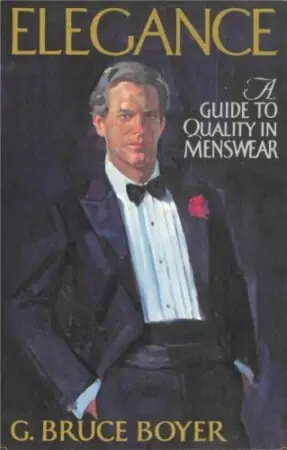
“The key to dressing well is to find freedom within the rules. Anyone can be completely different, since it’s easy to be outrageous. The trick is to be just that bit different.”
G. Bruce Boyer – Elegance: A Guide to Quality In Menswear
Classic Black Tie Precedents
For those readers who have reached this page after learning the Etiquette, History and Classic Components of black tie, it will be readily apparent that tinkering with the conventional formal wardrobe is akin to tampering with perfection. However, perfection is a relative concept which means that there is always room for reinterpretation.
- Classic Black Tie Precedents
- Learn The Black Tie Rules Before You Break Them
- Fewer Accents Are More
- Add Subtle Color To Your Black Tie Ensemble
- Consider Unique Dinner Jacket Models
- Unexpected Tuxedo Waist Covering: Less is Still More
- Tuxedo Shirt Alternatives? Not Really!
- Adventurous Tuxedo Neckwear: Black Is Usually Better
- Novel Footwear
- Unique Tuxedo Accessories
- Plaid: The Semi-Classic Alternative
- Formal Facts
Learn The Black Tie Rules Before You Break Them
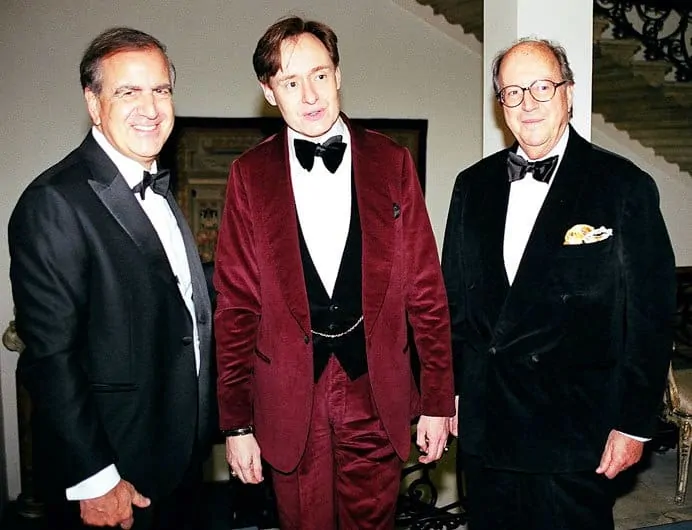
The key to tasteful personalization is recognizing that the difference between skillfully bending the rules and ineptly breaking them lies in one’s knowledge of their underlying principles. Men who wish to experiment with unproven black-tie variations should maximize their chances for success by first learning these fundamentals. Others who prefer to take advantage of tried-and-true options can simply choose from the following sartorial precedents favored by some of the most stylish dressers of the twentieth century.
Fewer Accents Are More
Discretion is an important factor in assembling an evening kit that is distinctive without being distasteful; the adage “less is more” couldn’t be better suited to customizing a wardrobe that derives its primary appeal from its refined simplicity. Therefore, when choosing among the following classic alternatives it is best to limit yourself to one item at a time.
Also be aware that a man’s age and an event’s formality will impact the appropriateness of these alternatives. Check out the Rules for Bending the Rules to see how these factors affect the propriety of a variation.
Add Subtle Color To Your Black Tie Ensemble
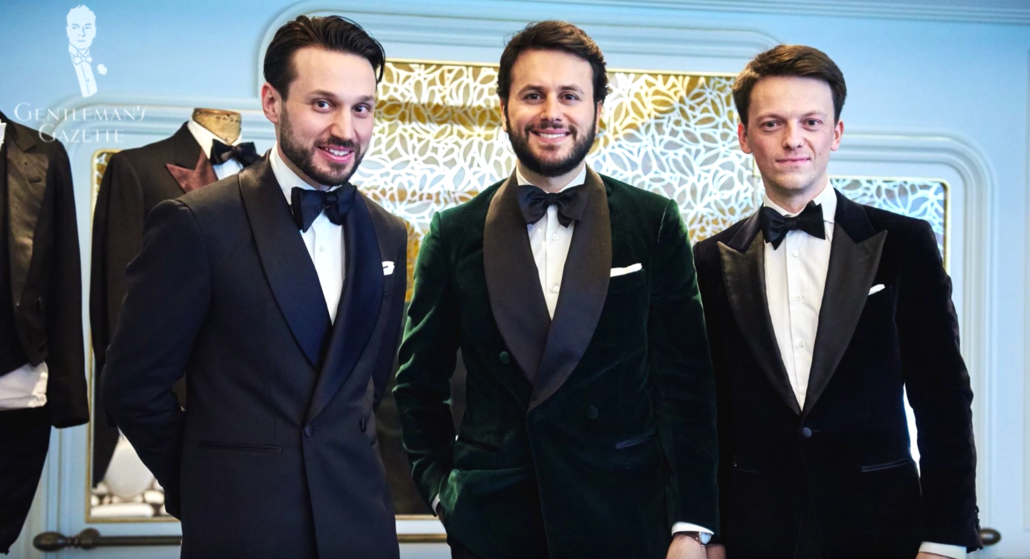
While color is the simplest way to customize a black-tie ensemble, its indiscreet use is the most common culprit in degrading the tuxedo from elegant formal attire to a sophomoric prom costume. In Dressing the Man, classic menswear authority Alan Flusser offers some basic advice for avoiding this pitfall:
- use only one colored accessory: “Injecting more than one contrasting accessory into the two-color format fragments its formal integrity into smaller, less important pieces.”
- surround the color with black: “By limiting your selection to only those components predominantly bordered by black, such as the waistcoat, cummerbund, dress shirt or pocket square, you have ensured that this single dollop of dissonance remains part of the whole.”
- use deep, rich colors: “The tonalities capable of enriching this already dramatic, high-contrast composition are those registering an equal degree of pluck and richness.” Plum, bottle green, deep gold and dark red are classic examples.

Consider Unique Dinner Jacket Models
The cardinal rules for alternative jackets is that they are appropriate only for less formal occasions, such as a private party at home or at a private club, and that all other aspects of one’s ensemble comply with the rules for proper black tie. Even then, they should be approached with caution as they do not command the utmost respect.
For more in-depth information about non-traditional dinner jackets, please take a look here.
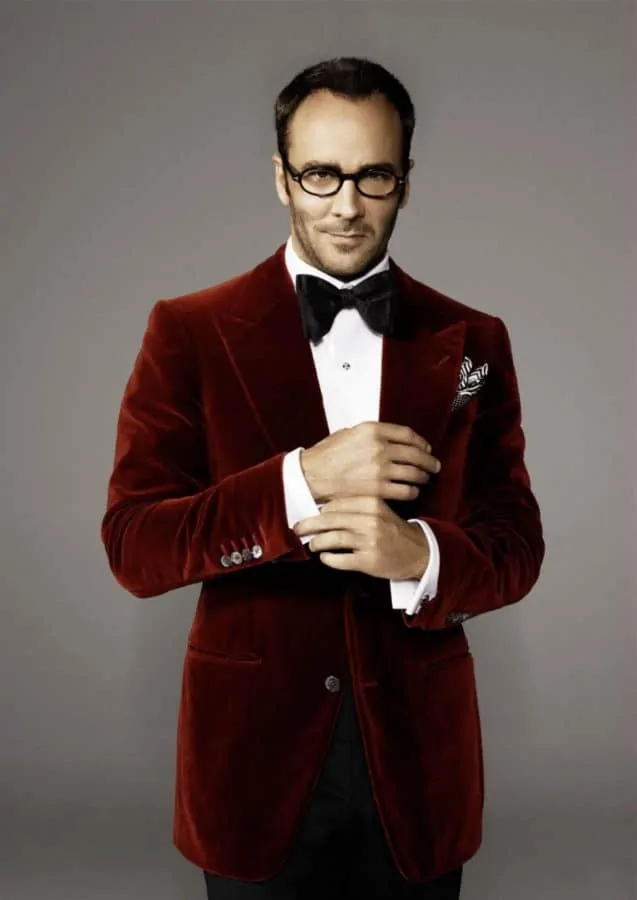
Smoking Jacket
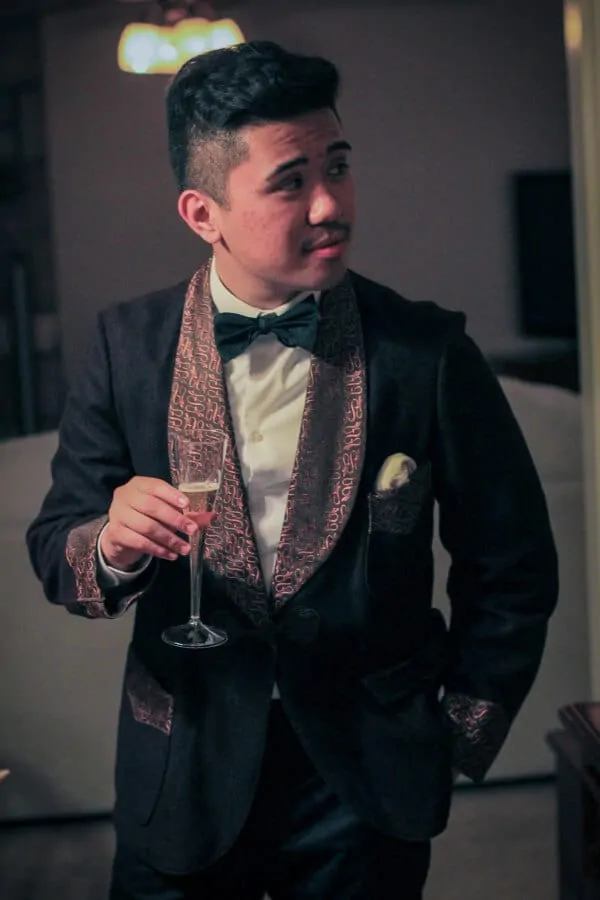
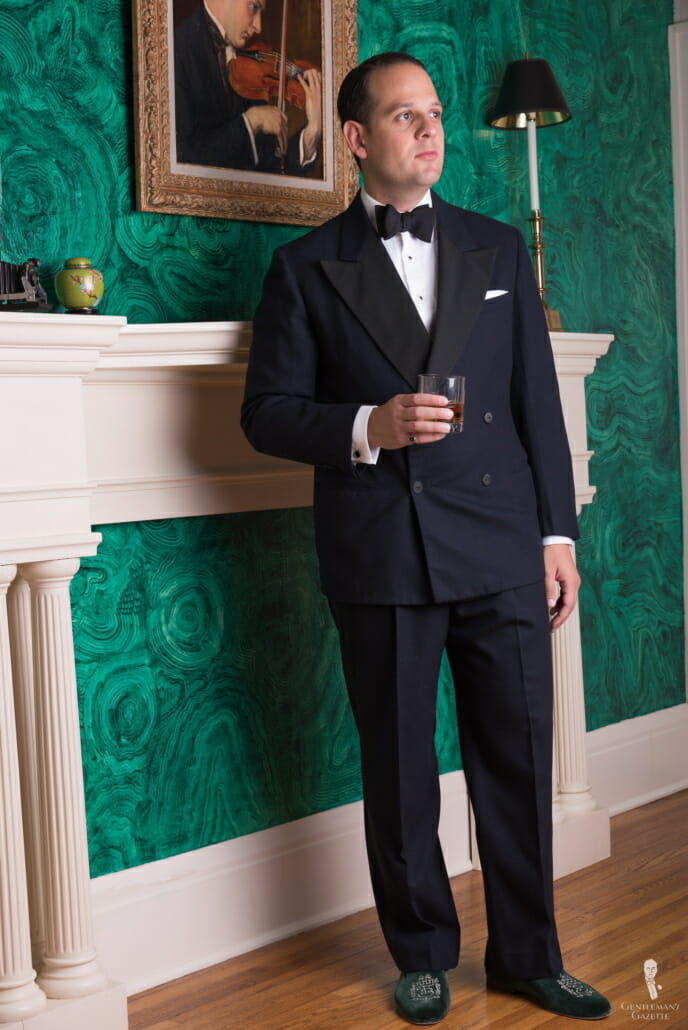
As the inspiration for the original dinner jacket, the smoking jacket remains a popular alternative to the traditional black-tie coat. Although fashioned in many different styles it is always constructed of colored velvet in dark hues usually of green, violet, burgundy or blue. The most authentic types of smoking jacket can be either double-breasted or single-breasted and have frog closures in place of buttons as well as a self-faced shawl collar. Classic variations popular in the 1930s were velvet hybrids that featured standard buttons and had self-faced peaked lapels on the double-breasted models or silk-covered shawl collars and cuffs on the single-breasteds.
More contemporary iterations are simply tuxedo jackets in every detail except for the velvet fabric. English haberdashers often include these designs in the smoking jacket category while North Americans are more likely to refer to them as velvet dinner jackets. The American moniker may better describe the garment’s appearance but the British terminology reflects its suitability for informal lounging rather than formal dining. These pseudo dinner jackets are discussed further on in Contemporary Jackets.
Odd / Separate Dinner Jacket
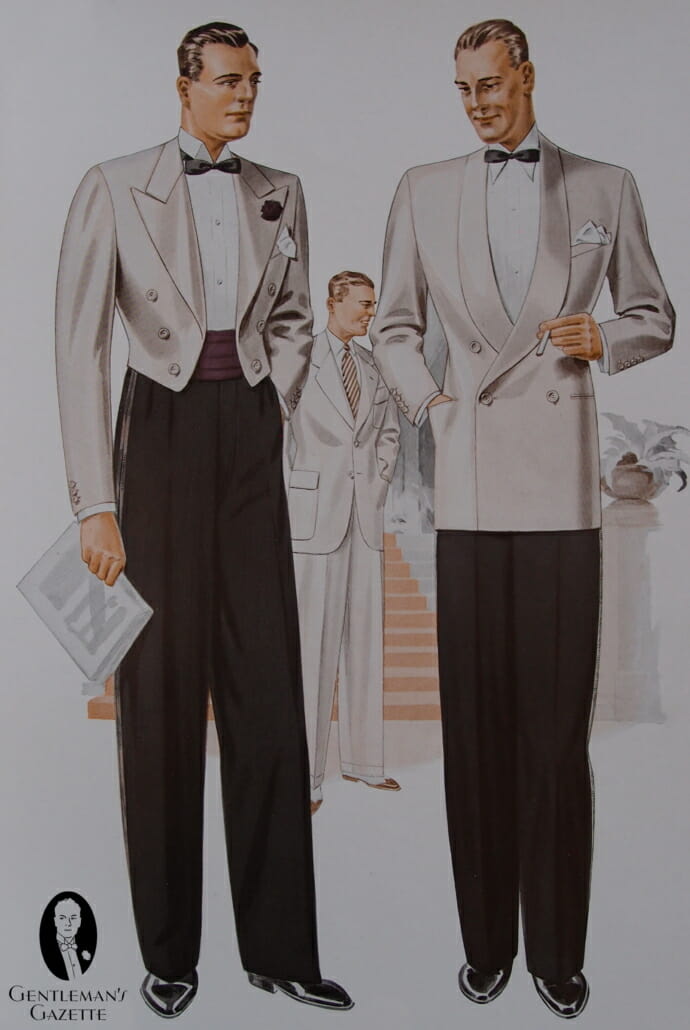
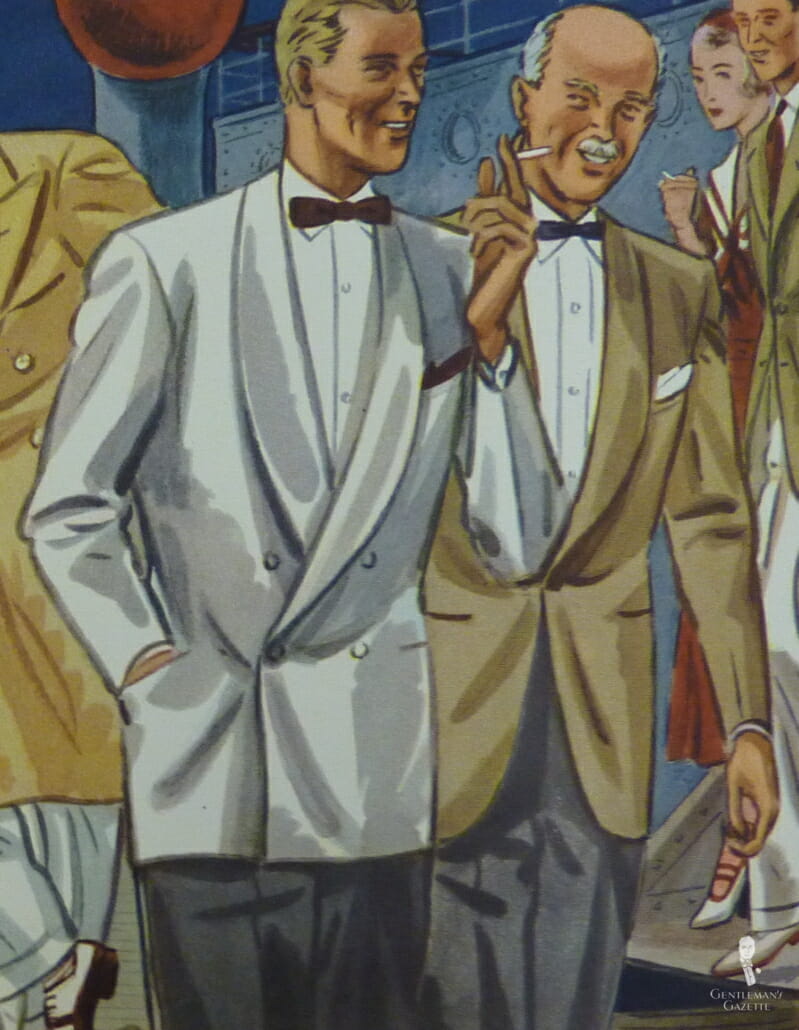
In the summer a tan colored jacket is a conventional alternative to white or off-white. Glenn O’Brien, GQ’s Style Guy, also recommends resurrecting the early ‘30s white civilian mess jacket but you’re on your own with that one.
Unexpected Tuxedo Waist Covering: Less is Still More
Matching Sets
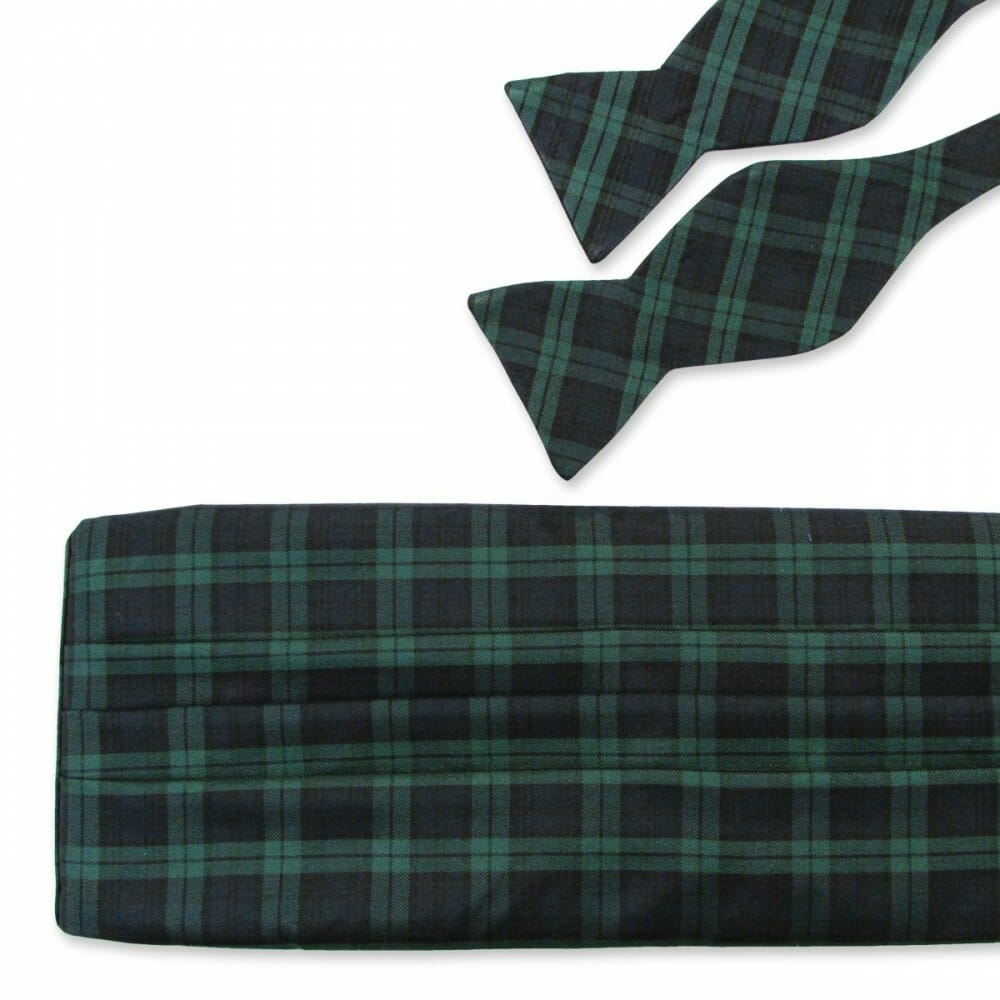
First and foremost, do not wear waist coverings and bow ties made out of matching colors and patterns. The black-tie outfit is close enough to a uniform as it is and accessories should be used to avoid a pre-packaged look, not to encourage it. As A Gentleman Gets Dressed Up so aptly puts it, “a gentleman’s pocket square, tie, and cummerbund were never intended to share the same gene pool.”
Just to be clear, this rule does not apply to black accessories as black is not a color.
Odd Waistcoats and Cummerbunds
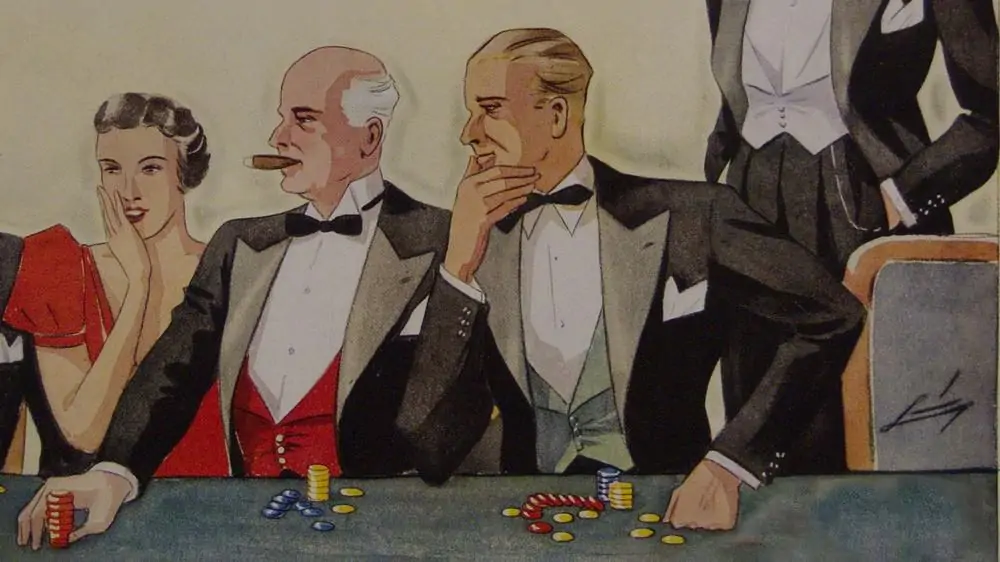
Waistcoats and cummerbunds are the most common method for adding color and pattern to black-tie but, once again, discretion is essential to maintaining the integrity of the formal ensemble. As mentioned previously, stick to deep, rich colors that harmonize with the existing black and white ensemble instead of bright, loud colors that detract from it.
White Waistcoat
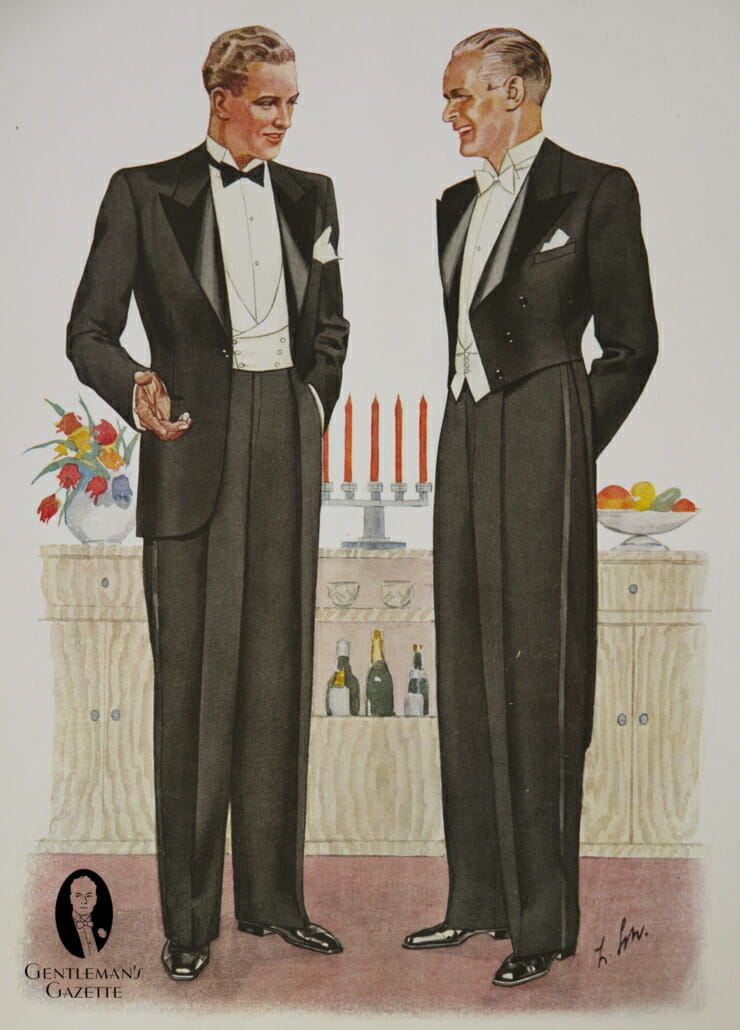
While colored and patterned waistcoats inherently diminish the formality of the tuxedo, the white piqué full-dress waistcoat actually elevates it. This posh variation – best paired with the very formal wing-collar shirt and peaked-lapel jacket – was common in the 1920s and 1930s and was prescribed by Emily Post for the most formal of black-tie occasions right up until the 1970s. Today it remains a stylish alternative for many dapper dressers. Full details can be found on the Full-Dress Waistcoat page in the White Tie section.
Tuxedo Shirt Alternatives? Not Really!
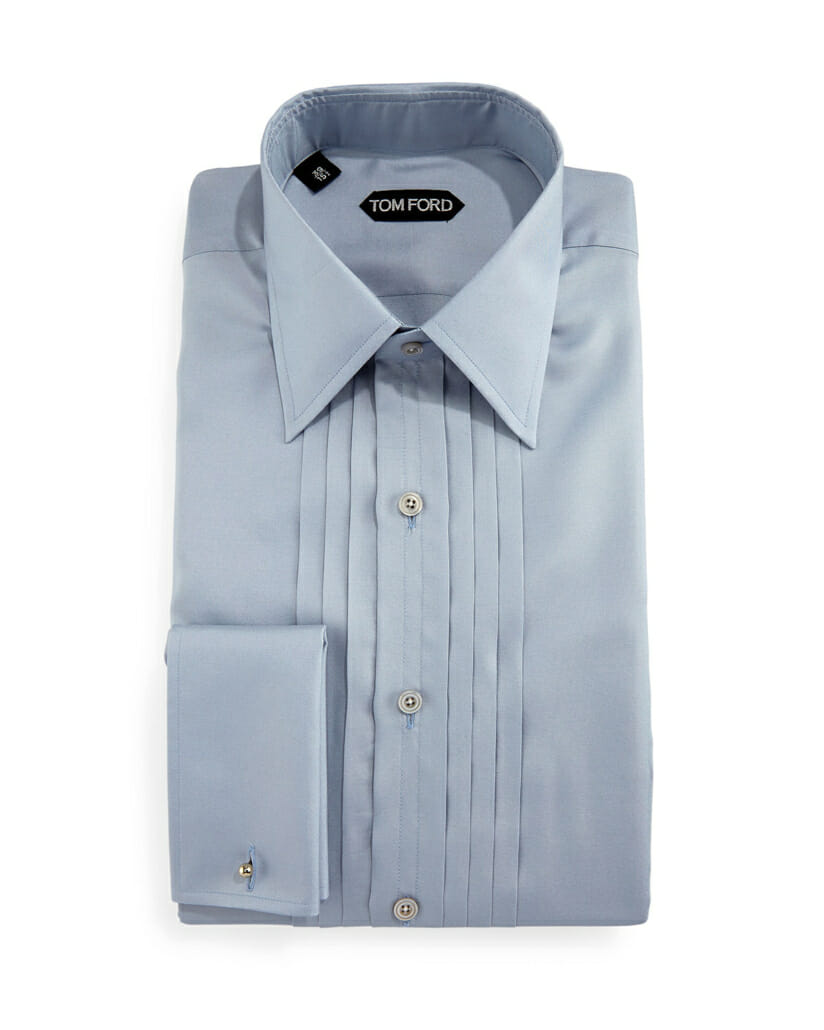
Silk dress shirts have long been accepted as a luxurious warm-weather alternative to cotton. Even though some designers have tried to introduce more color into evening shirts, including pastel tones such as blue, the crisp white tuxedo shirt remain the best option.
Adventurous Tuxedo Neckwear: Black Is Usually Better
The Rule: Keep your Bow Tie Black
There is one very simple rule for replacing the black bow tie: don’t.
Regardless of how common this sartorial gaffe appears at formal functions, it is still a faux pas. While it is true that matching ties and cummerbunds were recommended by even the most esteemed etiquette and fashion authorities from the 1960s through the early ‘80s, since that time there has been a return to classic standards which dictate the solid black bow tie is the only correct option with the black dinner jacket.
This is not simply a matter of changing fashions but, rather, a reflection of timeless style. Unlike the waistcoat, cummerbund or handkerchief, a contrasting bow tie is not framed by a dark color and therefore stands out as a glaring distraction. It has the effect of gift wrapping the neck and detracting from the face which is supposed to be the focal point of the suit.
And don’t even think of substituting a white bow tie. Just as with the evening tailcoat, the full-dress bow tie is never meant to be seen outside of a white-tie ensemble and its appearance with a tuxedo is considered a grave solecism.
The (Sole) Exception To The Rule: Warm Weather
The only exception to the black bow tie rule is limited to classic warm-weather kits due to their inherent informality. In the 1940s in particular, matching sets of maroon cummerbunds and bow ties were a popular alternative to black. (Midnight blue ties were also allowed when worn with trousers of the same color.) Today, the only hope that a grown man has for pulling off this look is to follow the classic warm-weather rules to the letter: jackets should be off-white, shirts should have turn-down collars, the set’s color must be a genuine maroon and, most importantly, ties should be self-tied. Wearing a pre-tied scarlet bow and cummerbund set with a modern wing-collar shirt and bleached white coat will virtually guarantee that you spend your evening taking other guests’ drink orders or being asked what time your band starts playing.
Novel Footwear
The classic alternative in black-tie footwear is the elegant evening slipper. Also known as the Prince Albert slipper, this soigné accent is made of velvet with leather soles and often features a motif or the wearer’s initials embroidered in gold. These slippers share the same dark colors as the smoking jacket with which they make a perfect pairing. Like the smoking jacket, they are appropriate only for private occasions.
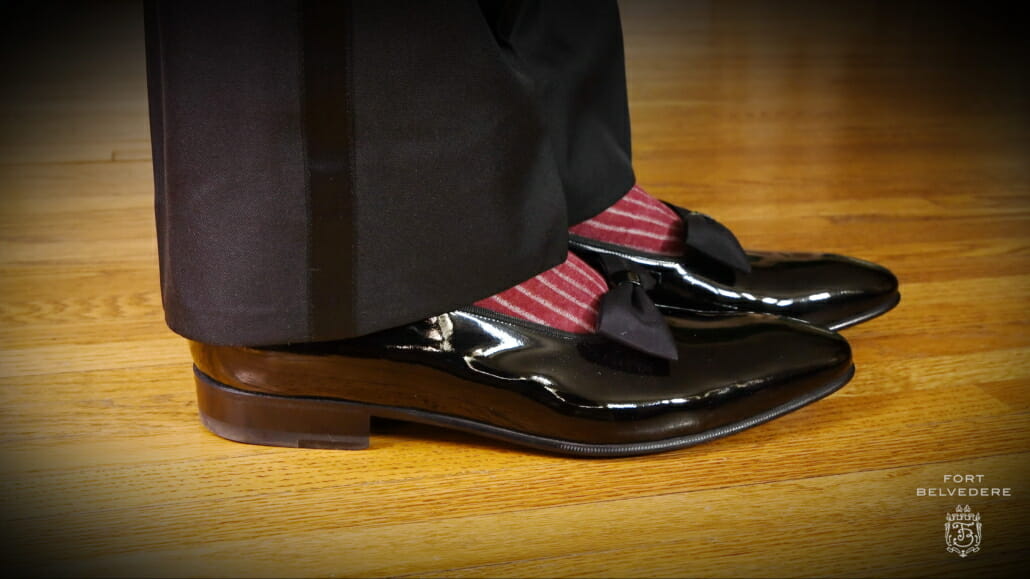
A formal hose can have a clock design that is either self-colored or of a contrasting color to match another accessory. However, the latter option should be used with discretion.
Unique Tuxedo Accessories
Suspenders (Braces)
Because you would never be so uncouth as to remove your jacket at a formal event your suspenders will never be seen by anyone other than your intimate companions. Consequently, this is a perfect opportunity to go ahead and indulge yourself.
Jewelry for Black Tie
Like the formal hose, cufflinks and studs are another option for subtly enhancing a color that has been introduced by another component in the formal ensemble.
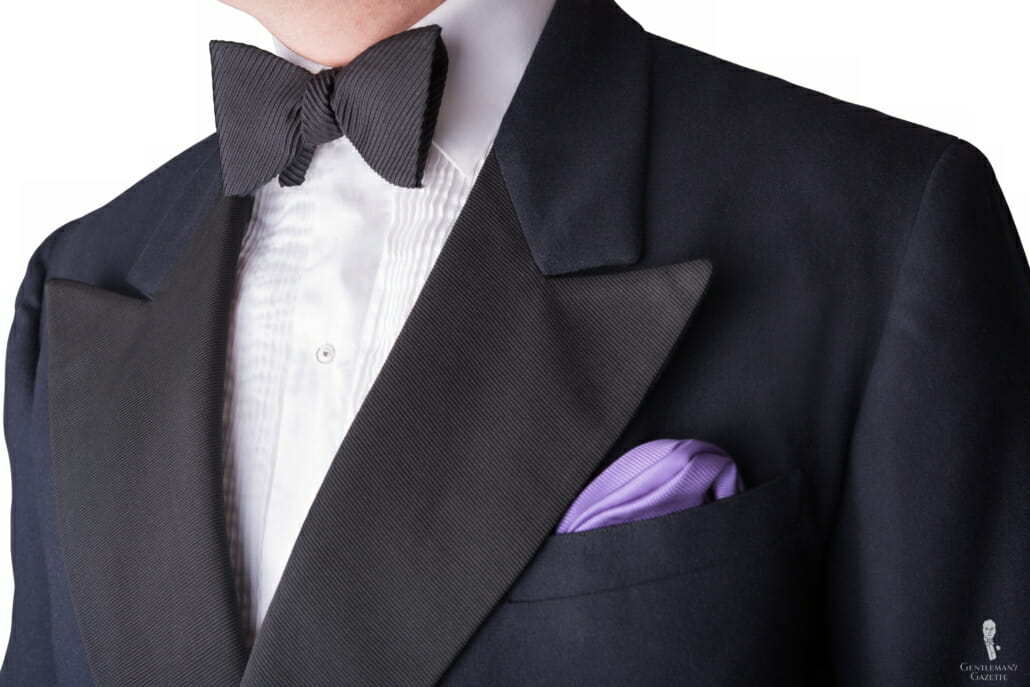
Pocket Square – White Linen Pocket Square with Hand-rolled Edges
Handkerchiefs in dark colors make for a natty touch, especially with warm-weather attire. Just be sure not to wear a colored boutonniere at the same time. Otherwise, a plain white linen pocket square with hand-rolled edges is the best companion.
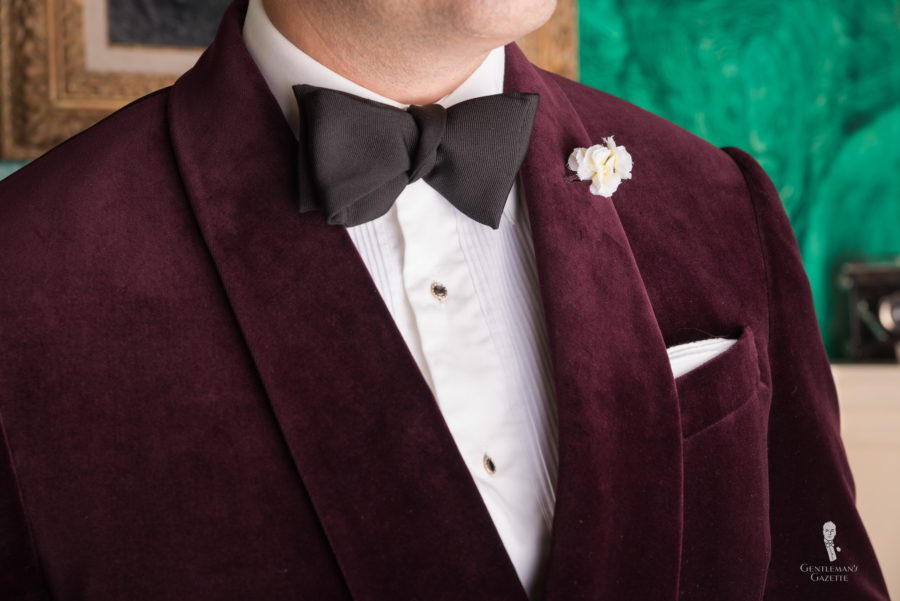
Boutonniere
Be daring and choose something other than a rose or carnation boutonniere. An Edelweiss boutonniere is a good start, but take a look here to get inspired.
Plaid: The Semi-Classic Alternative
While not technically classic, the 1950s origin of plaid alternatives can justifiably categorize them as at least semi-classic.
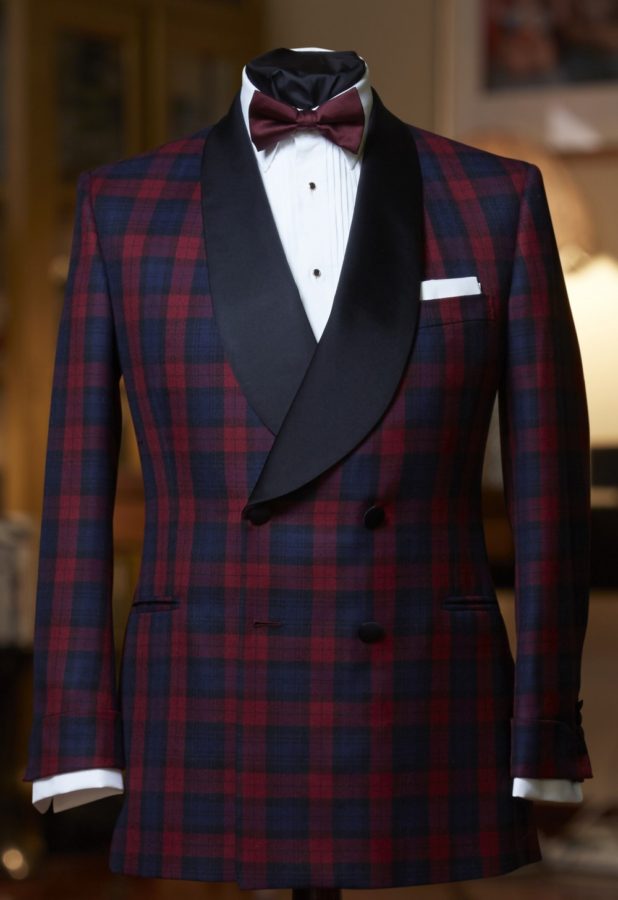
Jackets and Waist Coverings
The understated blue and green tones of the Black Watch pattern are particularly well suited for dinner jackets and waist coverings. (Most tartan patterns can be worn by anyone but be aware that it’s bad form to wear ones that are reserved for the use of a specific family or company, such as the British royal family’s Balmoral pattern.) Tartan coats traditionally take shawl collars faced in black silk but otherwise, all details are the same as for standard dinner jackets.
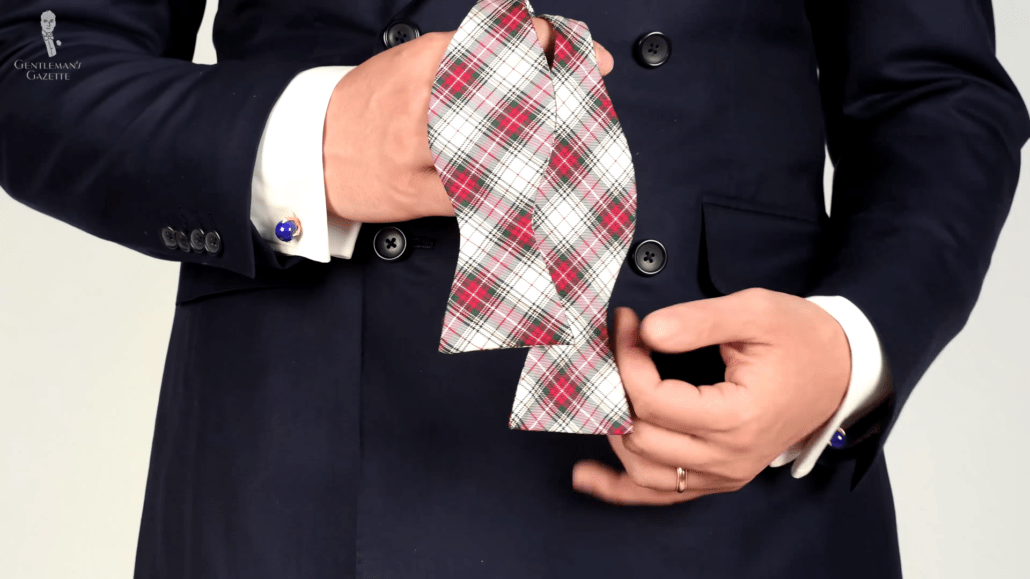
Bow Ties
A red and green plaid is a fitting touch for a less formal Christmas party as long as precautions are taken to minimize its distraction from the overall outfit:
• the colors should be tastefully dark
• the bow should be self-tied
• the band must be hidden by a turndown shirt collar
• it should not be worn with a matching waist cover
In addition, the tie should be constructed of silk as per standard formal bow ties. Most tartan bow ties are sold in the same wool used to make kilts but their rough, unfinished texture makes them inappropriate for formal attire.
Formal Facts
Well-Suited: Formal Accessorizing
Novices are often anxious to customize their formal wardrobe but they should spread out the process over a number of black-tie events in order to (A) see what works (and what doesn’t) on other men and (B) keep their own wardrobe feeling fresh and exciting.
What’s in a Name? Frog (Fastening)
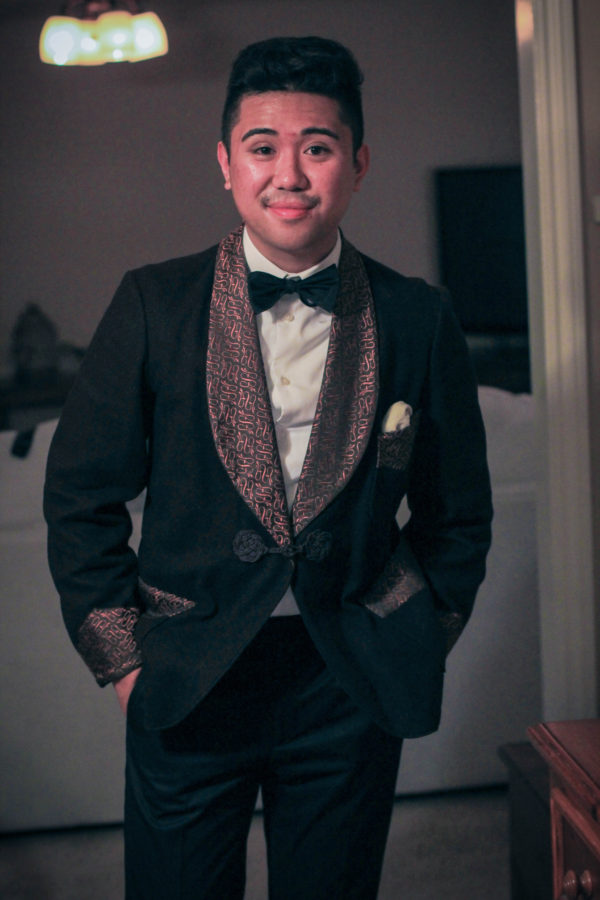
A frog is an ornamental braiding for fastening the front of a garment that consists of a button and a loop through which the button passes. They are often used on garments with an oriental design. The precise origin of the term is not known.
Patterns & Textures
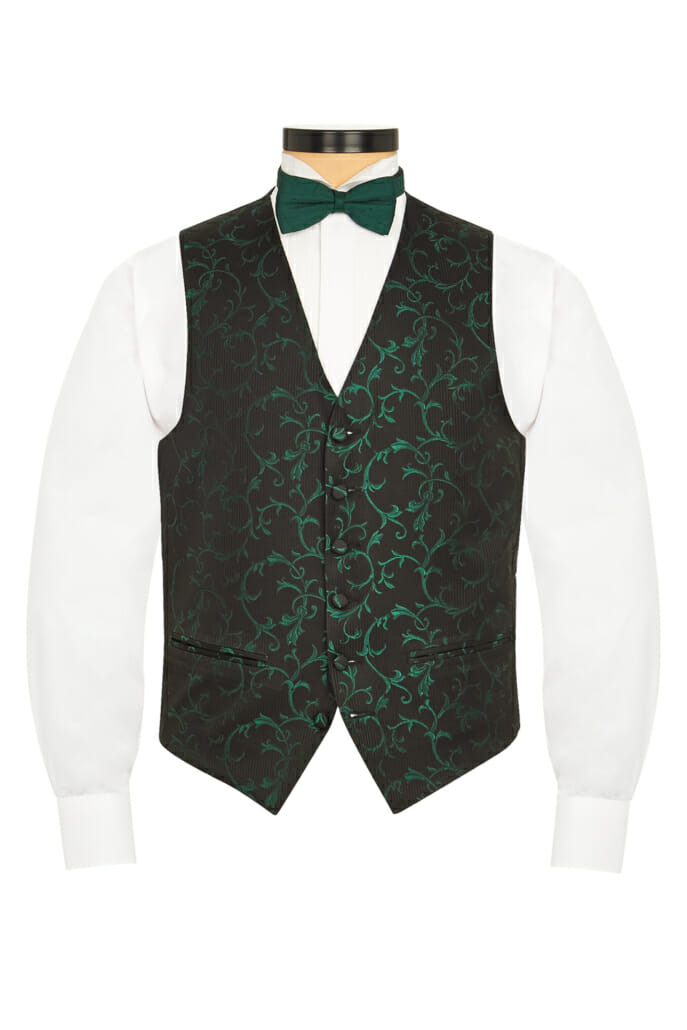
Patterned waistcoats, cummerbunds and bow ties may be the norm in today’s rental shops but one might assume their 1960s popularity precludes them from being categorized as classic. However, patterned waistcoats for evening wear had been around around the Fin de siècle but never really caught on.
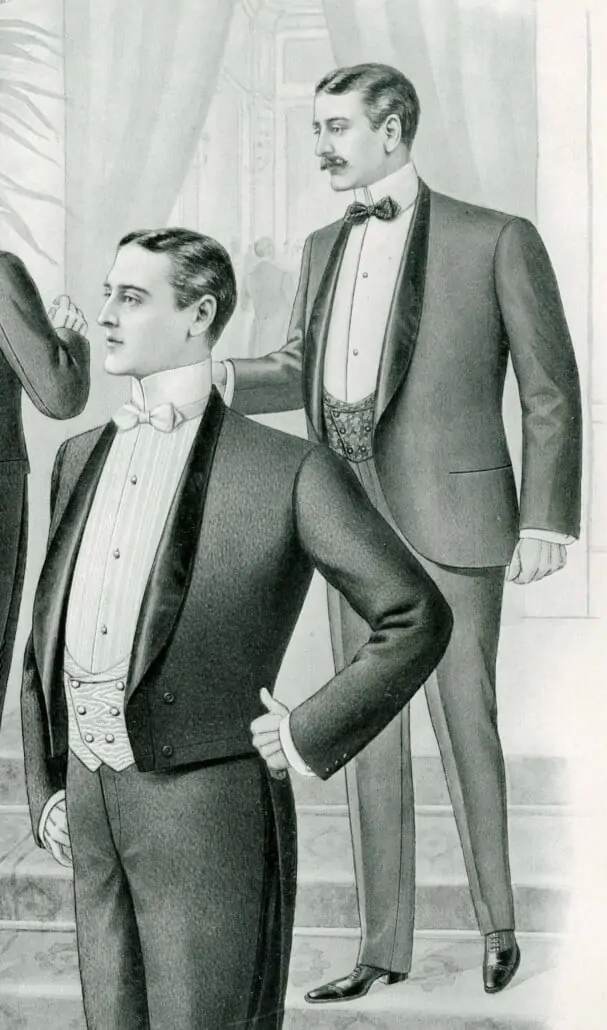
For information on these modern alternatives see Contemporary Black Tie and Scottish Black Tie Outfits.
Is a White Waistcoat Proper for Black Tie?
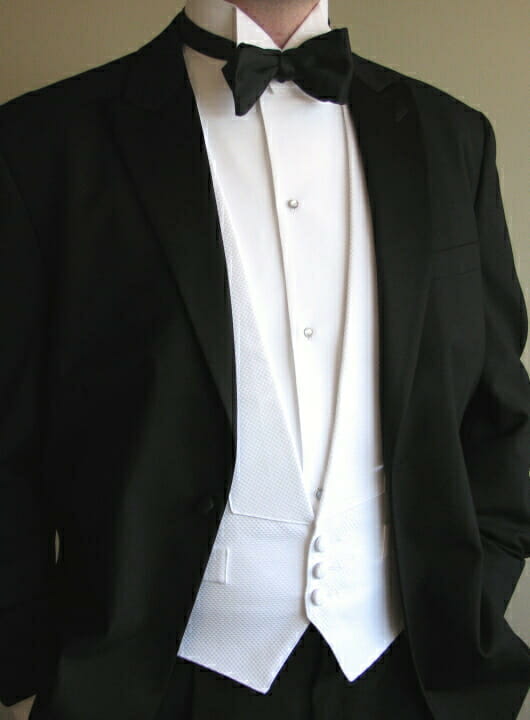
The full-dress waistcoat was once utilized to maximize the formality of the black-tie ensemble, especially in combination with a wing collar. Now it is used primarily for its sartorial virtues. Be advised though that it can emphasize a pronounced waistline.
If you like a vintage look, it is sophisticated way to elevate your black tie outfit from the masses.
Explore this chapter: 4 Classic Black Tie – The Gold Standard
- 4.1 Classic Tuxedo – Dinner Suits
- 4.2 Classic Evening Waistcoats, Vests, & Cummerbunds
- 4.3 Classic Tuxedo Shirts
- 4.4 Classic Neckwear – The Black Bow Tie
- 4.5 How To Find The Right Black Bow Tie For Your Tux and Face
- 4.6 Classic Tuxedo Shoes – Patent Leather Oxfords & Pumps
- 4.7 Classic Accessories – Cufflinks, Studs & Co
- 4.8 Classic Black Tie Outerwear
- 4.9 Warm-Weather Black Tie – The (Off) White Dinner Jacket
- 4.10 Classic Tuxedo Alternatives – How To Stand Out in Black Tie
- 4.11 Non-Traditional Dinner Jacket Guide