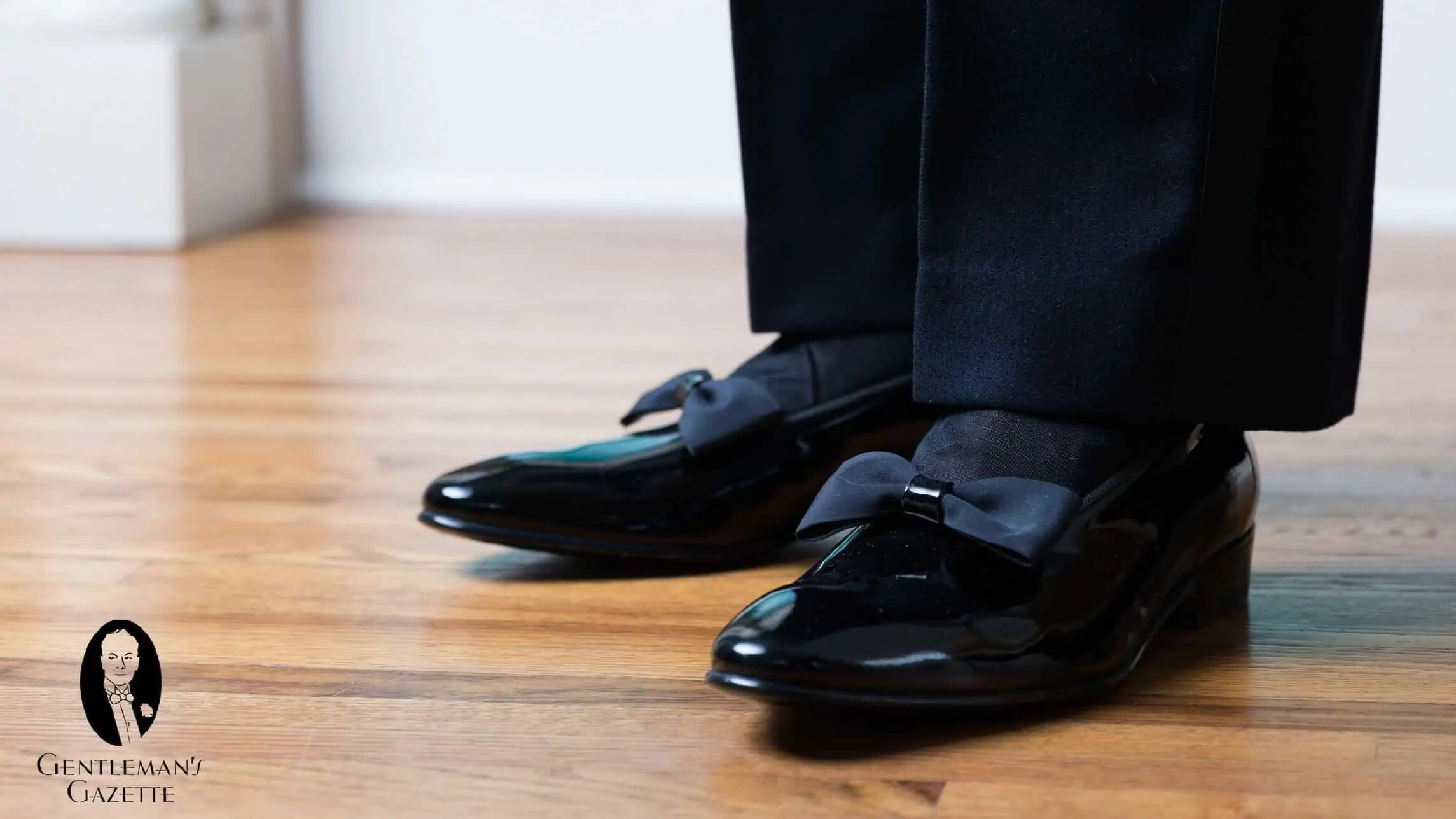
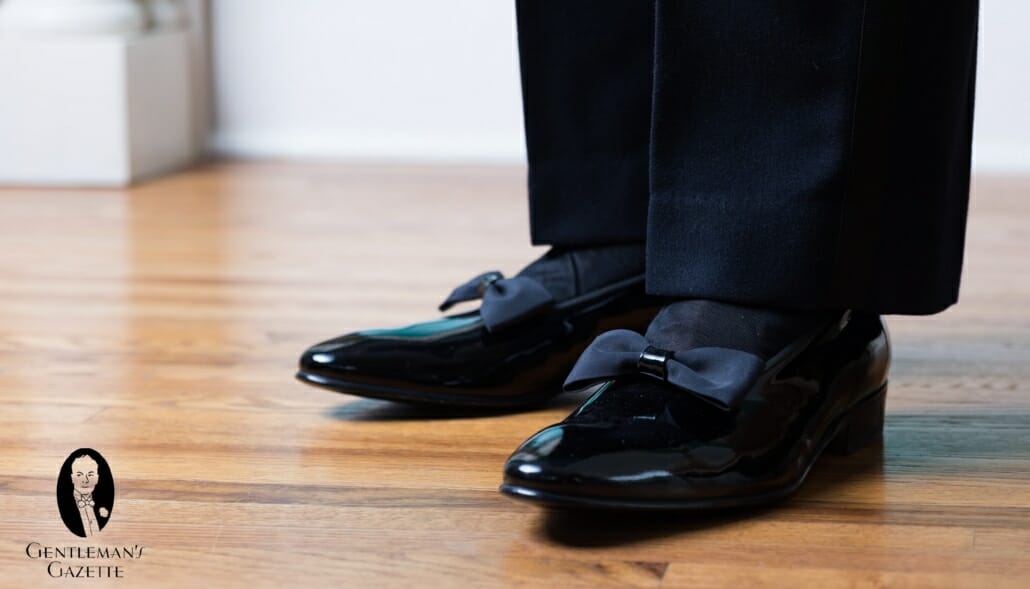
Whether slip-on or lace-up, the defining characteristic of formal footwear is its aesthetic minimalism. “Small, slim, and narrow feet give a light, quick, and (and hence) young lift to the overall silhouette” explains the black-tie treatise The Aesthetics of the Tuxedo, pointing out that this optical sleight-of-hand was often employed by vintage fashion illustrators. Consequently, formal shoes have a distinctly slipper-like appearance.
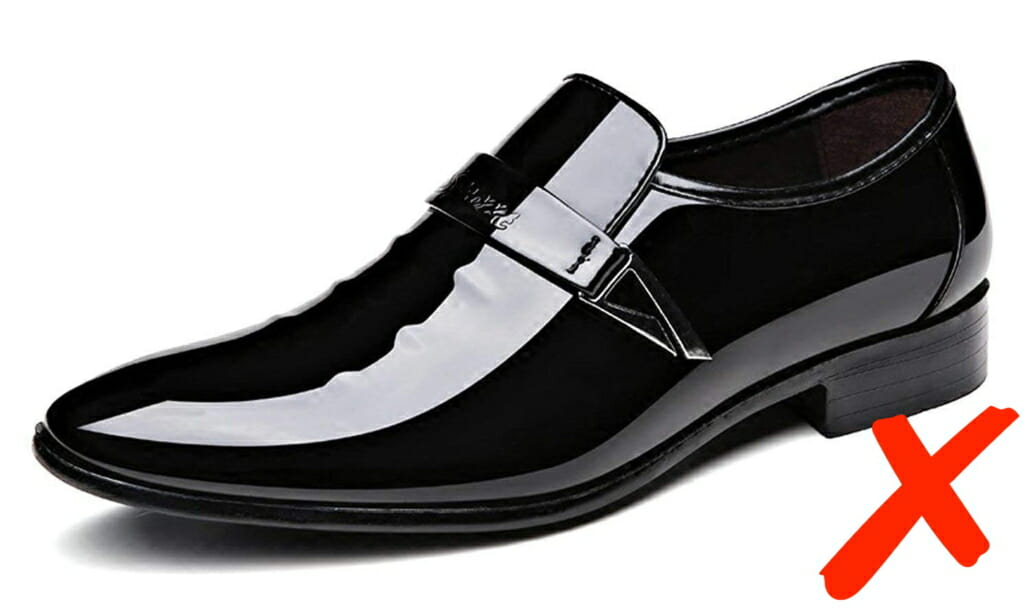
Patent leather was the material of choice for evening shoes from the 1850s through to the 1950s when well-polished calfskin became an acceptable alternative. In both cases, the high gloss of the shoe is intended to complement the outfit’s various silk facings as part of black tie’s sophisticated contrast of textures. Just be sure to avoid inexpensive patent PVC (vinyl) footwear as it will not only look cheap but will crack and peel as well.
The Formal Pump (Court Shoe): Elegant Original
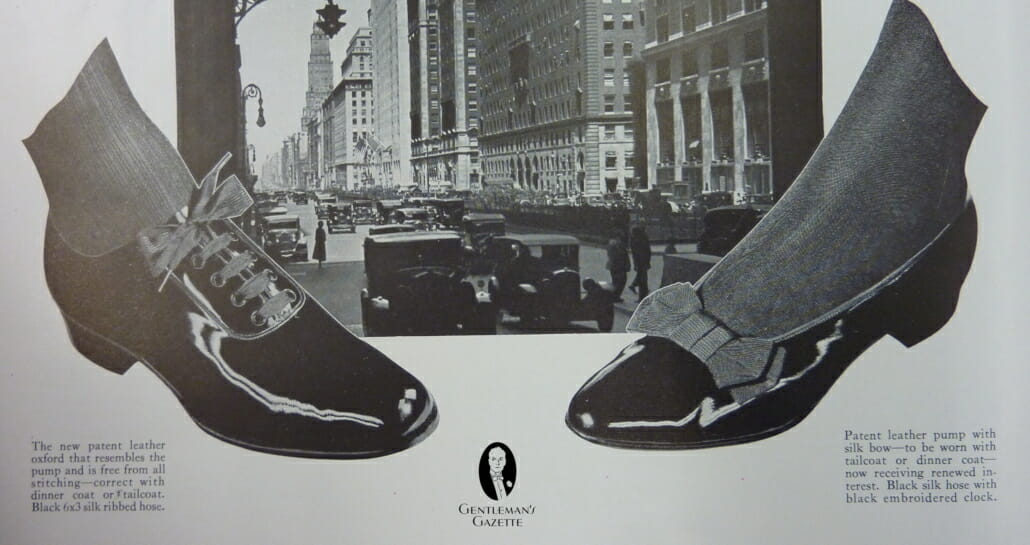
The formal pump (also known as an opera pump or, in the UK, men’s court shoe) has its origin in eighteenth-century court dress and has changed very little in the ensuing three hundred years. A vestige of an era of more effete menswear – it was originally worn with knee breeches and silk stockings – it is often misunderstood by more macho contemporary dressers. However, sartorial connoisseurs continue to appreciate its club elegance and the aristocratic nature of footwear intended to be worn exclusively indoors.
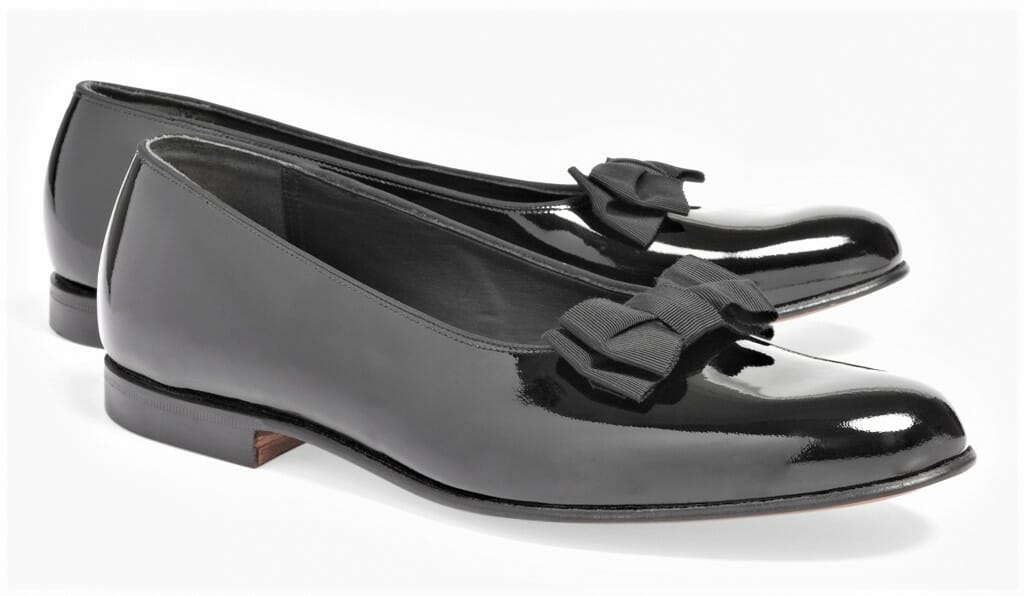
The evening pump is decorated with a silk bow, either pinched or flat, that complements the overall outfit in a couple of ways according to The Aesthetics of the Tuxedo. First, it coordinates with the necktie to bookend the suit and, secondly, it tricks the eye into seeing a smaller vamp (the upper portion of the shoe where the bow sits) thus enhancing the illusion of a smaller foot. While it would stand to reason that the bow should be satin or grosgrain to coordinate with the rest of the outfit’s facings, it is almost always grosgrain. This is because the high gloss of the shoe’s leather already complements the luster of the facings and so the bow fabric is utilized to offset the pump’s sheen rather than overdo it.
Pumps have traditionally been associated with dancing which is why they are often quilted for additional comfort. However, their slight build and lack of ties require that they fit the foot perfectly in order not to slip at the heel.
The Formal Lace-Up (Oxford): Sartorial Standard
Although not as formal as the pump, the evening lace-up still boasts an impressive heritage dating back to the turn of the twentieth century. The low-cut oxford derives its elegance from its “closely cropped soles, delicately beveled waist, and glovelike fit” as Dressing the Man so poetically explains. In addition, the ready-to-wear version has an advantage over its slip-on counterpart because of its ability to fit a wider variety of foot shapes and subsequently reduced the likelihood of pinching or slipping while dancing.
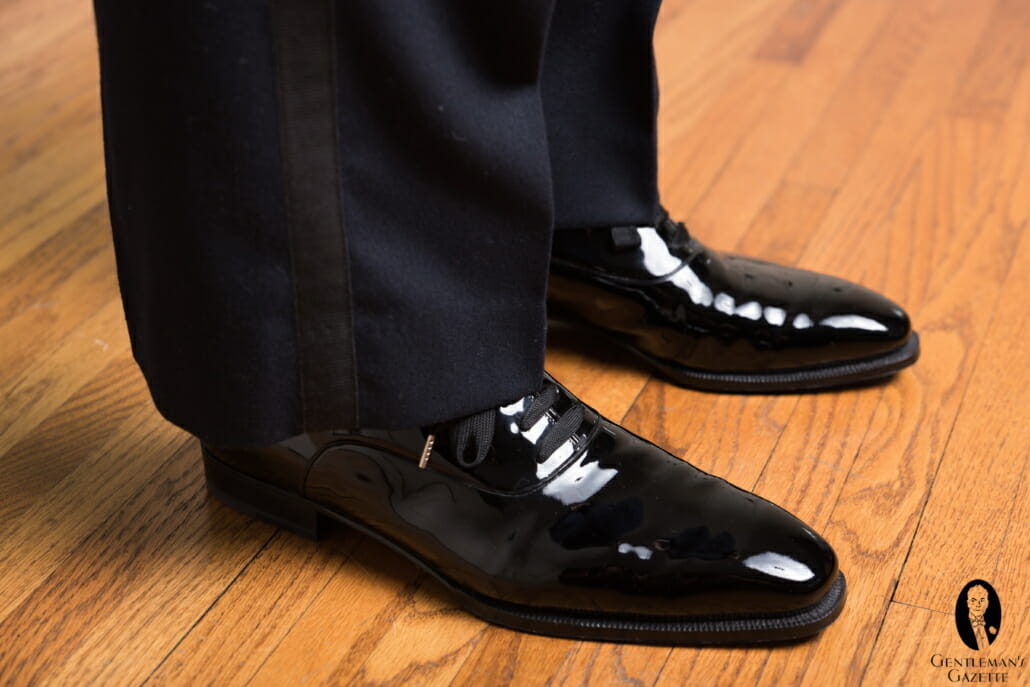
Laced shoes must be as simple as possible in order to respect formalwear’s refined minimalism. In this regard,
- Oxfords are the only allowable style; derbies, wingtips, brogues, and loafers should be avoided as they are too similar to everyday styles worn for work or leisure
- Plain-toed oxfords are preferable to the extra seam required by cap-toed versions
- Wholecut models have uppers cut from a single piece of leather, and therefore trump standard versions due to the absence of side seams
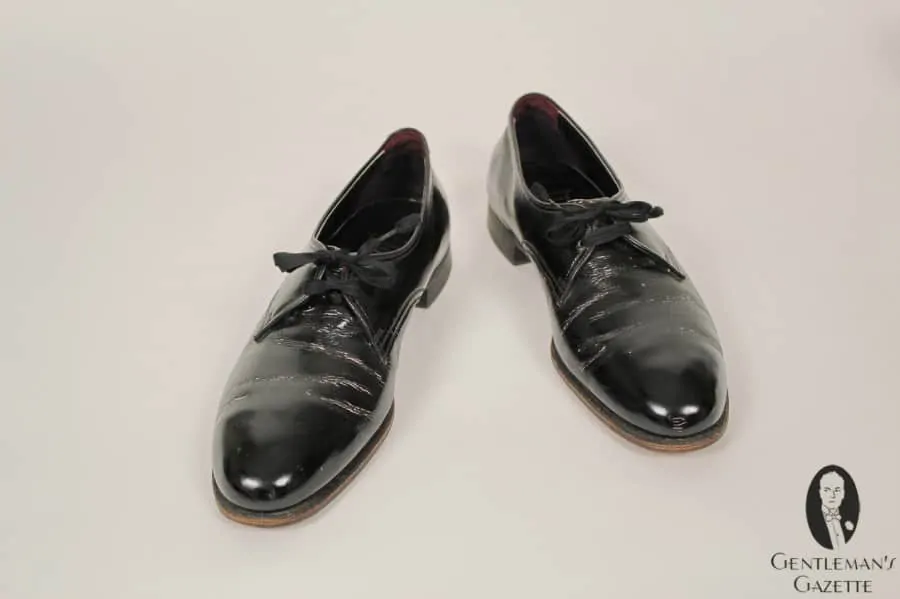
- In continental Europe, the black derby is likewise accepted and even President Truman – a known clotheshorse among US president – wore black derbies with wide shoelaces for black tie
The Finishing Touch: Formal Evening Shoelaces
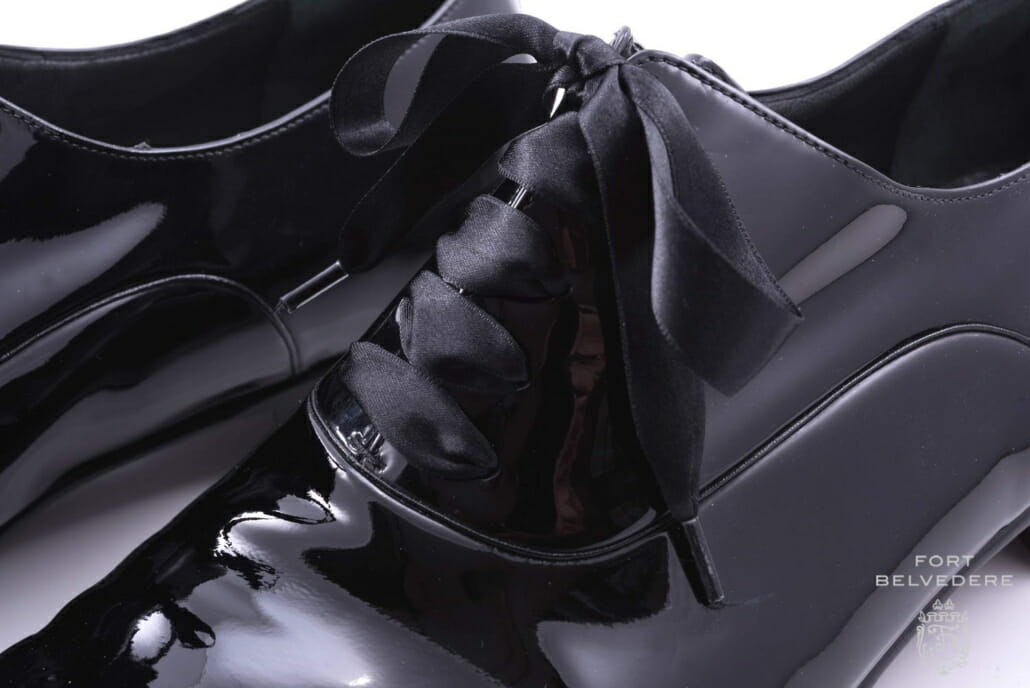
No matter if you have proper capless patent leather oxfords or calf-leather captoe Oxfords, a sure way to make it a black tie look is to use specific evening shoelaces. In the 1930s they used wide silk satin, grosgrain or velvet shoelaces.
We are proud to say that we revived that tradition by offering 5 kinds of evening shoelaces including satin, grosgrain, velvet and barathea options by Fort Belvedere in our shop, take a look.
Formal Hose: Superior Socks
With a classic black-tie ensemble, even the hosiery is carefully selected to enhance overall elegance. The traditional choice is black silk socks, descendants of the hose worn at court with knee breeches. The material’s dull luster serves as an effective complement to the trouser’s silk stripes and an elegant transition from the matte wool of the trousers to the glossy finish of the shoes. When wearing a midnight blue dinner suit hose should be of the same color.
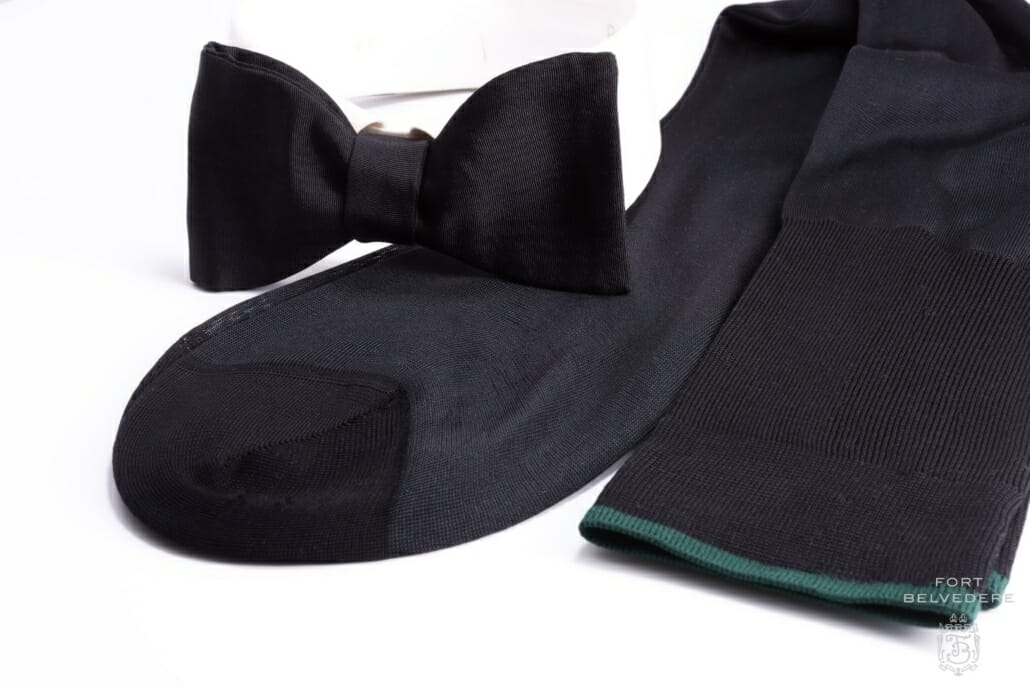
Fine-ribbed cotton-lisle and even wool have been acceptable alternatives for evening hose since Edwardian times. Regardless of the material or color chosen, formal socks must be calf height. There is probably no better way to ruin a formal outfit than by flashing bare shins when you sit or cross your legs.
Formal Facts
Well Suited: Pump Tips
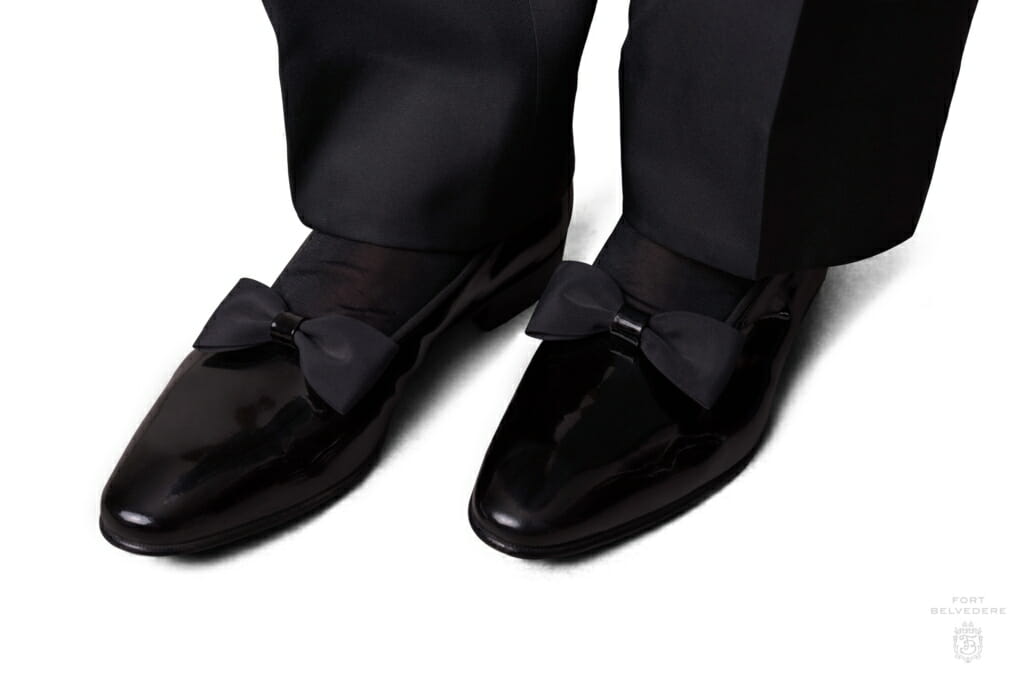
A snug fit is crucial for formal pumps so if bespoke footwear is not an option consider ordering ready-made versions in half a size smaller than normal to account for the extremely thin silk socks you’ll be wearing.
Once you have them keep in mind that they offer very little protection from inclement weather. (At times like this door-to-door chauffer service comes in handy.)
Formal Facts: The Ultimate Lace-Up
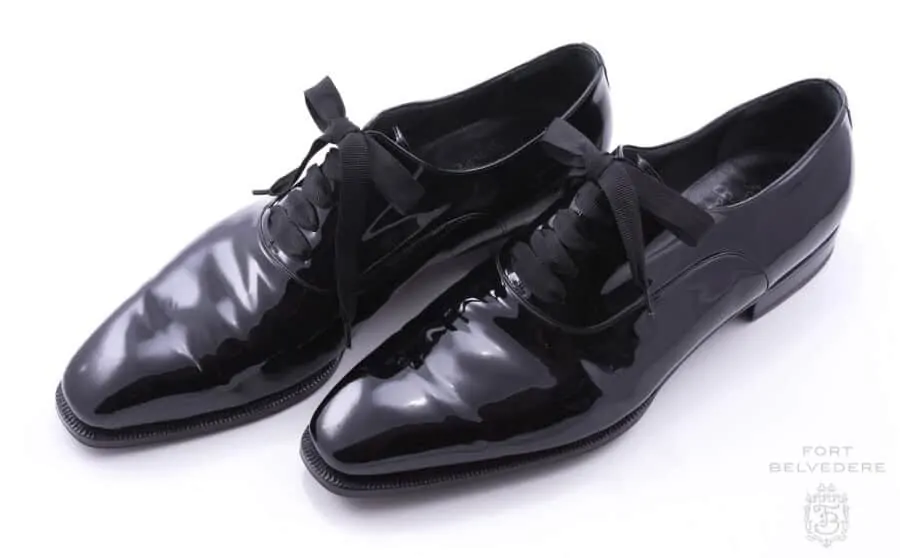
Although wholecut dress shoes are rarely seen they have a legitimate precedent in the form of a similar style introduced in 1934 as the ne plus ultra of lace-up dress shoe. See Vintage Footwear for the details.
Explore this chapter: 4 Classic Black Tie – The Gold Standard
- 4.1 Classic Tuxedo – Dinner Suits
- 4.2 Classic Evening Waistcoats, Vests, & Cummerbunds
- 4.3 Classic Tuxedo Shirts
- 4.4 Classic Neckwear – The Black Bow Tie
- 4.5 How To Find The Right Black Bow Tie For Your Tux and Face
- 4.6 Classic Tuxedo Shoes – Patent Leather Oxfords & Pumps
- 4.7 Classic Accessories – Cufflinks, Studs & Co
- 4.8 Classic Black Tie Outerwear
- 4.9 Warm-Weather Black Tie – The (Off) White Dinner Jacket
- 4.10 Classic Tuxedo Alternatives – How To Stand Out in Black Tie
- 4.11 Non-Traditional Dinner Jacket Guide