Dressing the Waist
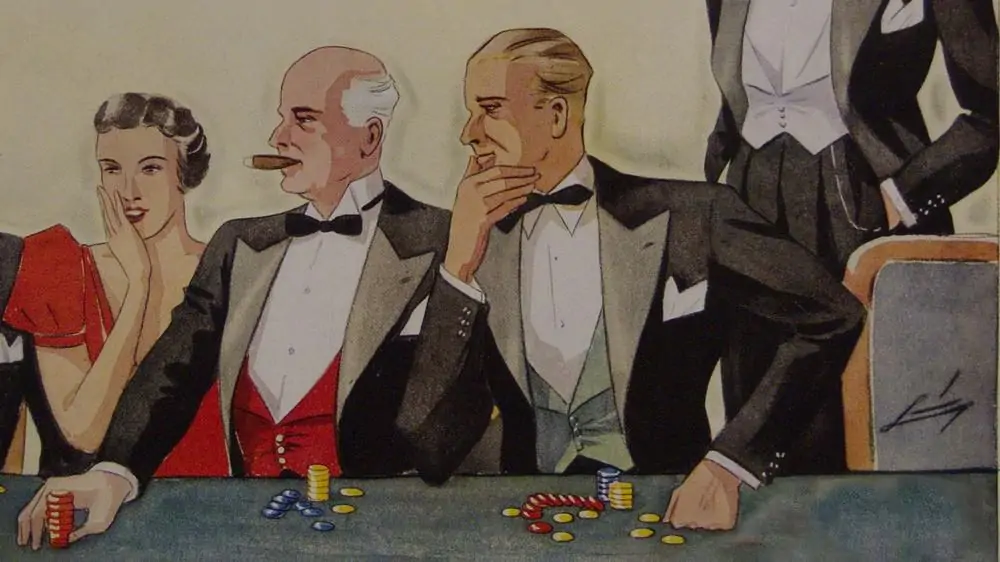
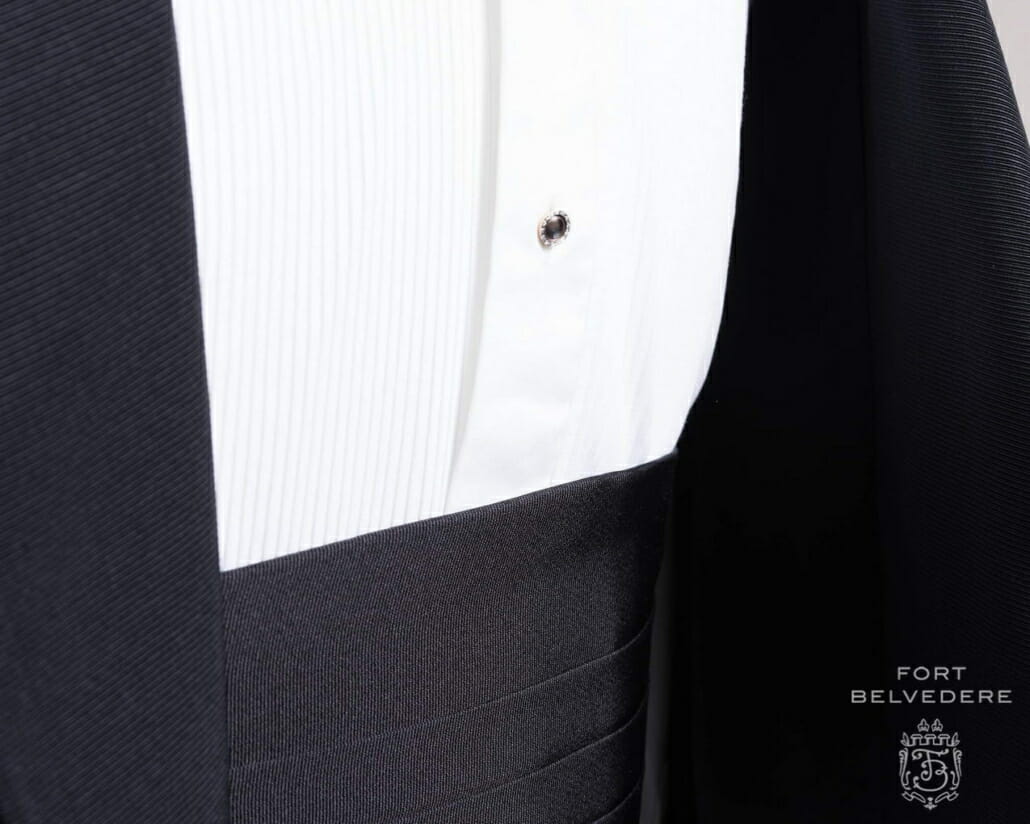
Thanks to the practice of prom dates and young grooms being dressed by their female companions, the role of the formal waistcoat or cummerbund are misconstrued by many today as a palette for matching women’s dress colors. In actual fact, these garments play an important part in formal wear’s refined minimalism by helping to conceal its working parts. Just as dress studs replace common shirt buttons and silk stripes cover trouser seams, a formal waist covering discreetly hides the trouser’s exposed waistband and the shirt bosom’s bottom edge.
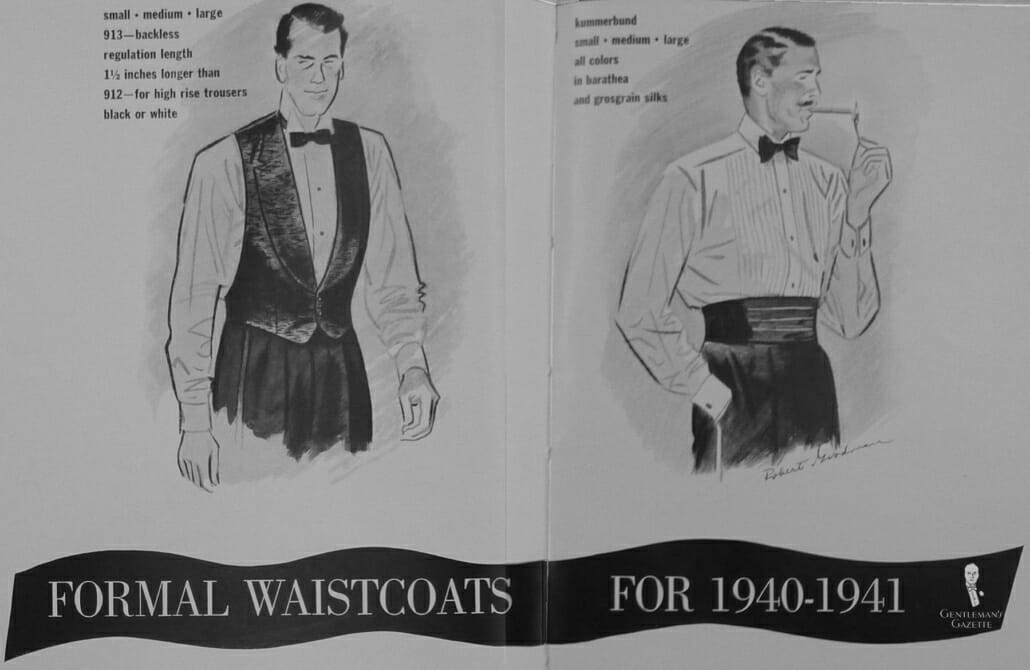
Black tie’s original waist covering was the evening waistcoat worn with its full-dress progenitor, the tailcoat. In the early 20th century, the dinner suit gained a slightly less formal alternative to call its own: the cummerbund. Although this dressy sash was initially appropriate only for warm-weather evenings, it has been acceptable year-round since the 1950s. Consequently, both garments are considered authentic and correct.
Either covering may be paired with either style of dinner jacket lapel, but the expert consensus is that the formality and pointed tips of the waistcoat harmonize best with the angularity of the peaked lapel while the informality and curved outline of the cummerbund best complement the streamlined shawl collar.
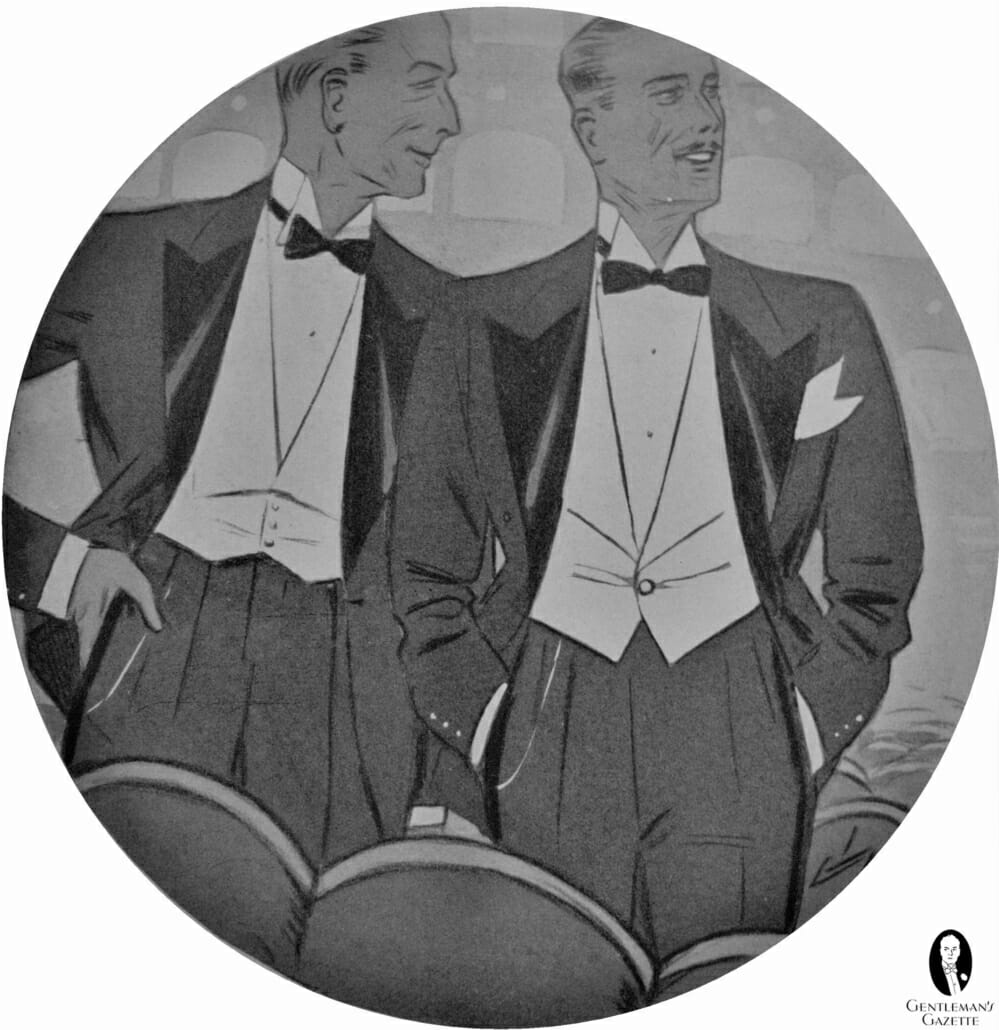
Neither garment is required with a double-breasted jacket because it is worn buttoned up thus hiding the wearer’s waist from view.
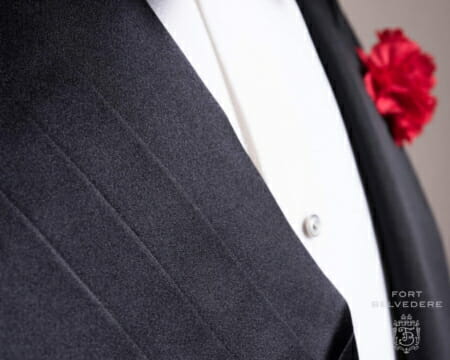
The Evening Waistcoat: The Classic Choice
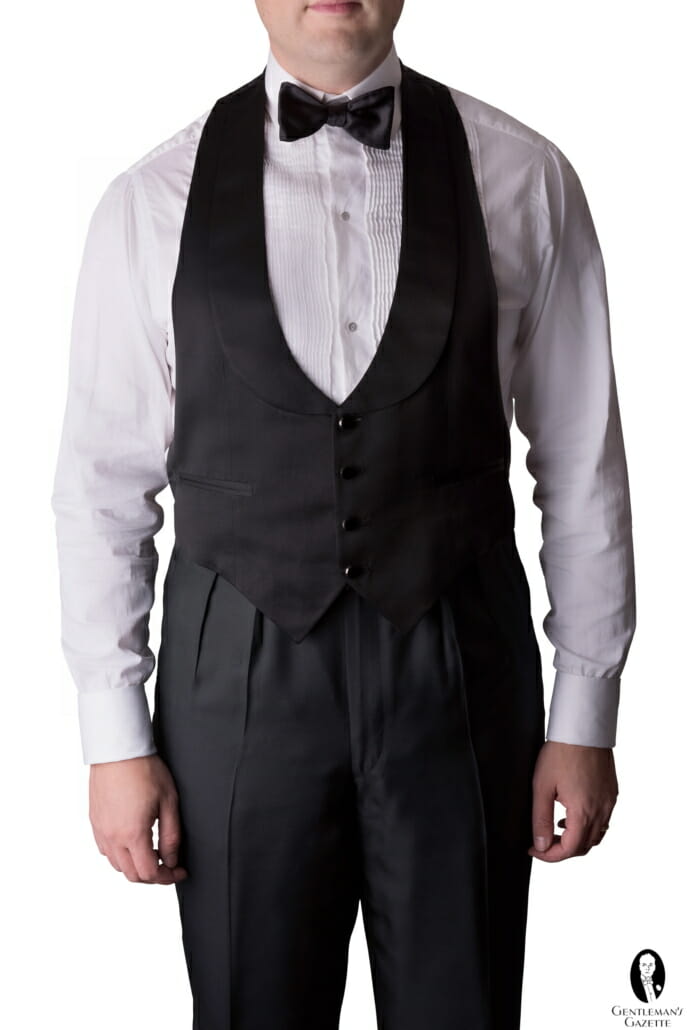
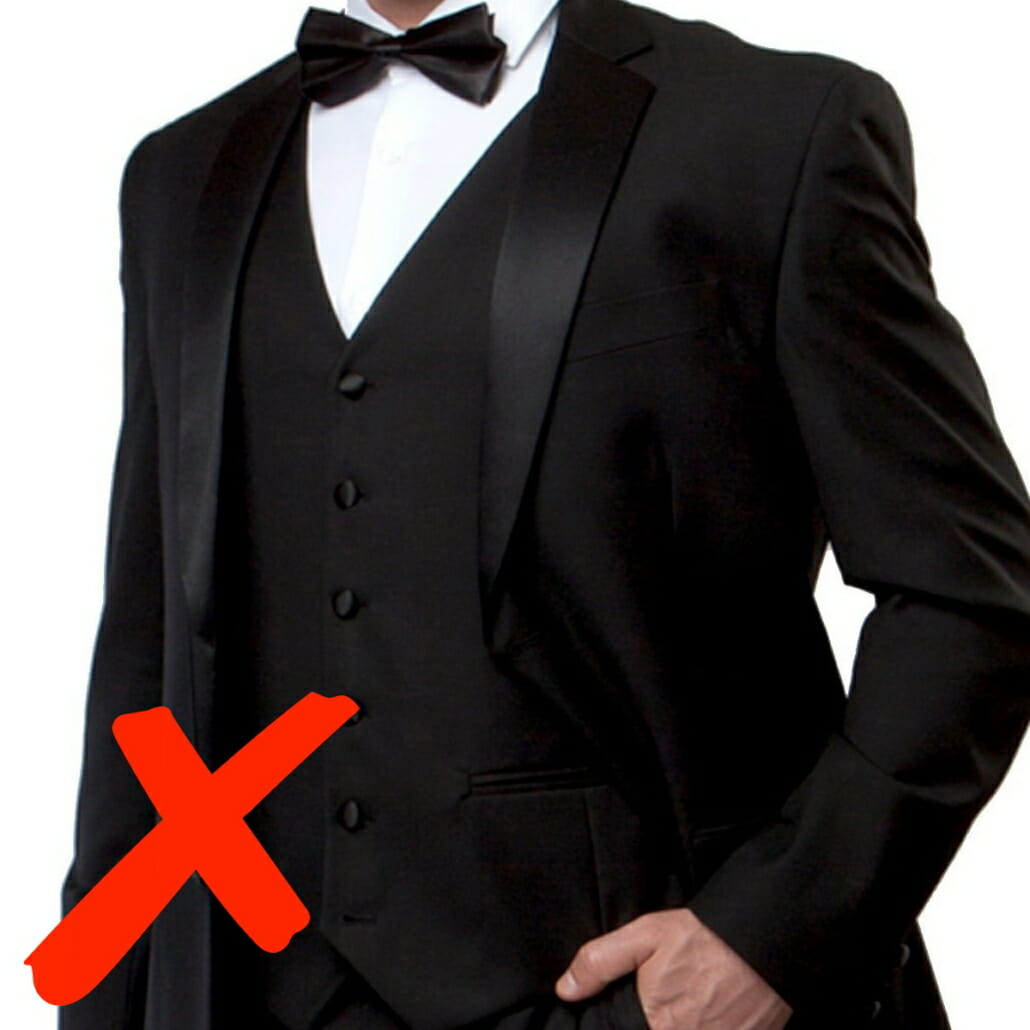
The obsequious high-buttoning formal vests available from today’s formalwear retailers are essentially glorified three-piece suit vests and as such are definitely not classic. Rather, the traditional evening waistcoat is distinguished by a low-cut design intended to reveal as much as possible of the formal shirt’s elegantly decorated bib. It should be just tall enough to peek out beyond the lapels of the closed dinner jacket.
The classic waistcoat is acceptable in either single- or double-breasted models. In the former case, the bottom of the vest typically ends in two points that can be angular or rounded according to taste.
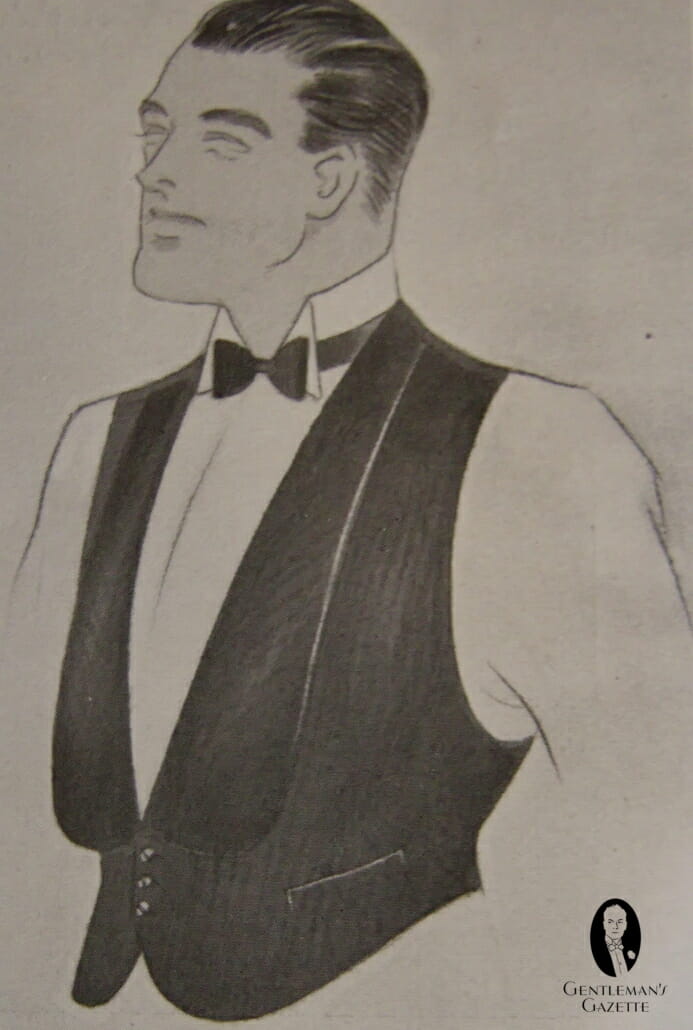
Backing Up the Waistcoat
Evening waistcoats can have either a fullback or the more common backless variety introduced by the Duke of Windsor as another of his contributions to after-six comfort. The latter style remains fastened in front when being donned and instead attaches behind the lower back and behind the neck by means of adjustable straps. While it wears cooler at evening events that are often hot, the backless waistcoat has a tendency to shift and look weird. Hence the semi-backless waistcoat was invented. It provides the wearer with the best of both worlds. It remains in place all evening and due to the reduced cloth in the back it feels cooler than with a fullback vest.
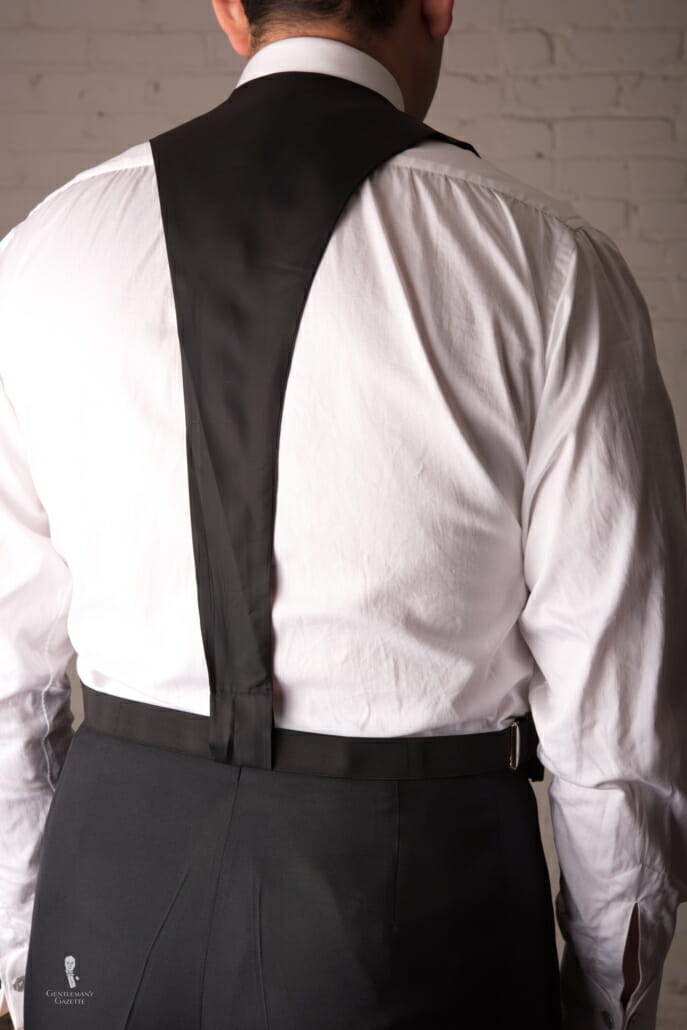
Materials & Buttons
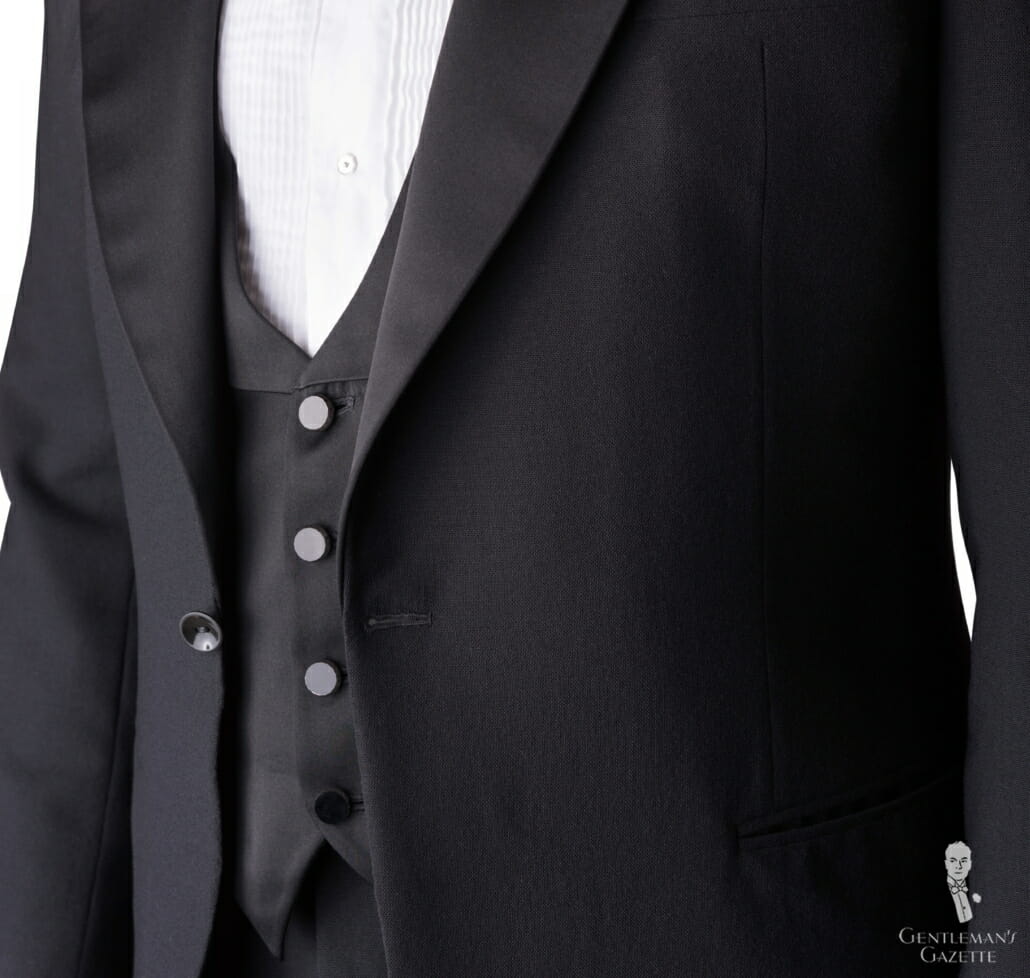
The body is constructed from the same material as the dinner jacket or is made entirely from silk to match the jacket’s facings. Also unique to the evening waistcoat are its shawl-style revers (lapels) which are usually self-faced when the body is silk or match the jacket lapels when the body is wool. Like the waistcoat’s bottom, the revers’ lower edges can be square cut or rounded.
Single-breasted waistcoats typically take three buttons while double-breasted models take four. Buttons are usually covered in satin or grosgrain although on better models they can be replaced by waistcoat studs to match the shirt studs. Both models are completed by two single welt pockets which once served as a convenient holder for a gentleman’s pocket watch.
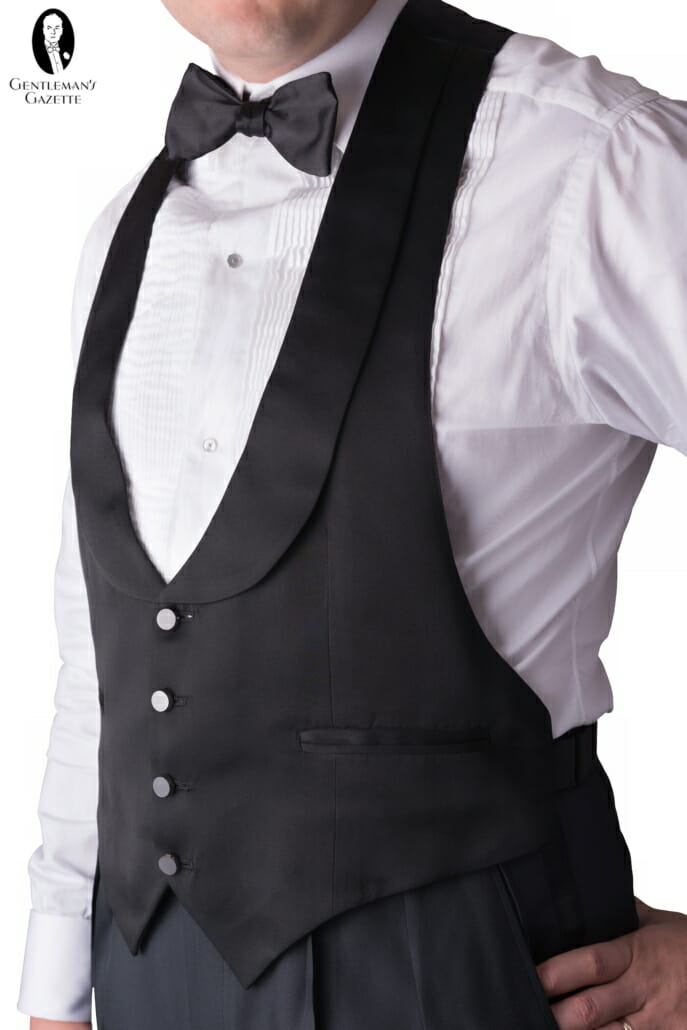
Another characteristic of finer quality waistcoats is a tab that attaches to a trouser button to keep them from riding up and exposing the waistband. Also, the neck strap on backless versions is adjusted with buttons rather than a metal buckle.
Cummerbund: Cool & Contemporary Contender
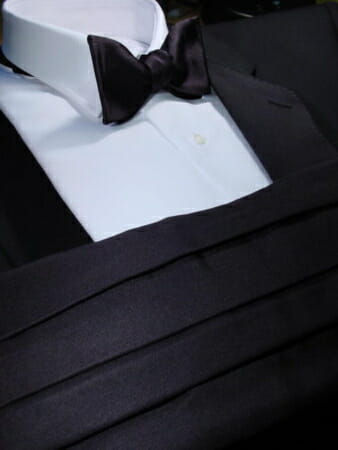
The cummerbund was imported to England in the Victorian Era by British officers serving in India. It was originally a long, brightly colored sash that was wrapped around a tunic. It was known by the Hindustani word “kamarband,“ which means “loin band.” In the 1920s it was adapted into its modern incarnation with pleats replacing the folds of the sash. Although it covered the trouser waist as effectively as the waistcoat, its comparative simplicity designated it as a less formal alternative best suited to a shawl collar jacket and a soft-front shirt.
Materials
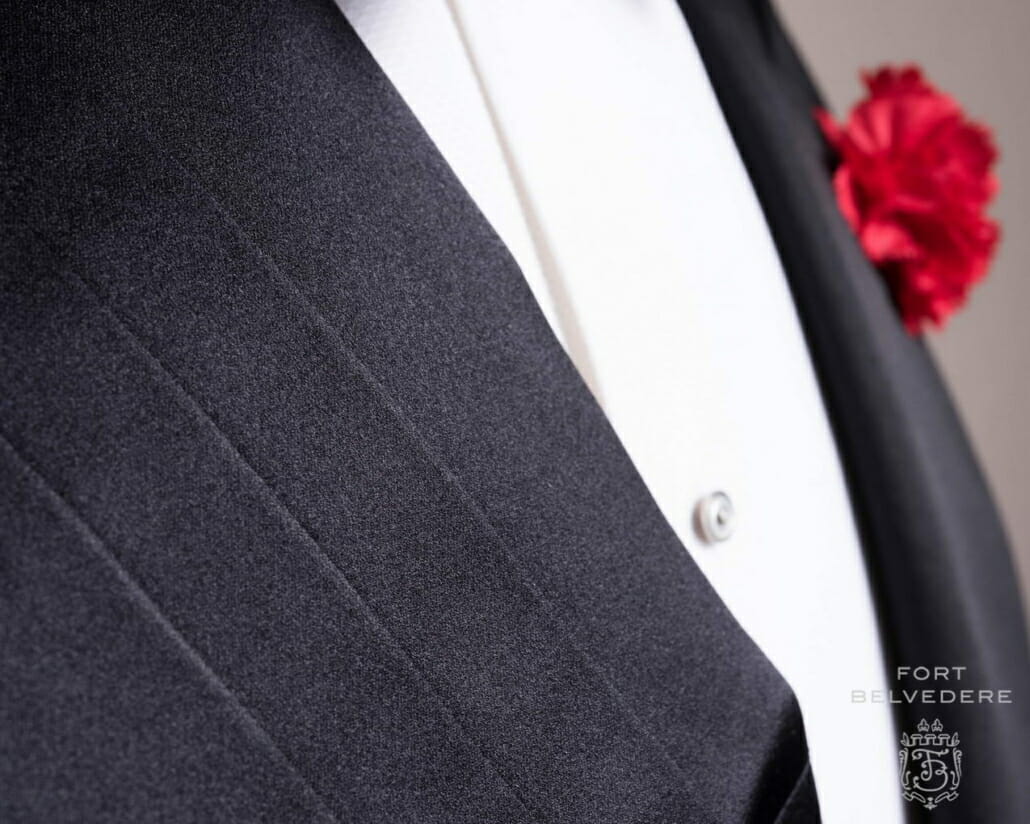
The material is silk in a satin, barathea, moire or grosgrain finish to match the facings of the dinner jacket lapels and is traditionally black. Of course, grosgrain comes in many different ribb widths so sometimes it is difficult to find the right match for your lapels. However, this overlay’s informal nature makes it an ideal mechanism for introducing tasteful color into black tie.
Pleats
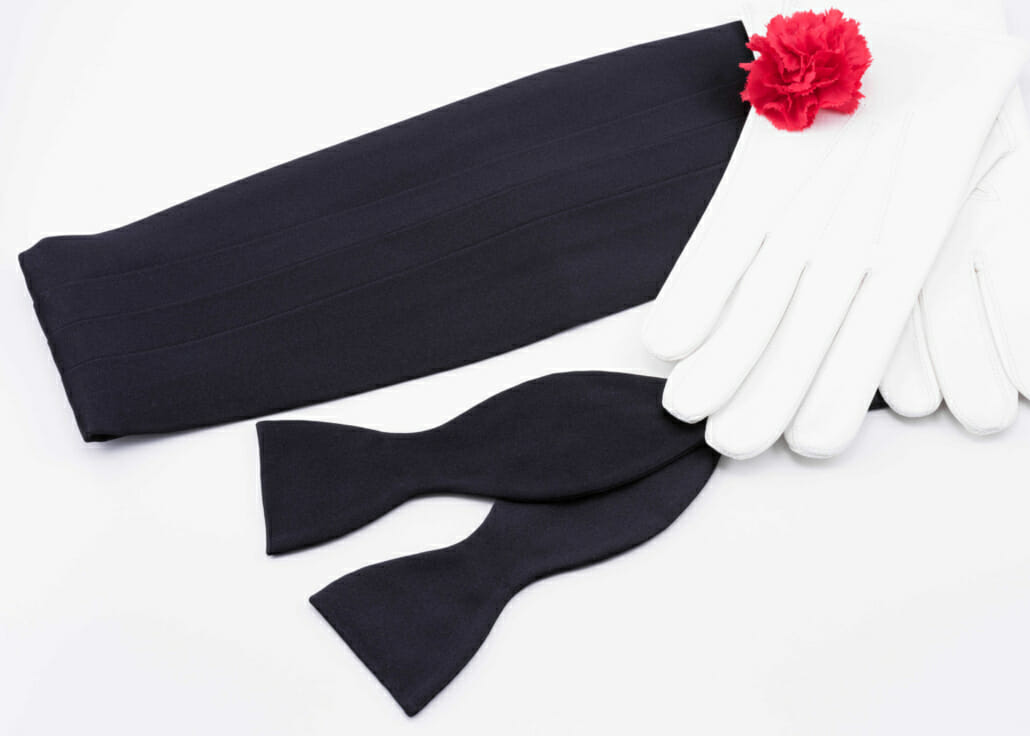
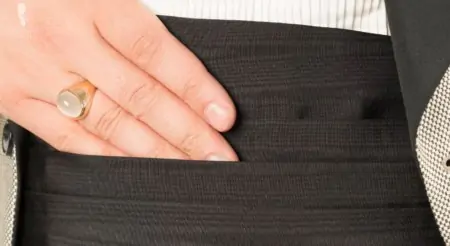
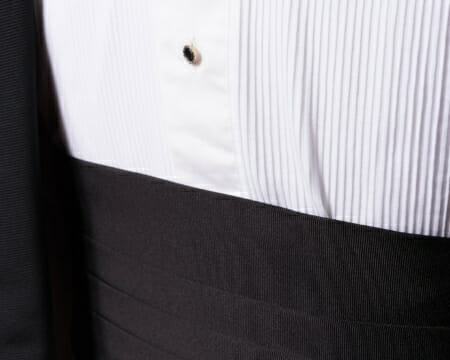
Pleats are worn facing up, the vestige of a time when dress trousers did not have pockets and gentlemen would often carry their opera tickets tucked into their cummerbund. Please note that the oft-repeated claim that the pleat direction allows a cummerbund to catch crumbs is as ludicrous as arguing that the extra fabric in French cuffs is intended for wiping one’s mouth, but this false anecdote may help you remember how to properly orient your cummerbund.
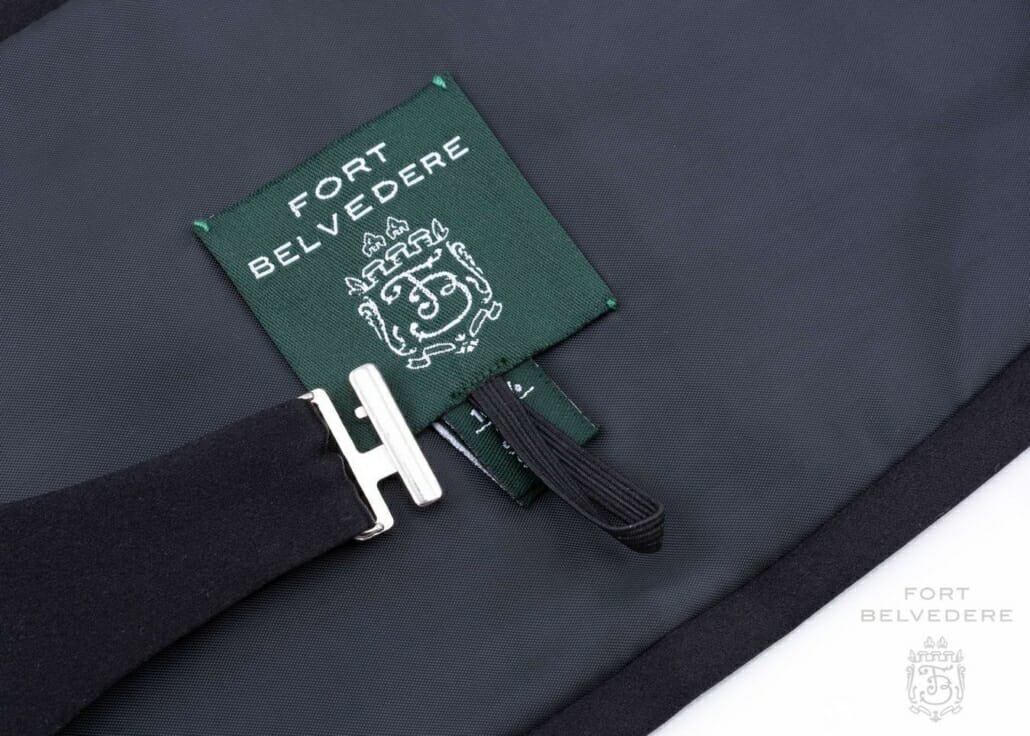
Better quality models are distinguished by a gentle curve along its top line, a small hidden pocket for storing tickets or cash and, like the formal waistcoat, an elastic loop for fastening to the trousers.
You can peruse a carefully curated selection of quality silk cummerbunds with a loop in Silk Satin, Barathea Grosgrain, Wide Rib Grosgrain and Moire at the Fort Belvedere Shop
Explore this chapter: 4 Classic Black Tie – The Gold Standard
- 4.1 Classic Tuxedo – Dinner Suits
- 4.2 Classic Evening Waistcoats, Vests, & Cummerbunds
- 4.3 Classic Tuxedo Shirts
- 4.4 Classic Neckwear – The Black Bow Tie
- 4.5 How To Find The Right Black Bow Tie For Your Tux and Face
- 4.6 Classic Tuxedo Shoes – Patent Leather Oxfords & Pumps
- 4.7 Classic Accessories – Cufflinks, Studs & Co
- 4.8 Classic Black Tie Outerwear
- 4.9 Warm-Weather Black Tie – The (Off) White Dinner Jacket
- 4.10 Classic Tuxedo Alternatives – How To Stand Out in Black Tie
- 4.11 Non-Traditional Dinner Jacket Guide