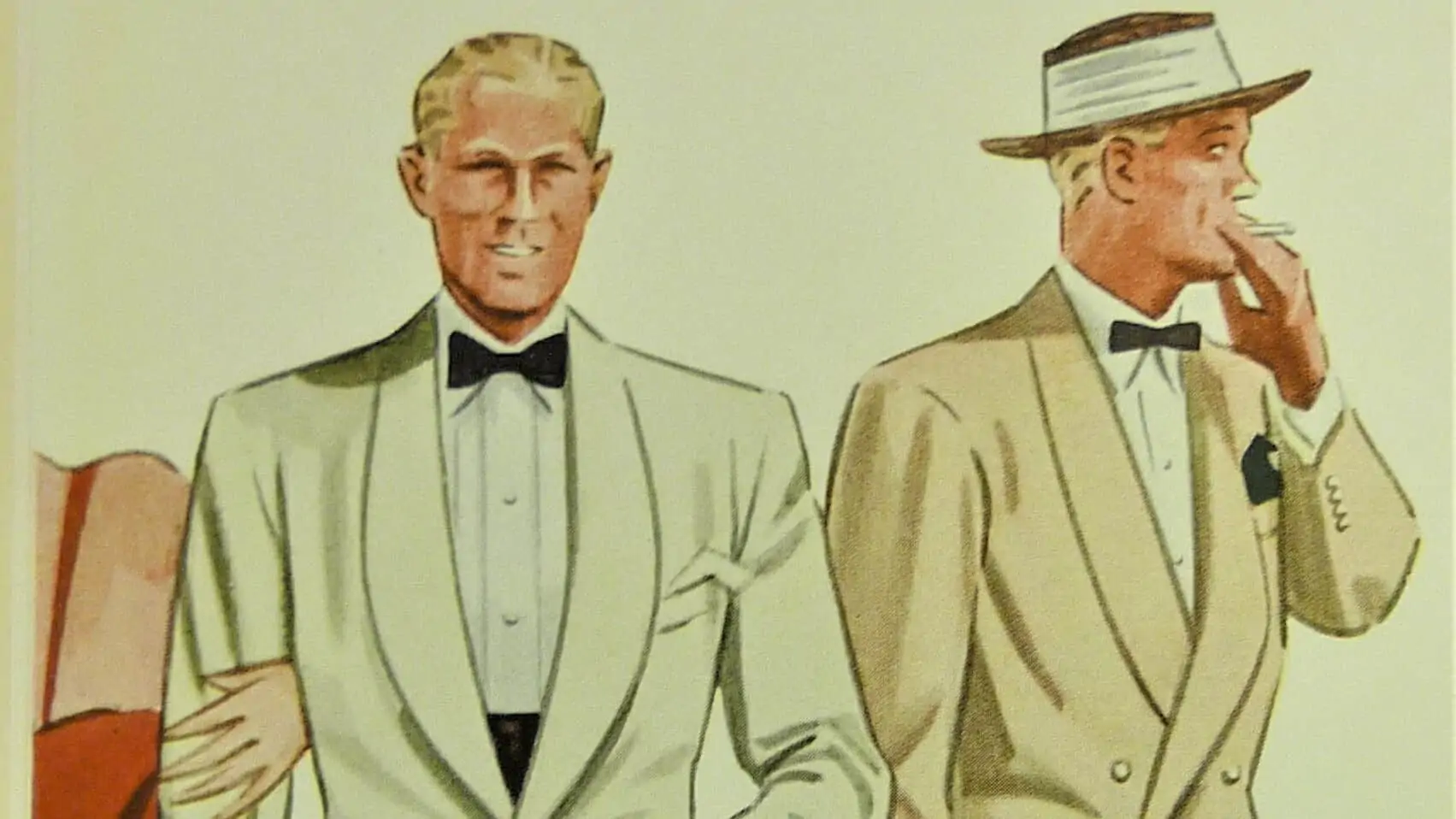
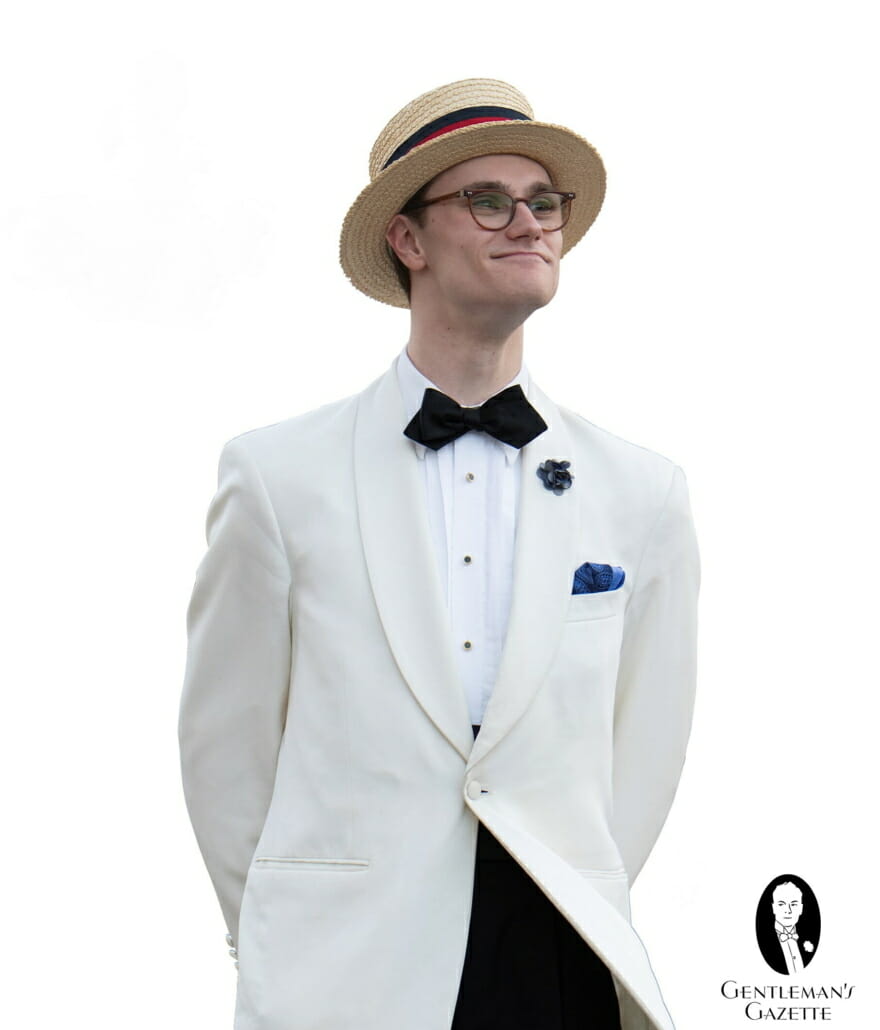
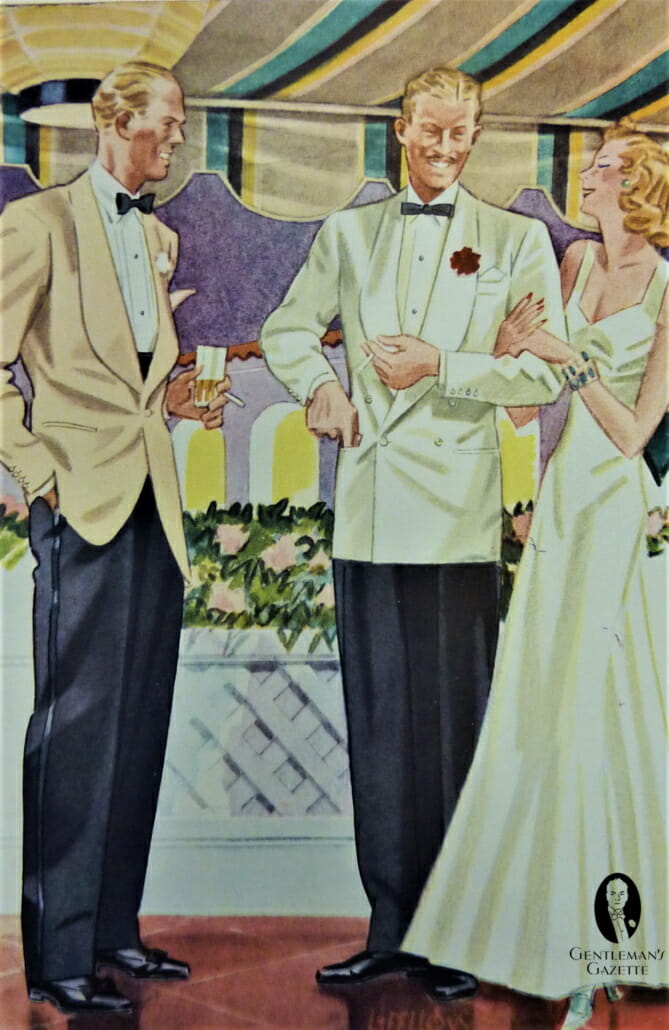
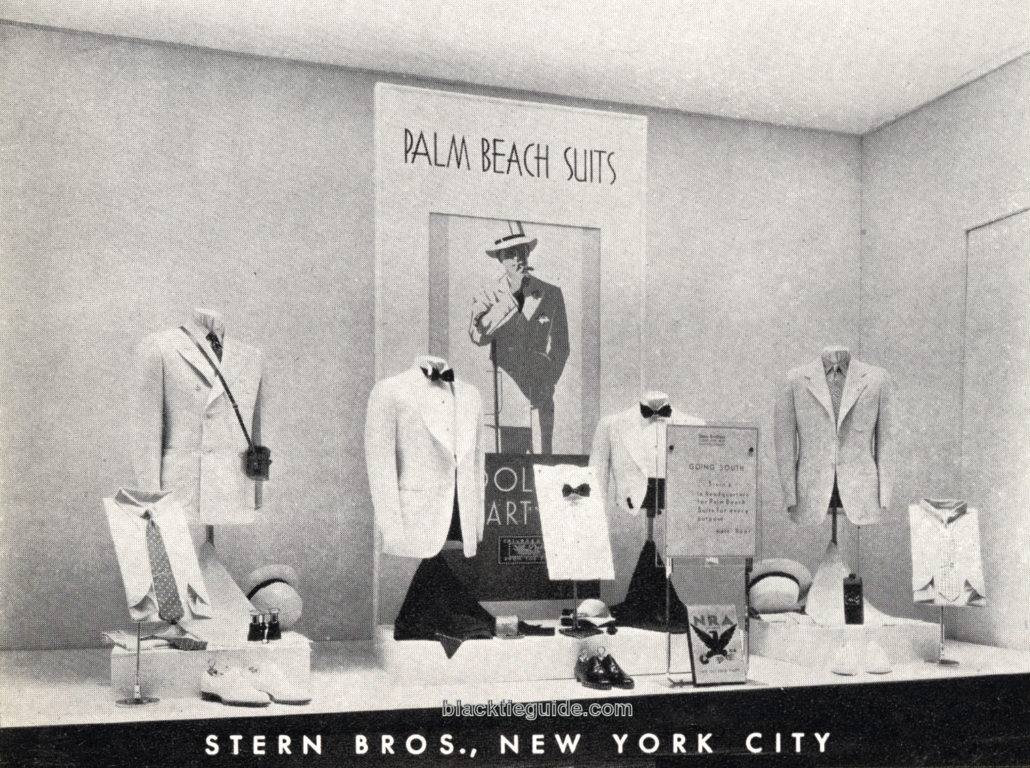
The white jacket variation of black tie began in the early 1930s as a way for well-heeled vacationers to dress formally in the tropical heat without having to endure the heavy and dark-colored fabrics that were standard for evening wear at the time. While dinner suits have become much more lightweight since then, the light-colored jacket has remained a popular warm-weather alternative to its ebony progenitor.
However, without a proper understanding of its form and function, the white dinner jacket easily becomes a flashy gimmick. Subtlety and restraint are the keys to the successful execution of this classic variation.
White Dinner Jacket Etiquette
The white dinner jacket’s origin on cruises and at tropical resorts speaks to its specific role as a less formal alternative to the traditional black tie. It is only appropriate at formal occasions in the tropics year-round and in America during the summer season, typically at open-air social gatherings such as country club dances and yacht club parties.
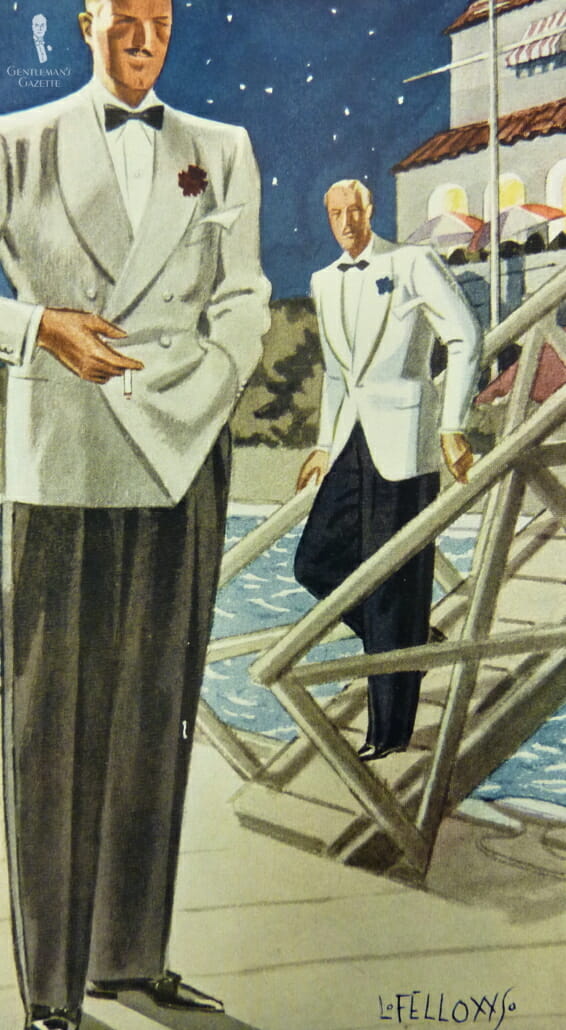
While summer in the southern United States qualifies as being at least subtropical, the same cannot be said for the more temperate northern states and Canada. It is for this reason that numerous experts advise using discretion north of the Mason-Dixon line in order to avoid dressing for effect rather than for the occasion. Indeed, black-tie guests north of the 49th parallel would be wise to heed the example of their British cousins who do not consider the United Kingdom’s temperate climate to be appropriate for white formal wear at any time of the year (with the notable exception of Last Night of the Proms).
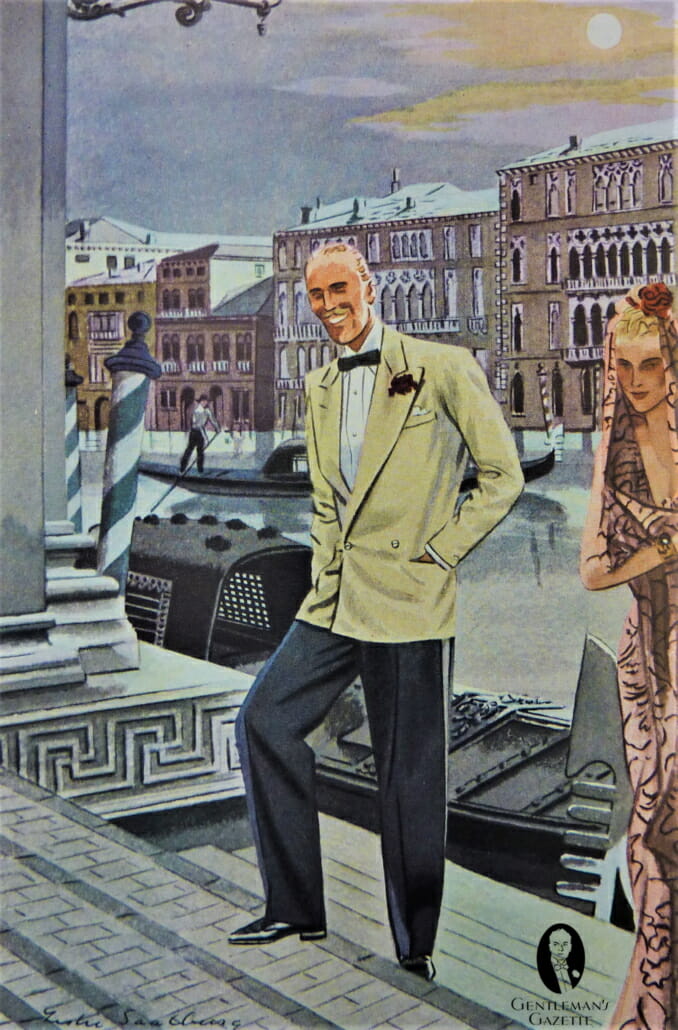
And if a man is particularly serious about formal conventions, a white jacket should never be worn in the city “unless one has a napkin over his arm or a saxophone up to his lips” as Esquire once put it. Don’t forget that the white jacket is an alternative, not a directive. The black jacket is perfectly acceptable in any season and any locale and actually trumps the formality of the white version.
The Warm-Weather Dinner Jacket: Model, Style, and Fabric
Model and Style
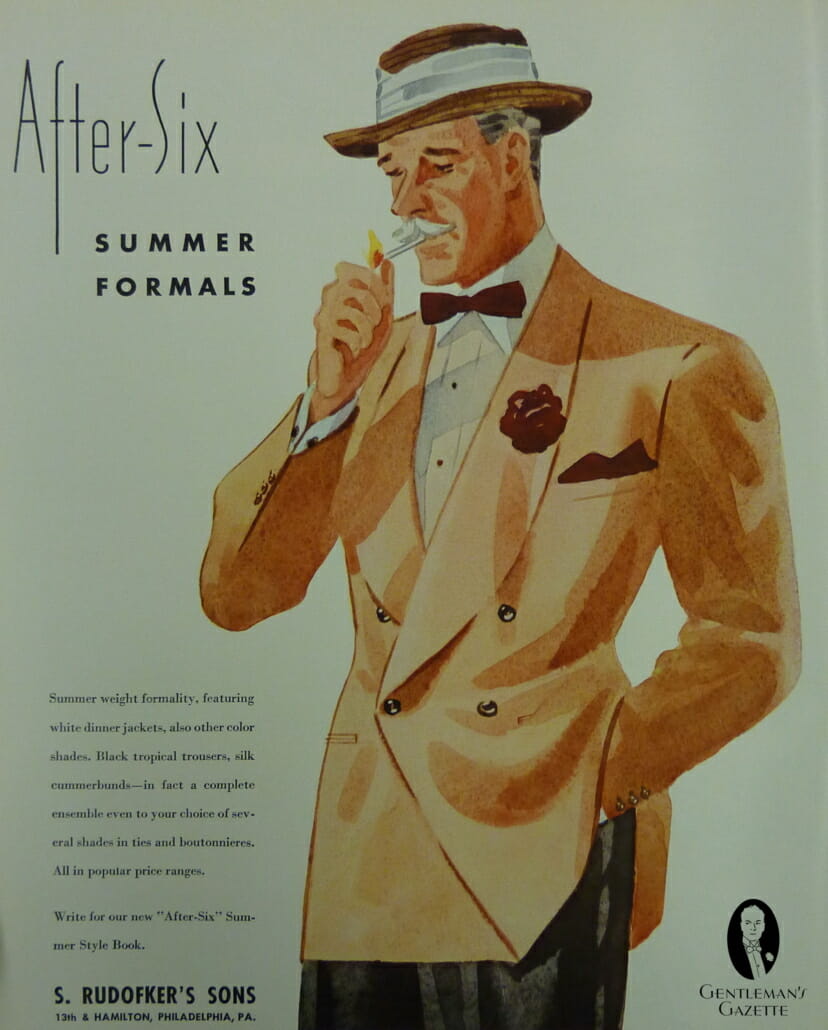
Single- or double-breasted models are both correct and both offer distinct advantages for warm-weather climates. The former allows the jacket to be worn open while the latter permits the wearer to dispense with a waist covering. While peaked lapels are perfectly acceptable, the more casual effect of the shawl collar is ideally suited to this less formal dinner jacket.
Fabric
Although etiquette experts generally refer to these alternative jackets as “white” and rental shops are filled with brightly bleached polyester coats, sartorial authorities deliberately prefer descriptors such as off-white, ivory, cream or winter white instead. There are a number of reasons for this:
- white wool and other natural fabrics take on a yellowish appearance over time
- when worn in abundance pure white is counterintuitive to the understated elegance that formal wear is intended to convey
- bright white is unflattering to fair-skinned faces
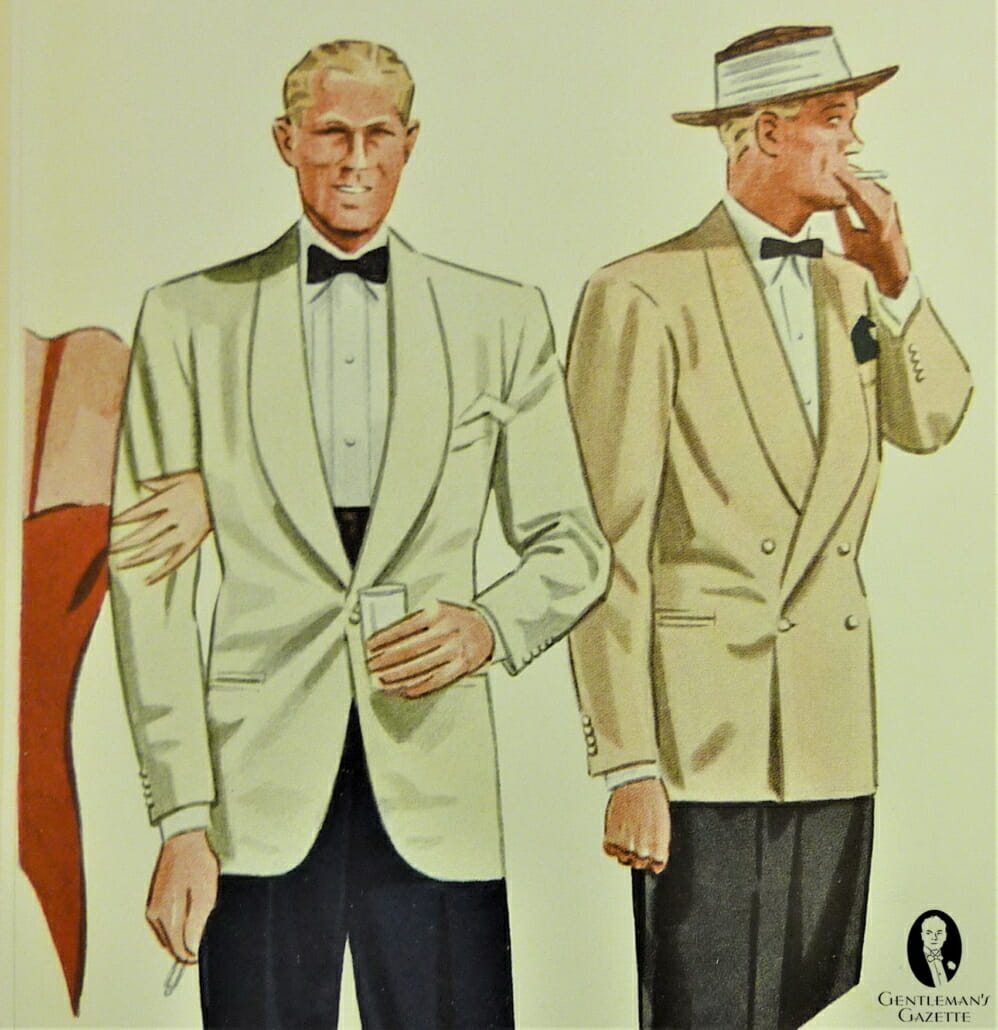
Unlined, lightweight natural fabrics are acceptable alternatives to the standard worsted wool. This includes cotton, gabardine, and linen. Avoid synthetic fabrics as they don’t breathe well (and usually don’t look very good either).
Finishes
Traditionally, the lapels are self-facing meaning that they are covered in the same fabric as the rest of the jacket. The details of the pockets, vents, and buttons are the same as for the classic jacket.
Cool-Wearing Trousers
Warm-weather trousers follow the same rules as classic trousers including their black or midnight-blue coloring and wool material. If choosing to have a pair purpose-tailored for hot climes it stands to reason that they should be constructed of lighter weight worsted than used for a year-round tuxedo.
The Reverse Warm Weather Combination
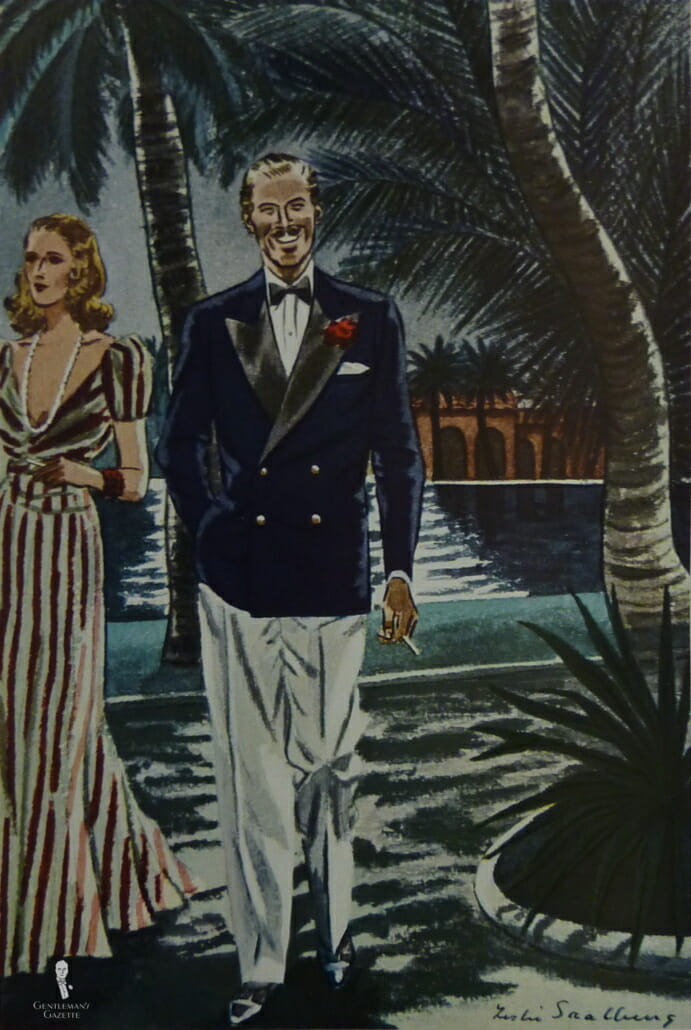
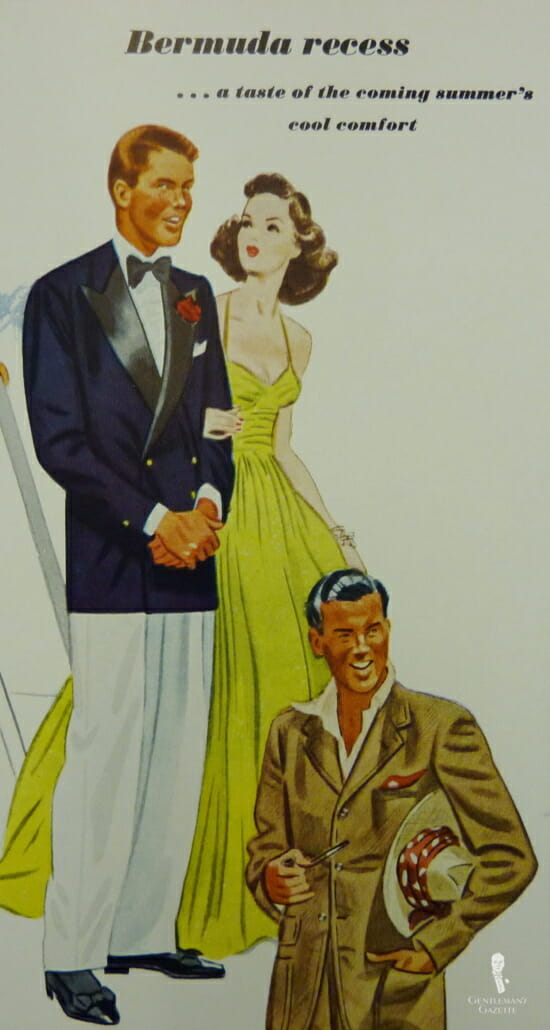
Originating in Monte Carlo a combination of a dark double-breasted dinner jacket and white trousers became popular in 1939 in Palm Beach. The dinner jacket often had gold buttons, thus giving the ensemble a nautical touch. The pumps, boutonniere and silk shirt were likewise somewhat casual elements that made it a perfect seaside evening outfit.
Relaxed Shirts to Beat the Heat
The classic pleated-front shirt with soft turndown collar is traditionally paired with the light colored jacket due to its equally relaxed air.
Cummerbunds To Keep Cool
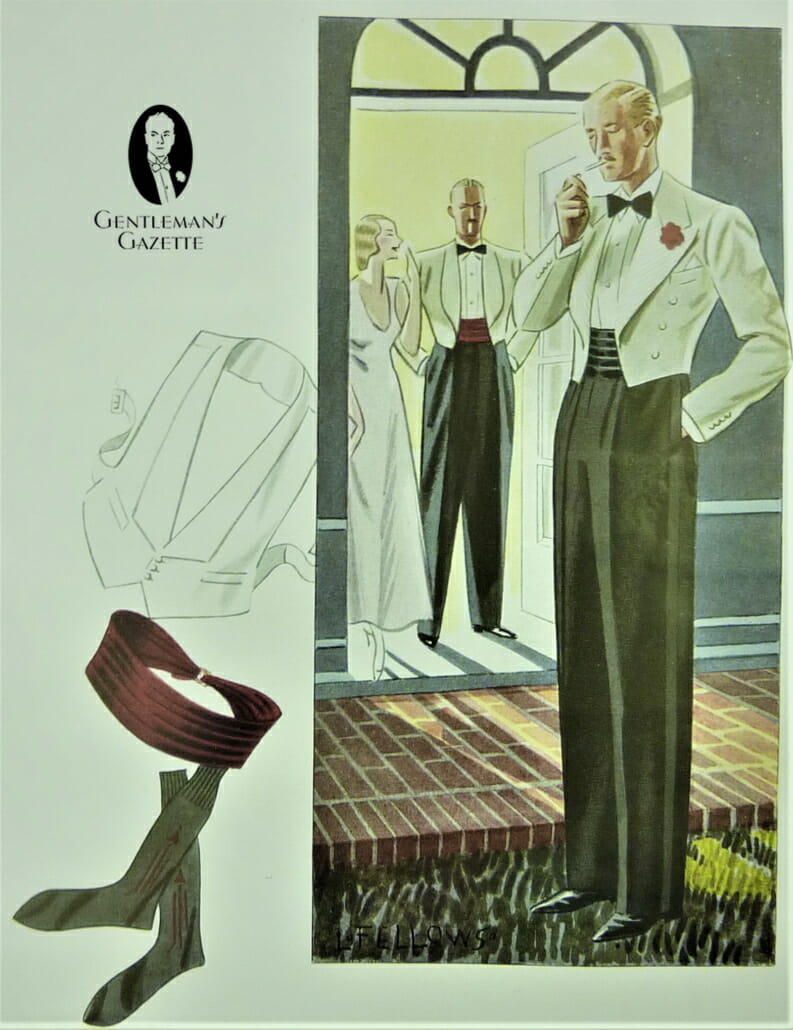
The cummerbund is the overlay of choice for tropical weather as it covers up less of the torso than does the waistcoat, thereby keeping the wearer cooler. It is worn only with single-breasted jackets not just because of classic black-tie etiquette but also because adding an unnecessary layer of clothing under a closed double-breasted model would defeat the purpose of this warm-weather alternative. As with the year-round ensemble, the cummerbund is traditionally made of black silk in a grosgrain or satin finish but can be used as an opportunity to inject a tasteful color or pattern into one’s evening wear.
Conventional Black Tie Neckwear
The same details apply as per the classic bow tie including the matching of the tie’s fabric – but not its color – with the cummerbund.
Formal Air of the Formal Pump
While either type of classic footwear is acceptable, the formal pump’s more stylish appearance is an ideal complement to the swank demeanor of warm-weather black tie.
Light-Colored Accessories
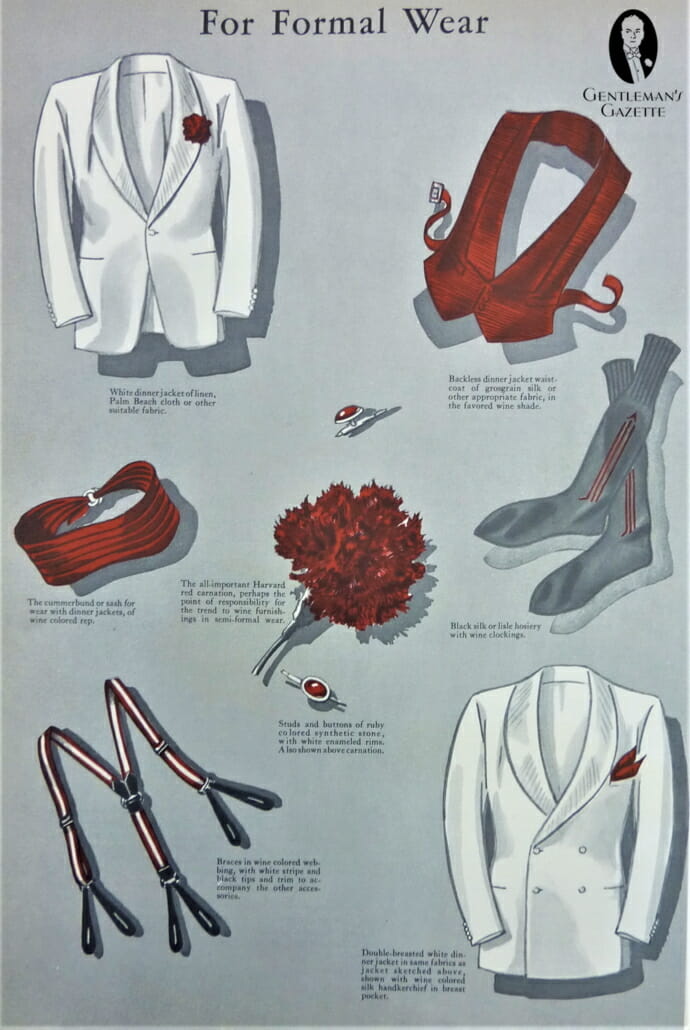
White suspenders are a prudent choice when wearing light-colored jackets constructed of thin materials. A handkerchief of white silk is always natty but this is a perfect chance to infuse the warm-weather ensemble with a dash of tasteful color, particularly if not wearing a boutonniere. In the heyday of the white dinner jacket, stylish men would also wear colorful cufflinks and shirt studs set with precious stones that matched the cummerbund or pocket square – see Classic Alternatives for more details.
Formal Facts
Tuxedo Icon: Humphrey Bogart’s White Dinner Jacket in Casablance
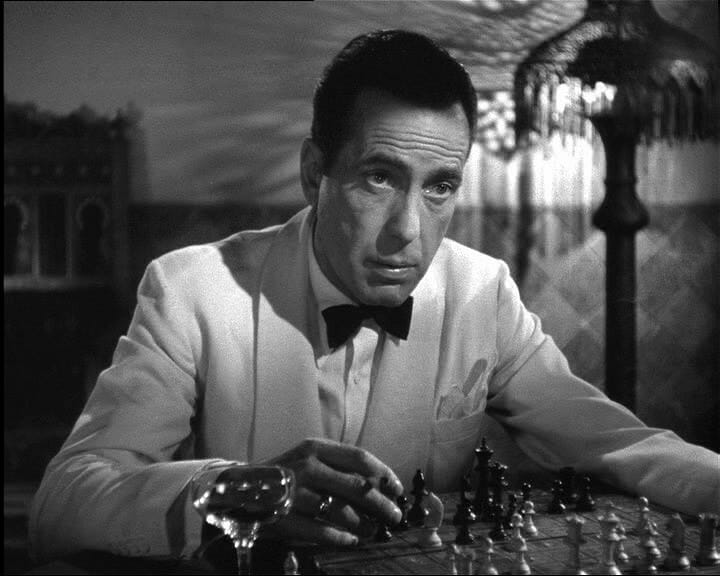
The white dinner jacket attained iconic status when Humphrey Bogart wore a shawl collar white dinner jacket in 1942’s Casablanca.
What’s in a Name?: “Tropics”

The tropics are the part of the earth that lays between the Tropic of Cancer (23.5° north of the equator) and the Tropic of Capricorn (23.5° south). The subtropics are defined by climate but are generally bordered by the tropics and the 35° north and south latitudes. If you are in those areas, a white dinner jacket is definitely a good investment, but even outside of those areas, it can get quite hot and humid.
Formal Facts: Summer Season is White Dinner Jacket Season
Most American style and etiquette sources define the sartorial summer season as Memorial Day (last Monday in May) to Labor Day (first Monday in September). In Canada, the equivalent period is Victoria Day to Labour Day. Some sources claim that the jacket can be donned as early as April which may reflect a regional discrepancy since the southern states enjoy a longer hot-weather season than the north.
Considering the global climate change, the opportunities to wear an (off) white dinner jackets are increasing…
Explore this chapter: 4 Classic Black Tie – The Gold Standard
- 4.1 Classic Tuxedo – Dinner Suits
- 4.2 Classic Evening Waistcoats, Vests, & Cummerbunds
- 4.3 Classic Tuxedo Shirts
- 4.4 Classic Neckwear – The Black Bow Tie
- 4.5 How To Find The Right Black Bow Tie For Your Tux and Face
- 4.6 Classic Tuxedo Shoes – Patent Leather Oxfords & Pumps
- 4.7 Classic Accessories – Cufflinks, Studs & Co
- 4.8 Classic Black Tie Outerwear
- 4.9 Warm-Weather Black Tie – The (Off) White Dinner Jacket
- 4.10 Classic Tuxedo Alternatives – How To Stand Out in Black Tie
- 4.11 Non-Traditional Dinner Jacket Guide