The appearance of the tuxedo shirt has evolved through the ages, and the same applies for contemporary tuxedo shirts, but certain basic rules still apply.
Tuxedo Shirt Rules:
- White fabric
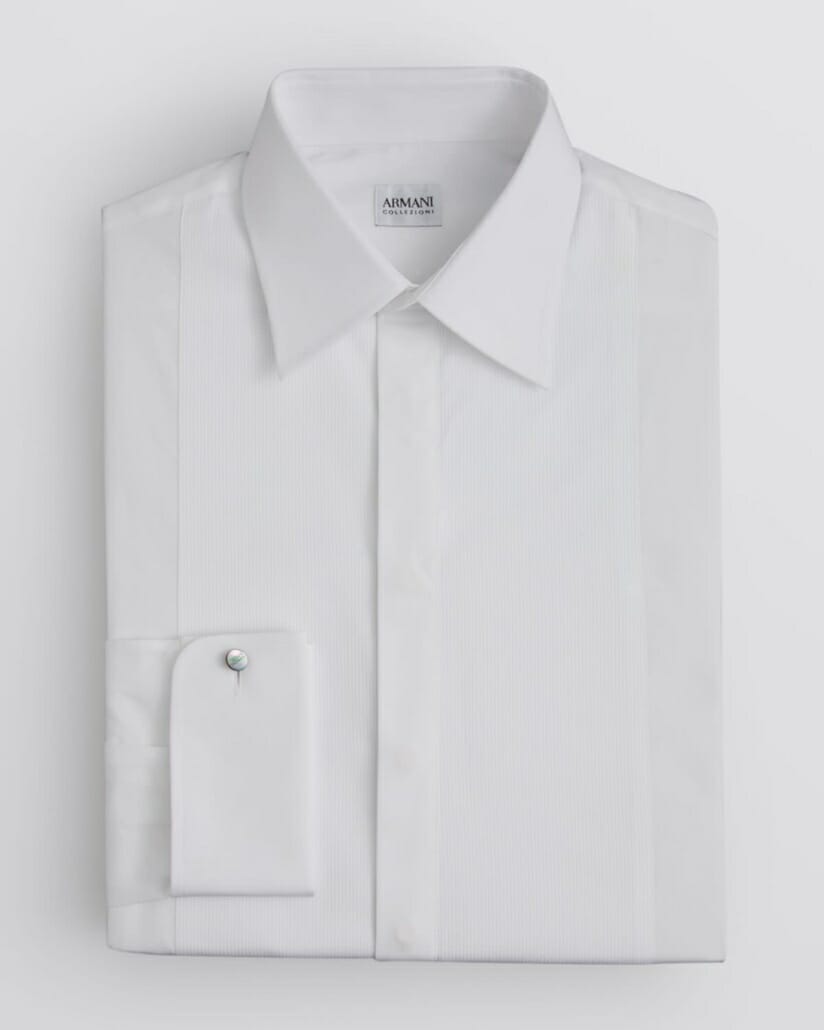
- Turndown collar
- Fronts that are either pleated or piqué, also known as marcella
- Traditionally has eyelets for studs; fly-front is acceptable in a contemporary context
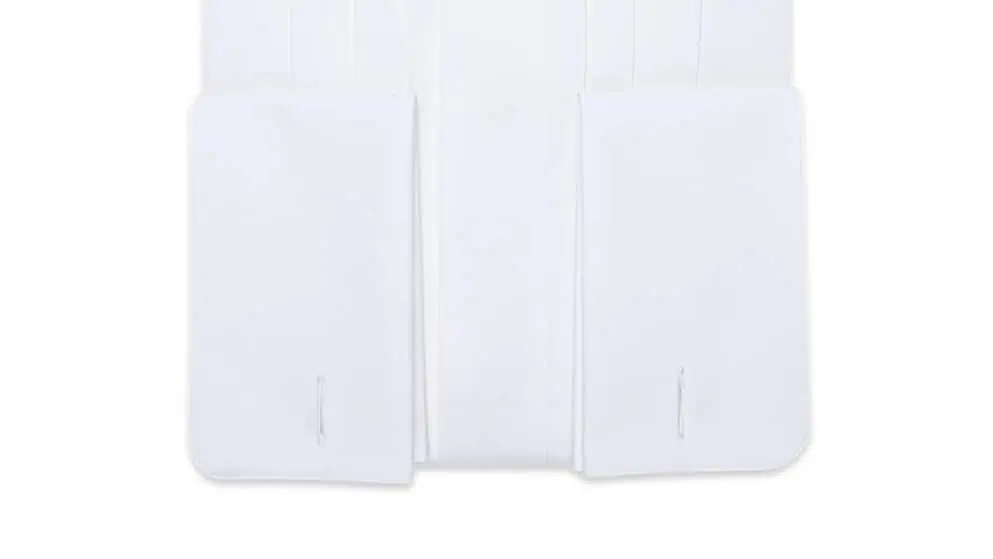
- French cuffs (double cuffs)
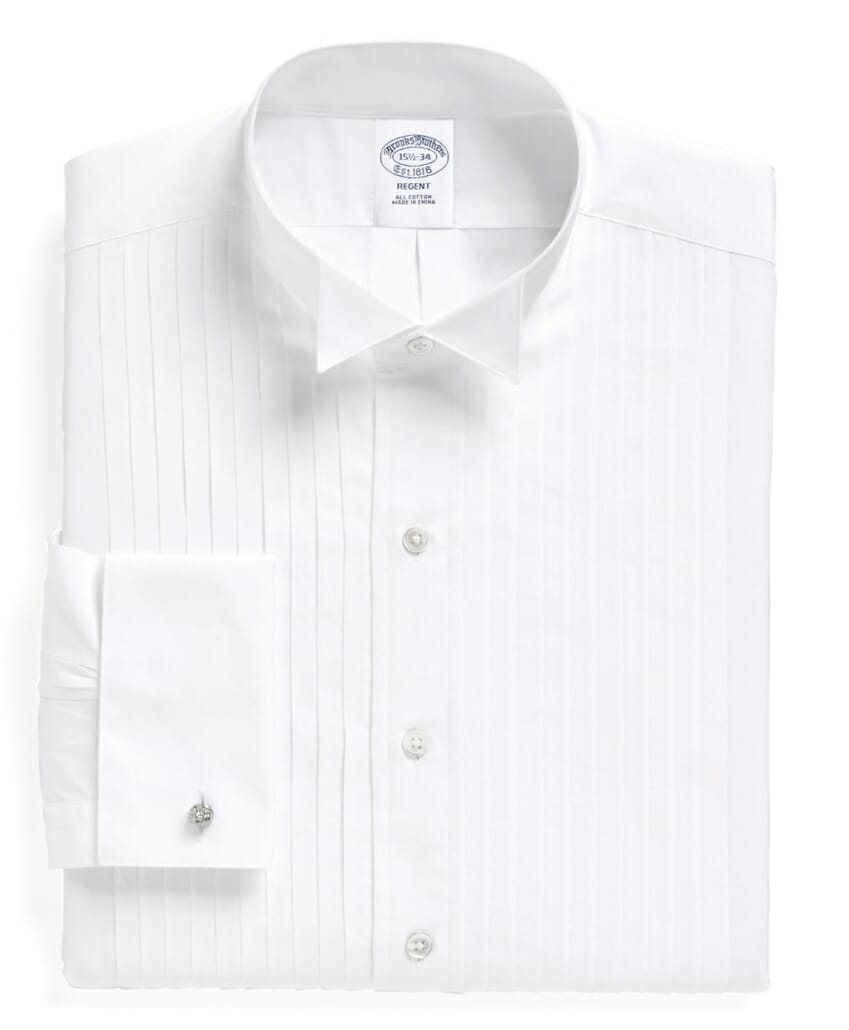
Attached Wing-Collar Shirt: The Classic Original
Changing the Collar
When the dinner jacket was created as an informal substitute for the evening tailcoat it was worn with the tailcoat’s standard accessories, including the stiff-front detachable wing collar shirt. Then in the 1930s it was given its very own “semi-formal” shirt with a soft, pleated bosom, French cuffs and an attached turndown collar. This became the new standard for black tie and remained that way until the 1970s when manufacturers introduced a hybrid that altered the standard shirt’s soft, attached collar from turndown to wing style.
The intention may have to been to add an elegant flair but by the end of the decade these attached collars had become shrunken and flaccid. Oddly, American men loved them. By the mid-1980s this style had become the de facto tuxedo shirt in the U.S. and remained that way until the rise of the four-in-hand tie in the ‘00s revived the turndown model.
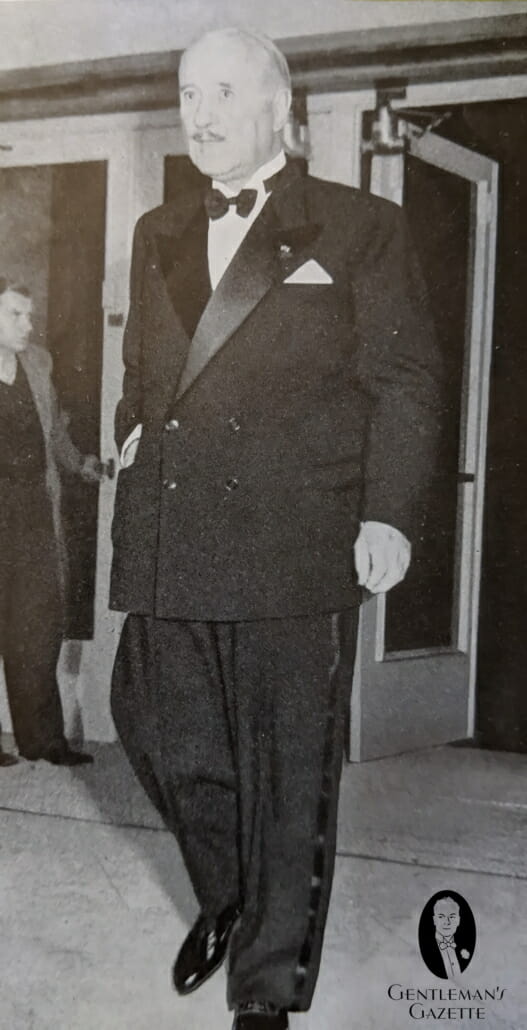
British style authorities, on the other hand, despise the modern incarnation and expect their wing collars to be impressively tall and erect, as it were.
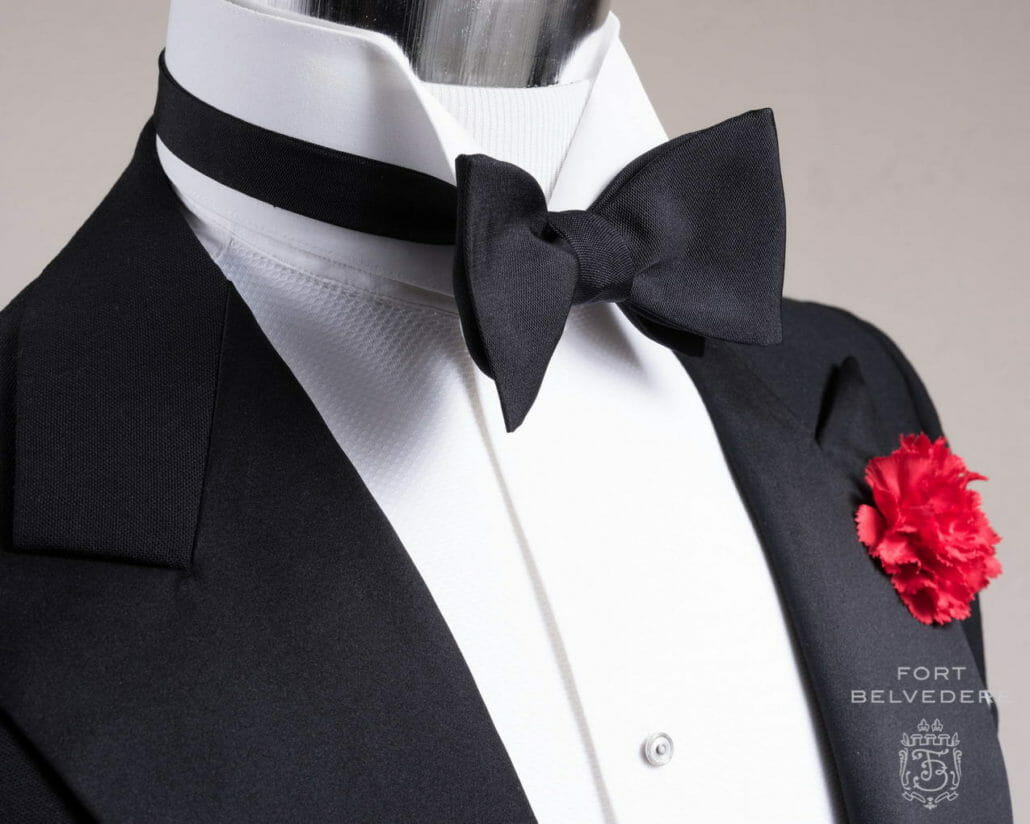
From an aesthetic point of view, it is not the detachable collar’s physical construction that makes it formal but its appearance. Therefore, a modern version must imitate the original’s prime characteristics: it must be tall enough to properly cover the neck (almost all the way up to the jaw line), it must be stiff enough to stand straight up throughout the evening and its tabs must be sizable enough to not be engulfed by the bow tie. The latter trait is not an issue for the modern style of swept wing collar that folds back almost the entire front of the collar to create two large oblong triangles.
Pleats
Although some consider the pleated front to be incompatible with a wing collar, there are historical precedents for this combination dating back to Victorian times. A piqué bosom is also traditional and has the added benefit of imparting the shirt with a bit of full-dress formality. Either shirt front can be unstarched or lightly starched, known in sartorial parlance as “soft” or “semi-stiff” respectively (honest).
The Importance of the Bow Tie Loop
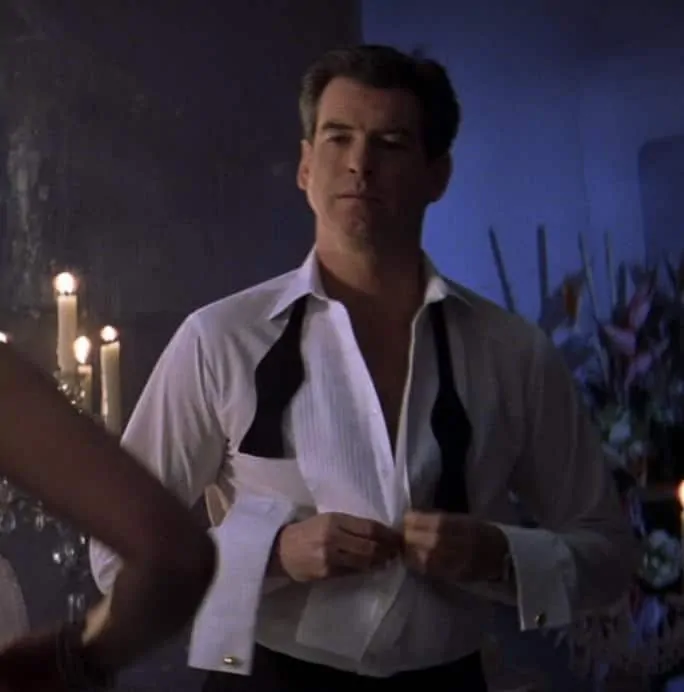
The bow tie loop featured on the back of premium formal shirts is particularly important when wearing black tie. While its omission might have a relatively minor impact on the aesthetics of full dress due to the white-on-white color scheme of the bow tie and shirt collar, the sight of a contrasting black band riding high up the neck lends a distinctly disheveled look to a tuxedo ensemble. A contemporary variation on the bow tie loop is a full-height hem sewn onto the rear of the collar that conceals the majority of the tie’s band.
Turndown-Collar Shirt: The Popular Alternative
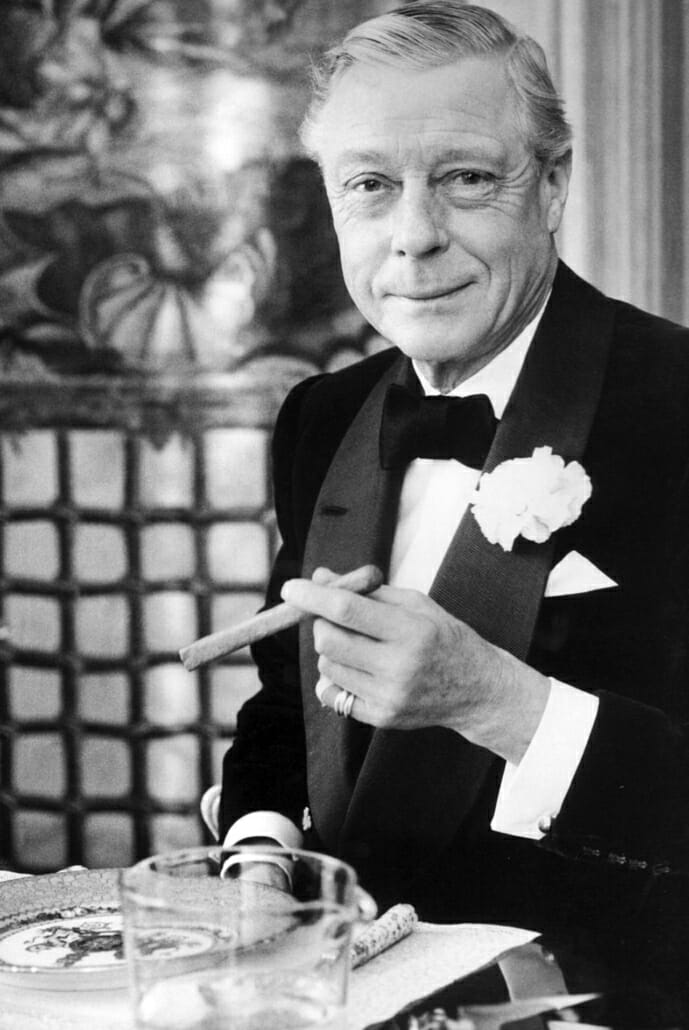
In the 1920s most black tie oufits had a stiff collar shirt. The then Price of Wales, later King Edward VII and the Duke of Windsor had a preference for soft turndown collars that were attached to the shirt, and he led the way for those shirts to be considered proper black tie shirts today.
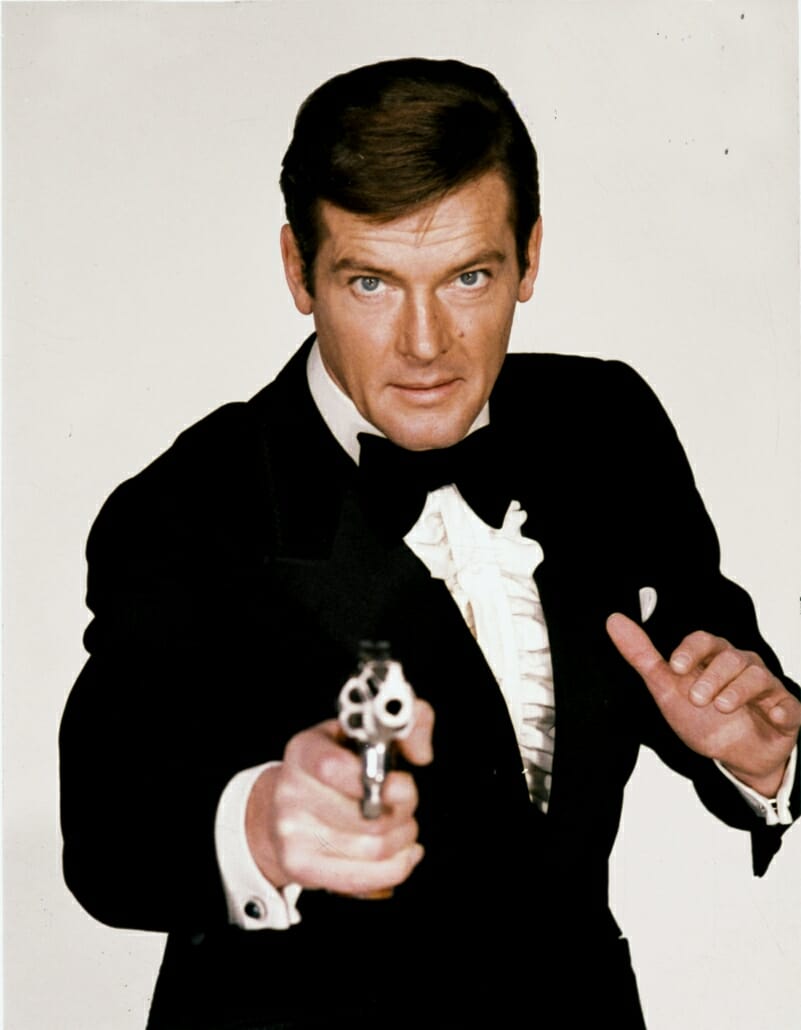
Ever since the 1950s designers have been experimenting with various ways of decorating the classic black-tie shirt bosom to provide alternatives to pleats and piqué. The most (in)famous of these innovations was the ruffled front that was so popular at weddings in the 1960s and 1970s but recent efforts have been far more tasteful.
Unpleated Shirt Fronts
Tucks and plissé are understated variations of the pleat and therefore true to the intended spirit of formal attire. Plain fronts, on the other hand, have to be accessorized with care.
Pairing them with notched-lapel jackets and/or four-in-hand ties will only serve to downgrade a man’s evening wear to the level of common business attire. For the same reason, one should also avoid the recent button-front vogue or at the very least ensure that the buttons are constructed of pearl and surrounded by an elegantly decorated bosom.

Qualified Alternative: Fly Fronts for a Sleek Look
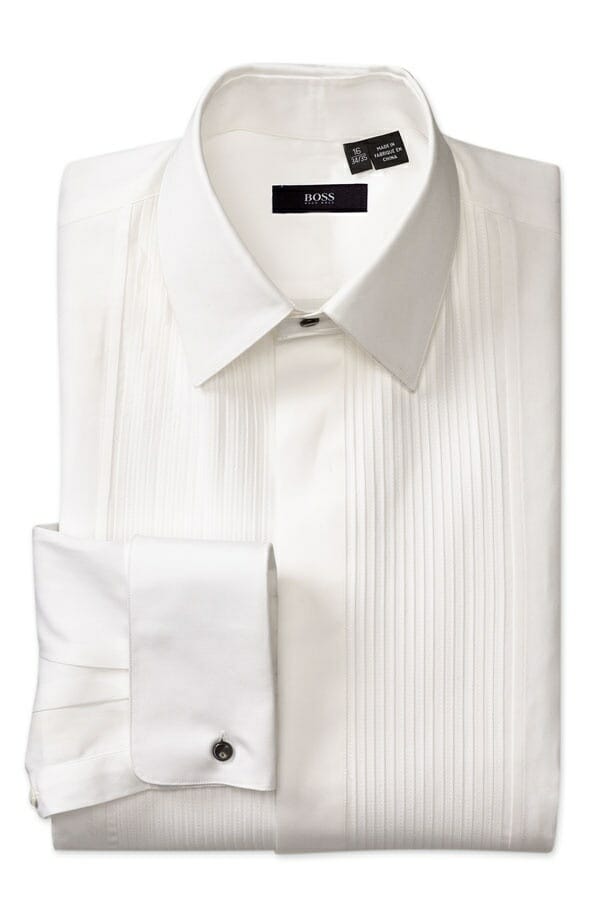
Since the 1980s shirts of both collar types have been appearing increasingly often with fly fronts, which conceal the placket. While this style eliminates the use of traditional studs, the fact that the buttons are hidden perfectly complements formal wear’s refined minimalism. The bosom of these shirts is decorated in any of the styles used by models with studs.
Explore this chapter: 5 Contemporary Black Tie Tuxedo – Amending Perfection?
- 5.1 Style Over Fashion – Lessons From The Past
- 5.2 Contemporary Tuxedo
- 5.3 Black-Tie Waist: Contemporary Evening Vests
- 5.4 Contemporary Black-Tie Tuxedo Shirts
- 5.5 Contemporary Neckwear – The Black Necktie et al
- 5.6 Contemporary Tuxedo Shoes, Black Tie Accessories, and Outerwear
- 5.7 Contemporary Alternatives and Personalization