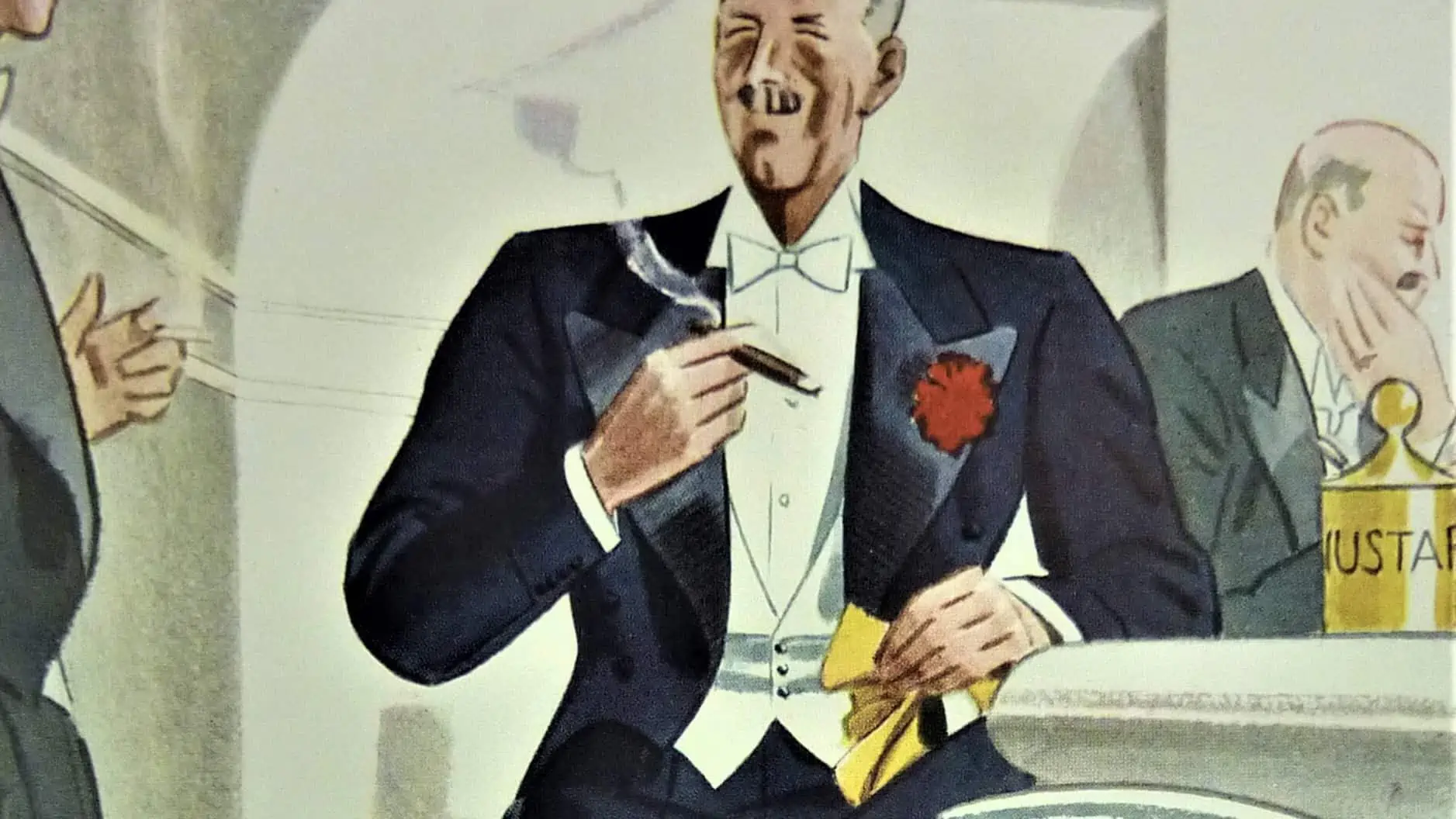
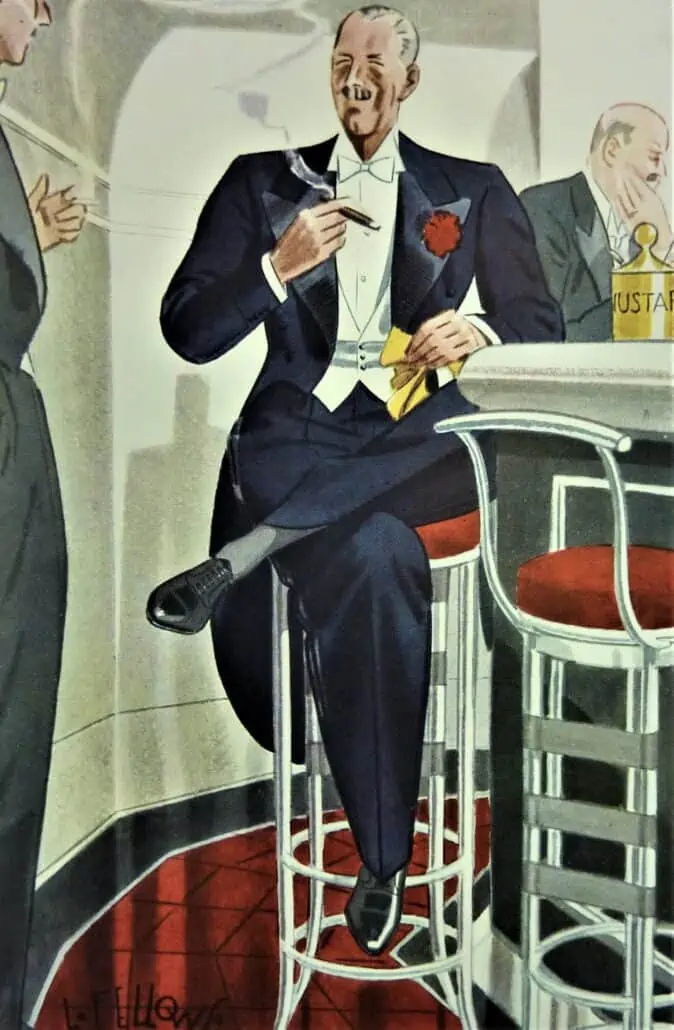
Black tie’s numerous variations reflect its origin as informal dining attire and its later role as semi-formal cocktail attire. White tie, on the other hand, originated as the most formal type of civilian apparel and has retained that exclusivity for over two centuries. When it transitioned from formal evening dress to “special” evening dress after the Second World War, its definition became fixed. Fashion designers may attempt to alter the tailcoat’s features from time to time, but style and etiquette experts recognize that the fundamentals of full dress (as white tie is also known) are not open to interpretation.
The following definition is drawn from fifty authoritative American and British resources published over the past seventy years.
Classic White Tie Full Ensemble
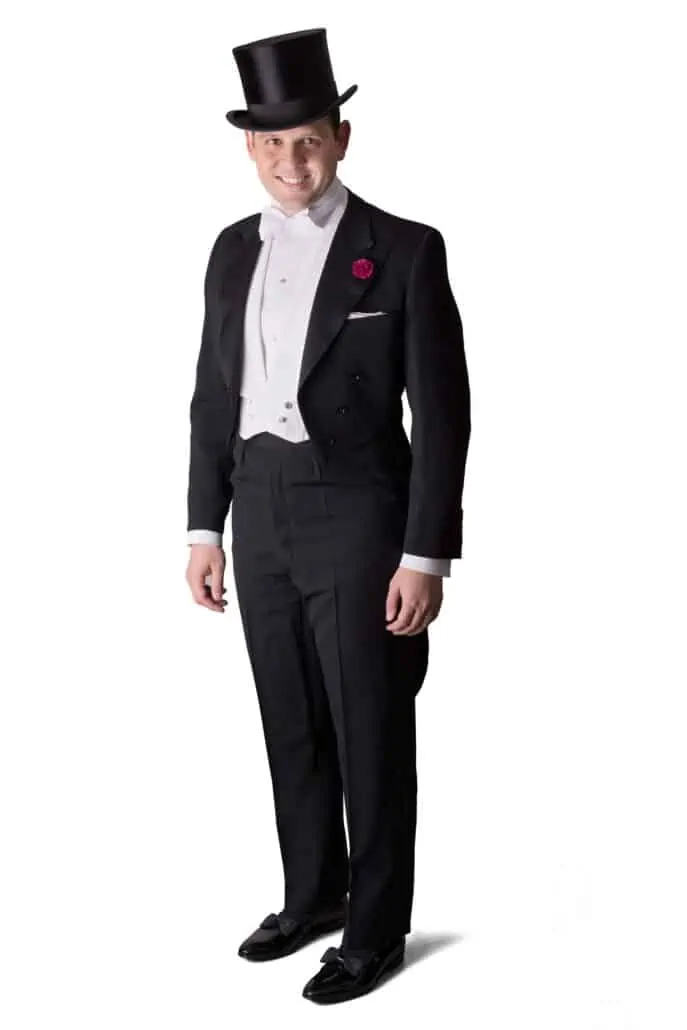
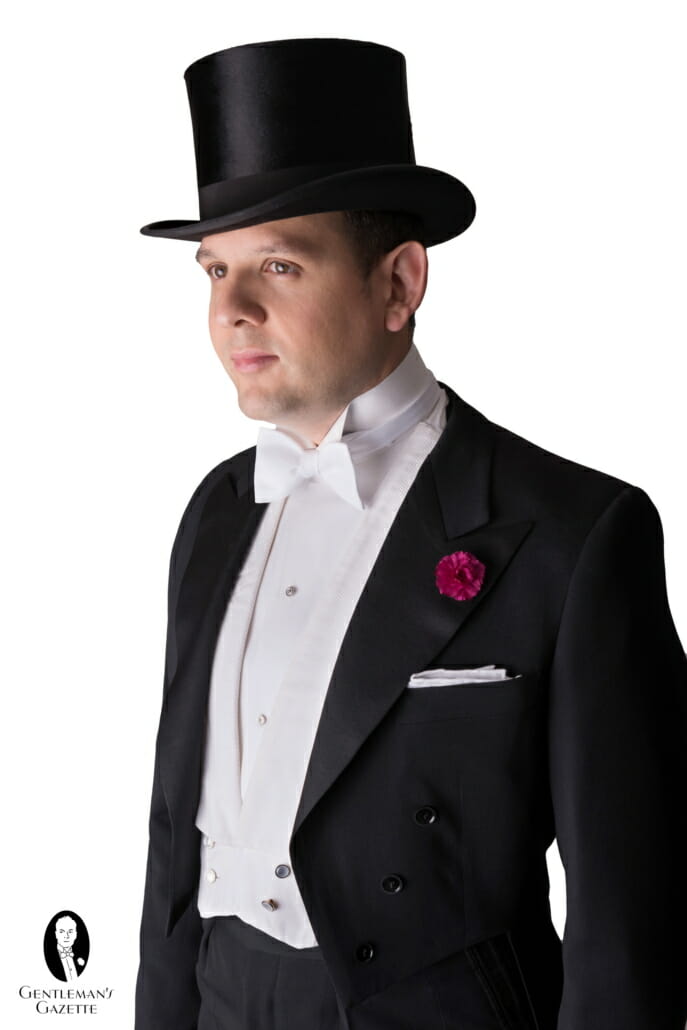
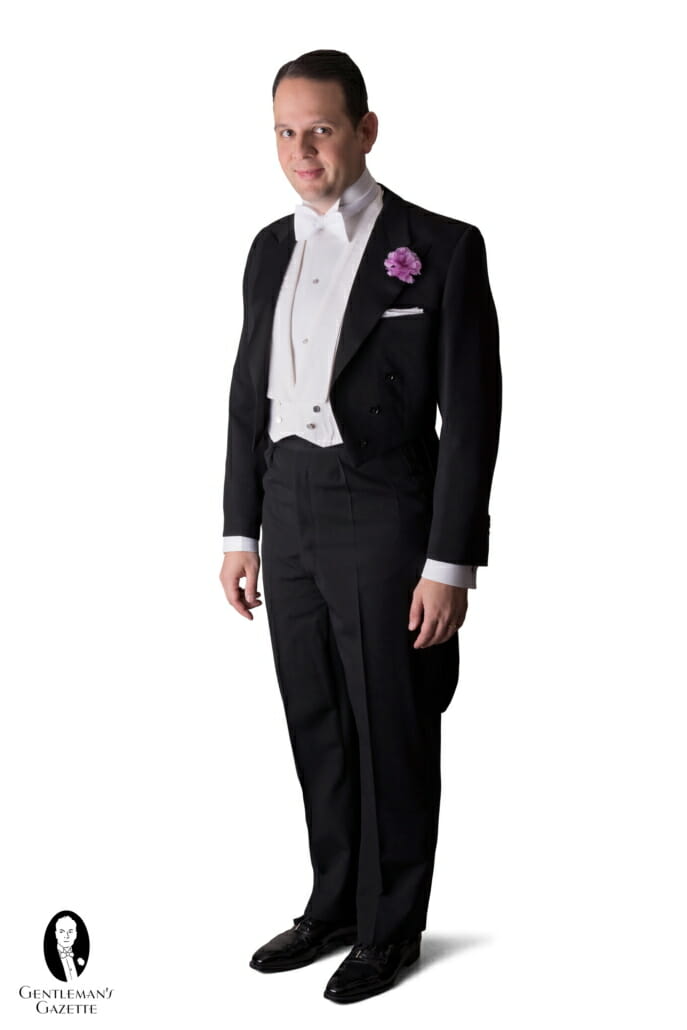
Coat (Evening Tailcoat)
- Black wool is the norm ; midnight blue is equally correct
- Cut in a double-breasted pattern but not intended to close
- Peaked lapels faced in satin or grosgrain, the latter considered more refined
- Front of the coat ends slightly below the waist, coattails end just behind the knees
Trousers
- Color and material to match the coat
- Two narrow stripes or one wide stripe of satin, grosgrain or braid along outside seams
- Trousers cut for suspenders (braces in the UK); high enough rise for the waistband to be covered by the short waistcoat
- No cuffs (turnups in the UK)
Waistcoat
- White piqué (Marcella in the UK)
- low-cut, single-breasted or double-breasted, usually backless
- Length does NOT extend below the front of tailcoat
- Oblong, self-faced revers (lapels)
Shirt
- White fabric with a stiff bosom of plain linen, plain cotton or piqué (Marcella in the UK)
- High, stiff, detachable wing collar
- Stiff single link cuffs (not French cuffs) fastened by links
- Eyelets for one or two shirt studs
Bow Tie
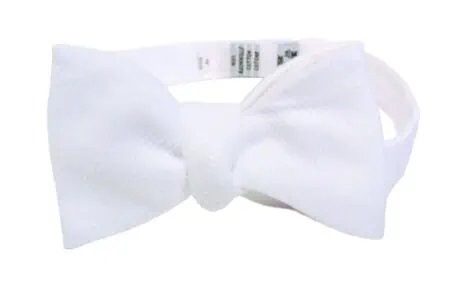
- Bow tie of white piqué (Marcella in the UK), preferably to match waistcoat
- Butterfly or batwing shapes are most common
- Self-tied, not pre-tied
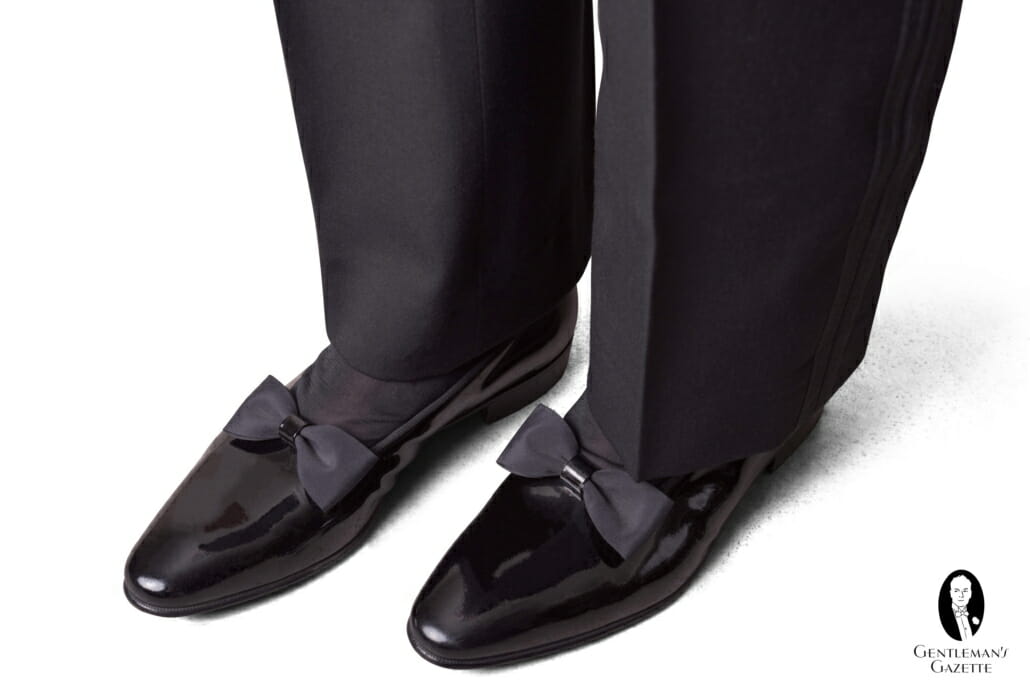
Footwear
- Black pumps (most traditional) or plain-toed oxfords (acceptable today) of either:
· patent leather (most traditional)
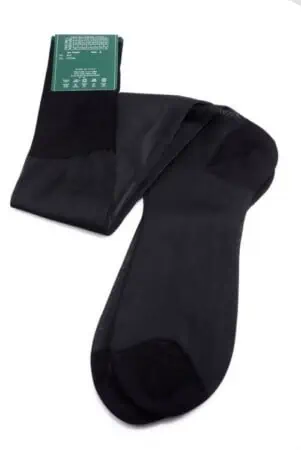
· highly polished calf leather - black silk socks/hose, over-the-calf length
Accessories
- Mother-of-pearl shirt studs (or buttons), waistcoat studs and cufflinks
- Button-on suspenders (braces in the UK) and optional sock garters of white silk
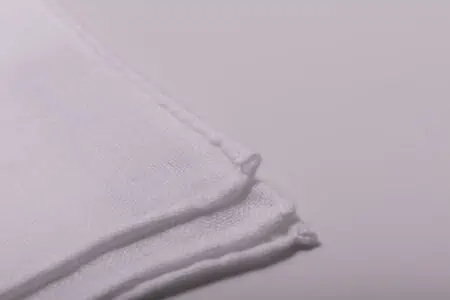
- Optional white linen pocket square
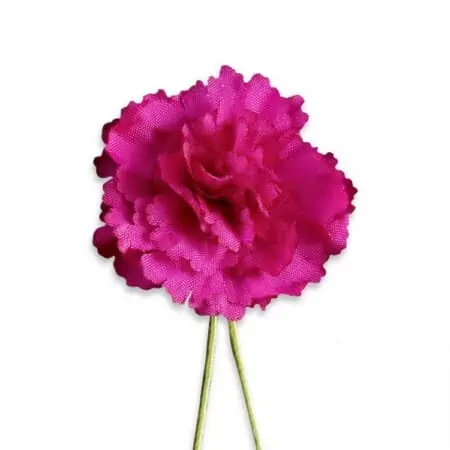
- Optional boutonniere; white carnation is most traditional
- Optional pocket watch with gold or platinum key chain is most traditional; evening wristwatch is also acceptable today
- Optional white kidskin dress gloves for indoor wear
Outerwear
- Black or midnight blue single- or double-breasted overcoat; Chesterfield is especially appropriate
- Optional white silk scarf with tassels
- White buckskin gloves
- Optional hat; either black silk top hat or collapsible opera hat
Men fortunate enough to receive an invitation to a white-tie affair should use this definition only as a starting point. Considering that full dress is required solely for the most illustrious of social events and that its garments are not nearly as forgiving a dinner suit, it is important to be familiar with the component details in the White Tie section before purchasing or renting the required attire.
How Not To Wear White Tie
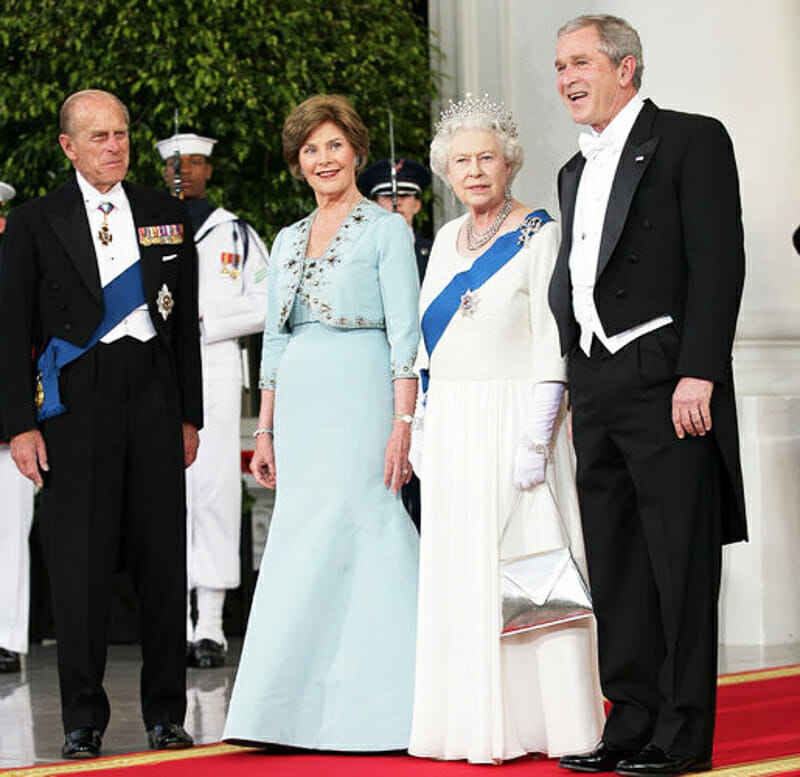
How not to wear white tie, courtesy of George W. Bush:
1. The waistcoat should never extend below the bottom of the tailcoat.
2. The shirt collar must be a wing collar.
3. The trousers are to be worn at the waist, not slung down around the hips.
4. The shirt sleeve should how at least 3/4″ of cuff, more on that in our Proper Sleeve Length Guide (To be fair, Prince Philip is equally guilty of this particular gaffe.)
Explore this chapter: 2 Black Tie & Tuxedo Etiquette