Etiquette Through the Ages
Up until World War II, fashion magazines and etiquette books published very specific descriptions of what type of attire was correct in what circumstance. On their own, these sources provide interesting insight but they should be viewed in a larger context for an accurate picture of historical trends.
- Etiquette Through the Ages
- Overview of the Edwardian Era (1900s, ‘10s): “Informal Evening Wear”
- Overview of the Jazz Age (1920s): “Informal Evening Wear”
- Overview of the Depression Era (1930s): “Semi-Formal Evening Wear”
- Overview of the War & Post-War Years (’40s, early ’50s): “Semi-Formal Evening Wear”
- Formal Facts
Firstly, since each author is influenced by his or her bias, consciously or otherwise, it is best to examine an era’s sources as a group to discern common themes. The following charts are the results of just such a review.
Secondly, keep in mind that these sources were intended to inform readers of what was proper, not necessarily what was popular. For a more accurate picture of what black-tie dressers were actually wearing during a given time period, see the History section which ascertains these trends from sources such as fashion pictorials, clothing ads, and etiquette authorities’ specific admonishments.
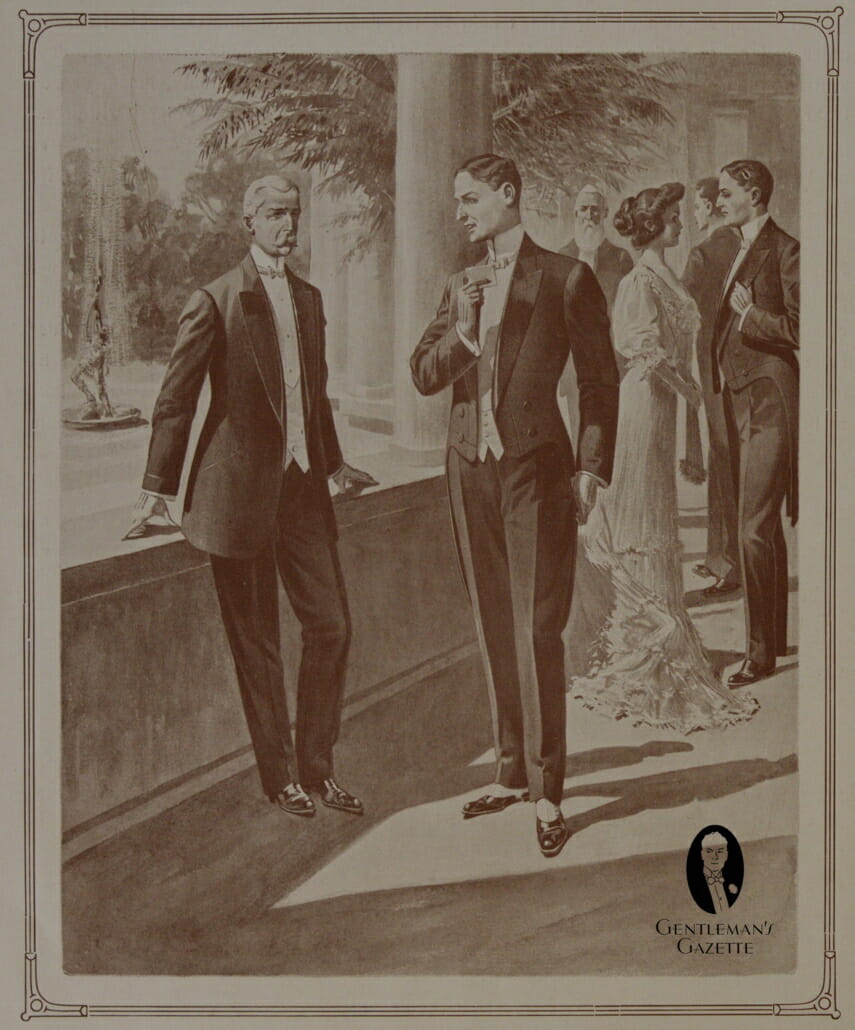
Overview of the Edwardian Era (1900s, ‘10s): “Informal Evening Wear”
Attire
| Jacket | • Black or oxford gray• single-breasted • Peak lapel or shawl collar with silk facing in sat in |
| Trousers | • Color and material to match jacket • With or without braid along seams |
| Waist Covering | • Waistcoat to match coat or of fancy black or gray silk, low cut with plain or fancy buttons • Generally single-breasted and U-shaped |
| Shirt | • Stiff white plain front; soft pleated front becoming popular • Stiff detachable wing or folded collar (or poke collar, based on period illustrations) • Holes for one or two studs (based on period illustrations) |
| Neckwear | • Black silk self-tie bow tie • Gray silk to match waistcoat is an alternative • Small, straight-end shape most popular (based on period illustrations) |
| Footwear | • Hose: black silk or lisle; plain, self or white clocks • Shoes: black patent leather or calfskin button or lace-up shoes, black patent or gunmetal leather pumps |
| Outerwear | • Overcoat: dark color dress coat such as Chesterfield, Inverness, frock coat, raglan • Hat: no consensus other than black color; some authorities forbade silk high hats (i.e. top hats and opera hats) with short dinner jackets while others recommended only that style of hat; still, others allowed a vast range of options from high hat to “Tuxedo” hat to derby to Fedora • Gloves: generally, gray suede or white deerskin |
| Jewelry | • Gold or semi-precious stone studs and cufflinks • Inconspicuous pocket watch fob |
| Accessories | (Boutonnieres and handkerchiefs are not mentioned) |
| Warm-Weather Black Tie | Good Form for All Occasions says many men substitute white “belt” (i.e. cummerbund or sash) for waistcoat, white duck trousers for the usual black ones, and soft white shirts or those with narrow pleats for the regulation stiff-bosomed shirt |
Occasion
| General | • Dinner jacket is meant only for dinners where women are not present as it is not an appropriate counterpart to their formal evening dresses; examples are stags, clubs, home dinners, informal dinners (a 1921 book defines “informal dinner” as dinners without guests, or in the company of one or two intimates) • Informal excursions to theater also allowed (but not theater parties) • Can substitute for full dress in summer (Book of Good Manners, Good Form for All Occasions) |
Sources for further review:
March 31, 1900 Harper’s Bazar “Spring and Summer Fashions for Men”
Feb 1902 Fashion magazine dress chart, The Book of Good Manners: Etiquette for All Occasions (1901 copyright, reprinted 1912)
Dictionary of Men’s Wear (1908)
1908 The Man’s Book [aka Fairchild’s Magazine] dress chart
1909 Fairchild’s Magazine [aka Man’s Book: A Magazine]
Nov 1912 Sartorial Arts Journal; The Etiquette of To-day(1913)
December 1913 Dress and Vanity Fair “The Well Dressed Man”
Good Form for All Occasions(1914), Marion Harland’s Complete Etiquette (1914)
See Bibliography for publisher and author information for most sources.
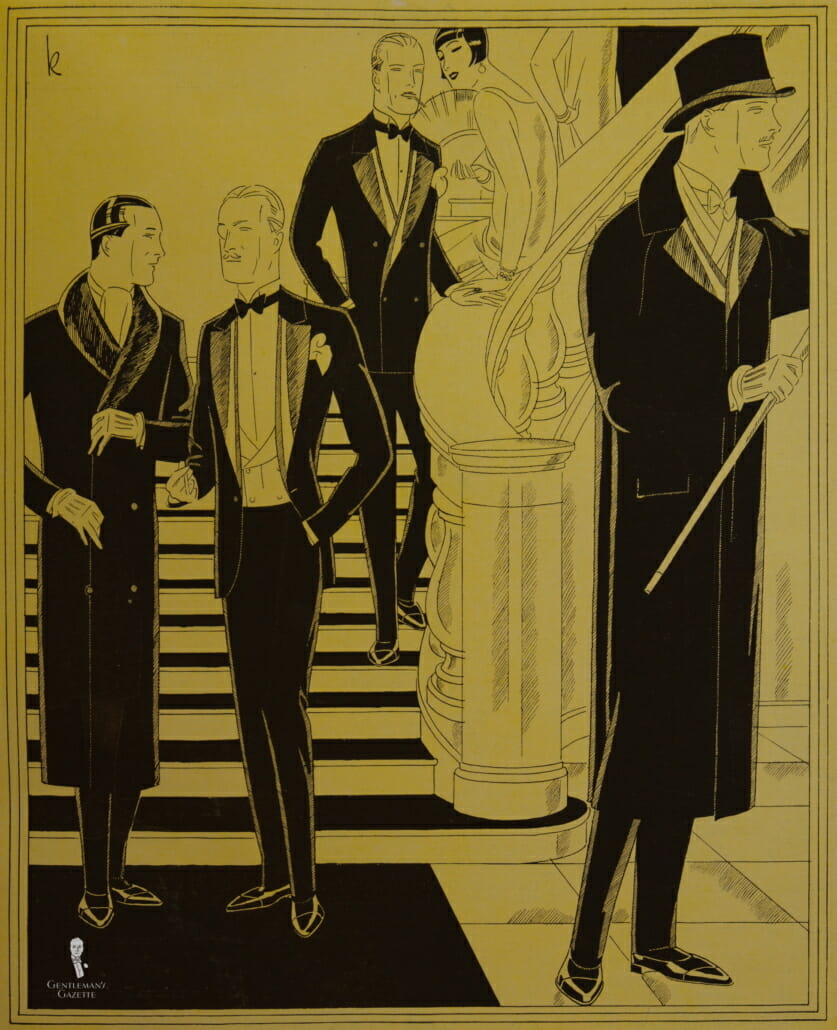
Overview of the Jazz Age (1920s): “Informal Evening Wear”
Attire
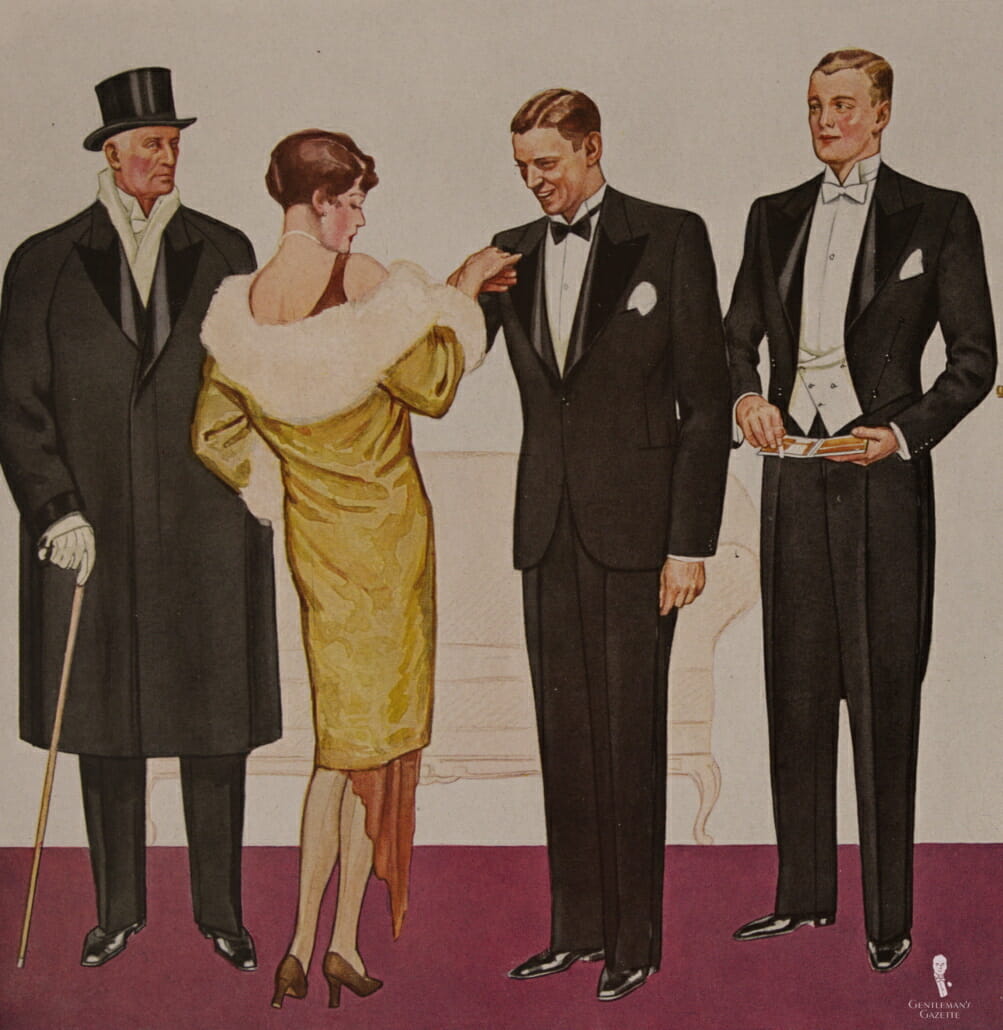
| Jacket | • Black worsted is the norm, midnight blue is acceptable • Single-breasted model is the standard, double-breasted becoming accepted for informal occasions • Peak lapel or shawl collar with silk facing in satin |
| Trousers | • Color and material to match jacket • Single braid along seams |
| Waist Covering | • Black or white evening waistcoat (latter is most formal) • Black in silk to match facings or cloth to match jacket, white in piqué or other washable linen • Single- or double-breasted • Low cut, U- or V-shaped |
| Shirt | • Stiff white plain front with single cuffs or, according to some sources, softer pleated front in summer • Stiff detachable wing or upright collar • Holes for two or three studs |
| Neckwear | • Butterfly or bat wing bow tie • Black “silk or satin” |
| Footwear | • Black silk hose • Black patent leather “ties” or pumps |
| Outerwear | • Overcoat: any dark blue or black dress coat such as Chesterfield, Inverness, cape coat, frock coat • Hat: generally top hat, black Homburg; straw hat allowable in summer • Gloves: white buckskin |
| Jewelry | • Pearl, mother-of-pearl or jeweled studs and matching cufflinks |
| Accessories | (Boutonnieres and handkerchiefs are not mentioned) |
| Warm-Weather Black Tie | See “Shirt” and “Outerwear” above |
Occasion
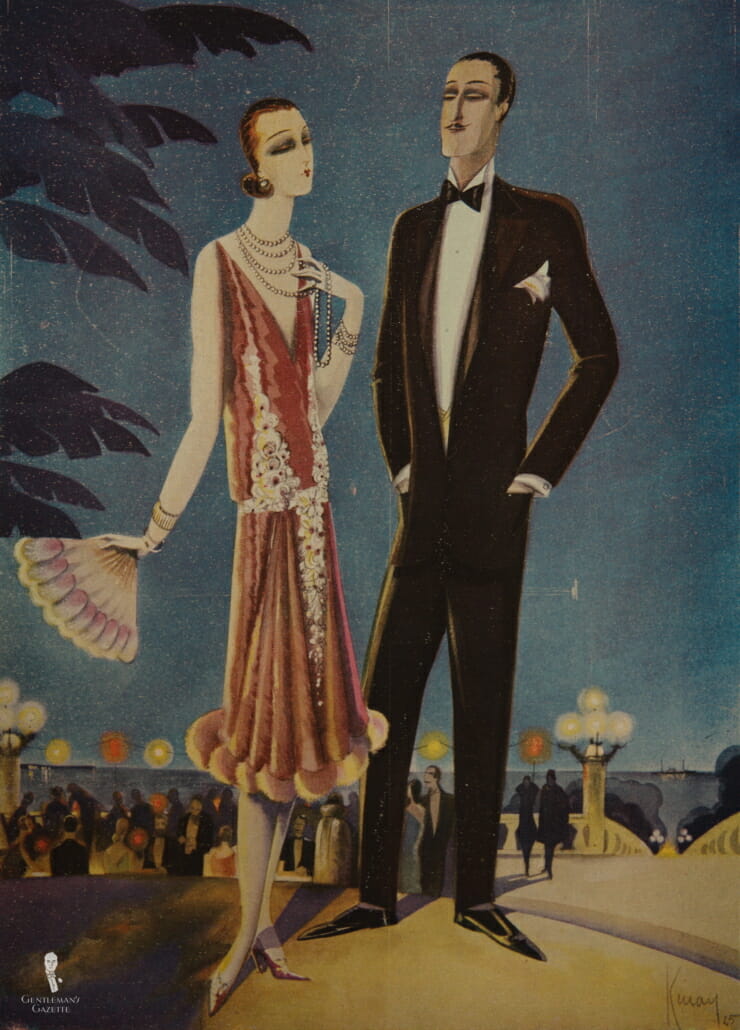
| General | • “Informal” dinner jacket (versus “full dress”) is only permissible for dinner when dining at home without guests, or in the company of one or two intimates; allowed when attending opera with a man friend (Encyclopedia of Etiquette) • The tuxedo coat and waistcoat are worn at all informal affairs when no women are present such as small theater parties (when not occupying a box), bowling and card parties and the like (Book of Good Manners) • The dinner jacket is worn every evening and nearly everywhere, whereas the tailcoat is necessary only at balls, formal dinners, and in a box at the opera. (Emily Post 1922) • Black Tie can be worn at “informal evening affairs” (as opposed to “weddings, balls, formal dinners, theater parties and receptions”) (Men’s Wear 1925 and 1926 dress charts) |
| Public Entertainments(Theater, Opera, etc.) | • Theater: in New York, the dinner coat is worn because a full dress is not correct unless going to a ball afterwards (Emily Post 1922) • White Tie required for theater party (Men’s Wear chart 1925) • Balls and opera still White Tie (Emily Post 1922) • In summer there is no occasion for full dress for fashionable New Yorker because no opera, formal dinners or balls are given between May and November since even the ultra formal Newport resort gave up the practice in recent years. (Emily Post 1922) |
| Private Entertainments (Debuts, Proms, etc.) | Formal dinners (and receptions) still called for White Tie (Post 1922, Men’s Wear 1925) |
| Shipboard | • Dark sack suits on ordinary steamers, dinner jackets in de luxe steamer restaurant (Emily Post 1922) • Full dress is gauche “No gentleman wears a tail-coat on shipboard under any circumstances whatsoever.” (Emily Post 1922) • It is almost an edict that a dinner coat be worn every evening of the voyage except the first and last. Even on the smaller liners many prefer it (Ocean Record: A Pocket Handbook for Travelers • Without a dinner jacket, you can’t dine other than first or last night, or socialize after 8 o’clock (The Frantic Atlantic ) |
Sources for further review:
Book of Etiquette Vol 2 (1921)
Encyclopedia of Etiquette (1921)
The Book of Good Manners: A Guide to Polite Usage for All Social Functions (1922)
Etiquette in Society, in Business, in Politics and at Home (1922)
Vogue’s Book of Etiquette (1925)
The New Book of Etiquette (1924)
Ocean Record: A Pocket Handbook for Travelers (1925); Mar 11, 1925 Men’s ear dress chart
Mar 24 and Apr 7, 1926 Men’s Wear dress charts
The Frantic Atlantic (1927)
Aug 22, 1928 Men’s Wear dress chart.
See Bibliography for publisher and author information for most sources.
Overview of the Depression Era (1930s): “Semi-Formal Evening Wear”
Attire
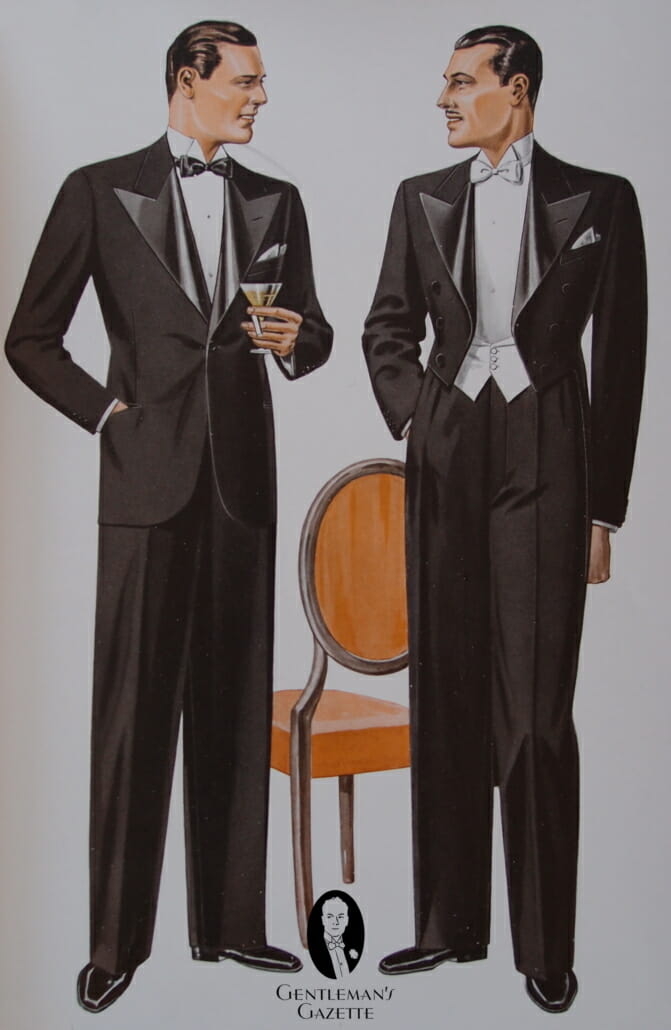
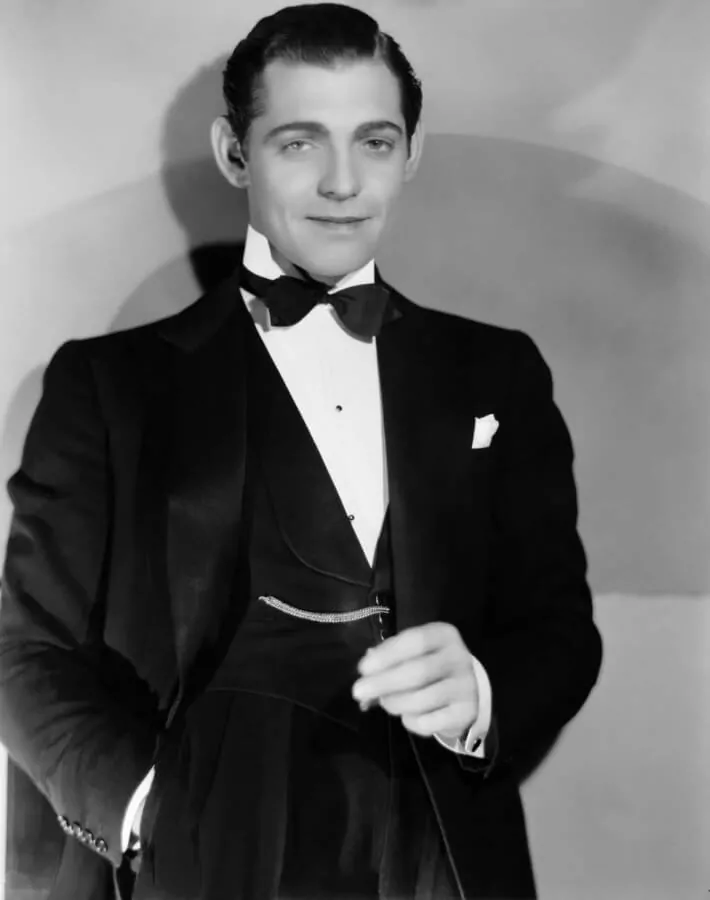
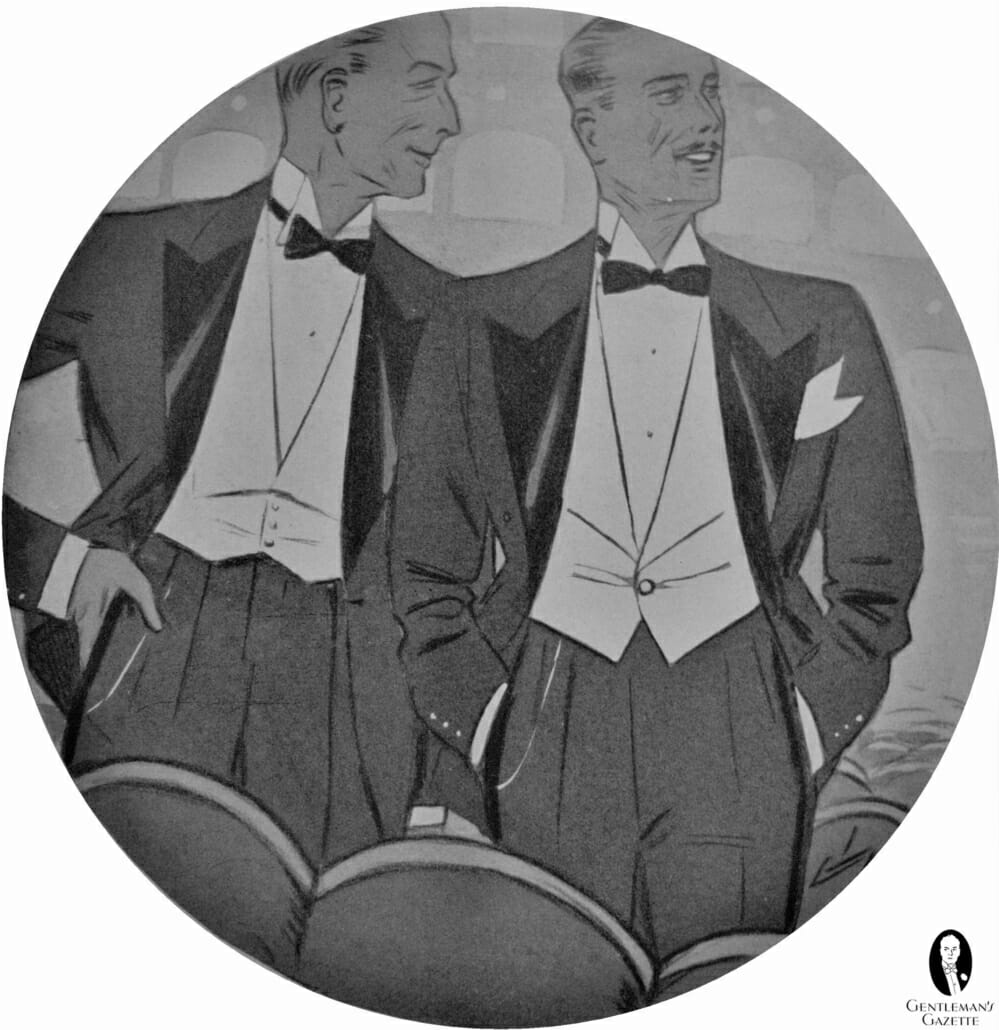
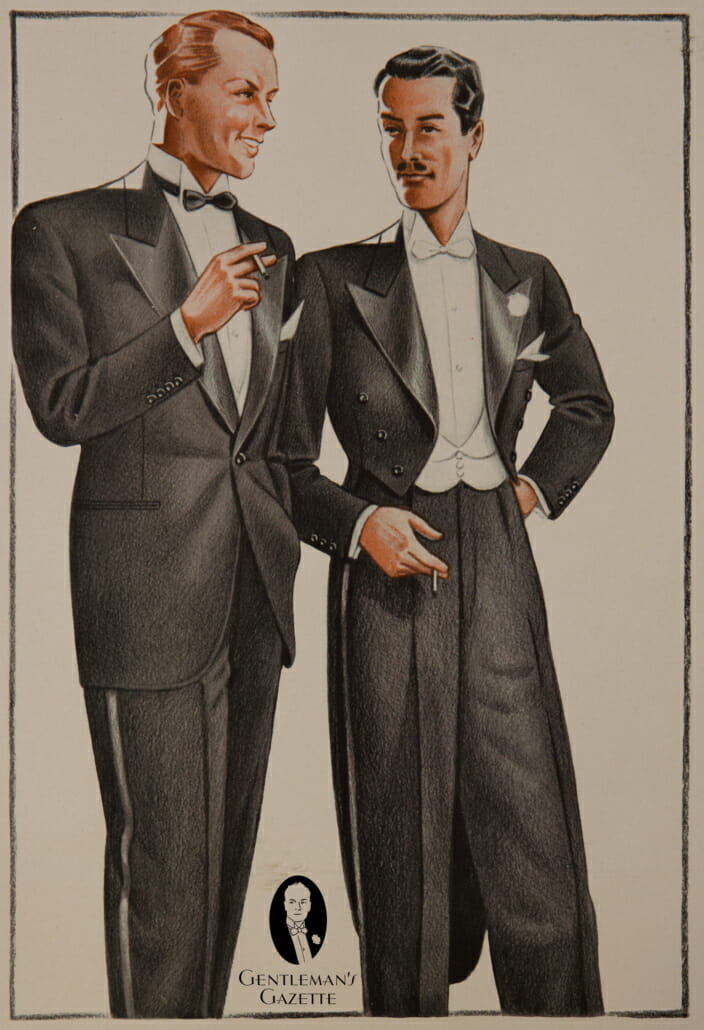
| Jacket | • Black or midnight blue finished or unfinished worsted • Single-breasted model is the standard, double-breasted acceptable for informal occasions such as resorts or country clubs • Peak lapel or shawl collar with silk facing in satin or grosgrain |
| Trousers | • Color and material to match jacket • Single braid along seams |
| Waist Covering | • Black or white evening waistcoat (latter is most formal) • Black in silk to match facings or cloth to match jacket, white in piqué or other washable linen • Single- or double-breasted • A black cummerbund is an informal substitute for a waistcoat, often recommended for double-breasted dinner jackets (!) |
| Shirt | • Stiff bosom of white piqué or plain linen, single cuffs • Softer pleated bosom is informal alternative • Detachable wing collar is most formal • Attached turndown collar for stags or with informal double-breasted dinner jacket Note: Etiquette experts did not associate specific shirt fronts with specific collars but sartorialists specified that turndown collar and pleats were definitely informal; wing collar was still by far the most recommended • Holes for two or three studs (info taken from jewelry specs) |
| Neckwear | • Narrow butterfly or bat wing bow tie with straight ends or pointed ends • Plain black silk or to match lapels |
| Footwear | • Black silk or lisle socks plain or with white clocks; black wool is acceptable alternate • Black patent leather “ties” or pumps |
| Outerwear | • Overcoat: black single-breasted fly front topcoat with or without silk faced lapels • Hat: black collapsible opera hat or black Homburg • Gloves: white buckskin |
| Jewelry | • Black enamel, plain gold, mother of pearl or semi-precious stone studs and matching cufflinks • Pocket watch |
| Accessories | • White flower is most conservative, dark red carnation is acceptable • White linen handkerchiefs |
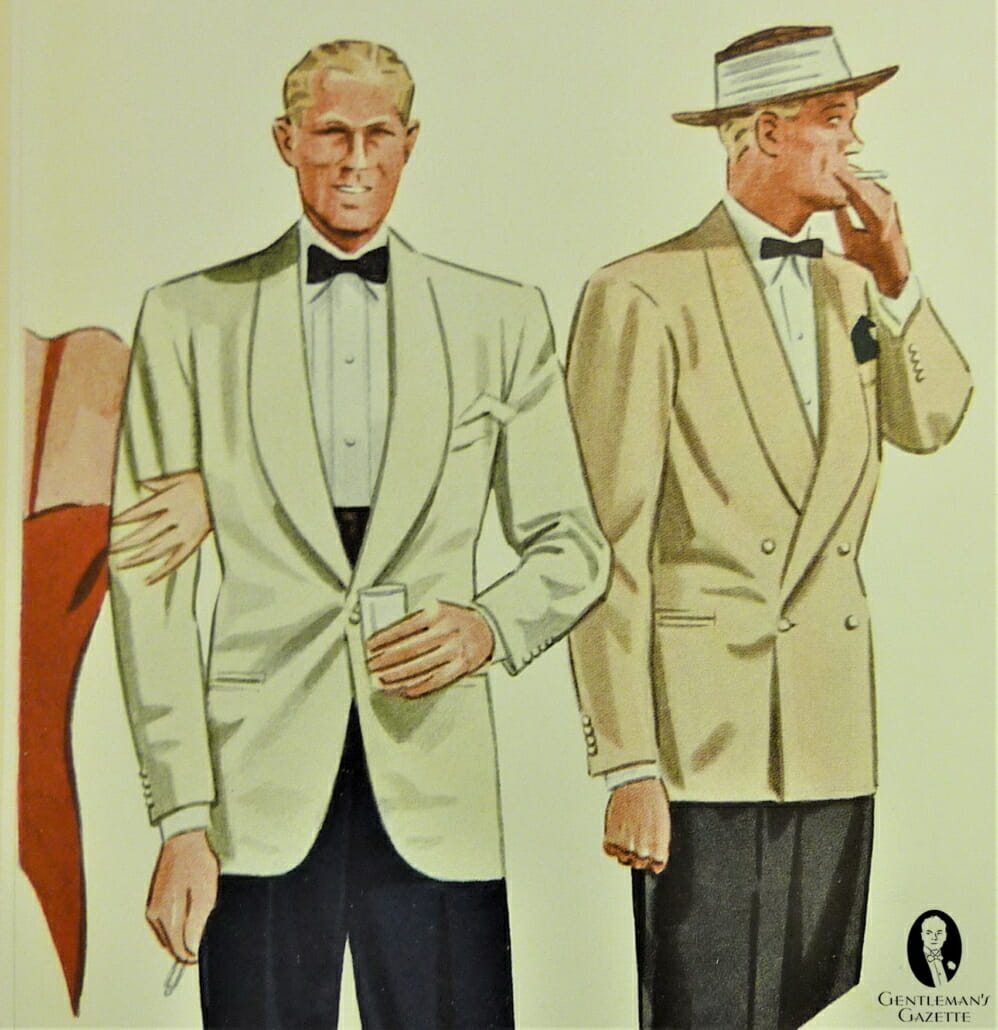
| Warm-Weather Black Tie | • Generally single-breasted shawl collar white dinner jacket or double-breasted white, black or midnight blue dinner jacket • Black or white cummerbund or waistcoat; other colors also acceptable • Black or midnight blue trousers with single braid • Soft front shirt with turndown collar • Socks may have colored clocks • Outerwear is straw boater or Panama hat • All other details as per standard semi-formal wear |
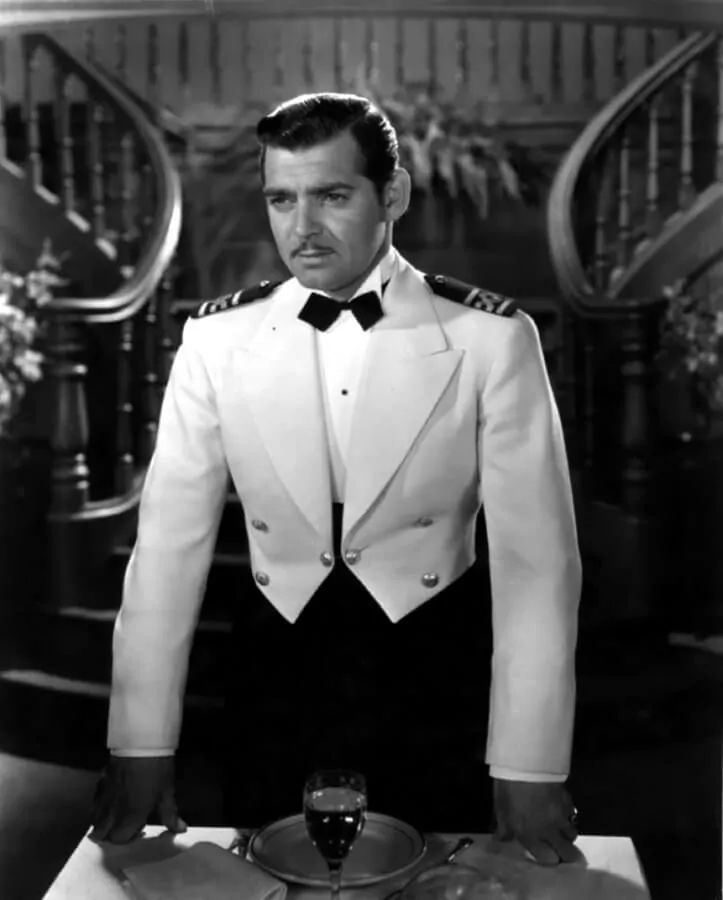
| Warm-Weather Black Tie: Mess Jacket | • White mess jacket • White waistcoat or (black) cummerbund • All other details as per Warm Weather Black Tie Note: this option is only listed by Emily Post but is included in this chart because of the mess jacket’s widespread acceptance |
Occasion
| General | • Emily Post 1937: Same general rules as 1922 plus: a young man “can easily do without a tail coat for the dinner coat with a white waistcoat takes the place of full evening dress almost everywhere.” Also, “never in daylight hours” except when heading out to an evening party • A woman’s evening attire is determined by whether or not her male consort is wearing evening clothes (Emily Post 1937) • Tuxedo is for restaurant and theater wear, dining at home and all informal evening occasions requiring more than ordinary street clothes (New Book of Etiquette ) |
| Public Entertainments (Theater, Opera, etc.) | • Theater: “At the highest-type evening performance in New York, especially when the play has not been on very long, a lady wears a semi-evening dress, a gentleman a ‘tuxedo’. Full dress is always worn at smart theaters in London but is seldom worn in New York except by those who are going to a party later.” (Emily Post 1937) • Opera: White Tie (Emily Post 1937, New Book of Etiquette) |
| Private Entertainments (Debuts, Proms, etc.) | • White Tie for ceremonious dinners or balls and all highly formal evening occasions (New Book of Etiquette) |
| Shipboard | • Dinner jackets required every night on transatlantic crossing except for first and last night when clothes were packed (unless ship left in the morning in which case there was no excuse not to wear on first night) (Esquire Jun 1934) • Emily Post 1937: same rules as 1922 for shipboard dress |
Sources for further review:
Aug 20, 1930 Men’s Wear dress chart
1931 Book of Etiquette (1931; British)
New Book of Etiquette (Vol 1) (1931, copyright 1924)
Fall 1932 Apparel Arts dress chart
Christmas 1932 Apparel Arts“Re Evening Dress”
Spring and Fall 1933 Apparel Arts dress charts (v2 #3)
Winter 1934-35 Apparel Arts“Illustrated dress chart of winter resort fashions for the south”
New Book of Etiquette: Completely Revised Ed. (1936, copyright 1934)
The New Etiquette (1937); Etiquette, the Blue Book of Social Usage (1937)
Jan 1940 Esquire “Background for a Red Carnation”
Aug 1940 Esquire “Our own night school”
Jun 1940 Esquire “Wedding Wearables”
Nov 1940 Esquire “Black + White = Evening Dress”
Book of Etiquette (1942; included in Depression Era category because it was likely written by 1941)
See Bibliography for publisher and author information for most sources.
Overview of the War & Post-War Years (’40s, early ’50s): “Semi-Formal Evening Wear”
Attire
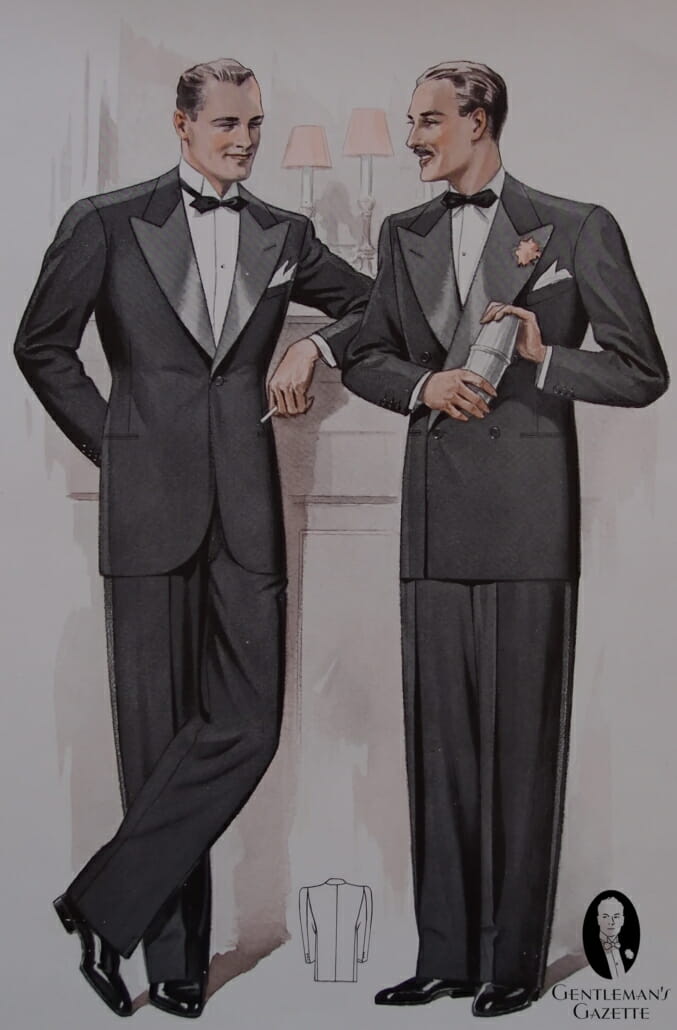
| Jacket | • Black or midnight blue finished or unfinished worsted• single-breasted or double-breasted • Peak lapel or shawl collar with silk facing in satin or grosgrain |
| Trousers | • Color and material to match jacket • Single braid along seams |
| Waist Covering (specified for single-breasted jacket only) | • Black or midnight blue evening waistcoat, white also acceptable especially for more formal occasions but increasingly rare; black or midnight blue in silk to match facings or cloth to match jacket; white in piqué or other washable linen • The waistcoat can be single- or double-breasted Note: cummerbund recommended only with warm-weather Black Tie |
| Shirt | • Stiff-front or softer plain or pleated front • Detachable wing collar or attached turndown collar • Holes for two or three studs Note: Many sources did not specify which fronts should be matched with which collars however the soft fronts with turndown collar were the most popular option during this time |
| Neckwear | • Plain black or midnight blue bow tie • Satin or dull silk |
| Footwear | • Black silk, lisle wool or nylon socks in plain, ribbed or clocked design; dark blue acceptable with midnight blue trousers • Black patent leather low evening shoes or pumps |
| Outerwear | • Overcoat: single- or double-breasted black, oxford gray, or dark blue • Hat: collapsible opera hat, black or midnight blue Homburg • Gloves: generally gray or white buckskin Note: Emily Post indicated gloves were not to be worn with dinner jackets and many other authorities don’t provide any information on the topic |
| Jewelry | • Studs and cufflinks of mother of pearl, enamel, gold, onyx or colored stone • Dressy wrist or pocket watch • Key chain |
| Accessories | • White or red carnations are most popular boutonnieres • White linen handkerchiefs |
| Warm-Weather Black Tie | • White single- or double-breasted dinner jacket • Black, midnight blue or maroon cummerbund • Black or midnight blue trousers with single braid • Soft front shirt with turndown collar; button-down is also allowed • Bow tie may be maroon especially with matching cummerbund • Outerwear is straw boater or Panama hat (if any) • All other details as per standard semi-formal wear |
| Warm-Weather Black Tie: Mess Jacket | • White linen mess jacket • All other details as per Warm Weather Black Tie Note: Only a minority of experts still refer to this option and one of them (Amy Vanderbilt) says it is considered “theatrical” |
| Country Summer | • At a formal dinner in the country or at a country club dance during the summer white dinner jacket may be worn in summer; white flannels with dark blue or gray jacket also correct with white, brown & white or black & white sport shoes (Book of Etiquette) • Dinner jackets as for town when weather is not too hot OR coats of white linen or light serge, also white, with the usual black evening trousers OR white linen suits OR for dances many younger men wear white flannel trousers with stiff shirt and collar and black dinner jacket (Vogue’s Book of Etiquette) |
Occasion
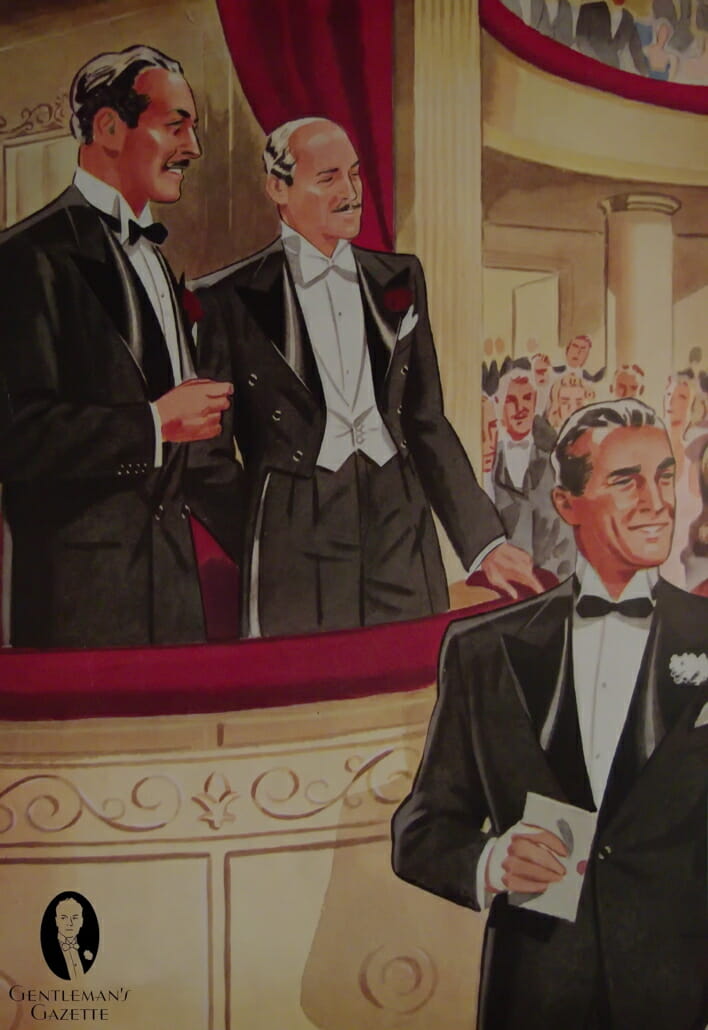
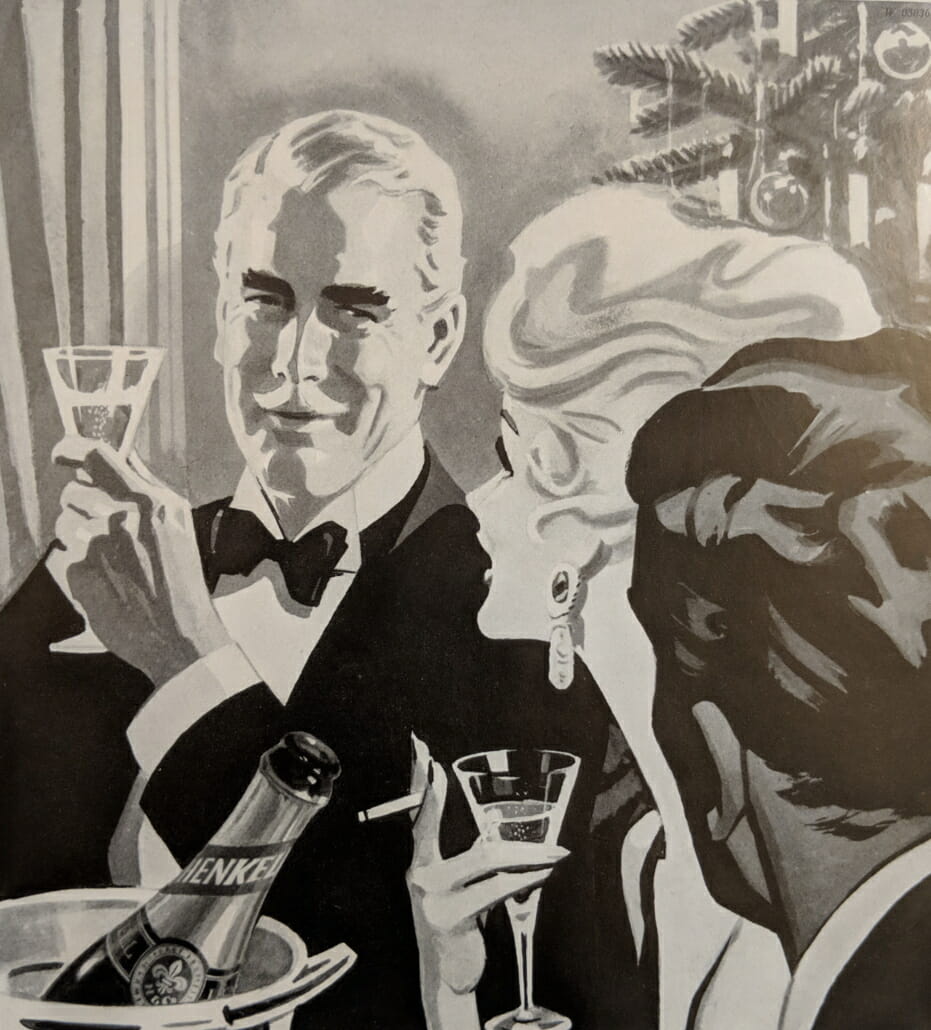
| General / Dining | • Tuxedo is worn at the theatre, at most dinners, at informal dances and in restaurants where “dress” is required. In general, worn on all semi-formal occasions which do not call for white tie and tails (Book of Etiquette ) • Emily Post 1945: Same general rules as 1937 • List of appropriate places no longer refers to dining at home; author groups informal parties and “most dinners” into every evening party that is not ceremoniously formal; defines semi-formal in context of what a community considers formal • Never before six or in broad daylight unless it can’t be helped (Amy Vanderbilt 1952) |
| Public Entertainments (Theater, Opera, etc.) | • Theater: Black Tie is worn at the theater (Book of Etiquette) • Emily Post 1945: Elaborates on 1937 edition’s description of “highest-type evening performance in New York”: “during the opening weeks and at the evening performance in New York of a play or musical comedy presenting stars of the highest rank” • A lady sitting “down front” in the orchestra wears a semi-evening dress, a gentleman a tuxedo • White ties and tails and low-cut evening dress are never worn at the theatre except by those who are going on to a party later. Whether or not people are going on elsewhere later naturally affects their choice of dress . • “The present trend of fashion leans, however, very decidedly toward ordinary day clothes for both men and women especially when the play has been running for several months.” • During opening week people in best seats usually wear tuxedos otherwise it is ordinary day clothes in most communities (Emily Post 1955) • Opera: White Tie in orchestra seats and in boxes on first two levels, dark suits and Black Tie in sections above first balcony (Emily Post 1945) • “Except on opening night – or in New York on fashionable Monday night – full dress is the exception rather than the rule.” Dinner jackets are worn in the boxes, “Dinner jackets and even dark blue or Oxford gray suits are seen in the orchestra.” “As in the theatre, the balcony is a ‘don’t dress’section unless a couple is going on to some other function where evening dress is expected.” (Amy Vanderbilt 1952) • White Tie for opera (Book of Etiquette) • Dinner jacket has pretty much replaced White Tie in the most expensive seats (i.e. boxes) even on Monday nights even though the author says White Tie is still required. Dark suits are replacing dinner jackets in other sections (Emily Post 1955) • Public Dinners: “It is quite common for the men to appear in dinner jackets and lately, alas, even in dark suits, unless they are seated on the dais, which still calls for White Tie and tails. Invitations to such public dinner now often read ‘White or Black Tie’ for without that choice being offered many would refuse to come”. (Amy Vanderbilt 1952) |
| Private Entertainments (Debuts, Proms, etc.) | • White Tie for ball (Book of Etiquette) |
| Shipboard | •On the great transatlantic liners, dinner jackets are the general, though not obligatory rule in the evening. On ships where a Captain’s or Gala Dinner is given, formality is expected with men wearing dinner jackets (unless the special night is a costume affair) (Amy Vanderbilt 1952) • Cruises: “Dinner clothes are not essential but the majority of people wear them. For men a white dinner jacket is customary on tropical cruises but an ordinary dinner jacket is also acceptable, and by some even preferred.” (Amy Vanderbilt 1952) • Emily Post 1945: Eliminates reference to men’s dress on shipboard |
Sources for further review:
Mar and May 1942 Esquire dress charts
Etiquette, the Blue Book of Social Usage (1945 and 1955)
Standard Book of Etiquette (1948)
Vogue’s Book of Etiquette (1948)
Jun 1948 Esquire wedding dress charts
Mar 1952 Esquire dress chart
Complete Book of Etiquette: The Guide to Gracious Living (1952)
Oct 1953 Esquire dress chart
Oct 1955 Esquire dress chart
See Bibliography for publisher and author information for most sources.
Formal Facts: “Dress” versus “Half Dress” versus “Undress
In Victorian times, elegant men concerned with the propriety of their appearance could easily change up to four times a day. Starting with a dressing gown and slippers, which were part of a category called “undress,” to morning dress, which comprised various styles that were mandated for different times of day and occasions and constituted “half dress,” they could then change for dinner, a ball or court, which were not all alike but were considered “full dress.”
(From Kent State University Museum exhibit “Of Men and Their Elegance”)
Formal Facts
Late Edwardian Formal Attire
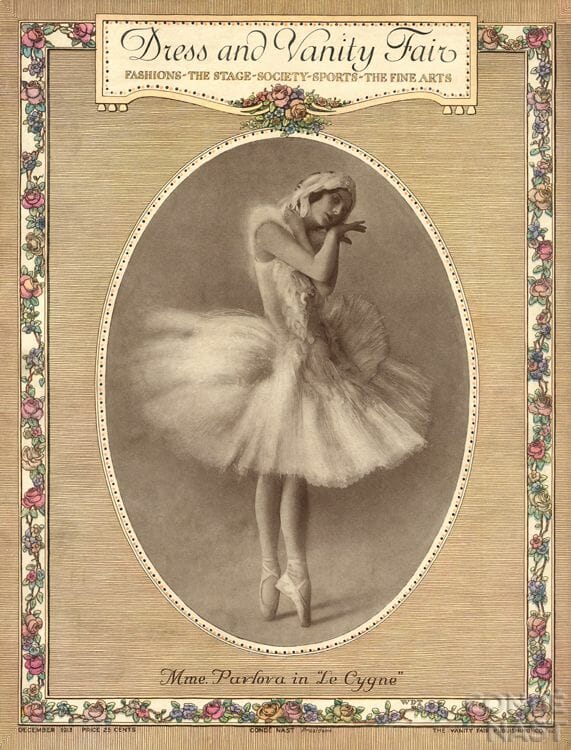
For an extremely detailed description of evening wear circa World War I, see this 1913 Dress and Vanity Fair article available online from oldmagazinearticles.com.
Formal Facts: “Black Tie” Etymology
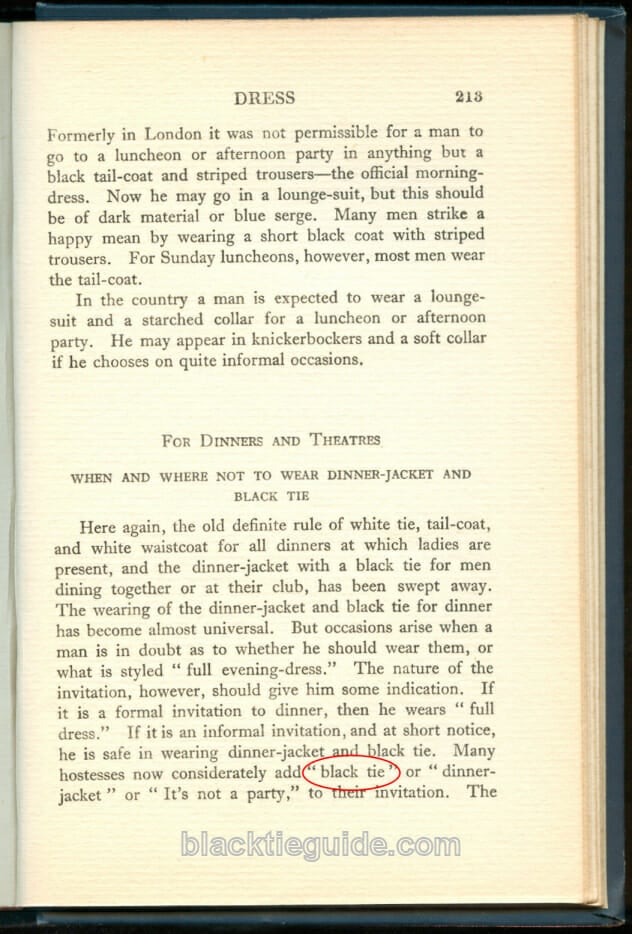
The Unabridged Oxford English Dictionary traces the origin of the term “black tie” to 1932. However, The Black Tie Guide has tracked its first printed appearance six years further back to a 1926 British publication titled The Book of Etiquette.
Explore this chapter: 8 Vintage Evening Wear
- 8.1 Vintage Black Tie Etiquette & Dress Codes
- 8.2 Vintage Tailcoats & Tuxedos
- 8.3 Vintage Evening Waistcoats & Cummerbunds
- 8.4 Vintage Evening Shirts
- 8.5 Vintage Evening Neckwear
- 8.6 Vintage Evening Footwear
- 8.7 Vintage Evening Accessories
- 8.8 Vintage Evening Outerwear
- 8.9 Vintage Warm-Weather Evening Wear
- 8.10 Vintage Evening Weddings
- 8.11 Retro Evening Wear