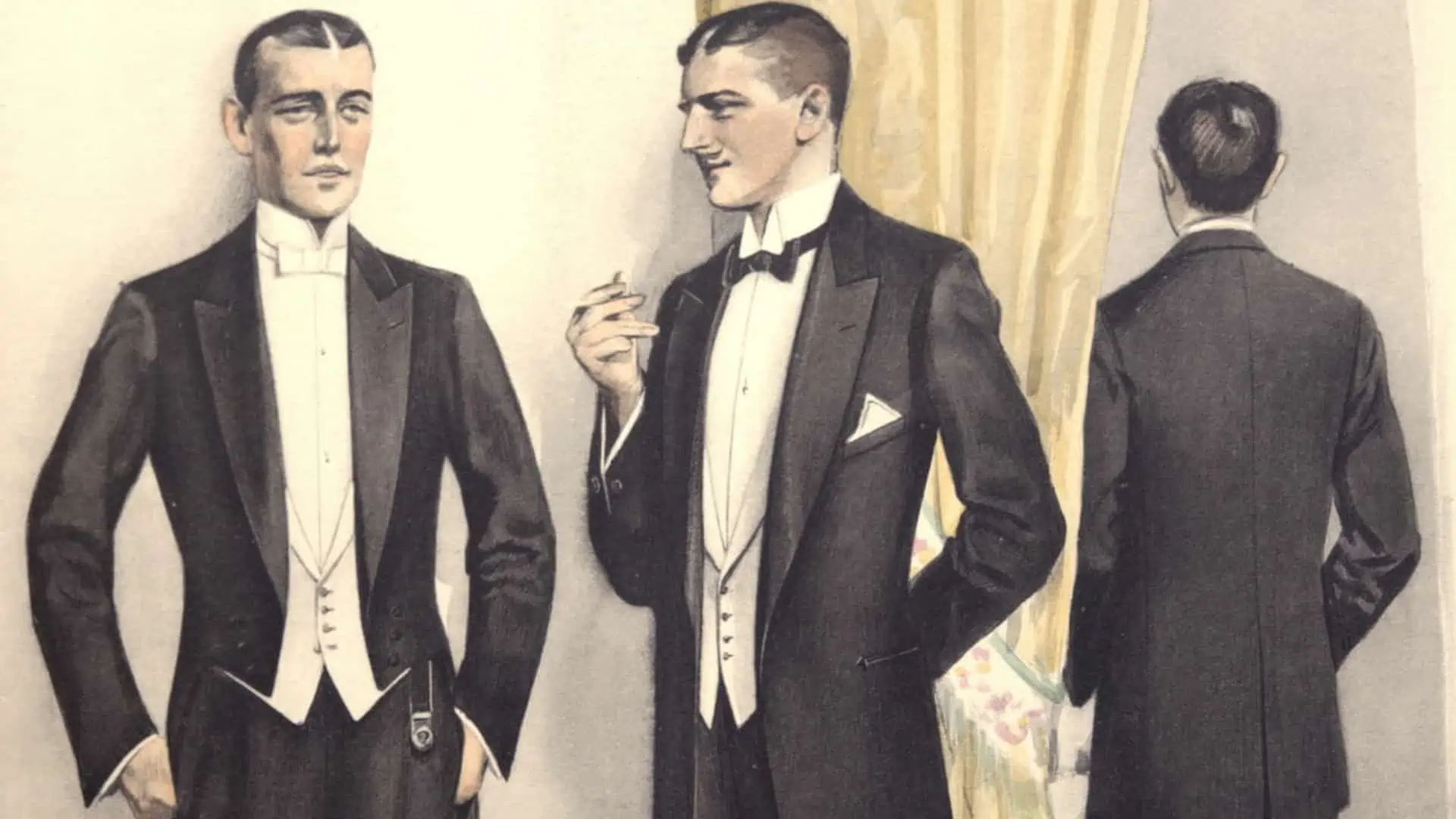
In this section, you will learn about the origins of the waistcoat and cummerbund, discovering how they were developed and standardized and seeing the many variations and styles that have been popular throughout the ages. Armed with this information, you will be better suited to make timeless selections when choosing your own waist-robing accessories.
- The Regency Waistcoat
- The Victorian Era: Conservatism Flattens Flair
- Evolutions of the Edwardian Era
- Waistcoats of the Roaring Twenties
- Dapper Waist Dressing of the 1930s
- The Decline of the Waistcoat from the 1940s to the 1970s
- Cummerbunds
- The Victorian Origins of the Cummerbund
- The Cummerbund in the Edwardian Era
- The Cummerbund: Warm-Weather Waist Alternative of the 1920s
- Jazz Singers and Pleated Cummerbunds of the 1930s
- Colorful Cummerbunds in the 1940s to 1960s
- The Cummerbund from the 1970s to the Present
- Formal Facts
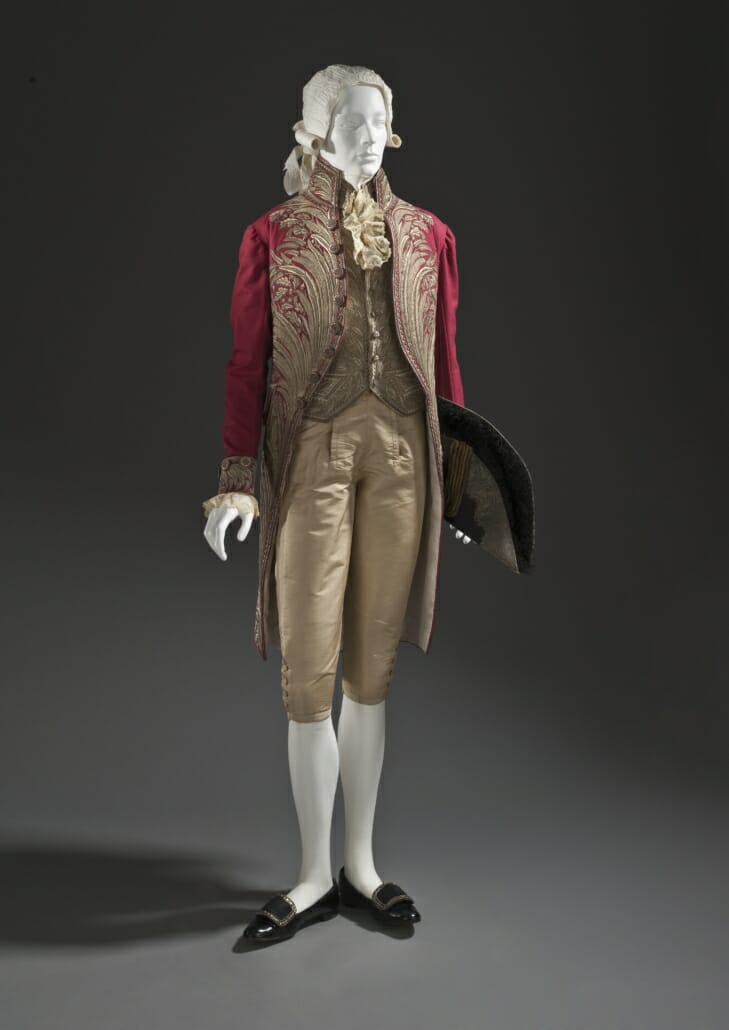
The Regency Waistcoat
The Origins
The prototype for modern evening wear was the dark blue/black-and-white dress ensemble fashioned by Beau Brummell at the turn of the nineteenth century. This included a single-breasted waistcoat of white Marcella or black plain fabric that was cut straight at the bottom. In the 1820s collars were introduced that were either notched or “en schal” (shawl).
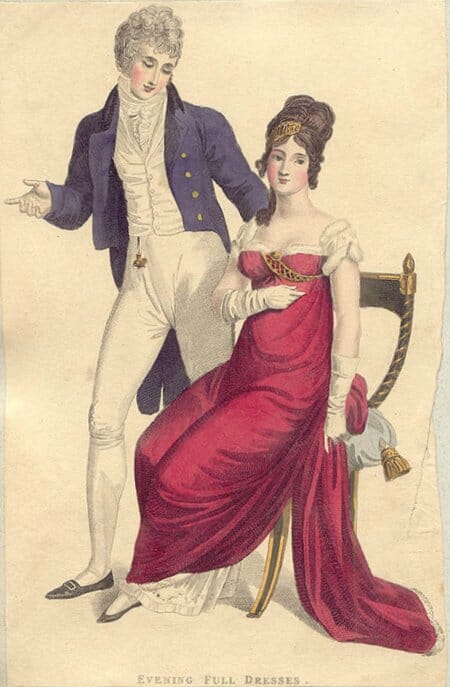
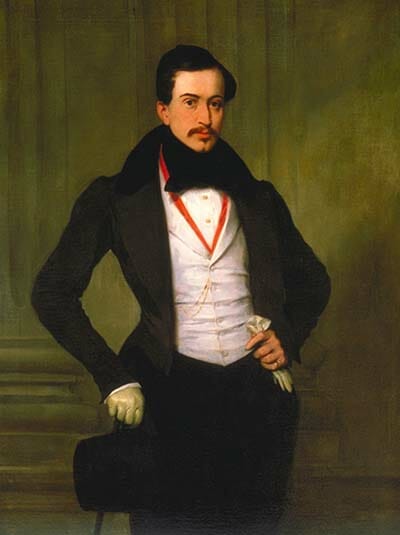
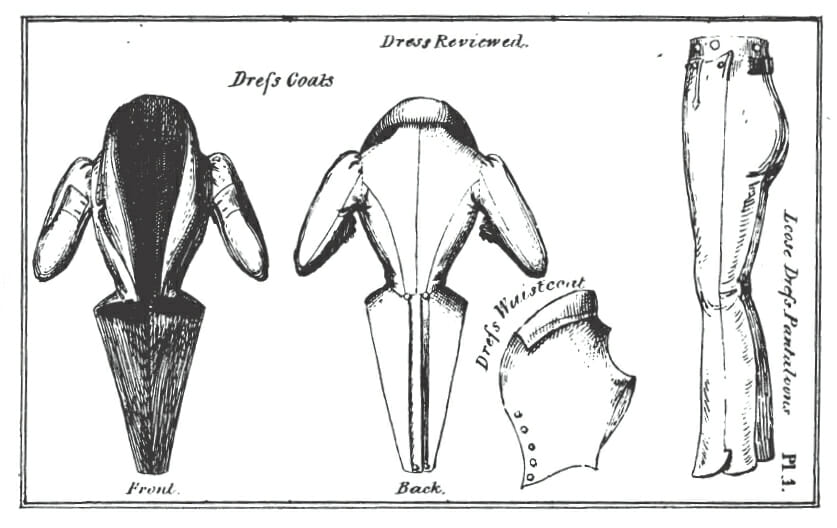
Late in the 1820s dandies deviated from the formula when they developed a taste for waistcoat models in “all the colors of the rainbow” featuring lavish embroidery and rich plain or figured silks and satins.
The garment also grew longer around this time leading to the return of the late eighteenth-century under-waistcoat. At first, this was a sparse undergarment meant to project just beyond the edges of the overlying version. It then evolved into a full-blown torso covering with lapels, decorative buttons and gorgeous colored materials designed to contrast with the upper-waistcoat which was often left open at the top for better exposure.
All of these embellishments were highly visible thanks to the new style of tailcoat tailored to remain open in front.
The Victorian Era: Conservatism Flattens Flair
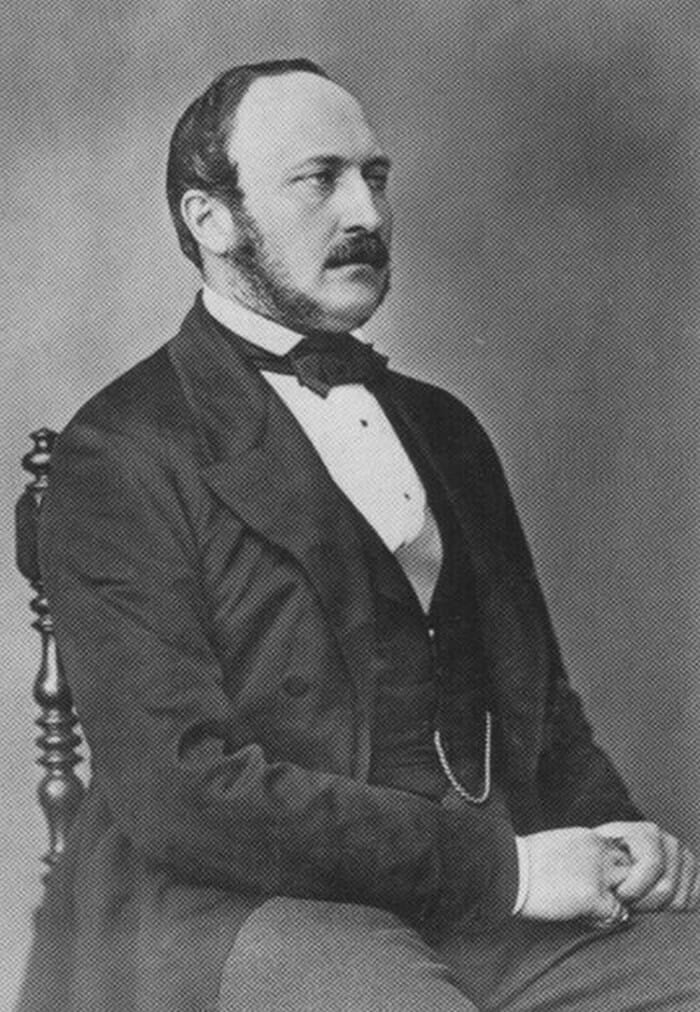
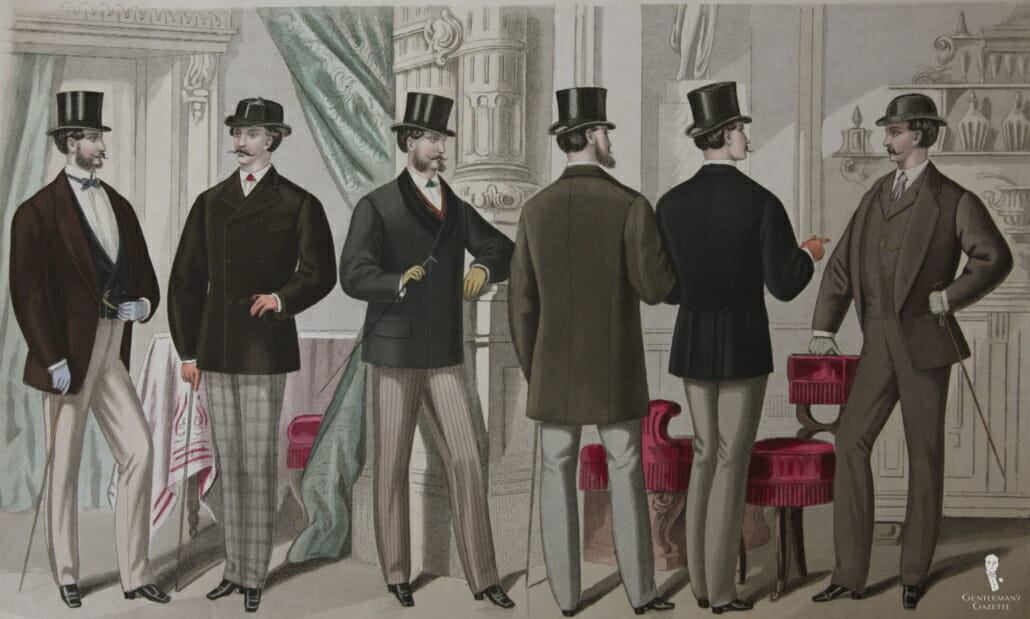
By the 1860s Victorian conservatism had overcome Regency flair and the evening waistcoat was generally cloth or silk and once again limited to black or white although British etiquette authorities advised that white was unfashionable and should be restricted to only the most formal of occasions. The V-shaped openings were cut increasingly low while the waist became gradually higher so that by the 1850s the bottom was usually cut straight across instead of featuring points as it sometimes did earlier in the era.
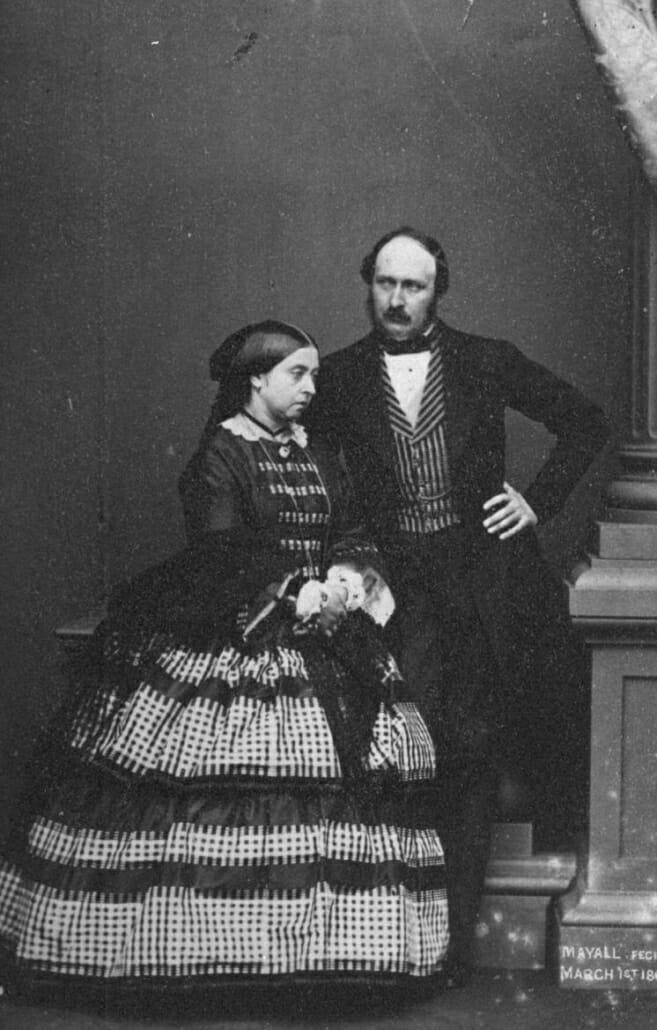
By mid-century the shawl collar was typical and hip pockets began to appear. Buttons were either material covered or gilt or fancy stones. A trouser loop was introduced to evening and wedding waistcoats in 1840. The Regency under-waistcoat died out by the 1850s due to the aforementioned shortened waist of the overlying vest. For a brief period it was sometimes replaced by the slipped waistcoat, a pseudo-under-waistcoat now more commonly associated with morning dress.
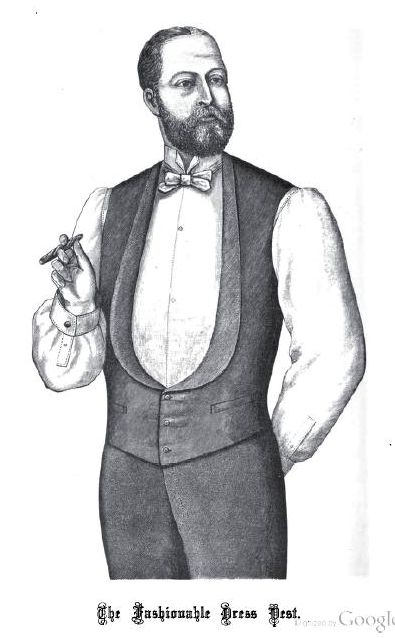
In the mid-1880s the newly introduced of U- or shield-shaped openings were favored over the V shape partly because of their effectiveness at displaying the formal shirt front. Single-breasted models were initially preferred but the double-breasted grew in favor from 1890. Collars were usually shawl style although many models did not feature lapels (aka revers).
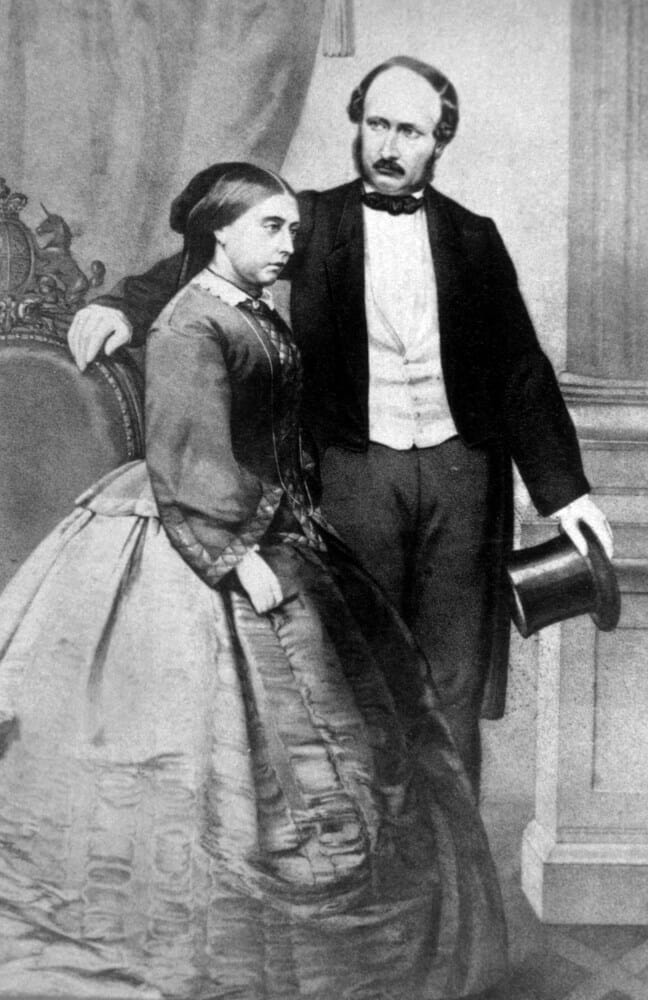
In England white piqué gradually ousted black fabric which became consigned to informal dinner wear. Conversely, black waistcoats to match the dress suit were the norm in the United States where white versions were considered a luxurious alternative because of the associated laundering expense.
When the dinner jacket was introduced in the late Victorian era it was simply considered an informal substitute for the tailcoat and was therefore worn with the same accouterments as prescribed for full dress including the standard white or black waistcoat.
Evolutions of the Edwardian Era
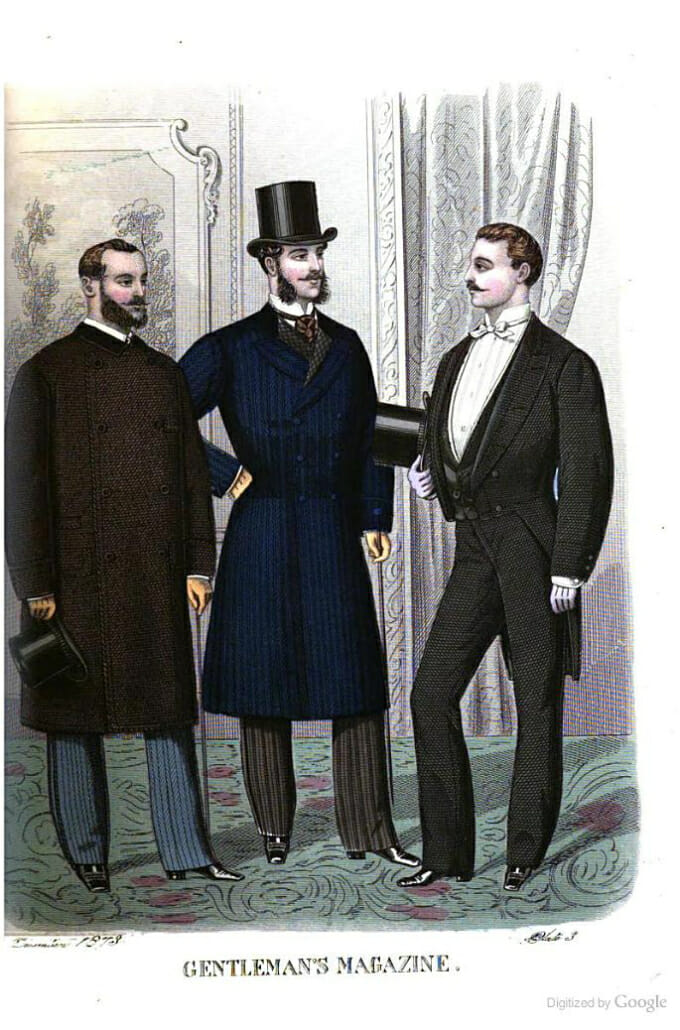
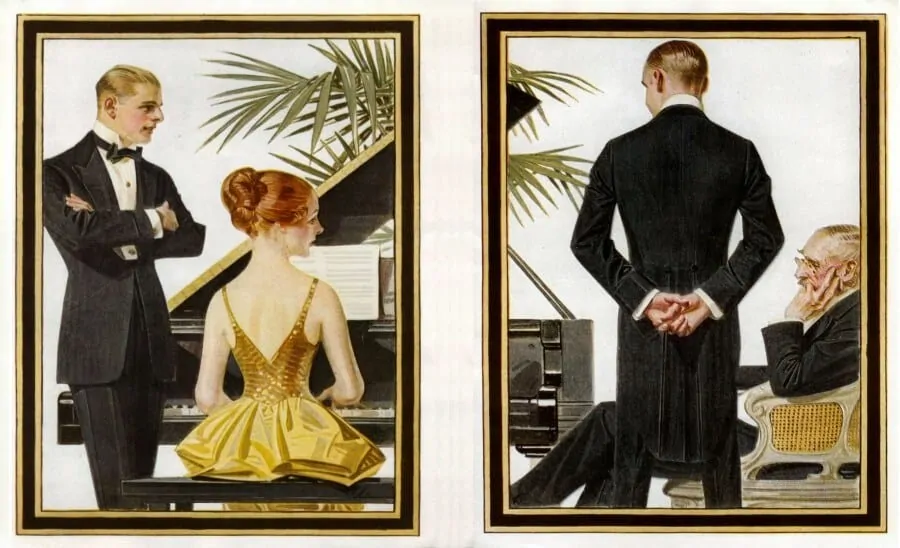
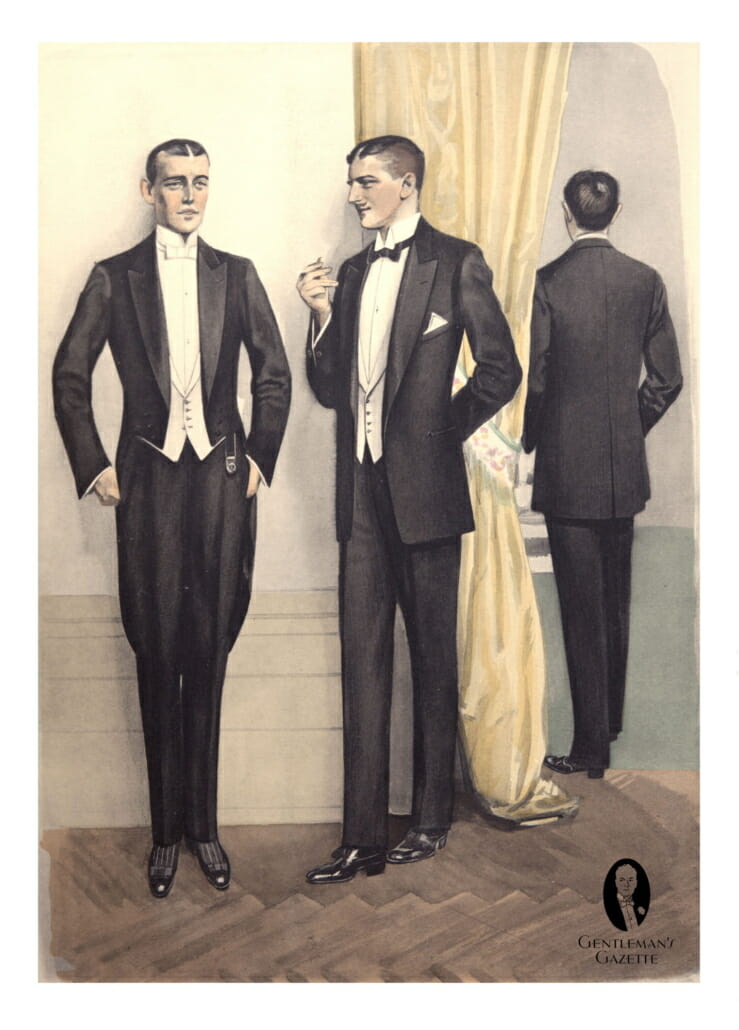
The English preference for white piqué waistcoats with full dress caught on in America and by the end of World War I black waistcoats were becoming relegated to informal evening dress in that country too. Double-breasted styles had become as popular as single-breasted and both began to develop pointed bottoms once again as their fronts followed the lines of the newly angled tailcoat fronts. The U-shape opening remained the favorite style and shawl collars were almost universal. An emerging trend was the matching of the waistcoat’s piqué pattern with that of the full-dress shirt and bow tie. These sets of matching linens were custom-made and expensive and therefore had limited popularity at first.
With the informal dinner jacket, there was at first a variety of choice: black wool to match the jacket, black or grey figured silk or white linen. As the era progressed the black wool option was increasingly preferred and the white full-dress model was increasingly prohibited. This period also marked the beginning of the trend for black silk waistcoats to match the silk of the jacket’s lapel facings and the bow tie. Cuts and styles were largely as for full-dress waistcoats although they were much less visible since dinner jackets were being worn closed by the 1910s.
Waistcoats of the Roaring Twenties
During the Jazz Age, white came to be considered the most formal color for the waistcoat because of the aforementioned expense of frequent laundering and starching. Consequently, black models ceased to be an alternative for full-dress suits while white models became increasingly popular with dinner jackets at occasions which would have required tailcoats prior to the First World War’s relaxation of social standards.
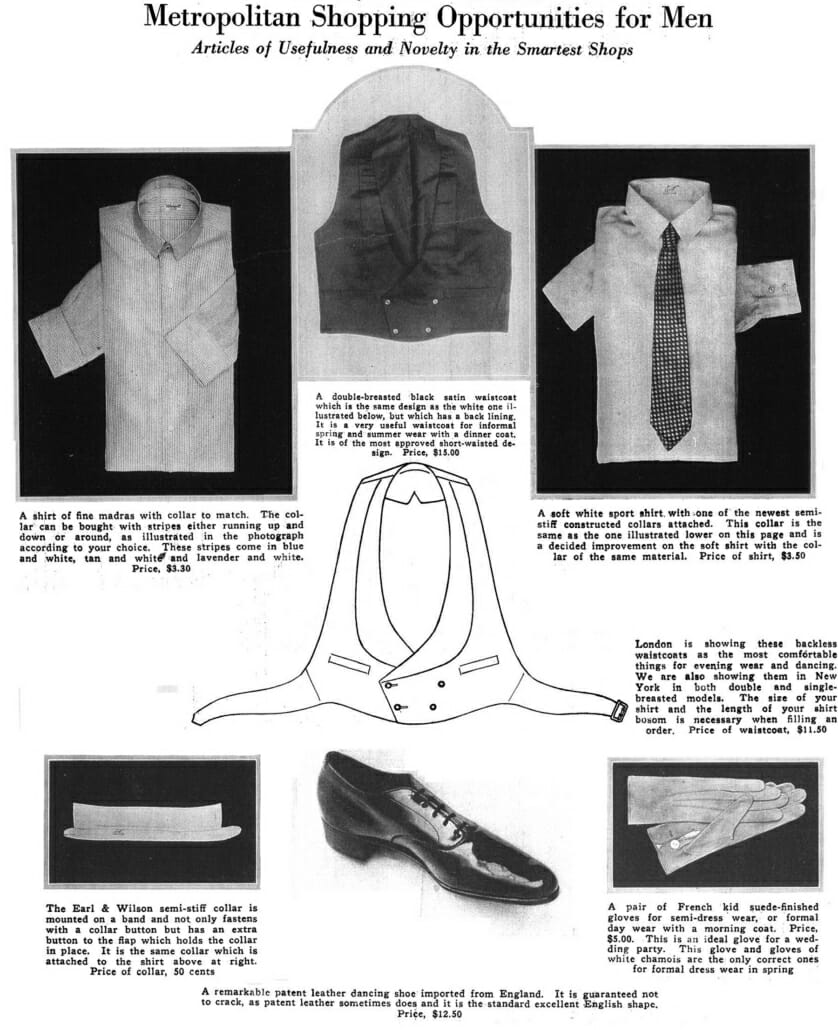
A stylish mode for the white waistcoat was the straight-waistline “tub” fashion that had been revived in America in 1921, a year after its re-introduction in England. Available in single- and double-breasted models it was popular with both informal and formal evening dress because its high-waisted cut and lack of points could better accommodate the height and fullness of the new trouser style.
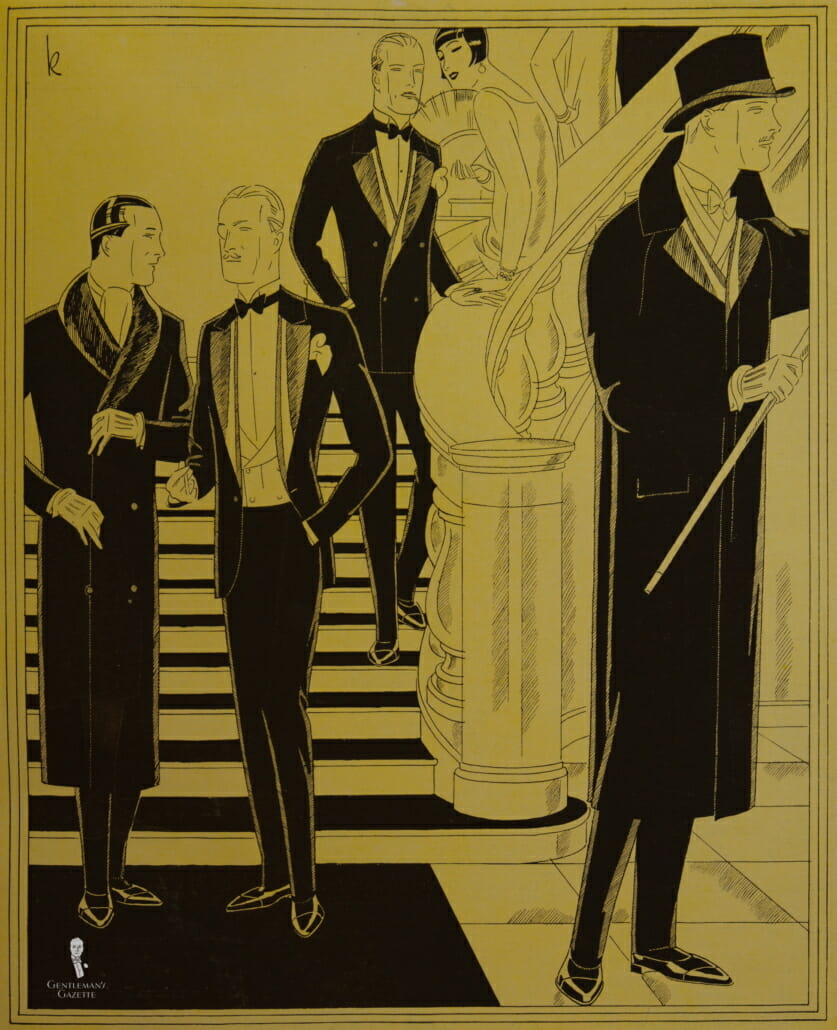
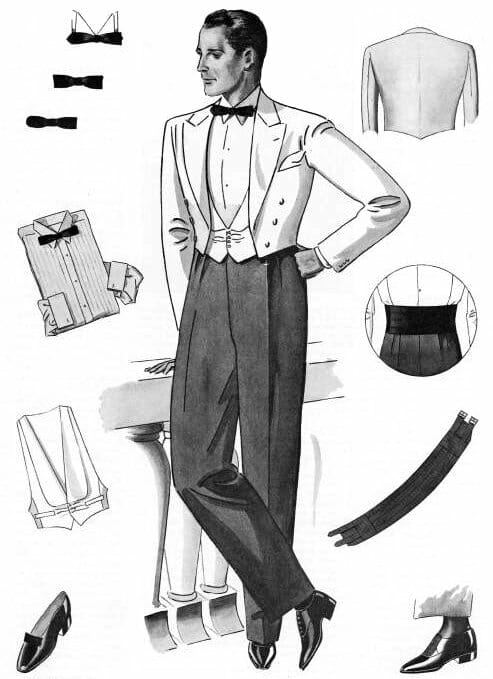
A few years later another waistcoat innovation was rapidly gaining in popularity: the backless model. Premiered by the Prince of Wales, this design replaced the fullback of the waistcoat with just two small straps that held the front in place thereby allowing the vest to retain much less body heat and making it particularly ideal for tropical climes. In fact, waistcoats were often worn with the new double-breasted dinner jackets designed for tropical evenings. This seems to be an unnecessary layer of clothing for a warm-weather outfit but the intention may have been to keep the waist covered even when a man opened his jacket to sit more comfortably. Also, double-breasted jackets of the 1920s typically had a narrow overlap when buttoned which revealed much more of the shirt front and, consequently, the edges of the underlying waistcoat. Not surprisingly, the practice died out when the minimalist cummerbund was introduced to warm-weather black tie in the early 1930s.
Shawl collars continued to be the norm for evening waistcoats although there were occasional appearances of models with peaked lapels or no lapels at all.
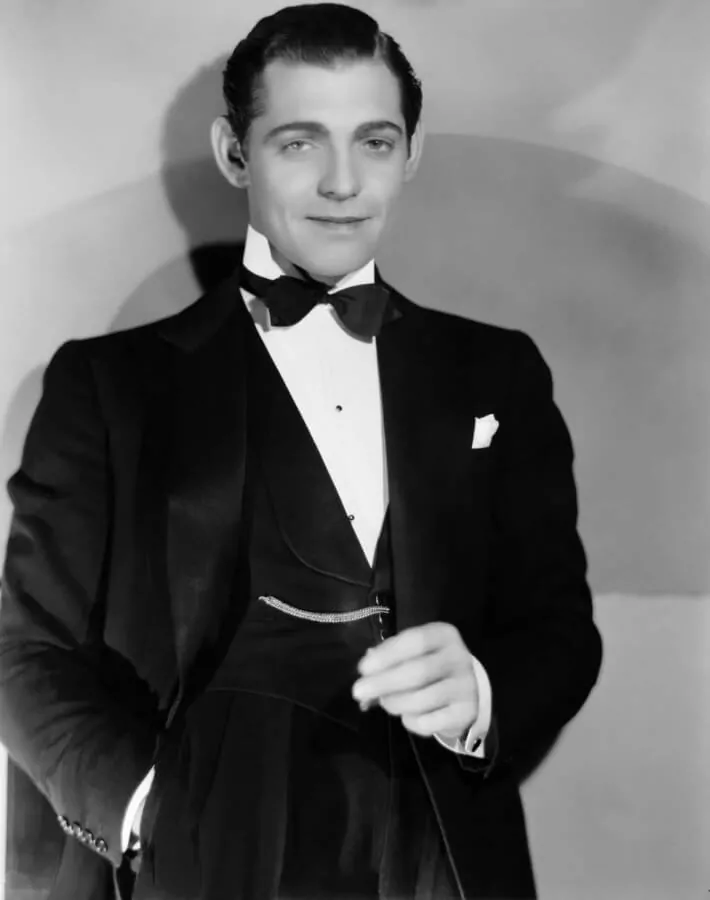
“Waistcoats have become a high style item. No more of the thick ill-fitting affairs but today a suave and sleek arrangement.”
Apparel Arts, 1933
Dapper Waist Dressing of the 1930s
Dapper dressers personalized their formal and semi-formal evening suits through their choice of single-breasted or double-breasted models, usually with a narrow V-shaped front opening, as well as a seemingly endless variety of lapels and cuts. By 1936 the backless design became the preferred choice in London and was rapidly gaining favor in the U.S.
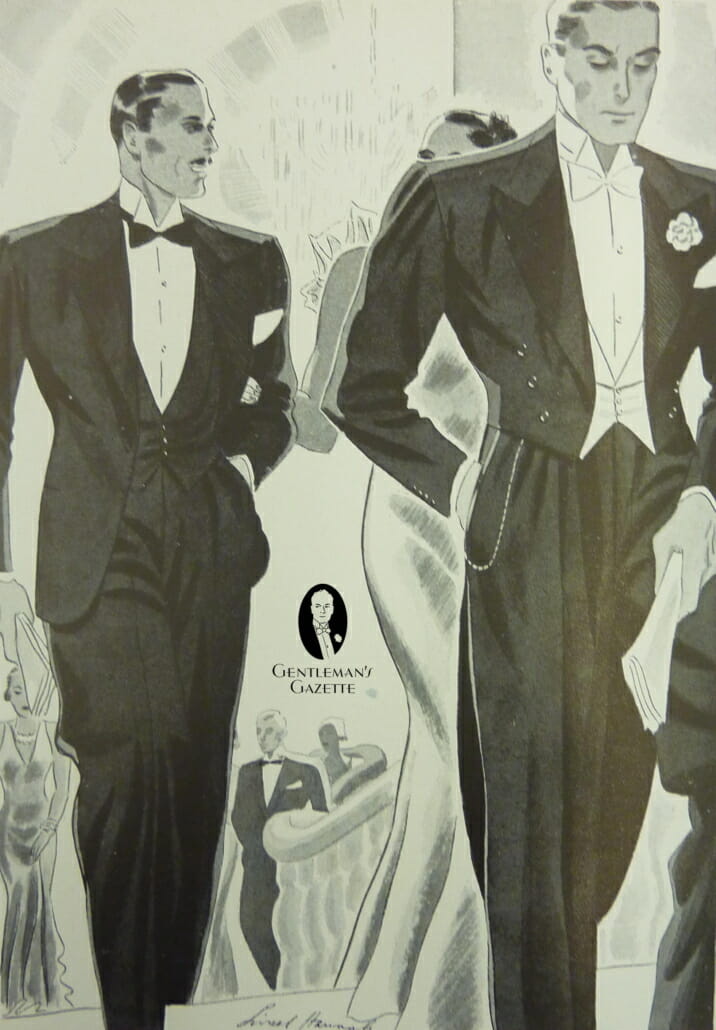
Notable developments for the full-dress waistcoat included the Prince of Wales’ export of the W-shaped double-breasted bottom of the daytime waistcoat into full evening dress. He also introduced rounded points as well as straight-bottom models styled without revers.
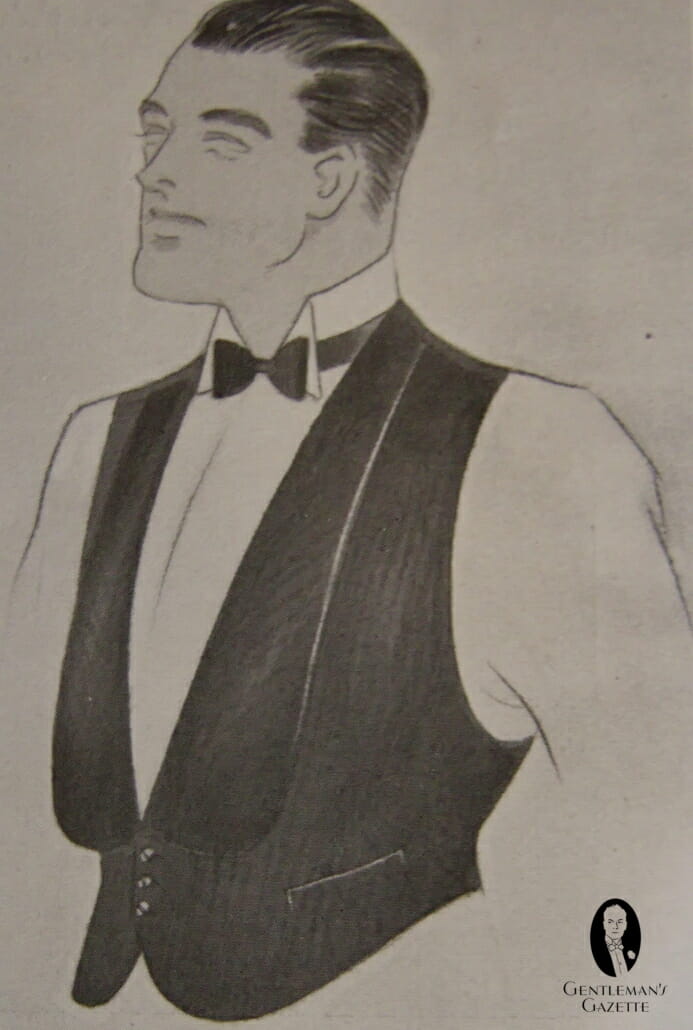
The previous decade’s fashion of wearing a full-dress waistcoat with the informal dinner jacket remained popular in Europe in the early ‘30s but by autumn 1933 the inaugural issue of Esquire was reporting that “The white waistcoat has at last been allowed to rejoin its lawful but long estranged mate, the tailcoat, and the new dinner jackets are matched with a waistcoat of the jacket material, with dull grosgrain lapel facing.” The renewed popularity of the tailcoat in the latter part of the decade further reduced the appeal of the mixed-breed combination although some etiquette experts would continue to recommend it as a formal middle ground for decades to come. (Emily Post prescribed it for the most formal of black-tie occasions right up until the 1970s.)
Around the same time that the white waistcoat fell out of favor some avant-garde dressers began to augment their tuxedos with styles fashioned of colored silk. However, the effect was a subtle one due to the evening waistcoat’s traditional low cut which limited its visibility under a closed dinner jacket. The rising popularity of double-breasted dinner jackets prompted fashion authorities to remind men that waistcoats were not necessary with such jackets.
The Decline of the Waistcoat from the 1940s to the 1970s
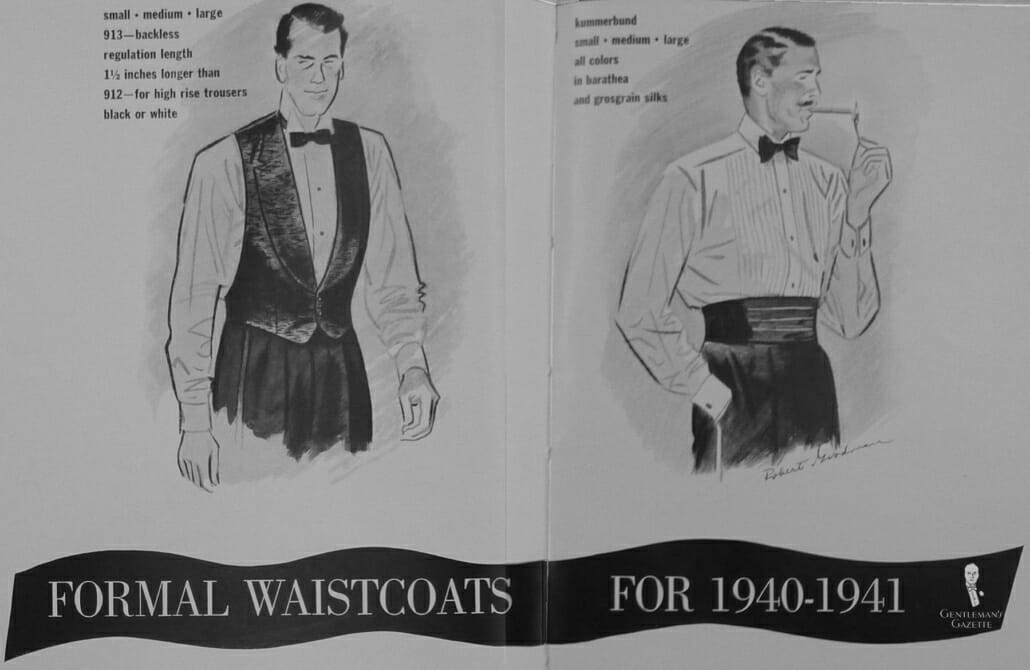
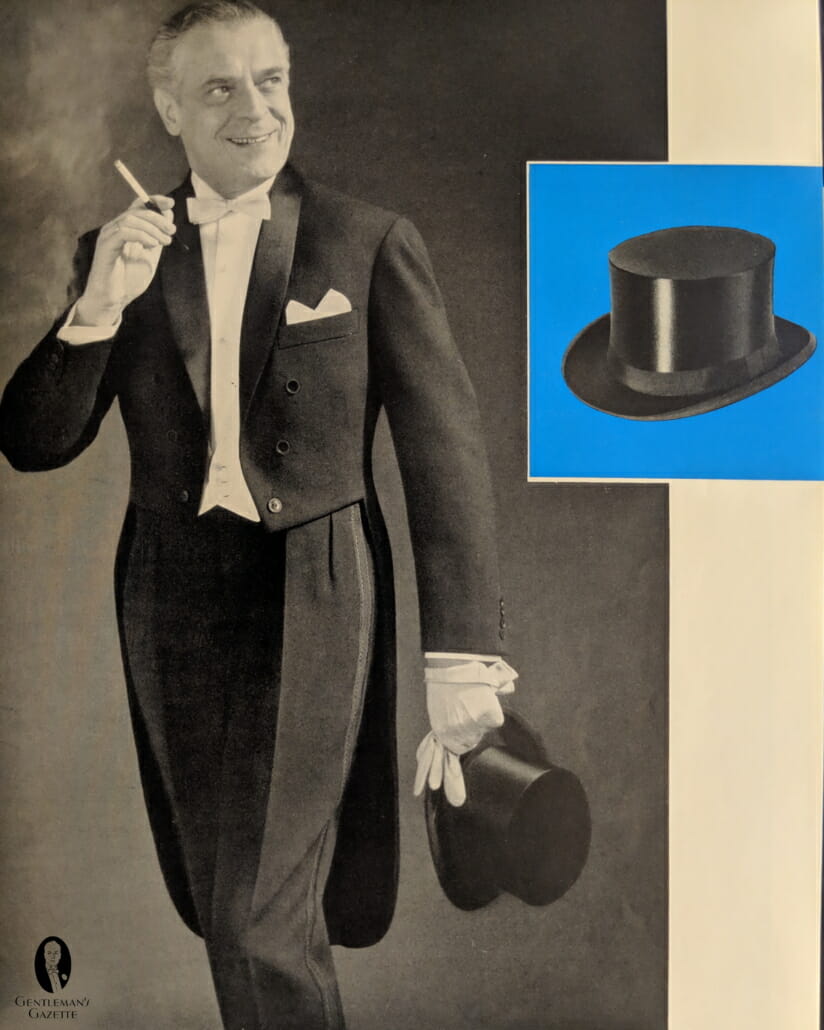
Like the aftermath of the First World War, it was a markedly more informal world that emerged from World War II and consequently many of the sartorial flourishes of 1930s evening wear disappeared. The declining interest in full dress, along with its highly conservative nature, meant that by the 1950s the rules for the white-tie waistcoat were pretty much set in stone for the remainder of the century.
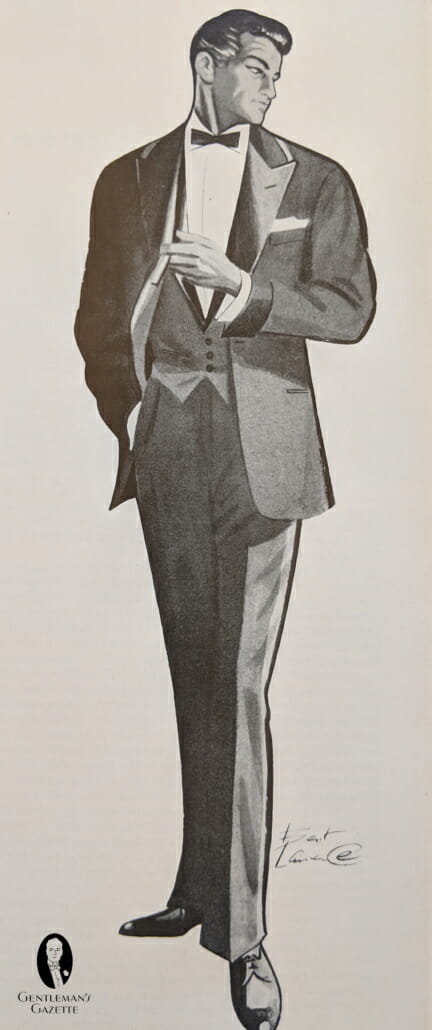
While the tuxedo continued to be much more relevant than the tailcoat, the post-war informal interpretation of black tie meant that the cummerbund was now the waist covering of choice. The waistcoat essentially went into sartorial exile emerging briefly in the early 1960s to enhance the Continental Look that was popular at the time. Now commonly referred to as a vest in America, the waistcoat was typically part of a three-piece formal suit.
The same type of trimmed edges featured on the jacket’s lapel was also used on the waistcoat’s revers until they began to disappear in the mid-sixties.
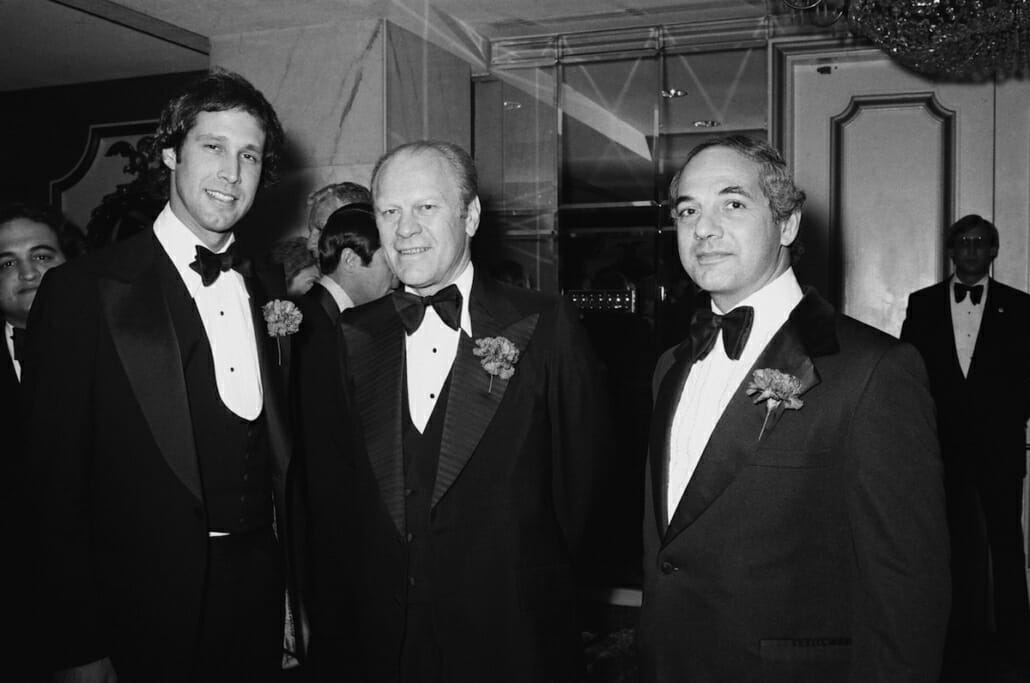
The extravagantly ruffled shirts, double-breasted jackets and “formal jumpsuits” of the late ‘60s and 1970s once again rendered the evening waistcoat largely obsolete. When it did appear it was more likely to be cut higher like the vest of a three-piece business suit, a style which became standard by the 1980s despite its aesthetic incompatibility with the low cut of traditional single-button tuxedo jackets. It could either match the tuxedos (often colored during this time) or be of a contrasting color, texture and/or pattern.
Cummerbunds
The Victorian Origins of the Cummerbund
English officers serving in British East India in the nineteenth century adopted the local practice of wearing a sash around the waist. According to The New Etiquette (1937) the purpose of the sash was “to keep the middle of the body warm, which was a great protection against the physical ravages of the excess heat and humidity.” However, warming up the waist to cool the body seems paradoxical. A 1932 Apparel Arts article claimed it was originally used to prevent night chill but this explanation is equally puzzling as the traditional waistcoat would have done the job much better. The most likely explanation for the officers’ adoption of the sash on the subcontinent was as a cooler substitute for the traditional dress waistcoat.
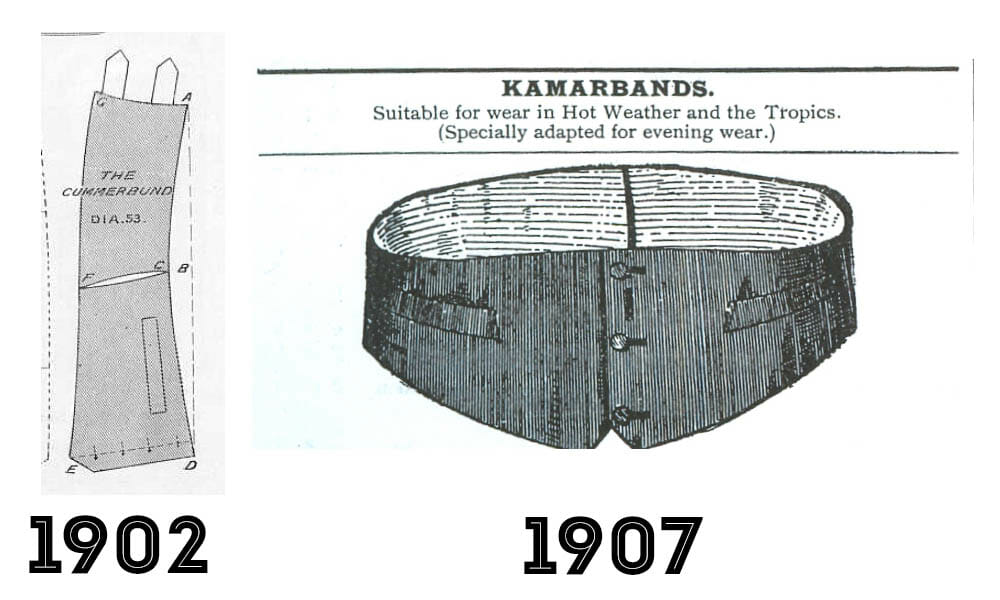
In the late Victorian period they adapted this kamarband into evening wear and exported it back to Europe where it was hardly a resounding success as a replacement for the full-dress waistcoat. One French fashion magazine described it in 1873 as a “wide belt that constitutes yet another grotesque fashion whose slovenly appearance hardly requires mention.”
The Handbook of English Costume of the Nineteenth Century contains an 1889 period description of the original cummerbund as a crimson or black silk “sash” wrapped around the waist four times. In 1893 it was described as a black “waistband” and was noted for having become popular with morning dress in colored silks wrapped twice around the waist. In 1895 it was described specifically as a “cummerbund” made of silk or colored twilled drill (a hardy cotton fabric most often used for khaki clothing) that had become “hopelessly vulgarized”.
The Cummerbund in the Edwardian Era
Despite its apparent fall from fashion in the late Victorian era the cummerbund appears again in early Edwardian sources, this time in the style of a cut-off waistcoat.
The Cummerbund: Warm-Weather Waist Alternative of the 1920s
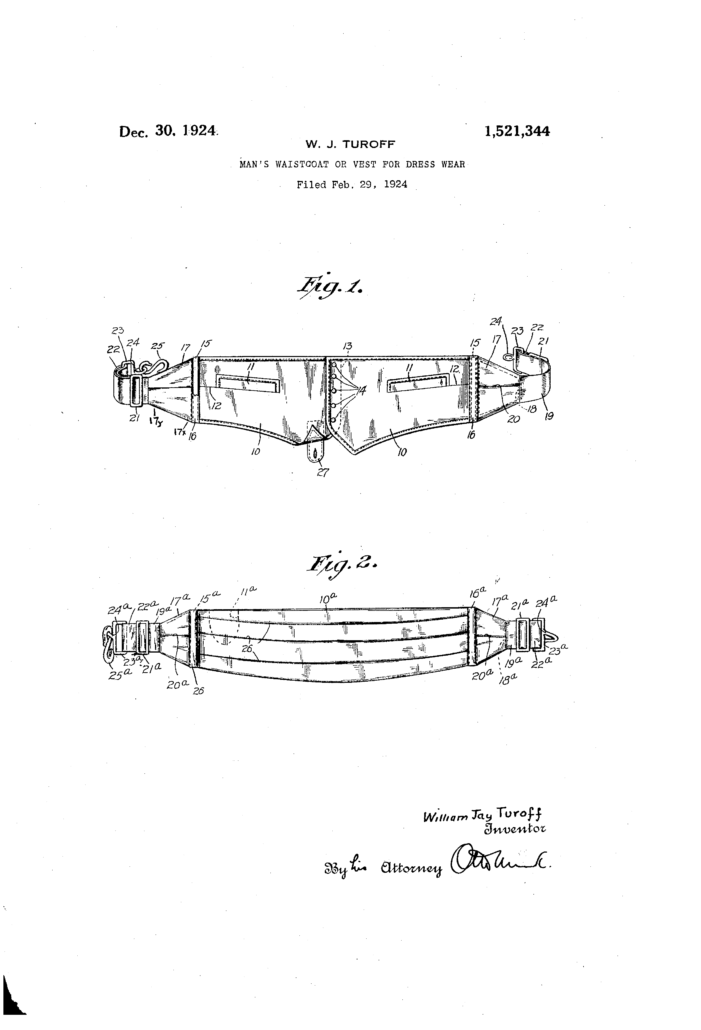
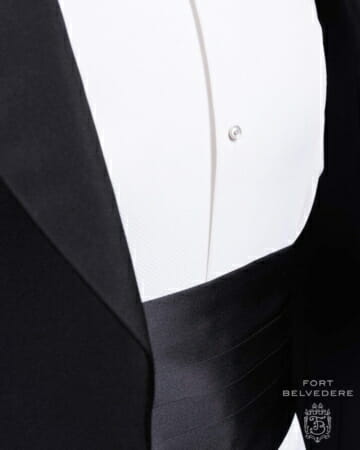
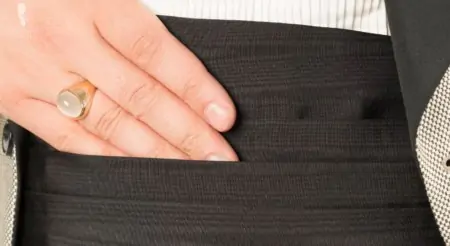
In 1924 a US patent application was filed for what was described as novel style of a “waistcoat or vest for dress wear” in that it consisted only of the bottom portion of the traditional waistcoat thereby eliminating the tendency for stiff dress shirts to bulge out of the open front of said waistcoat. Two variations were illustrated, one being similar to the Edwardian cummerbund except that it fastened in the rear with a buckle like a belt rather than buttoning in the front like a waistcoat. The other variation was the modern pleated style of cummerbund.
In 1928 a Men’s Wear article covering the Palm Beach scene noted an increase in popularity for the cummerbund which it described as “a black silk sash used as a replacement for the waistcoat on warm evenings”.
Jazz Singers and Pleated Cummerbunds of the 1930s
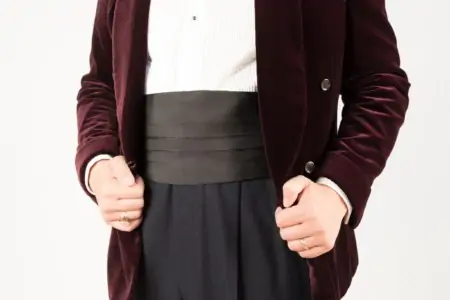
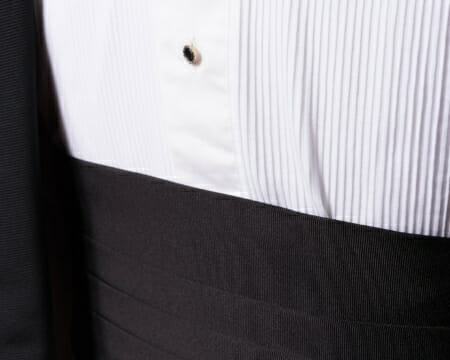
The pleated style of cummerbund became popular in 1933 thanks to the mess jacket craze of the early thirties. Advertisements from that era indicate that it was originally made in belt sizes.
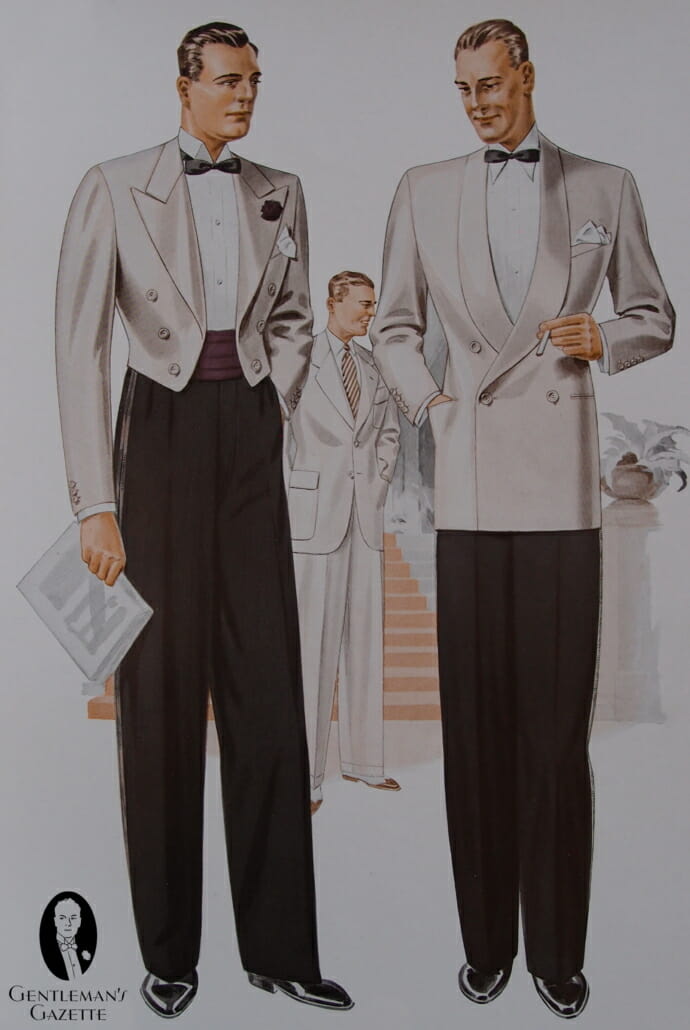
By 1937 The New Etiquette was describing it as a “popular and chic” waist covering for informal evening wear at resorts. “It is meant for hot weather to obviate the necessity of having the harness of a waistcoat over the shoulder and back when it might be uncomfortably warm. On the right people at the right time it is decorative and correctly in the spirit of colorful gaiety.” Colors were generally limited to black or maroon.
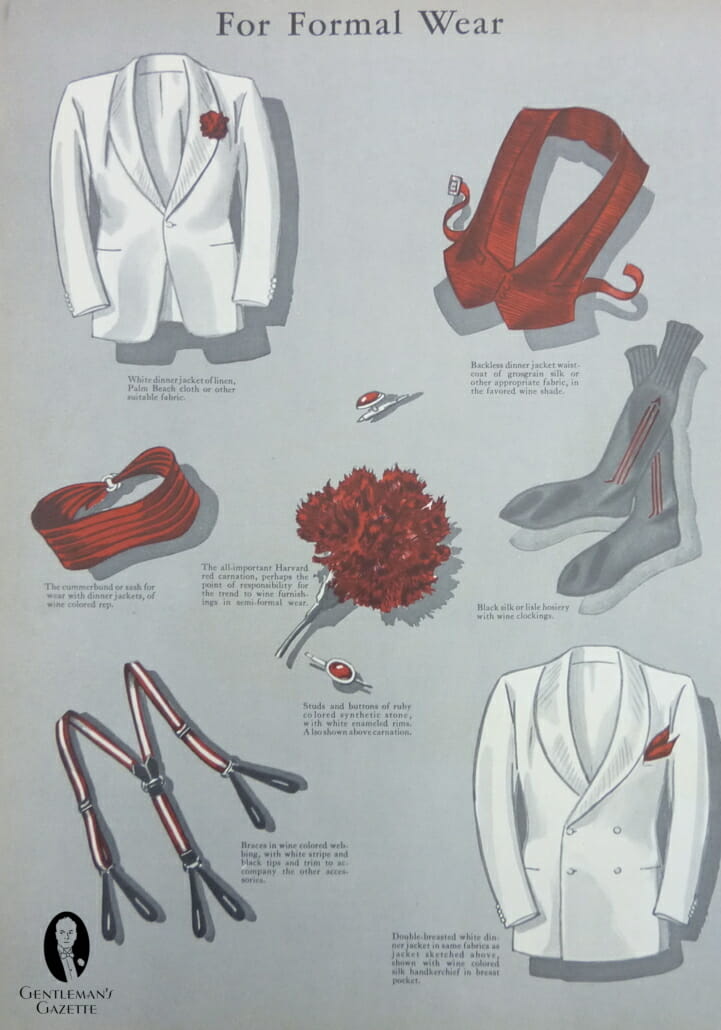
Like waistcoats in the 1920s, cummerbunds were sometimes worn with double-breasted jackets up until the mid 1930s.
Colorful Cummerbunds in the 1940s to 1960s
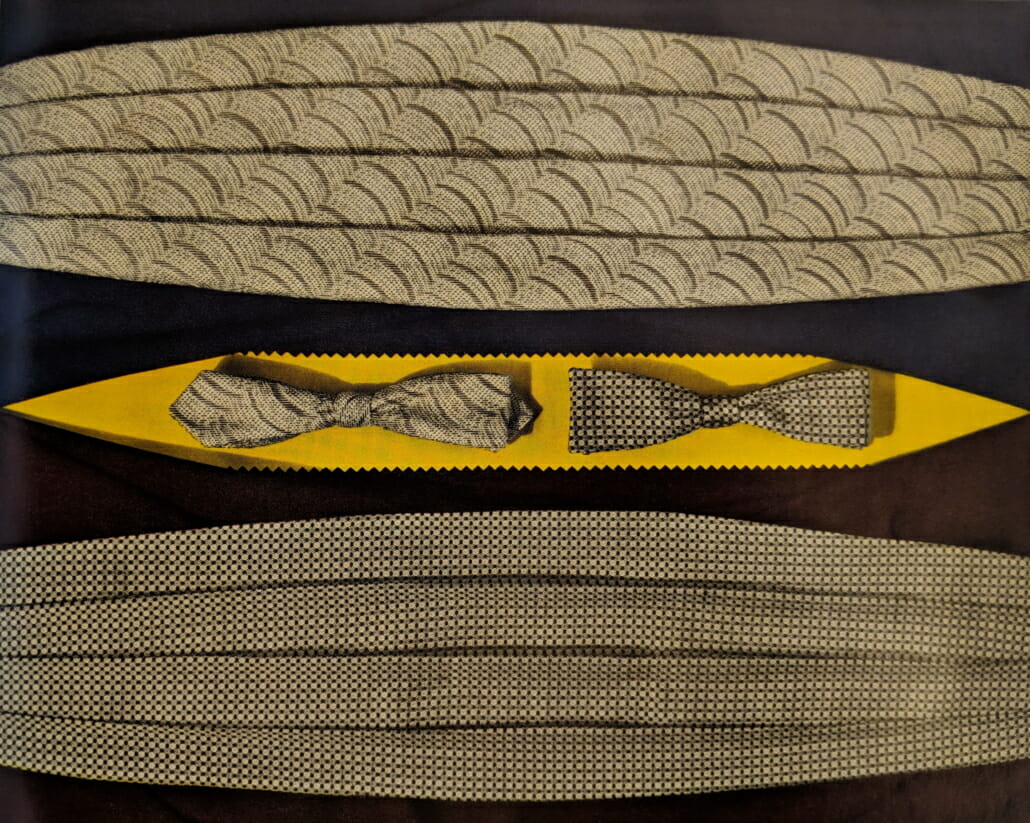
Formal standards were relaxed after the Second World War and by the 1950s the black cummerbund was considered appropriate year round. In fact, the cummerbund pretty much eradicated the waistcoat until the late 1970s. The adjustable version seems to have been invented in 1959 according to another US patent application (below) depicting a cummerbund with an adjustable rear strap specifically intended to eliminate the need for custom sized models.
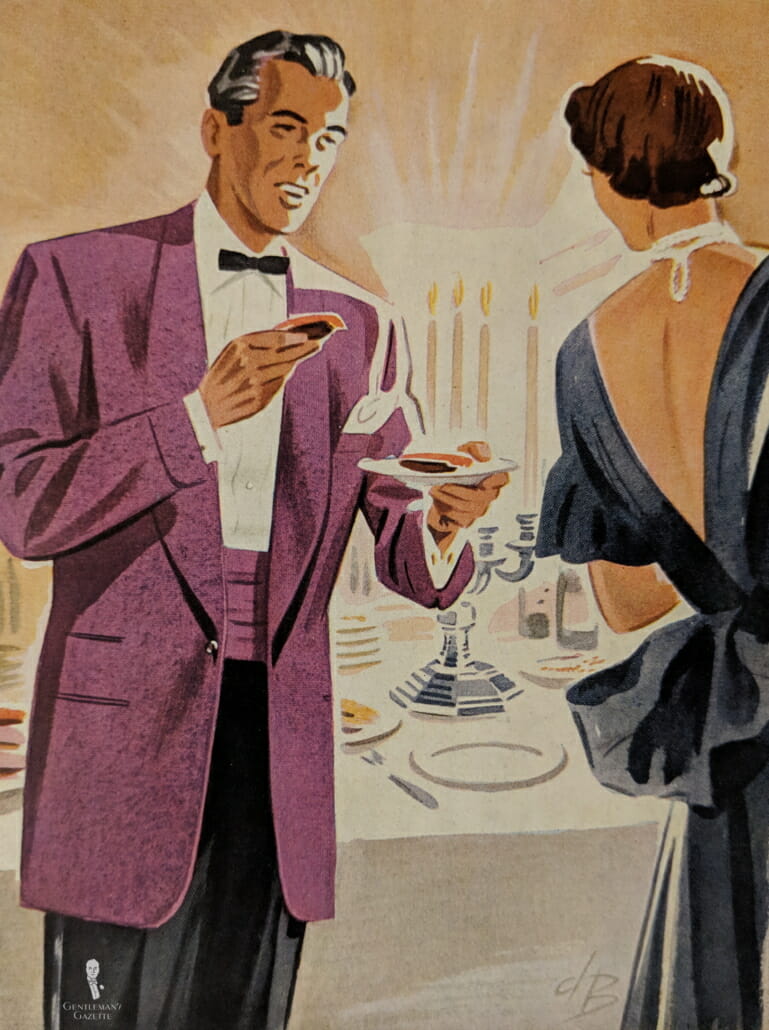
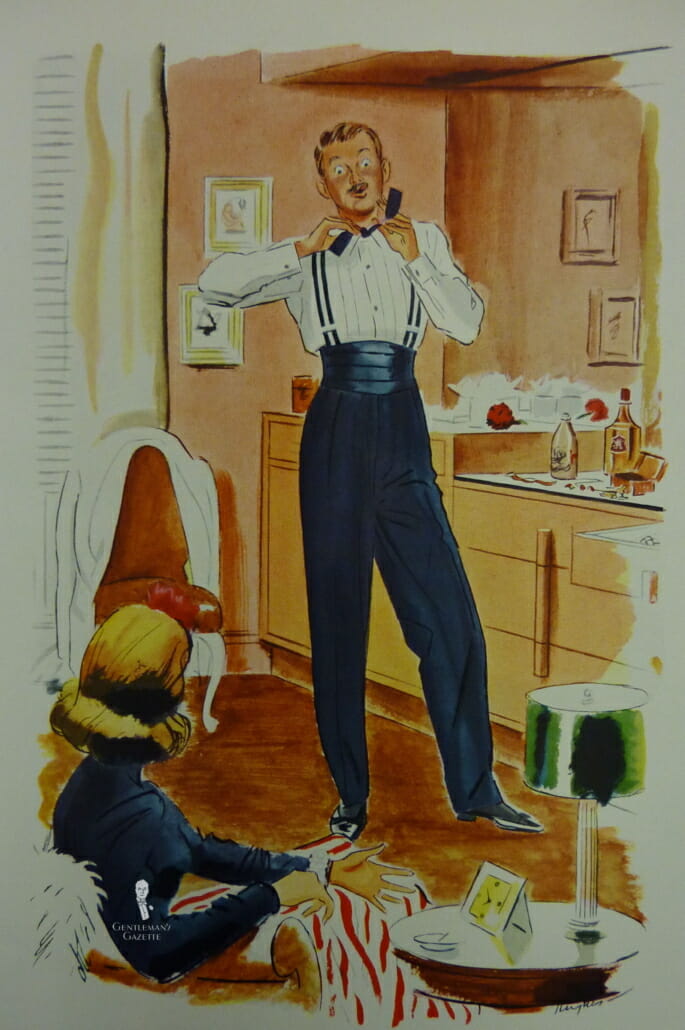
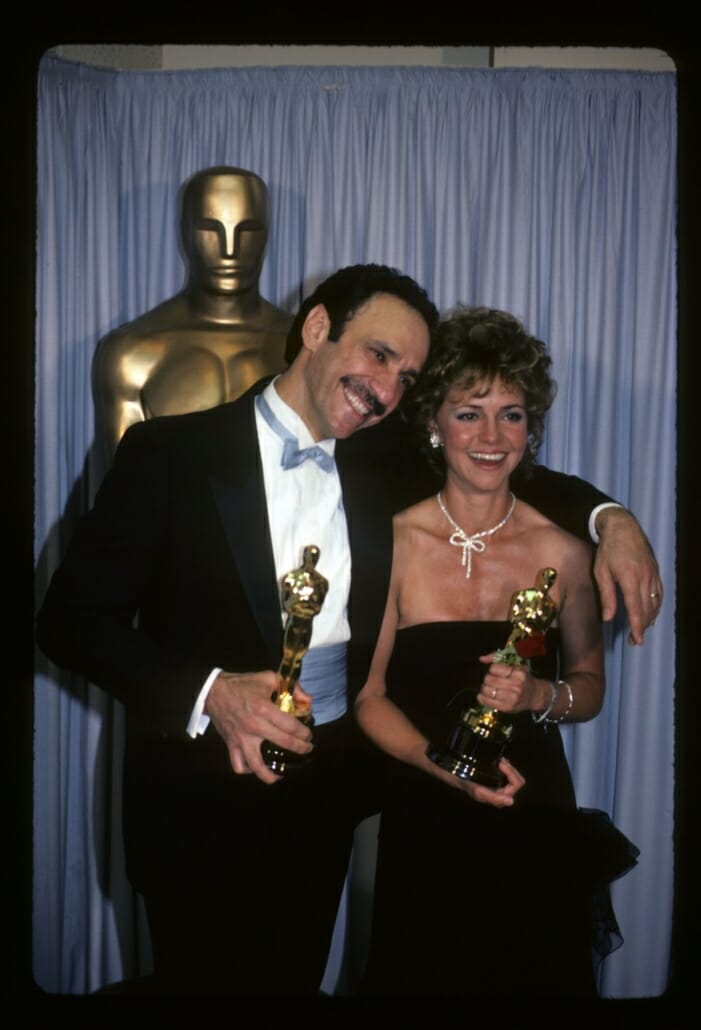
Tuning in to America’s growing taste for flair and comfort in formal wear, After Six introduced a riot of color, pattern and fabric to cummerbunds in 1954 and sold them with matching pre-tied bow ties in “formal paks”.
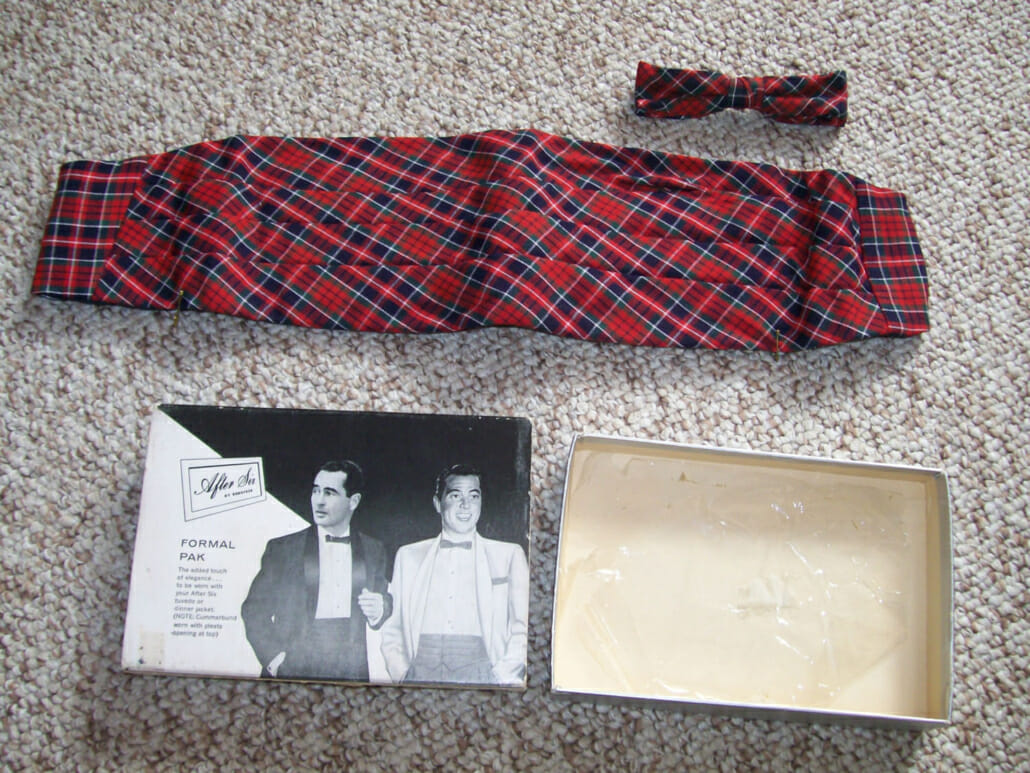
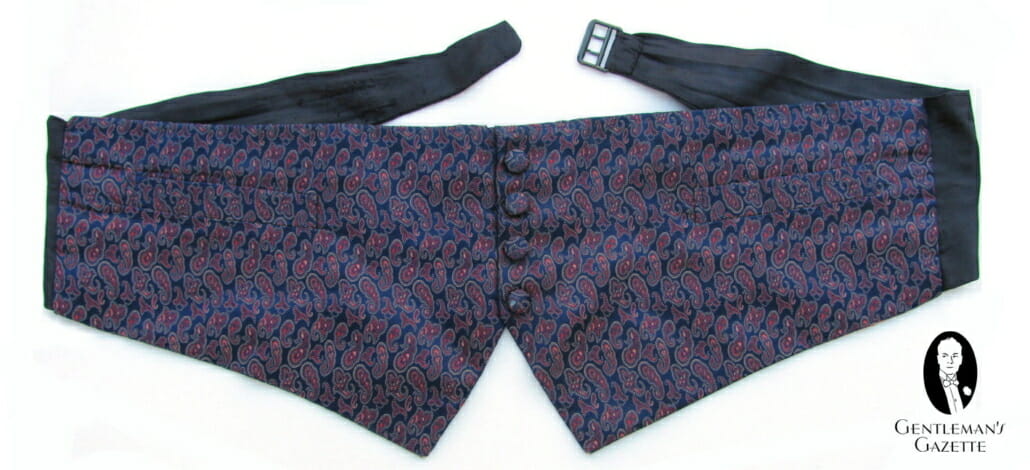
They also featured a variation known as the cummervest which was essentially a throwback to the Edwardian-era cummerbund styles. By 1959 upscale haberdashers were offering their own variations with matching self-tie bow ties and by 1967 After Six was advertising a whopping 164 varieties.
The Cummerbund from the 1970s to the Present
When conservatism returned to formal wear in the late 1970s the color and pattern introduced during the Peacock Revolution of the sixties was stripped from all garments with the notable exception of waist covers and matching ties. Solid colored cummerbund sets were particularly popular with young American males throughout the 1980s which may explain the formal sash’s fall from favor in the 1990s. By the turn of the millennium men much preferred either a waistcoat or uncovered waist to the formerly ubiquitous cummerbund.
Formal Facts
White Vest, Black Buttons
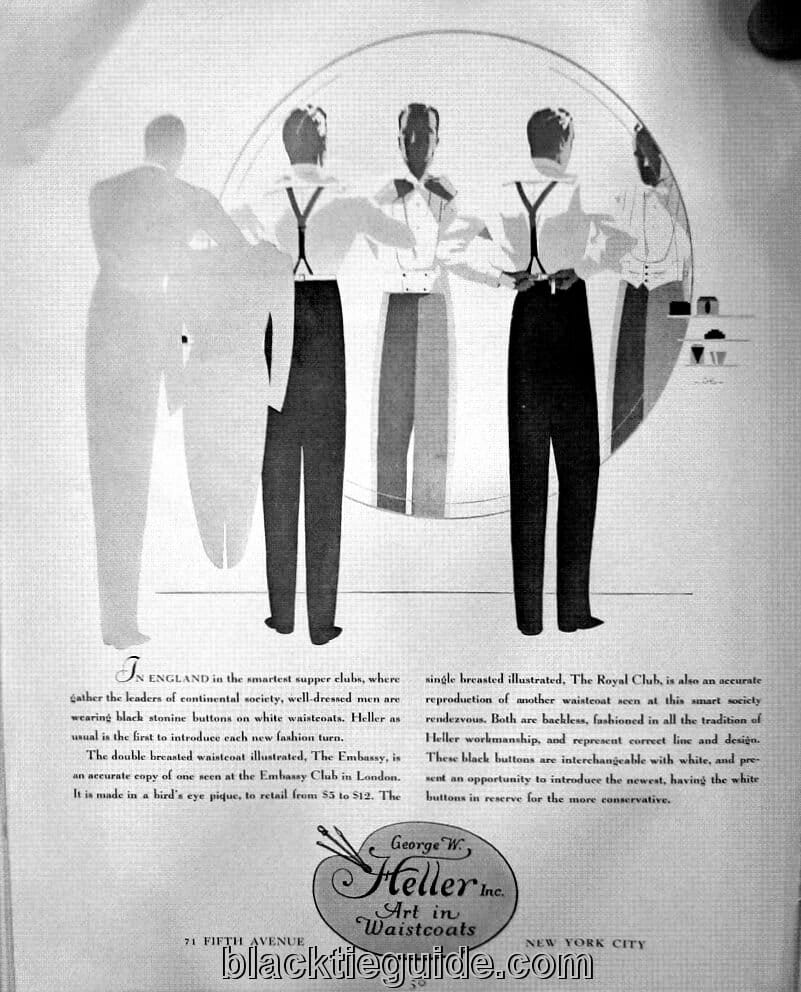
Like the studs and links of the full-dress shirt, the buttons of the full-dress waistcoat were traditionally made of pearl in order to blend with the garment’s white fabric. In 1932 the stylish Prince of Wales began sporting black waistcoat buttons and the fad quickly spread across London then America. Soon other colors were also allowable provided they were “not too showy” in the words of one menswear magazine. The trend lasted up until the war.
Braces-Attached Waistcoats
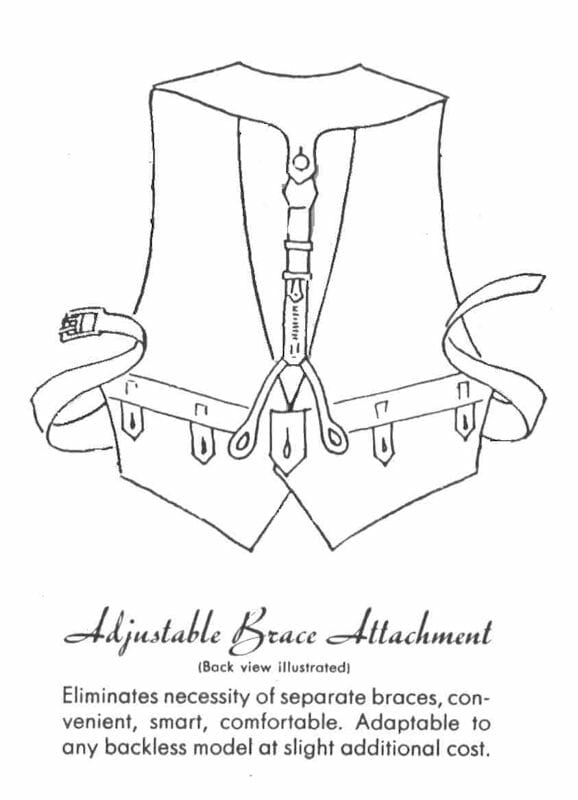
For convenience, some waistcoats featured built-in braces, or suspenders. We find it hard to believe that this clunky additional hardware was terribly useful, and so it is no surprise that this style of waistcoat never gained very much popularity and has, perhaps for the best, almost entirely disappeared today.
Explore this chapter: 8 Vintage Evening Wear
- 8.1 Vintage Black Tie Etiquette & Dress Codes
- 8.2 Vintage Tailcoats & Tuxedos
- 8.3 Vintage Evening Waistcoats & Cummerbunds
- 8.4 Vintage Evening Shirts
- 8.5 Vintage Evening Neckwear
- 8.6 Vintage Evening Footwear
- 8.7 Vintage Evening Accessories
- 8.8 Vintage Evening Outerwear
- 8.9 Vintage Warm-Weather Evening Wear
- 8.10 Vintage Evening Weddings
- 8.11 Retro Evening Wear