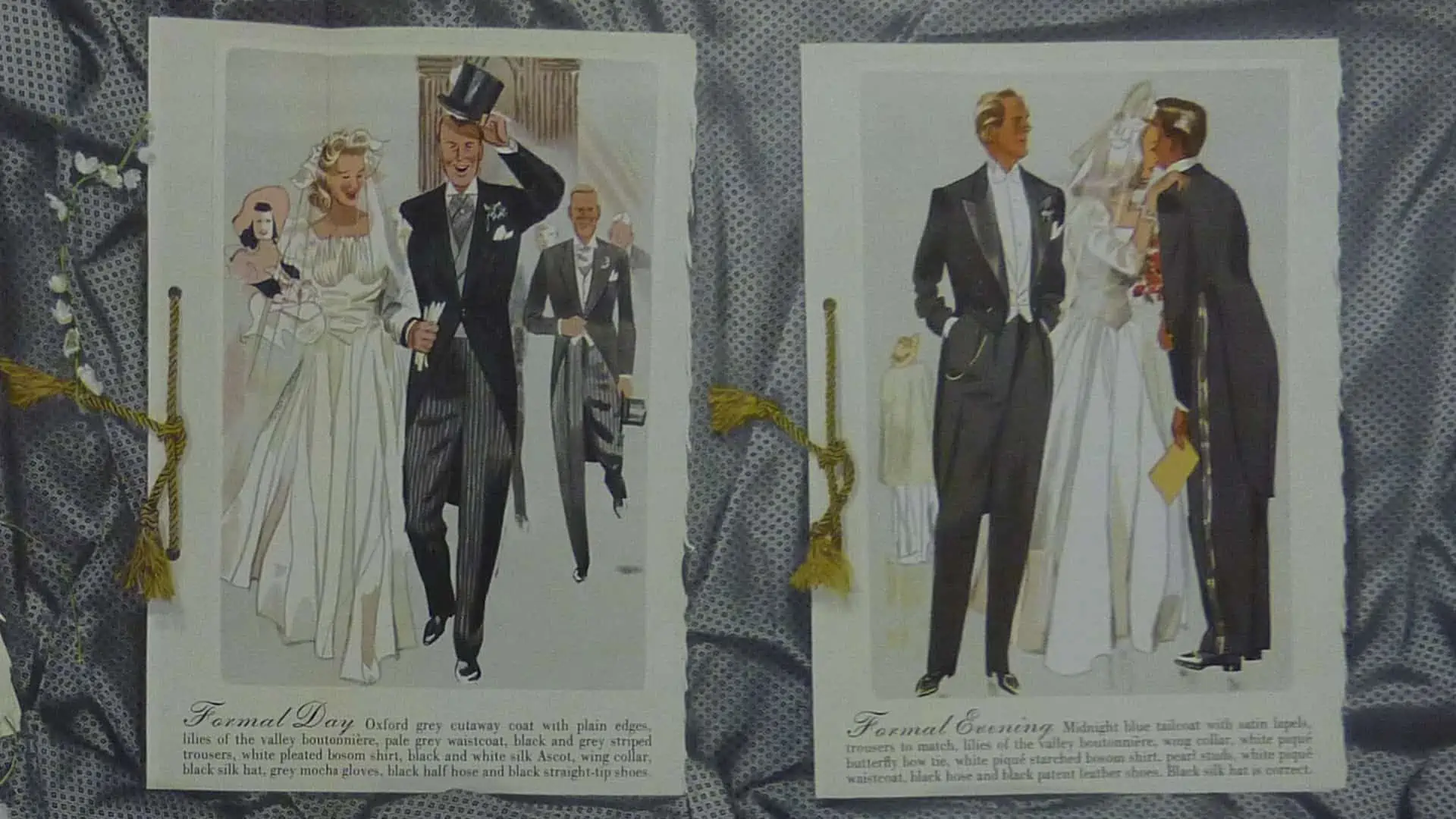
Whether you are considering vintage flair for your own nuptials or are merely interesting in the subject, this guide will take you through the sartorial evolution of the evening wedding in the 20th century.
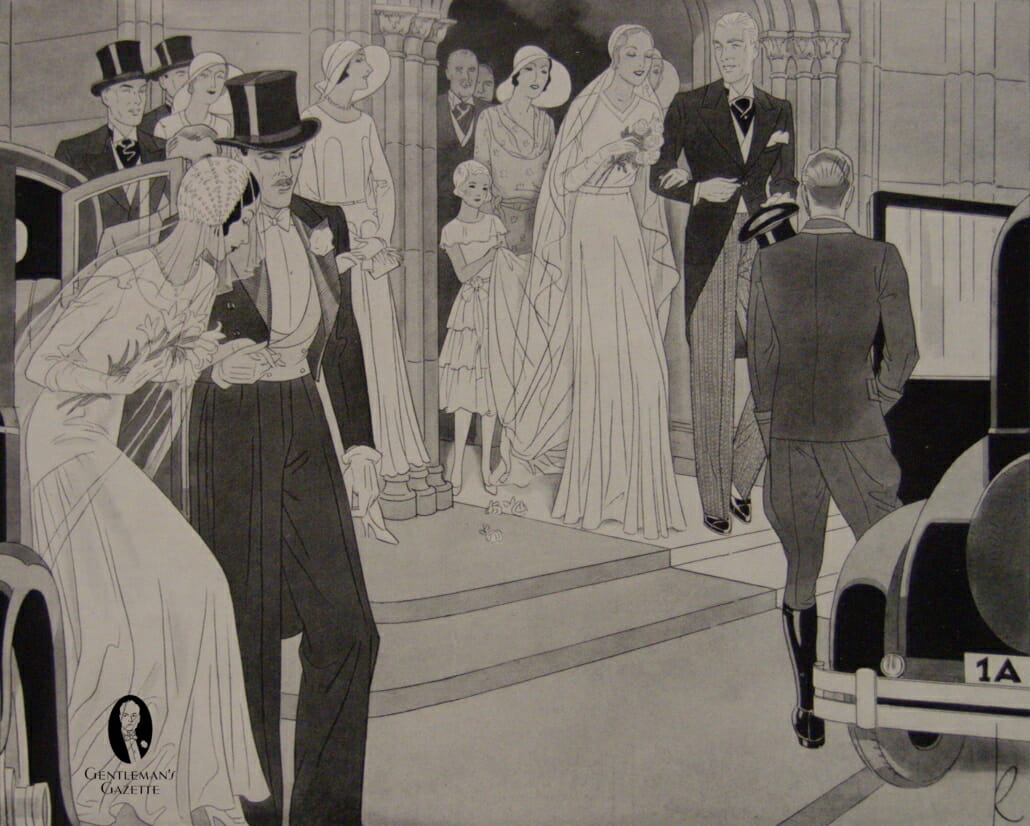
Evening Weddings Before the 1930s
Evening weddings are mentioned by American etiquette books dating as far back as 1887. They were always formal affairs and therefore exclusively white tie because prior to the 1930s the dinner suit was considered appropriate only for informal evening gatherings.
The 1922 edition of Emily Post’s Etiquette mentions that such weddings were unknown in New York society and only took place in the west in cities such as San Francisco. She would later add Atlanta to this list which corresponds with Vogue’s Book of Etiquette explanation in 1969 that evening weddings were popular in the South and Southwest because churches there were frequently warm and uncomfortable during the day.
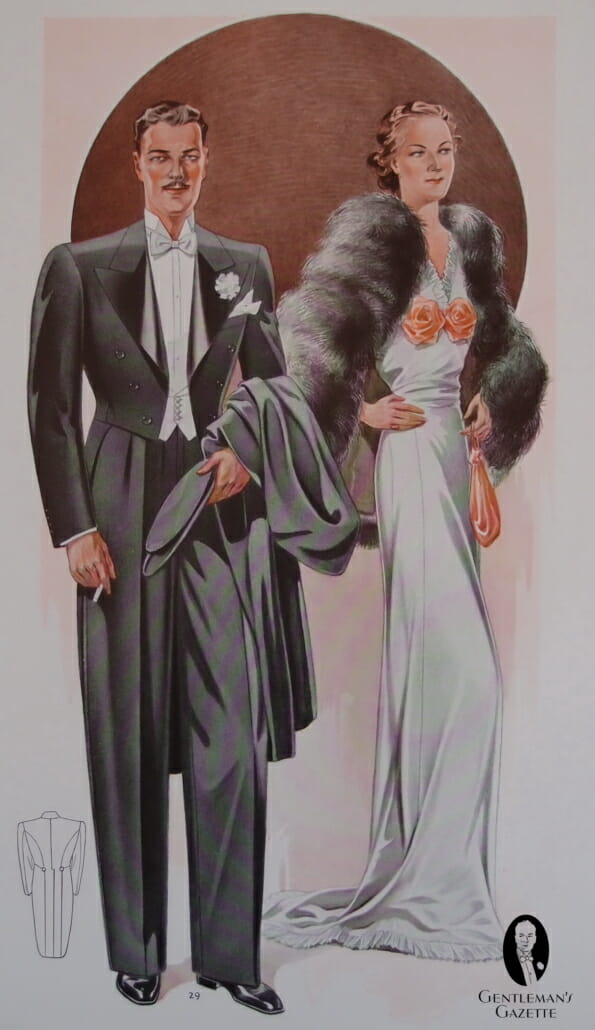
Depression Era Nuptials (1930s)
Traditional etiquette authorities continued to insist that “no man should ever be caught in a church in a tuxedo” but by the late 1930s menswear magazines acknowledged the growing trend of “semi-formal” evening weddings by providing detailed guidelines for such occasions.
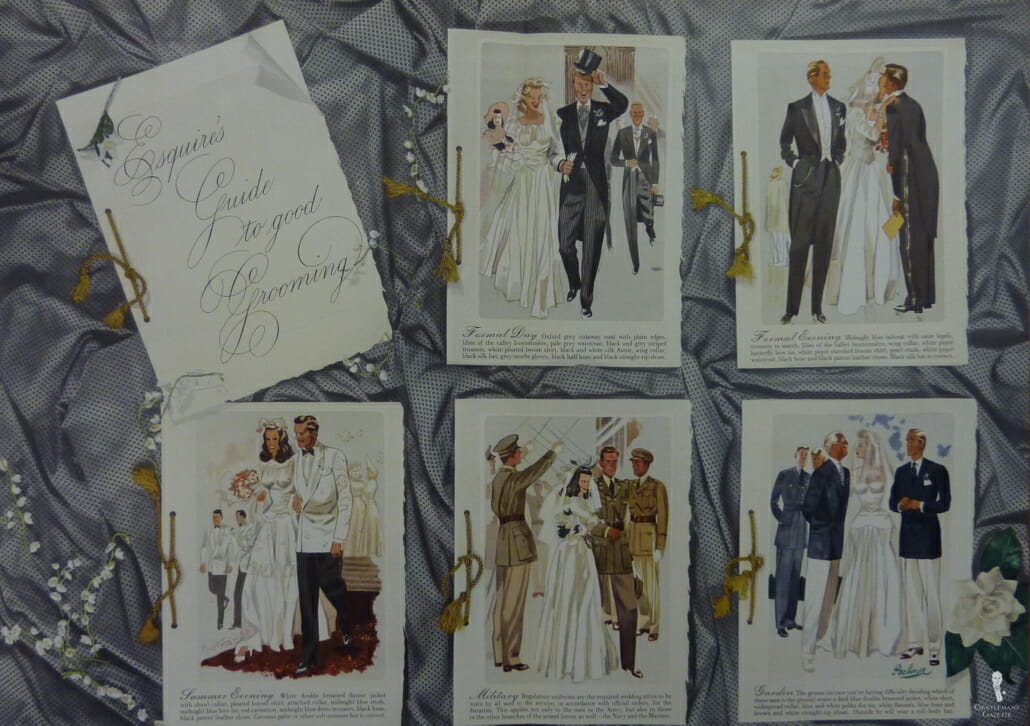
One of the earliest such references is this pictorial from the June 1937 issue of Esquire. In it, a black dinner jacket is depicted as being appropriate for semi-formal weddings in town while a white coat is suggested for similar ceremonies in the country.
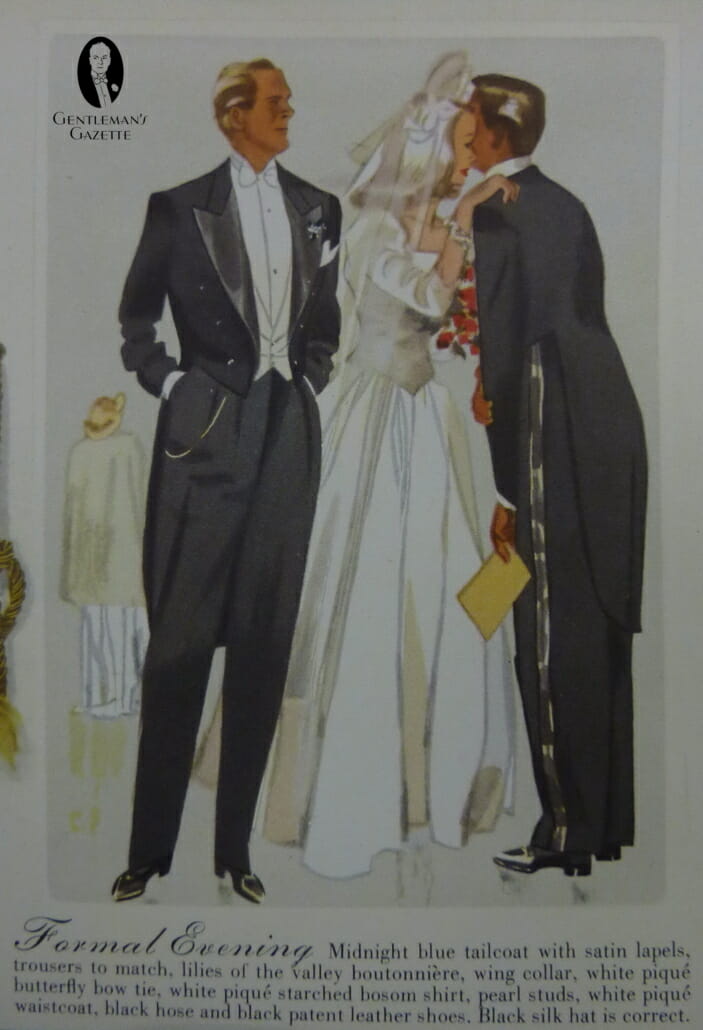
A more detailed written description of the groom’s options appeared in the June 1939 issue of the same magazine:
In town, the black or midnight blue dinner jacket, with wing collar, semi-butterfly tie, and black patent leather shoes. In the country or at a resort, the shawl collar double-breasted dinner jacket of white tropical worsted, washable fabric or Palm Beach is worn, with midnight blue or black dress trousers; a starched, pleated or soft bosom pique [sic] or silk shirt and black semi-butterfly tie are worn with both the regulation and the summer dinner jackets.
In June of the following year, the publication enhanced its descriptions and expanded them to include groomsmen and guests. However, the article’s broad definition of “formal evening wedding” (“church or home wedding after six o’clock”) and its new description of “semi-formal” weddings being strictly warm-weather affairs indicates a shift away from town versus country formality in favor of seasonal distinctions.
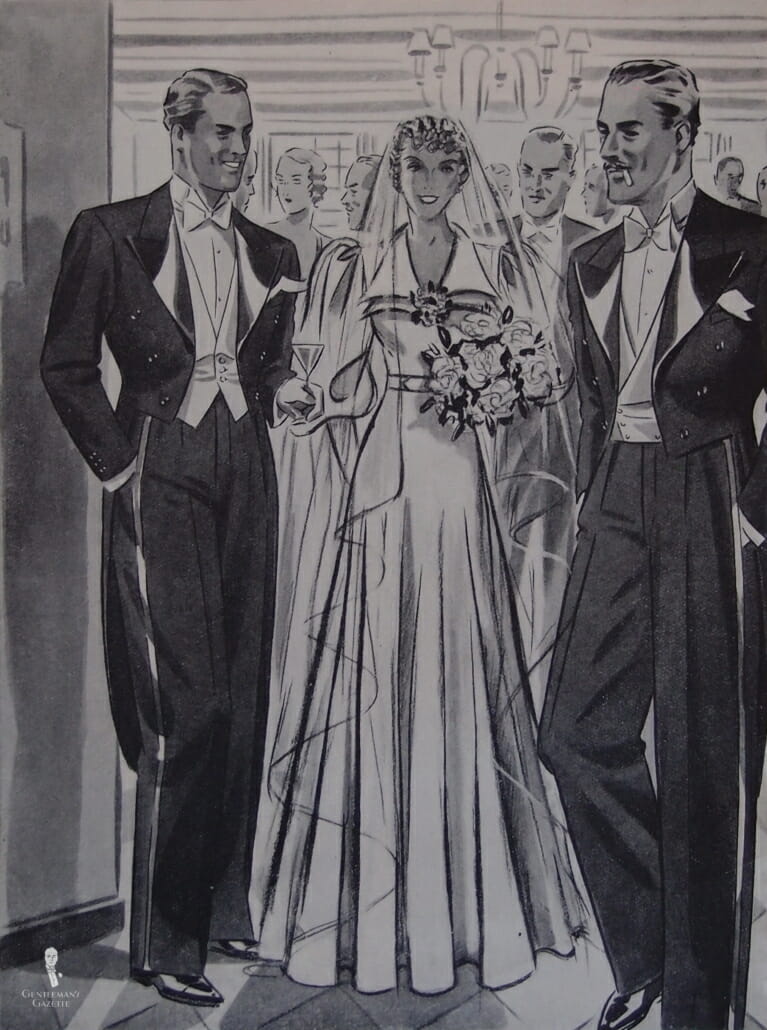
Despite the magazine’s apparent retraction of semi-formal town weddings, period photographs show that groomsmen were regularly appearing in tuxedos, presumably for evening church ceremonies. They also reveal a common practice of grooms wearing white ties with their tuxedos. This was likely an attempt to import some full-dress formality into their attire although technically it was just compounding one faux pas with another.
War & Post-War Weddings (1940s, ’50s)
In its May 1942 issue, Esquire once again divided wedding formality by season rather than locale, dropping the “semi-formal” tag altogether:
In June 1948 the magazine re-instated the generic semi-formal category alongside the more specific “summer evening” heading. The writers also added a bit of flair to warm-weather ceremonies by advising that guests (in single-breasted jackets, presumably) wear bow ties and cummerbunds of matching maroon, black or midnight blue. Additional instructions for groomsmen (see third page below) insisted that the same color must be used by all men in the wedding party.
Despite the relaxed standards of the new era, traditional etiquette authorities were slow to accept black tie at religious ceremonies. In the 1952 first edition of her series of etiquette books, author Amy Vanderbilt advised that
A tuxedo, essentially a frivolous garment, should not be worn in church for any reason. For a night wedding, even at home, full dress should be worn by members of the wedding party, unless they prefer the alternative of dark sack suits. In summer they may wear white flannels with blue coats or for an evening garden wedding, white dinner jackets.
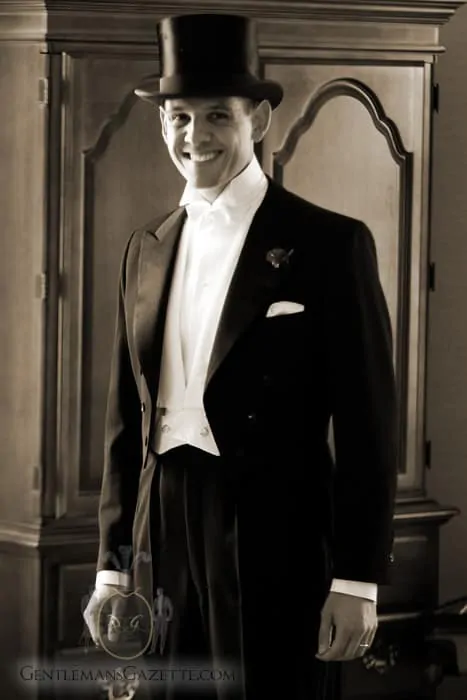
Elsewhere in the book she provided some leeway: “For a smaller, less formal wedding in the evening, a dinner jacket is permissible,” she allowed, specifying that “If the bride wears street clothes [as opposed to bridal gown] then the groom wears a dark business suit. If the bride wears a dinner dress the groom wears a tuxedo.” Mrs. Vanderbilt also noted that it had even become usual for young men to wear a tuxedo to a formal wedding but only as guests – wedding party members and fathers of the bride and groom were still expected to wear white tie.
Emily Post did not even acknowledge the semi-formal evening wedding until the fourth version of her famous Etiquette books in 1955. At that time she finally allowed for a dinner jacket to be worn to “less formal” evening weddings and prescribed the double-breasted white model for tropical ceremonies.
Vintage Groom Style: Looking Memorable on a Memorable Day
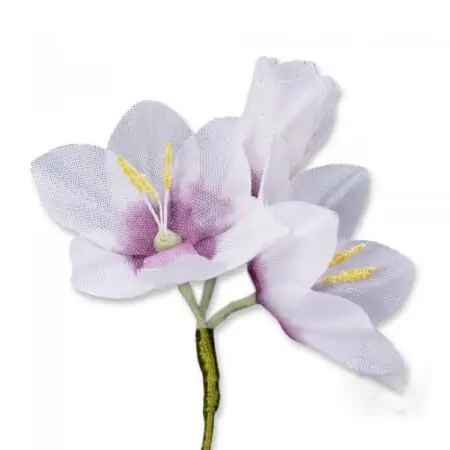
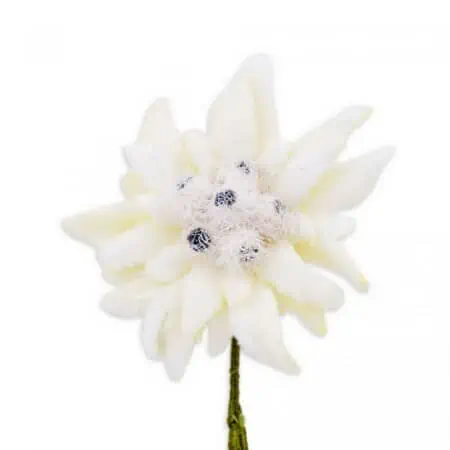
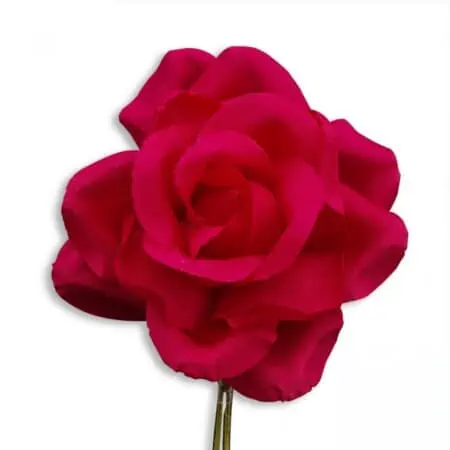
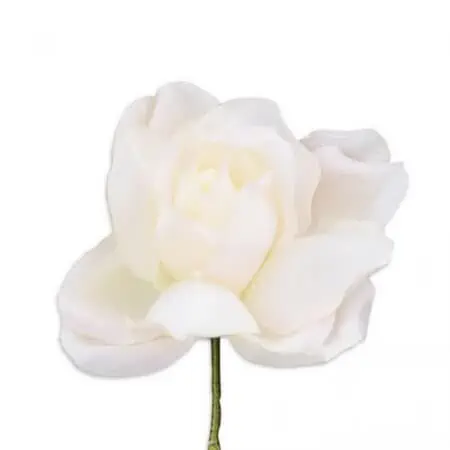
Although a bride’s attire is deliberately designed to set her apart from her bridesmaids, traditional formalwear etiquette called for groom and groomsmen to have a uniform appearance. The only distinguishing feature was the type of boutonniere worn. Esquire and Apparel Arts recommended that the groom wear a small white flower such as a lily of the valley or a flower from the bride’s bouquet. Best men wore white gardenias and ushers wore white carnations.
Formal Facts
Formal Day Weddings
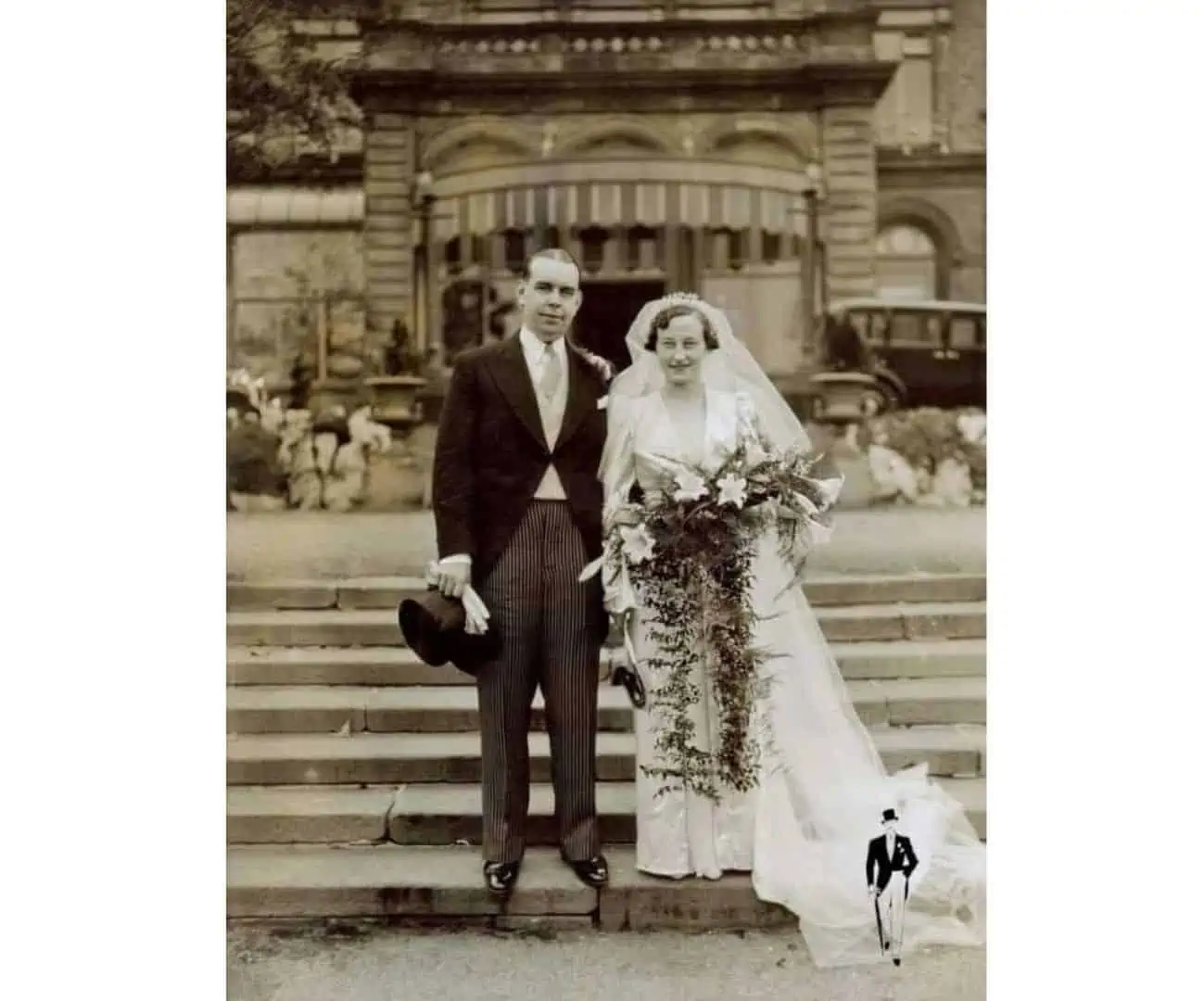
See the Morning Dress page for details of formal and semi-formal day wear.
Formal Timing
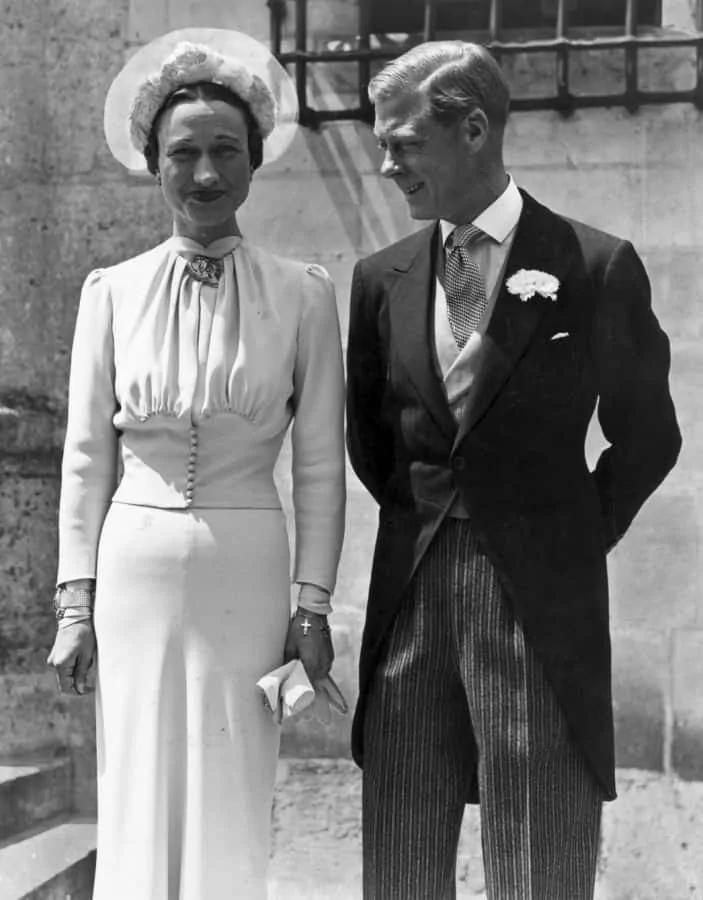
Emily Post books up to 1945 state that “smart” evening weddings traditionally began at 9 P.M., much like the grand balls of Victorian and Edwardian times. The 1952 edition of Amy Vanderbilt’s book moved up the time to “after 7 P.M.” and the 1963 edition to after 6 P.M. In 1969Vogue’s Book of Etiquette stated that weddings beginning at 7:30, 8:00 “or even nine o’clock” were popular in the South.
“Formal” Summer Wedding
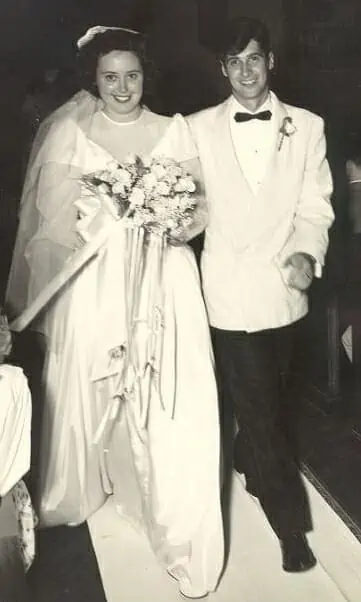
As if dress code terminology wasn’t confusing enough, Esquire would often refer to summer black-tie weddings as “formal” even though they were technically only semi-formal. This was because no summer wedding was considered formal in the conventional sense of the word, likely due to polite society’s traditional absence from the city during these months. The season’s torrid weather probably didn’t encourage suiting up in stifling full-dress rigs either.
Semi-Formal Variation
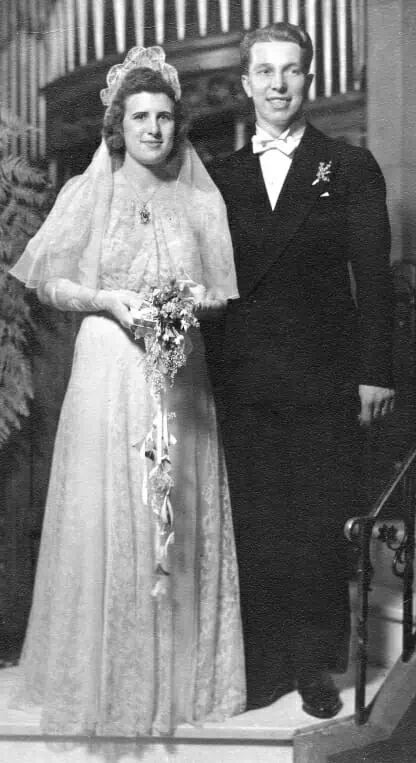
Despite traditional etiquette to the contrary, grooms in the 1930s and ’40s regularly wore tuxedos to church and often mismatched them with a white bow tie.
Explore this chapter: 8 Vintage Evening Wear
- 8.1 Vintage Black Tie Etiquette & Dress Codes
- 8.2 Vintage Tailcoats & Tuxedos
- 8.3 Vintage Evening Waistcoats & Cummerbunds
- 8.4 Vintage Evening Shirts
- 8.5 Vintage Evening Neckwear
- 8.6 Vintage Evening Footwear
- 8.7 Vintage Evening Accessories
- 8.8 Vintage Evening Outerwear
- 8.9 Vintage Warm-Weather Evening Wear
- 8.10 Vintage Evening Weddings
- 8.11 Retro Evening Wear