Regarding White Tie accessories: “Whatever they wear must look as if it were useful by intention and valuable by chance”
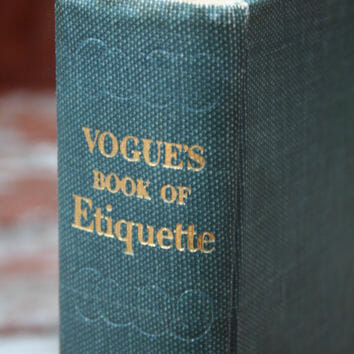
Vogue's Book of Etiquette, 1925
White Tie Footwear: Ensure Shine and Elegant Lines
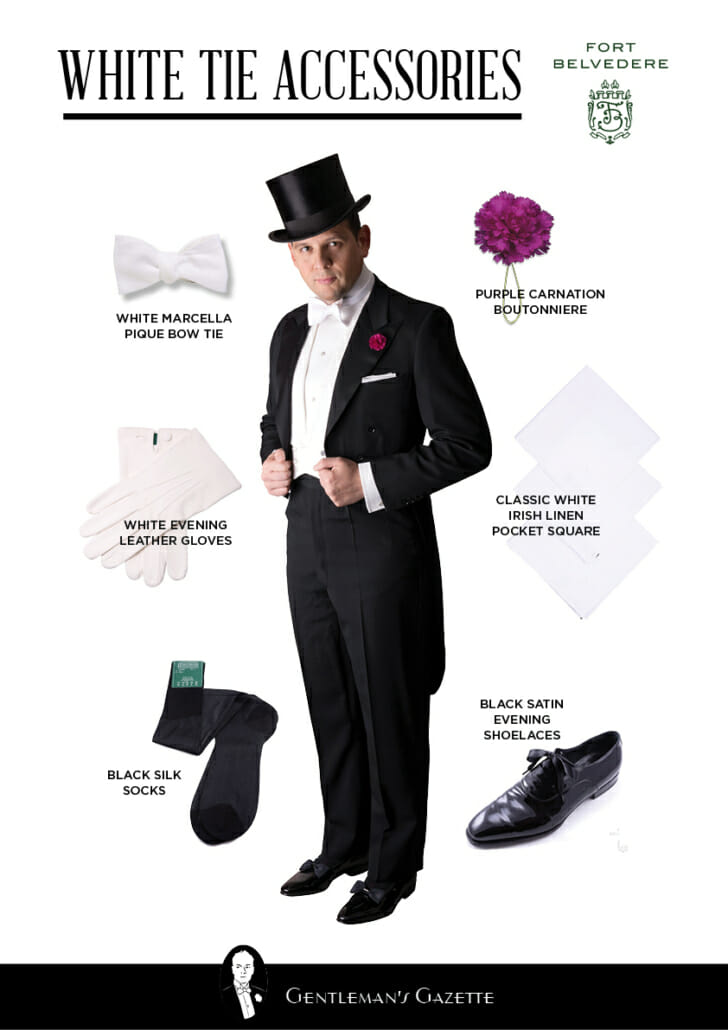
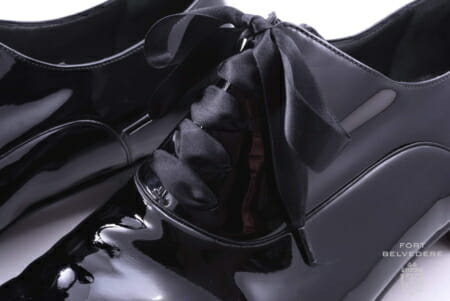
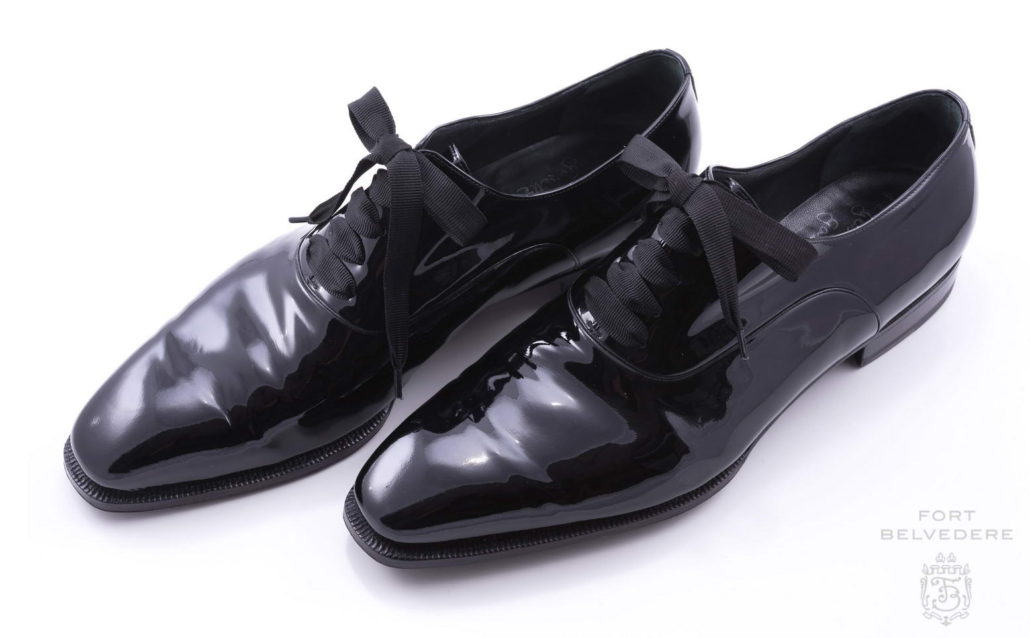
Formal lace-ups of capless or wholecut patent leather or mirror shine polished calfskin oxfords are correct shoes for full dress. Even when polished to a mirror shine, patent leather reflects the light better thus making it a preferable leather for full dress in our mind. If you do wear oxfords make sure to adding evening shoelaces that match your lapel facings.
- White Tie Footwear: Ensure Shine and Elegant Lines
- Cufflinks and Shirt Studs: Understated Opulence
- Suspenders (Braces) & Sock Garters (Sock Suspenders): One is Essential, the Other Obsolete
- White Tie Watch: An Elegant Option
- White Linen Pocket Square: A Refined Touch
- Boutonniere: A Colorful Accent for White Tie
- Full-Dress Gloves: An Often Overlooked Accessory
- Walking Stick / Cane: Obsolete Unless for Medical Use
- White Tie Outerwear: Protecting Yourself and Your Ensemble
- Overcoat, Evening Cloak: Bygone Flair
- Evening Scarf: Insulating Elegance
- Silk Top Hat: A Crowning Achievement
- The Monocle: For Vintage Enthusiasts
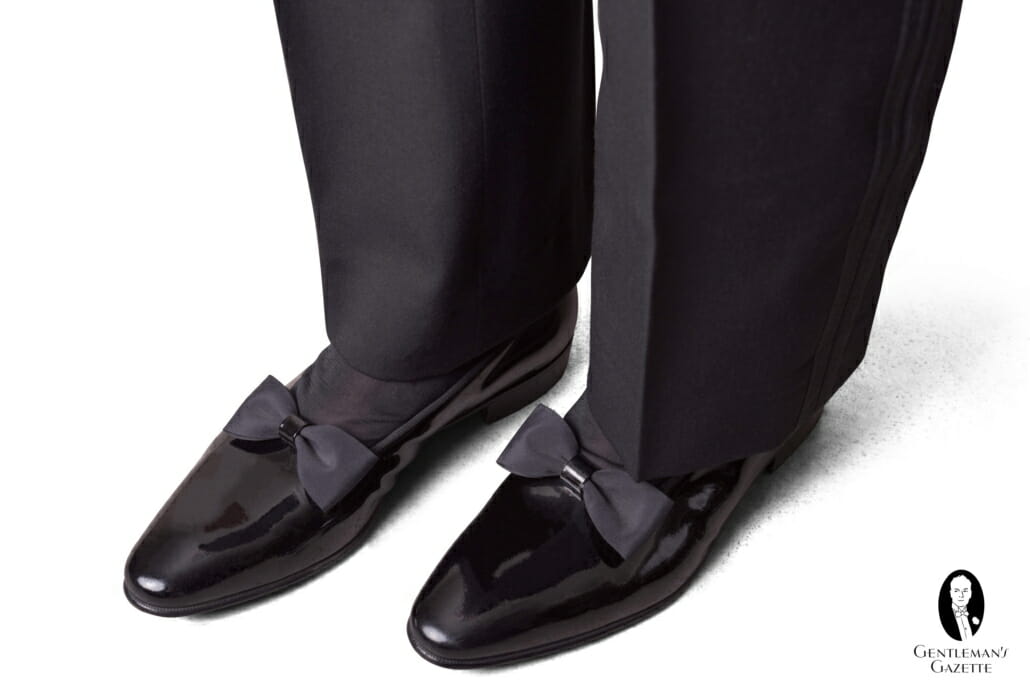
However, with its sixteenth-century origin and its long history as de facto footwear at the royal courts and grand ballrooms of Europe, the pump is the most formal of evening shoes and some say the best suited to the evening tailcoat. In our book, they are en par with one another.
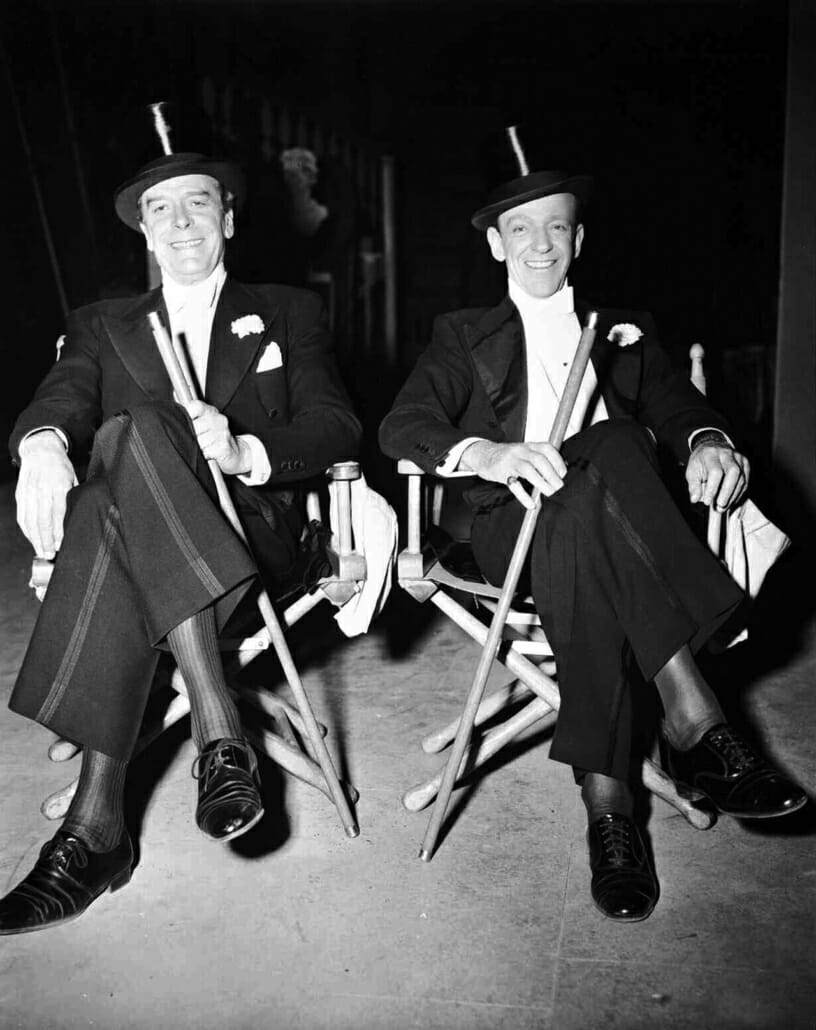
In Continental Europe and the U.S. people also used to wear Derby shoes with a white tie ensemble. While some deem it incorrect, there is historic precedent for the Derby. So if you have bigger feet, the Derby may be the best option for you.
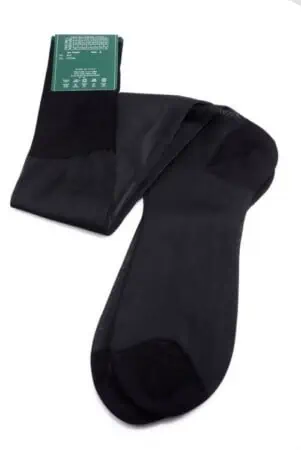
For similar reasons, the aristocratic pedigree and elegant sheen of silk hose make them preferable to other types of dress socks. Complete details for all options are provided in Classic Black-Tie Footwear. Note, albert slippers or pumps with a higher vamp are never appropriate for white tie.
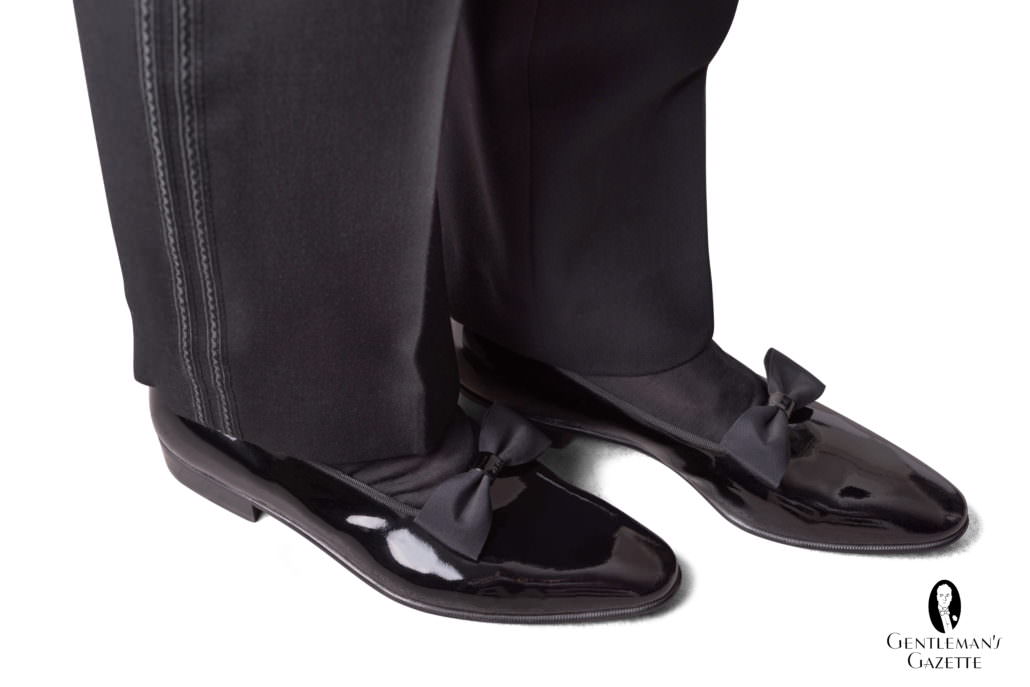
The History of Formal Pumps
Formal pumps and hose descend from the thin shoes and silk stockings worn with breeches as part of court dress at the royal courts of Europe. In fact, the British still refer to them as “court shoes” although this term has also come to refer to women’s low-heeled shoes just as “pump” now refers to the same style of shoe in North America.
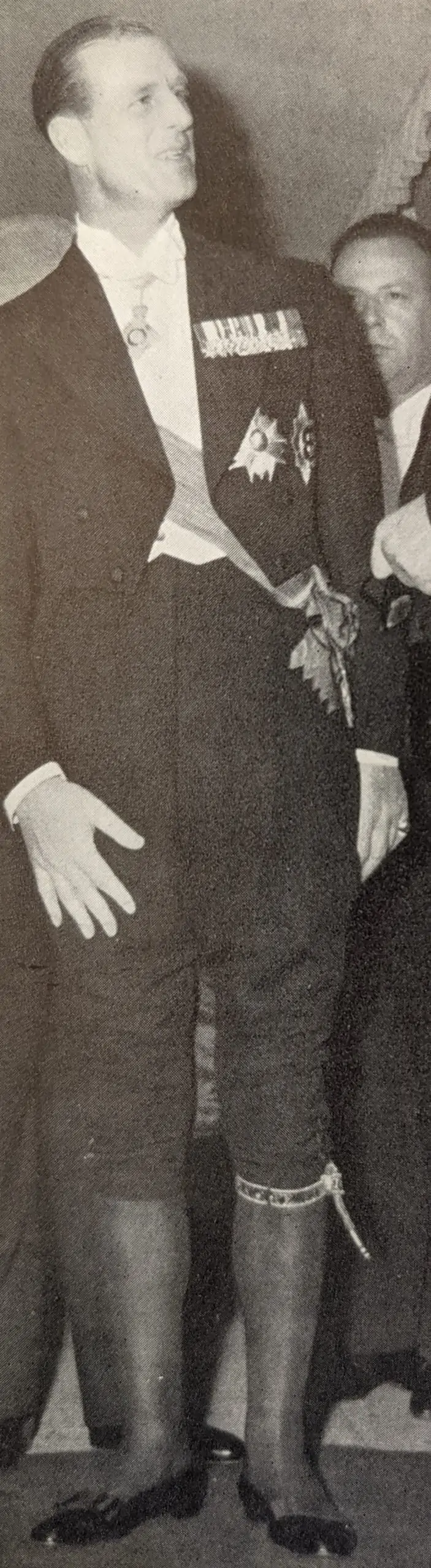
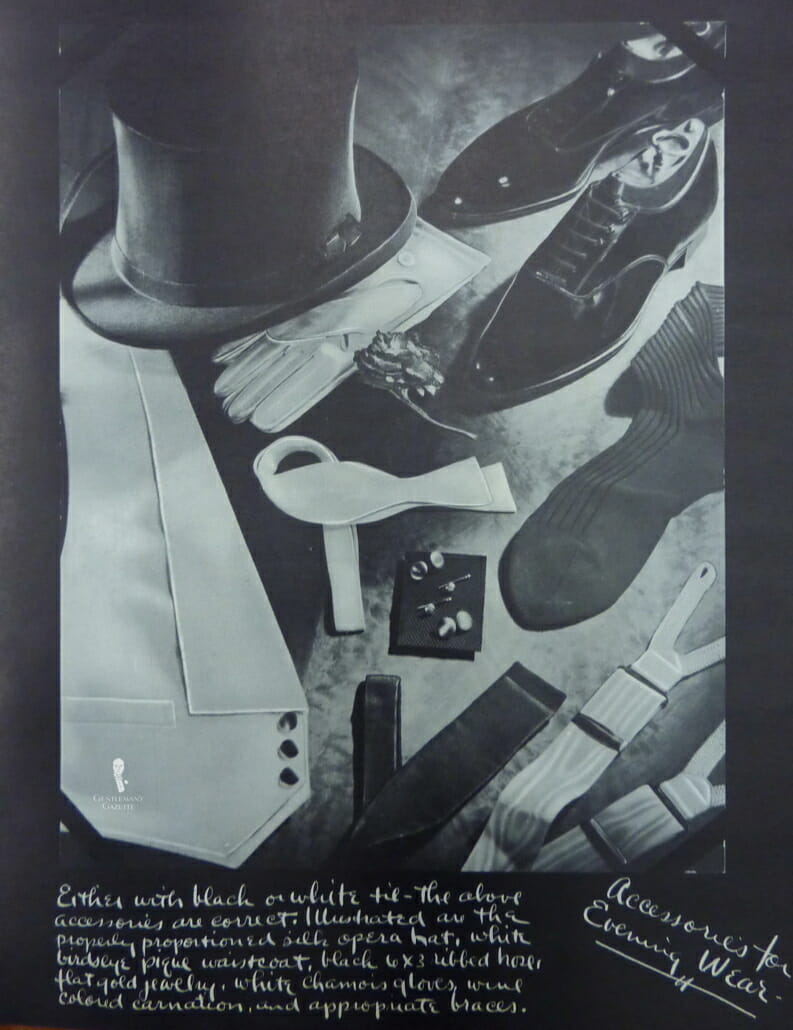
Cufflinks and Shirt Studs: Understated Opulence
The cardinal rule for full-dress jewelry is that it be expensive yet discreet. As Vogue’s Book of Etiquette said of men and their evening jewelry in 1925, “Whatever they wear must look as if it were useful by intention and valuable by chance.”
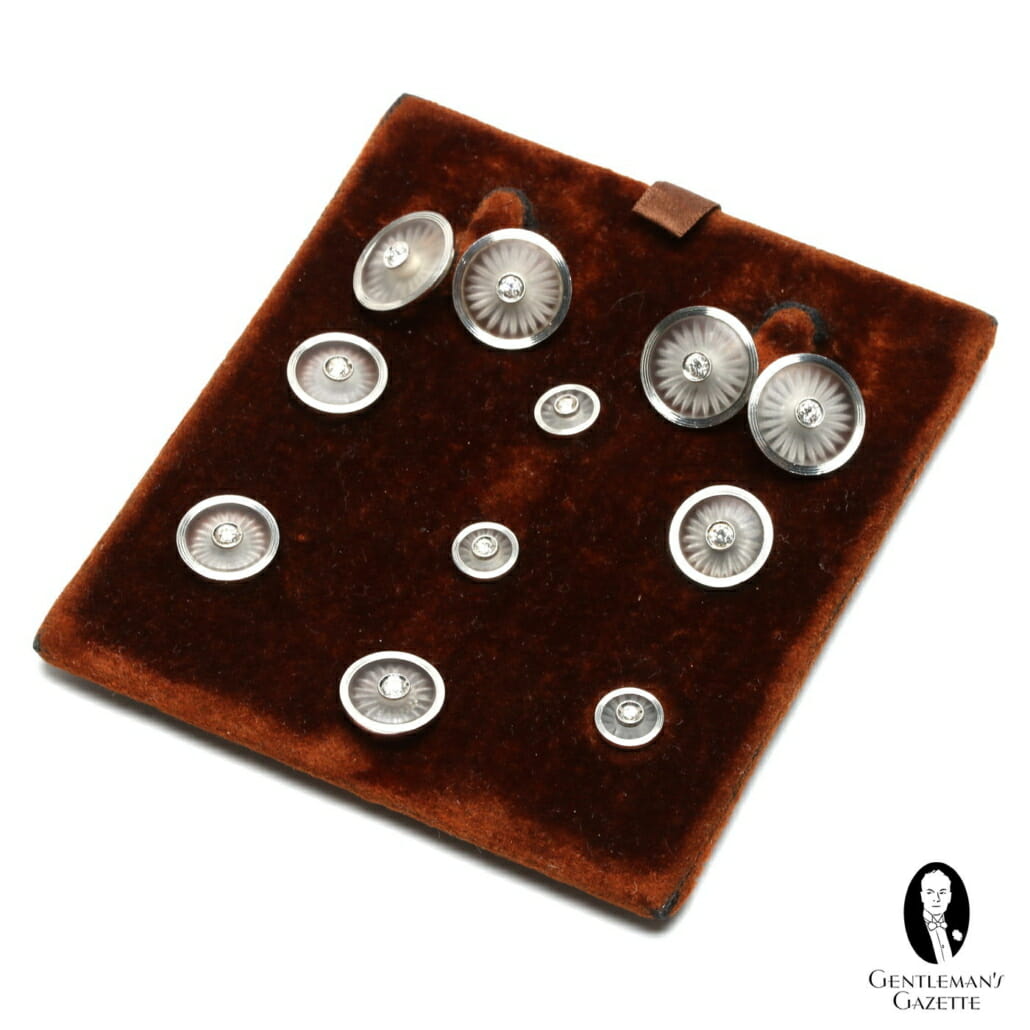
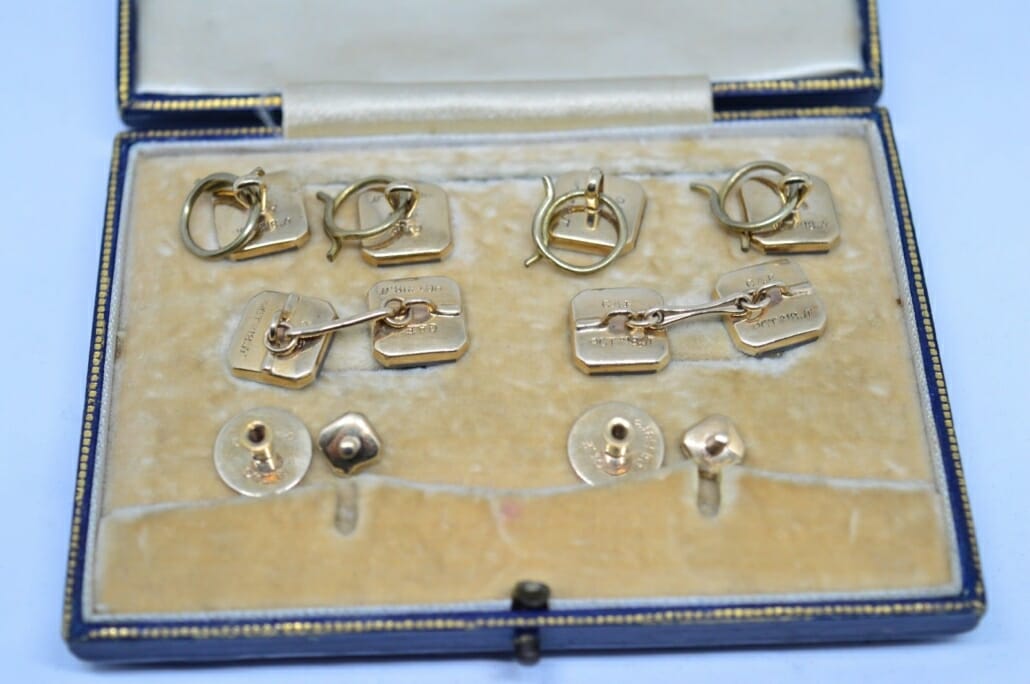
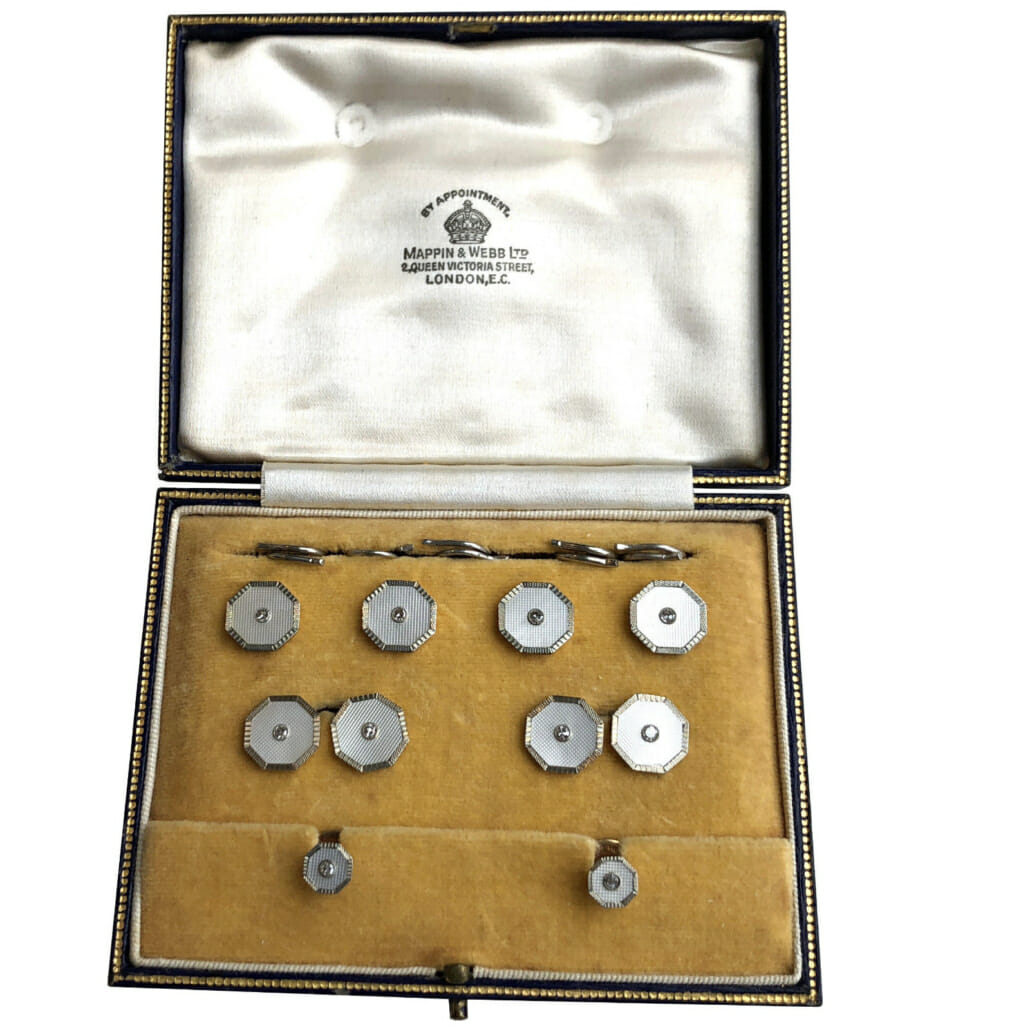
Most contemporary authorities keep it simple and suggest that shirt studs, cufflinks and waistcoat studs (if applicable) all be a matching set of mother-of-pearl but there is also a long history of dapper alternatives.
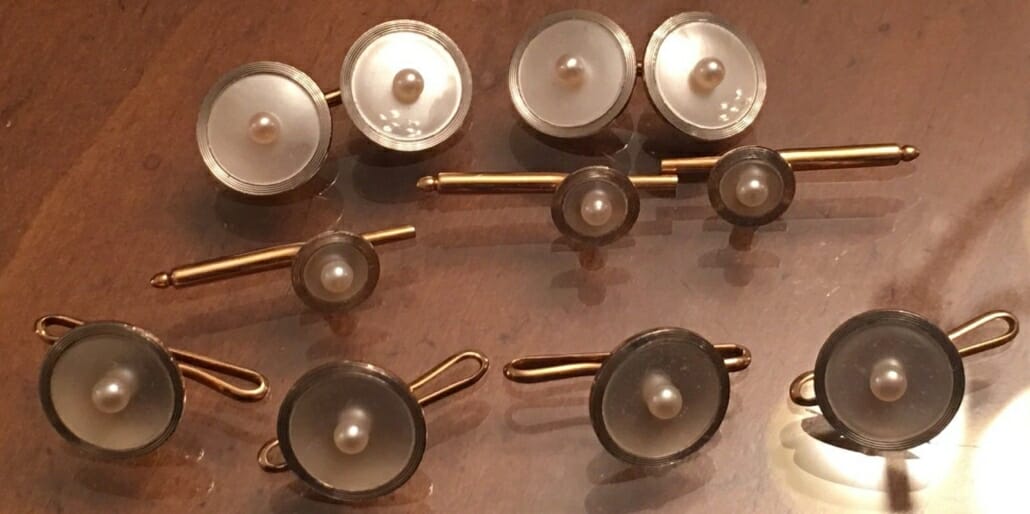
Shirt studs have traditionally been most popular in mother-of-pearl or a genuine pearl stud but precious or semiprecious stones were also acceptable. If they were matched with waistcoat studs then they were often of white pearl, white enamel or crystal. Cufflinks could also match the studs or they could stand apart in plain platinum or plain gold, the latter often being of the white variety.
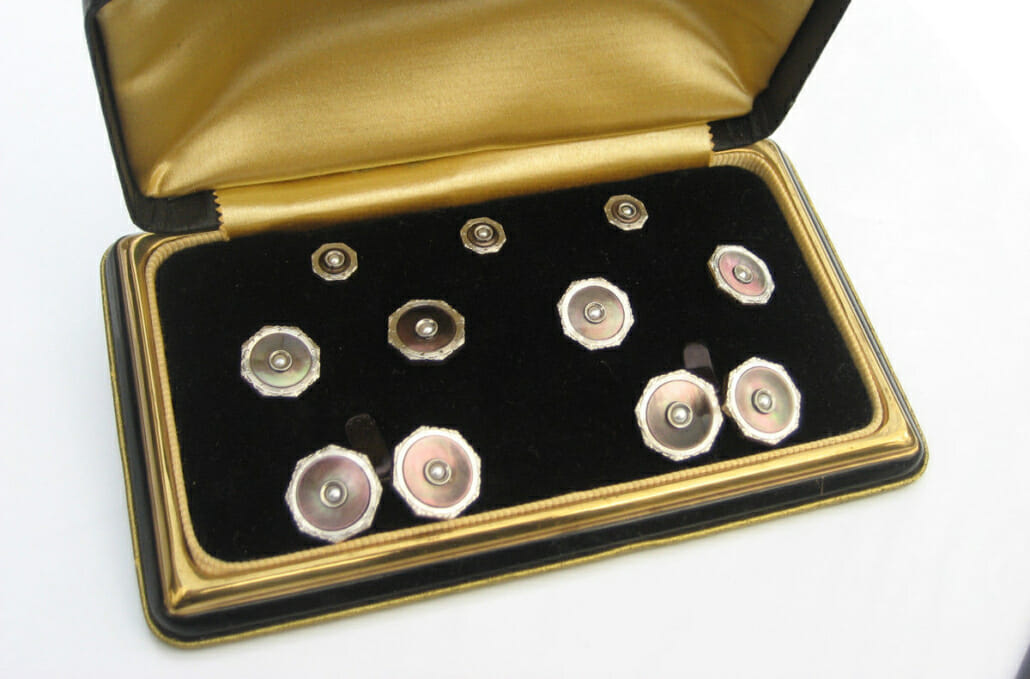
Onyx, abalone or mother dark mother of pearl dress sets are better suited to black tie outfits.
Most vintage shirt stud sets look stunning, but they are all too small for modern white tie shirts, and thus they almost always pop open leaving you and your undershirt or chest hair exposed.
Of course, by the time you notice it, the shirt stud is usually lost. Modern day shirt studs with a mechanism are made so they stay put all day, no matter how hard you dance or move.
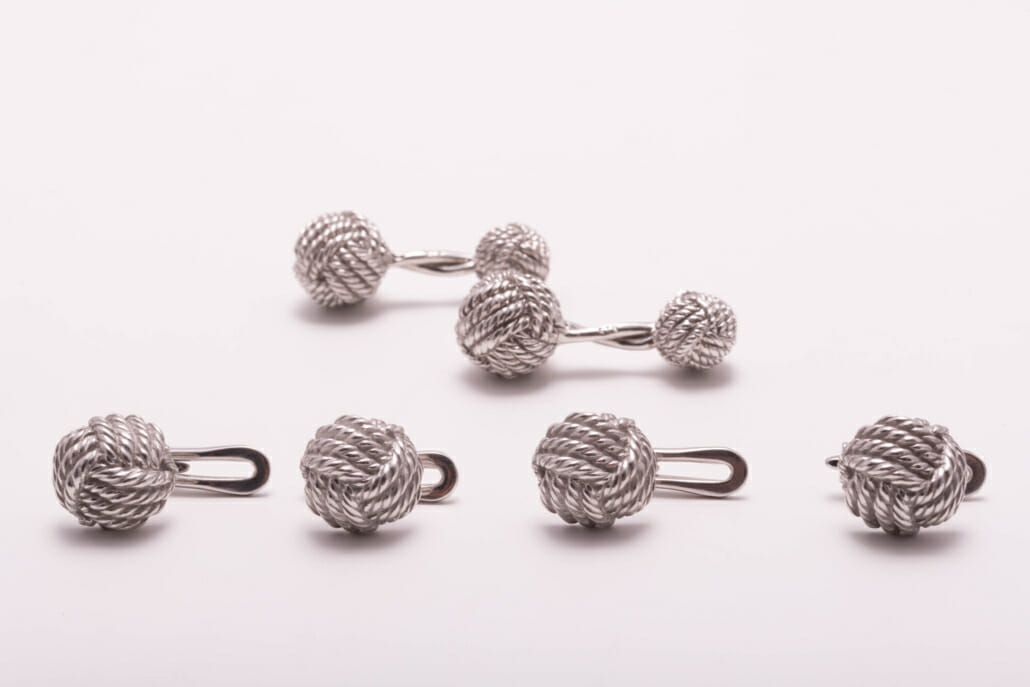
Waistcoat Studs: A Vintage Accessory
Back when white-tie affairs were a regular occurrence evening jewelry was big business. Besides adding variety to one’s outfit, waistcoat studs had the benefit of being removed for washing thus saving them from the wear and tear experienced by attached covered buttons.
Suspenders (Braces) & Sock Garters (Sock Suspenders): One is Essential, the Other Obsolete
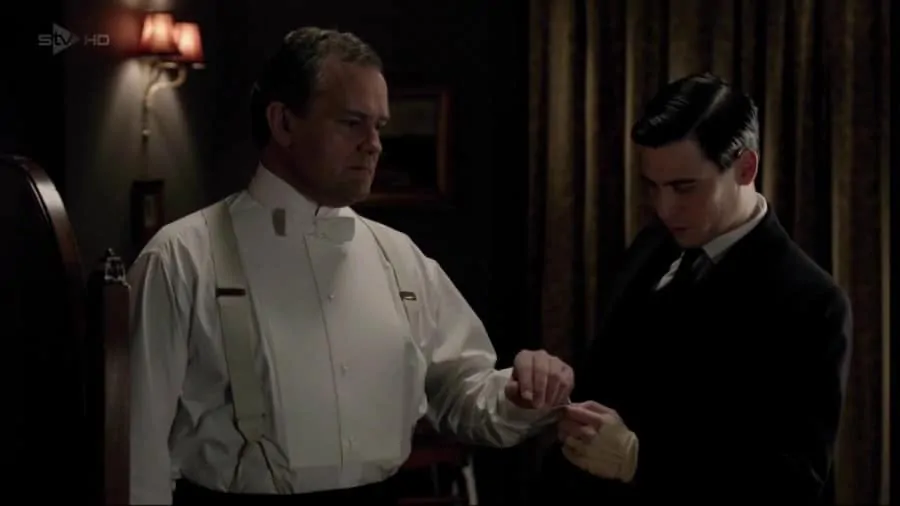
Classic white-tie suspenders (braces in UK) are constructed of white silk. Sock garters (sock suspenders in UK) can be of matching material if desired but it is hardly necessary as both items are classified as underwear and are not intended to be seen. Complete details of both can be found in Classic Black-Tie Accessories.
White Tie Watch: An Elegant Option
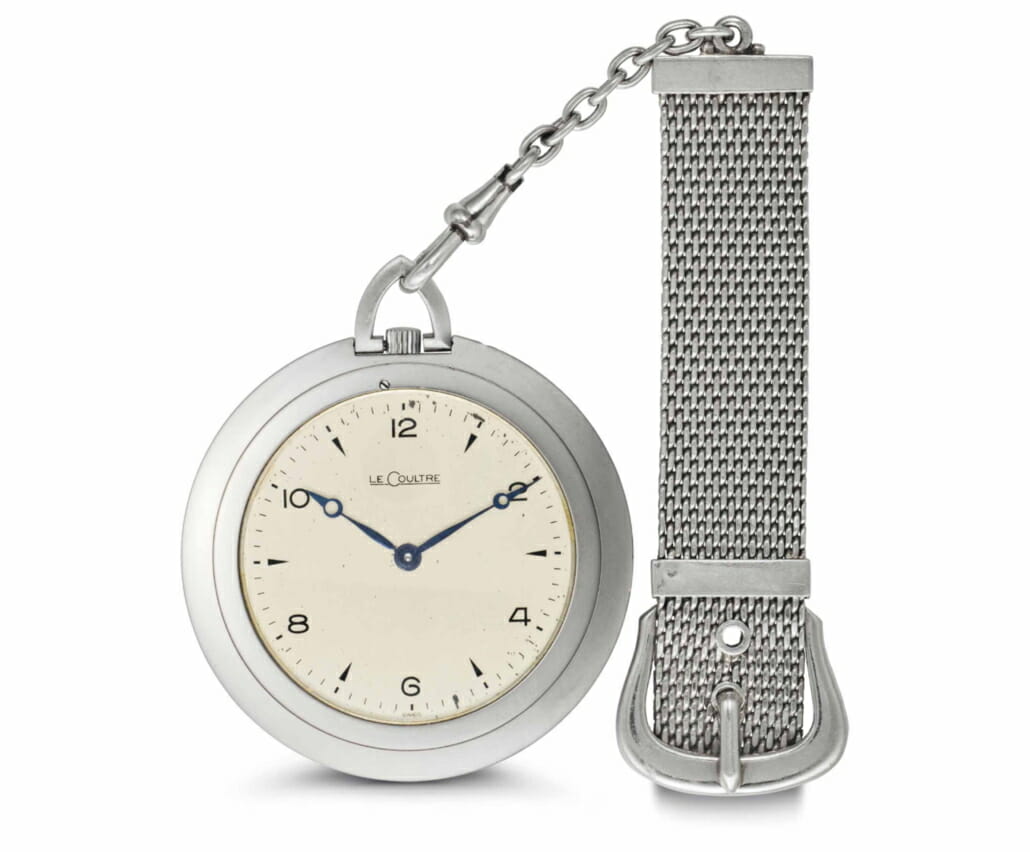
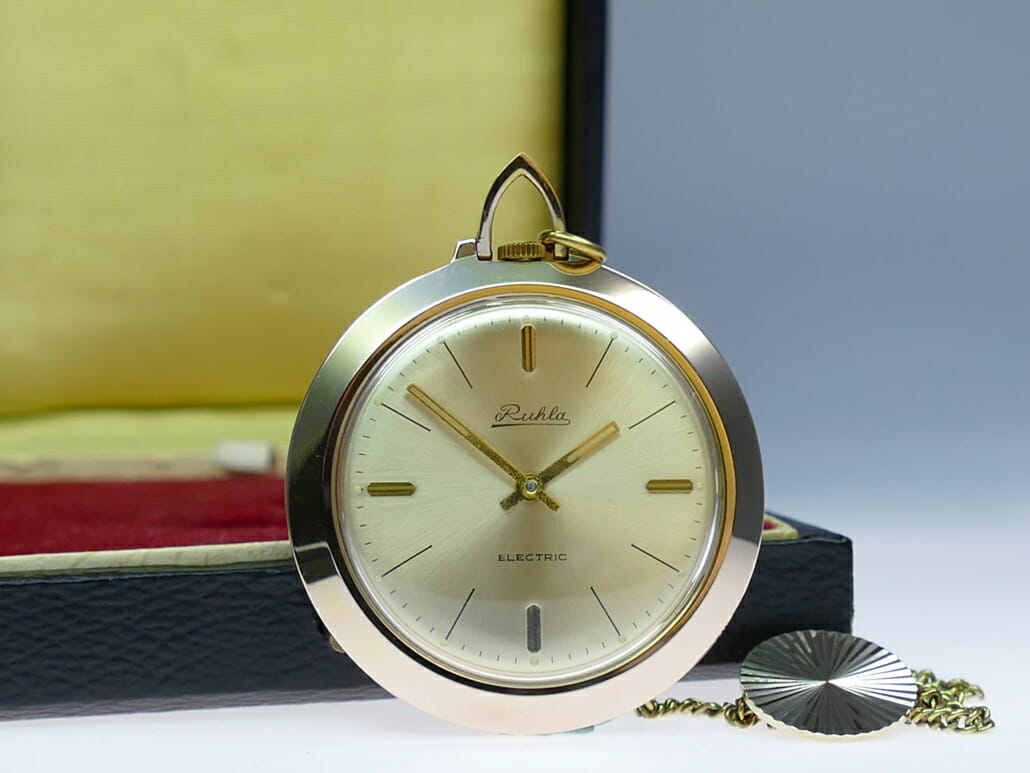
A pocket watch is the most classic timepiece for full dress and wristwatches are incorrect. Today, many men wear a pocket watch for white tie with an Albert watch chain, however, that is historically incorrect for white tie.
The more traditional option is to wear a pocket watch with a watch fob in your waistcoat pocket with the fob dangling out from underneath the tailcoat.
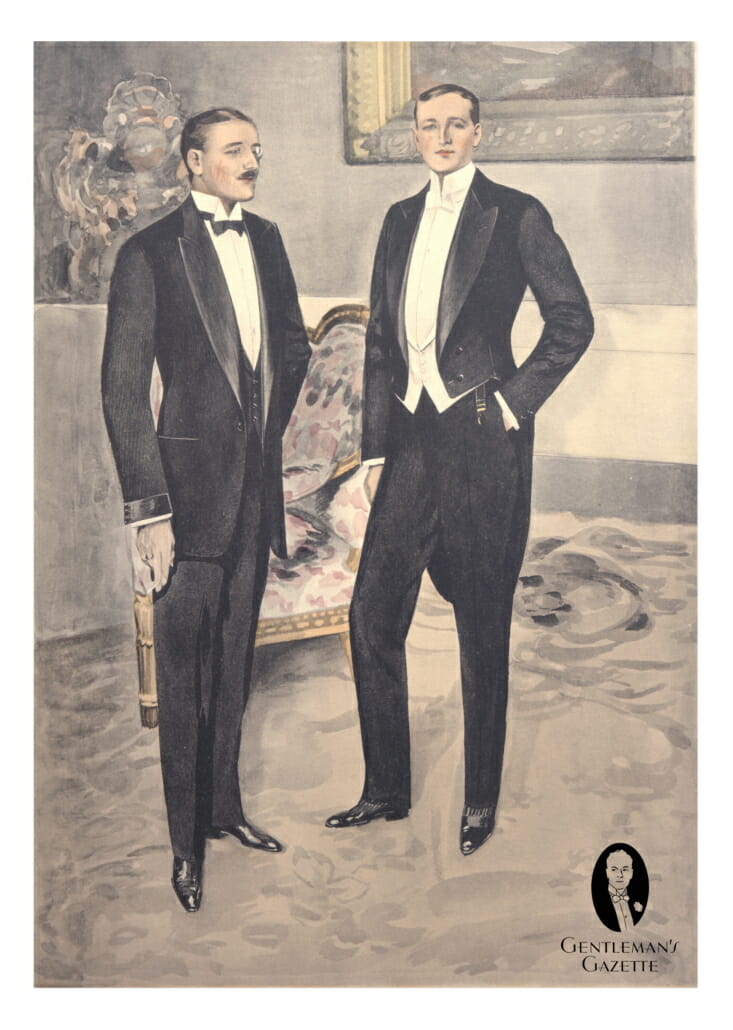
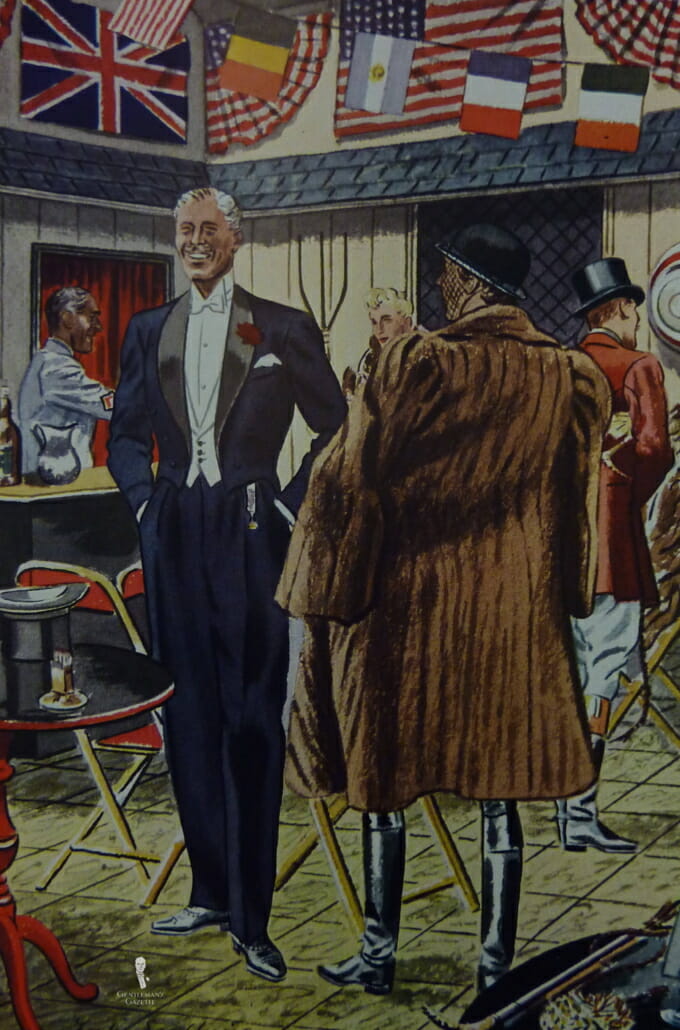
The other, more modern version is to have the pocket watch in your chest pocket with a watch chain attached to a lapel pin that is worn through the buttonhole.
Key Chain
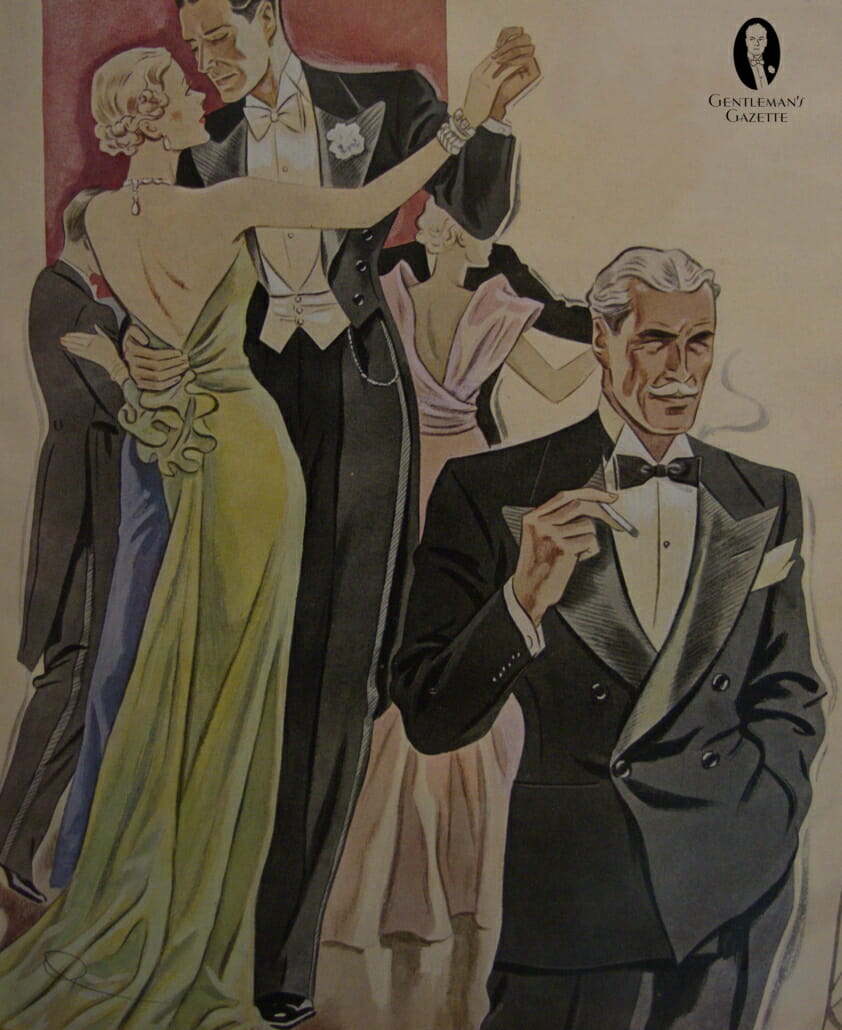
In older photos and illustrations one can sometimes see a chain in the pocket, which looks like a watch chain but it used to be in fact a key chain.
To learn more about tuxedo watches also visit Black Tie Watches.
White Linen Pocket Square: A Refined Touch
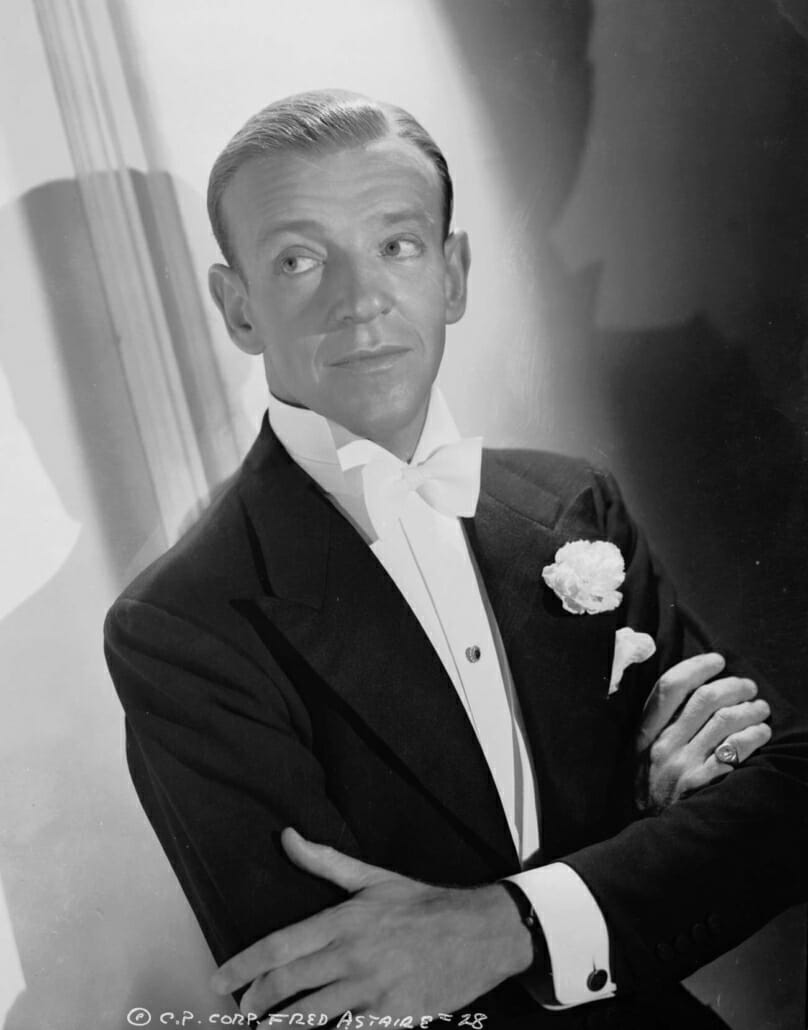
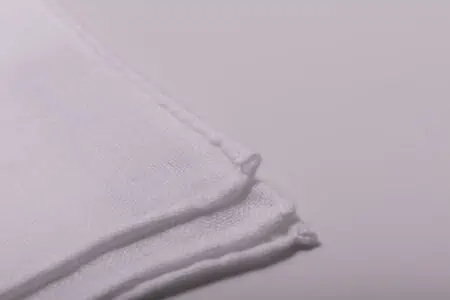
A handkerchief of fine white linen with hand rolled edges is the conventional pocket square with evening wear as described in Classic Black Tie Accessories. You can also have ones with your first initial embroidered in it to make them even more personal.
Boutonniere: A Colorful Accent for White Tie
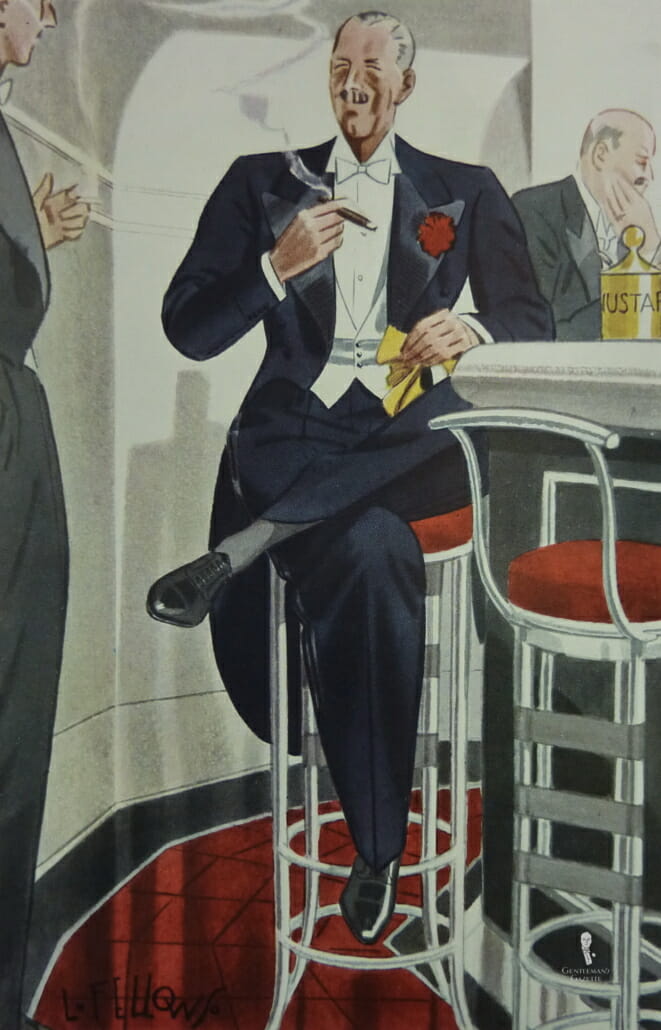
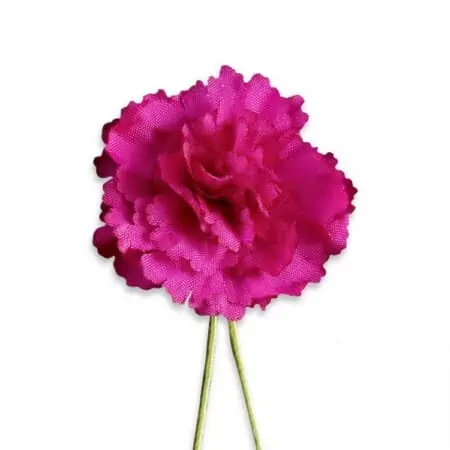
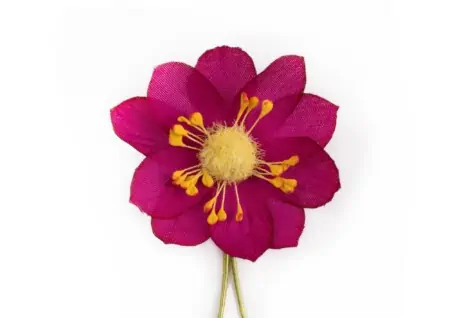
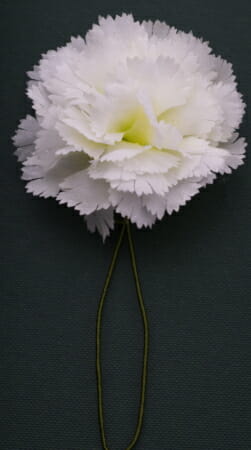
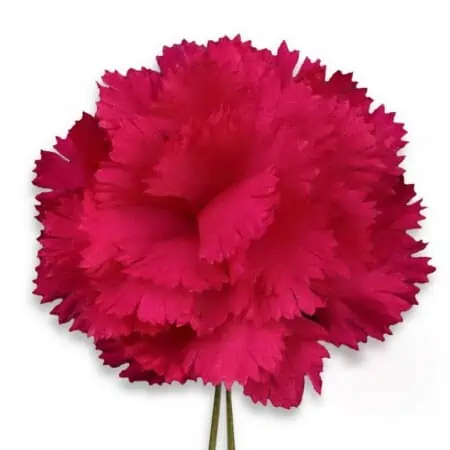
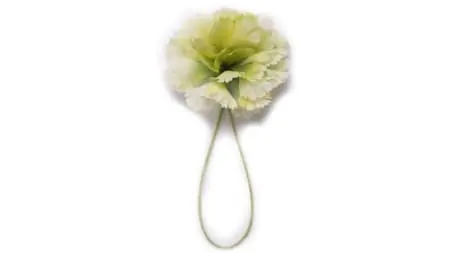
If a boutonniere is worn with full dress, the traditional option is white. Carnations are the most popular choice but small gardenias are also acceptable. In the 1930s it became acceptable to wear non-white boutonnieres such as red, purple, pink or yellow carnations. The key is to make these colorful buttonhole flowers work with white tie is to have no other color in your outfit other than white and black or midnight blue.
Further etiquette is described in Classic Black-Tie Accessories.
Full-Dress Gloves: An Often Overlooked Accessory
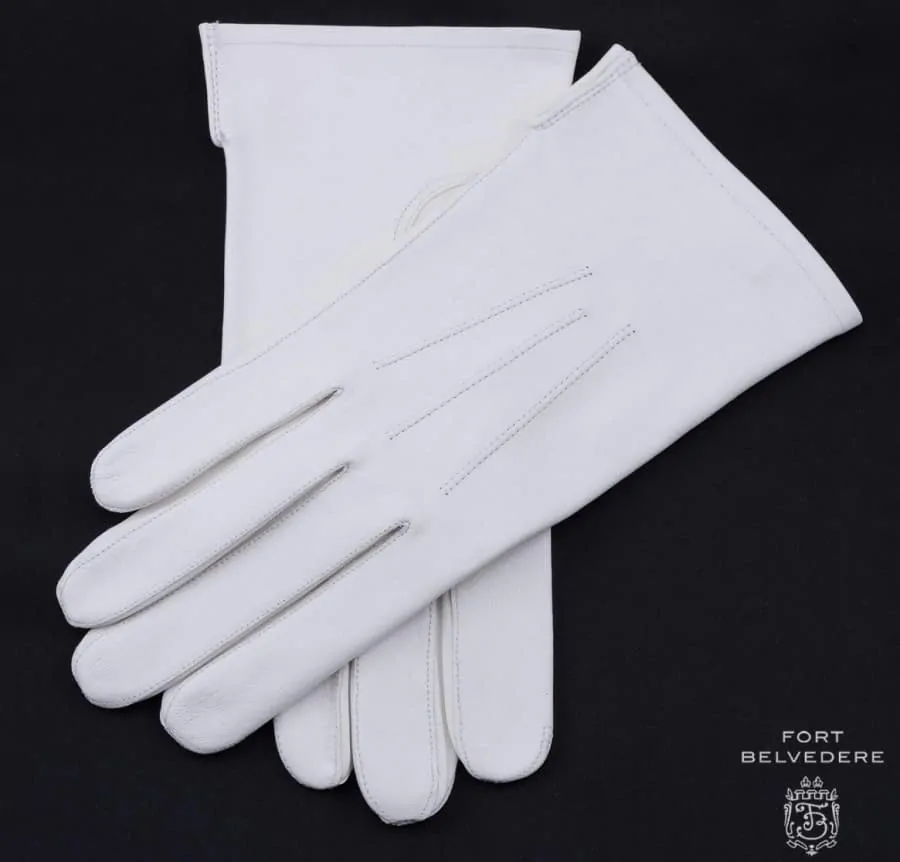
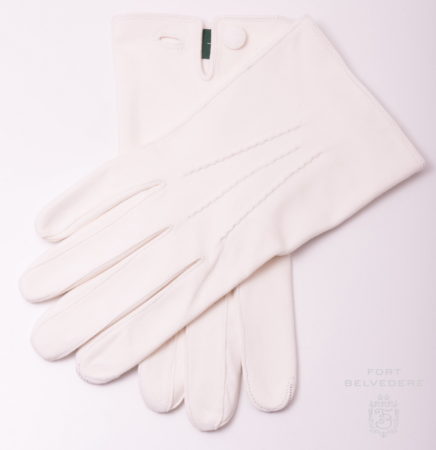
Indoor dress gloves were once an essential part of a gentleman’s evening dress but by the 1920s they were obligatory only at balls, the opera and when ushering a formal wedding. By the 1930s even these traditions were falling by the wayside and now, according to the British book History of Men’s Fashions, “they are “very seldom needed outside formal banquets, in royal circles or some white tie charity balls”. In America, debutante balls are also known to maintain the chivalric custom of shielding the fairer sex from the clammy touch of a man’s hand in a receiving line or on the dance floor.
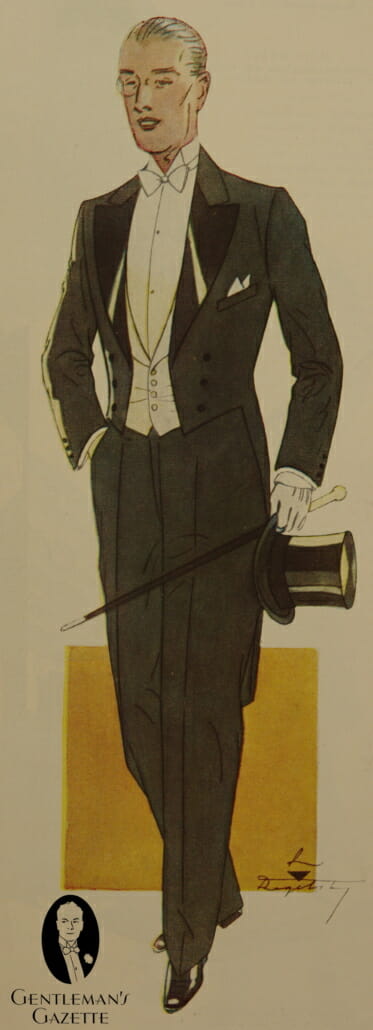
The correct gloves for these august occasions are ones made of white kidskin or lamb nappa in the slip-on or button style. Cotton gloves, while much less expensive, can not compare to kid’s luxurious texture and its ability to fit like a second skin. Just be sure to remove your gloves when refreshments are served, at which point you may discreetly slip them into the inside tail pocket of your tailcoat.
Outdoor Evening Gloves
Traditionally, white buckskin were the most popular street gloves but white chamois and doeskin (soft suede leathers made from sheep or deer skin, respectively) were also correct.
Walking Stick / Cane: Obsolete Unless for Medical Use
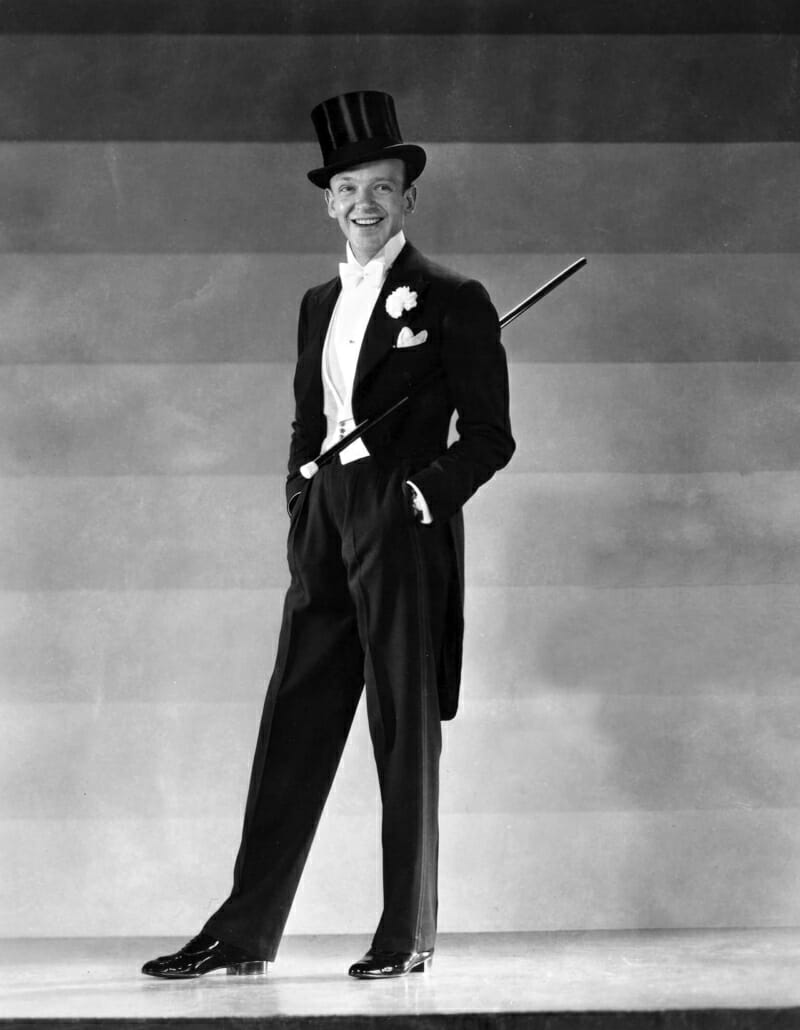
If you are invited to an Edwardian costume party and want to be historically accurate down to the last detail then make sure your walking stick (or cane in the UK) is of plain malacca or other plain wood and has no ornamentation other than possibly a plain silver or gold band to hide the handle joint. Gold or ivory knobs are the “hallmark of the imitation gentleman” according to etiquette maven Emily Post who also warned readers in 1922 that black sticks were “tabu”.
White Tie Outerwear: Protecting Yourself and Your Ensemble
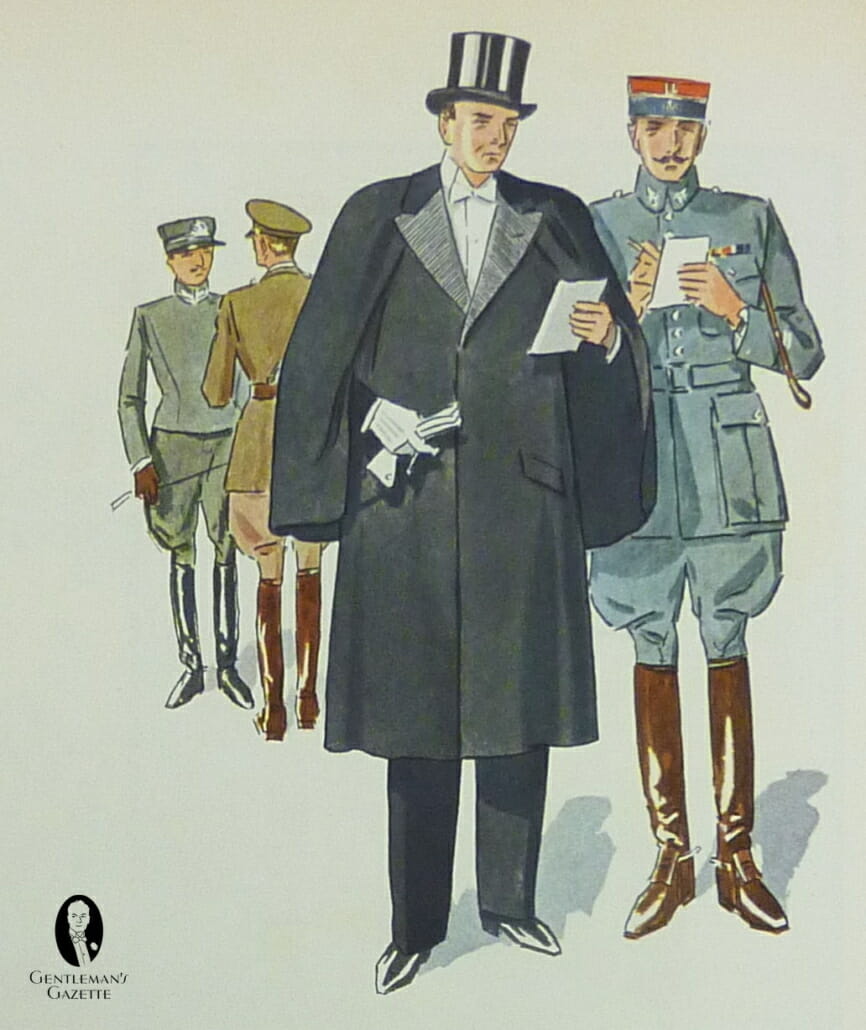
Overcoat, Evening Cloak: Bygone Flair
The inverness coat is the most conventional topcoat for white tie evening wear but peaked lapel silk faced overcoats are just as acceptable. Capes with white lining are a very bold statement. Otherwise, all classic Black-Tie overcoats also work for white tie.
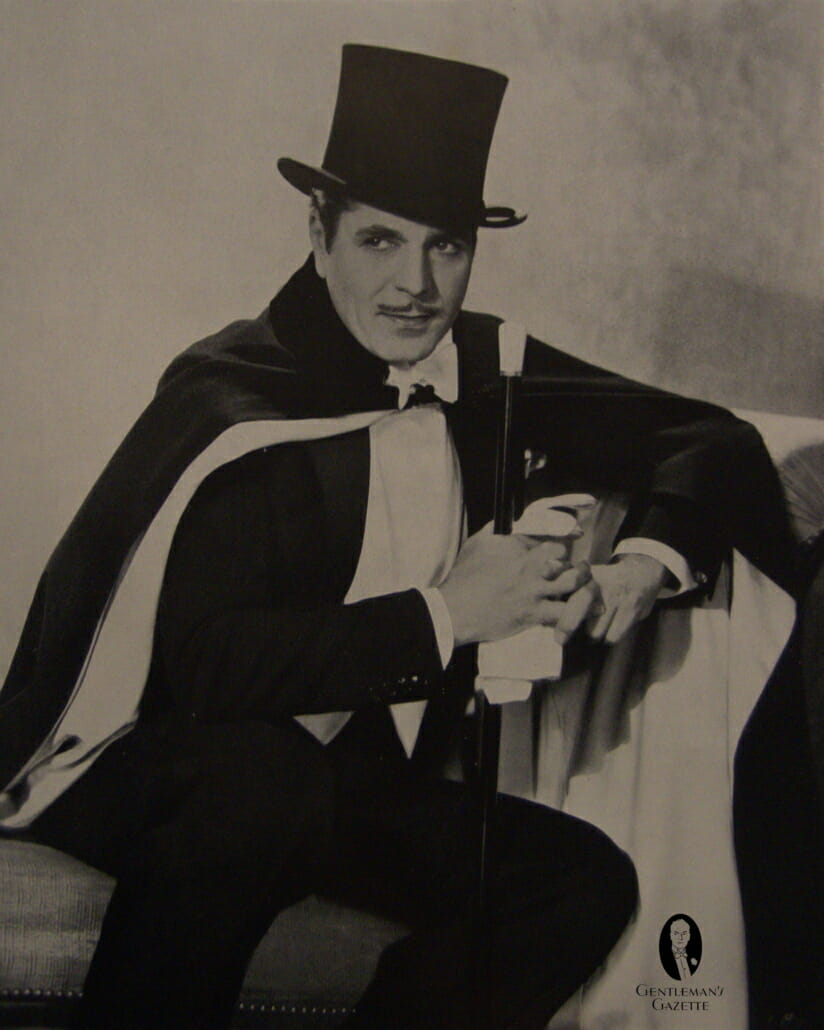
Evening Scarf: Insulating Elegance
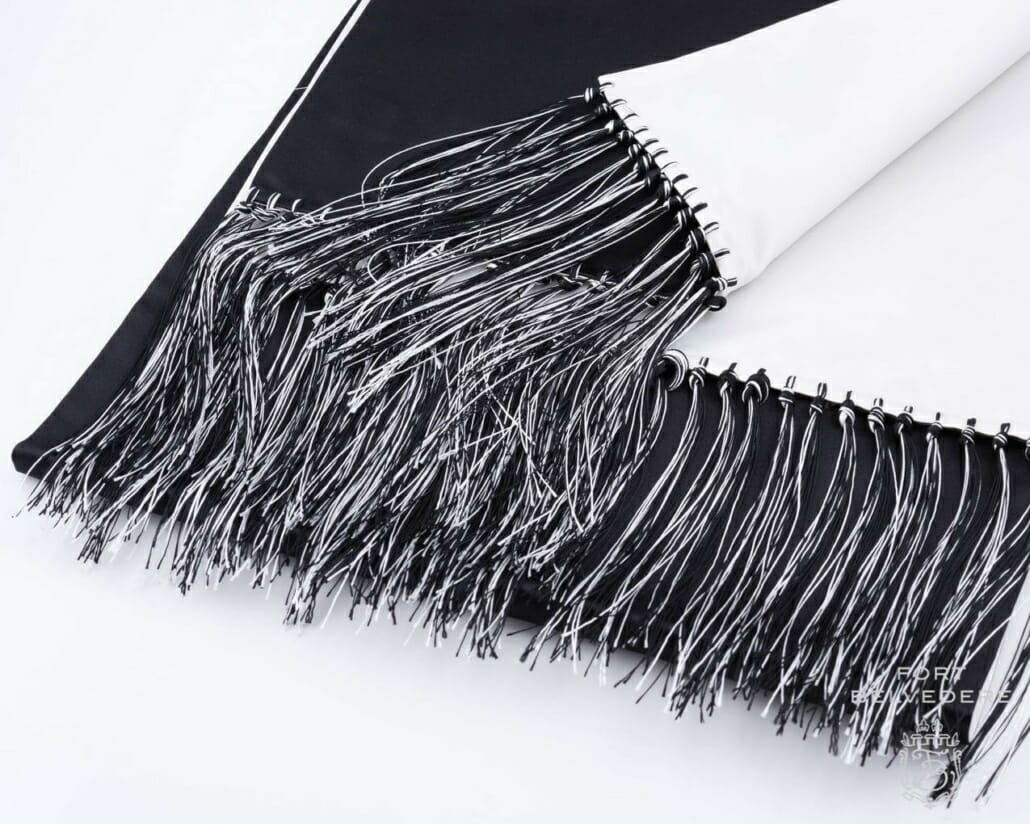
The correct evening scarf is white silk with tasseled ends as illustrated in Classic Black-Tie Outerwear.
Silk Top Hat: A Crowning Achievement
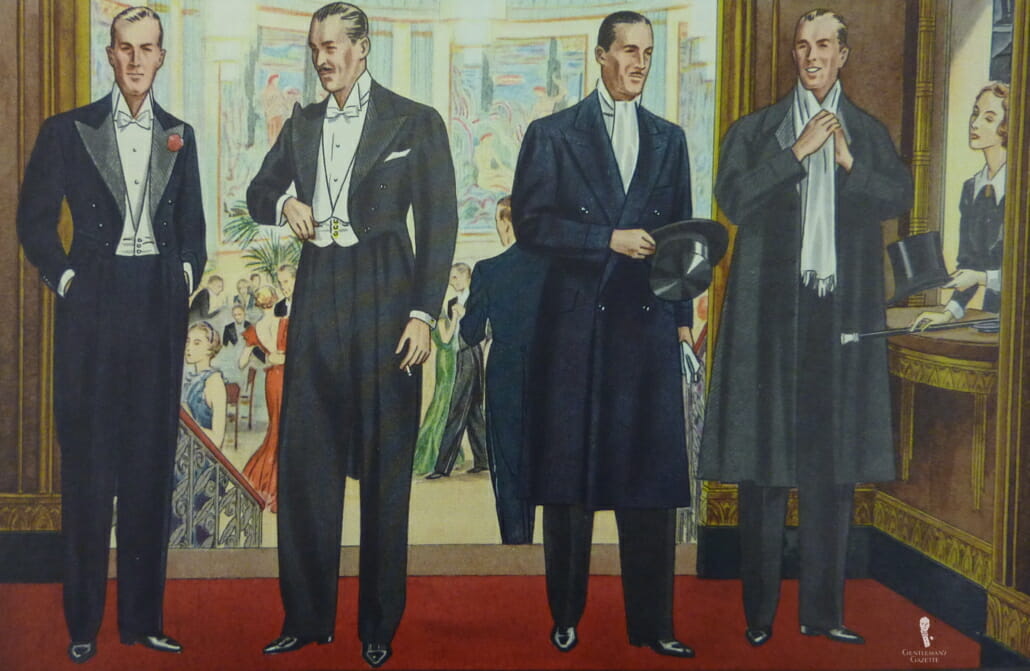
The extended height of the traditional top hat is a swank counterbalance to the tailcoat’s length and its luxe finish is the ideal complement to the coat’s silk trim. It remains a perfectly correct choice for a man who has the nonchalance required to pull it off and the willingness to pay a small fortune for an accessory that will be checked at the door.
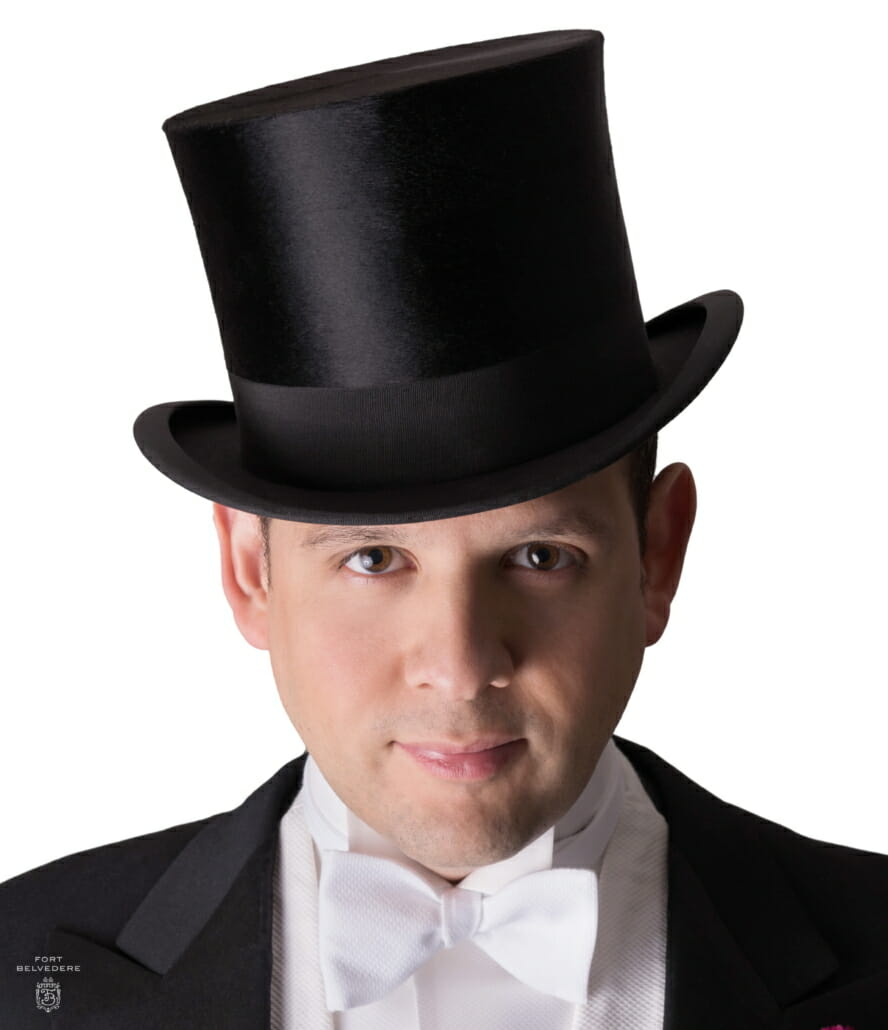
There are two models of top hast to choose from: standard and collapsible. The best standard models are made from black silk or from beaver fur felt that is highly polished in order to look like silk. The silk version, commonly known as a silk hat, was the most popular but is no longer made since the last mill that produced the required silk has gone out of business.
Such top hats now must be purchased second hand from vintage dealers for prices that can range up to $30,000 for larger hat sizes. Beaver-fur varities, on the other hand, are still being manufactured by English companies such as 330-year-old Lock & Co. Hatters where prices start at a mere £365 ($585 US). They also sell vintage top hats and they are most in demand before Royal Ascot.
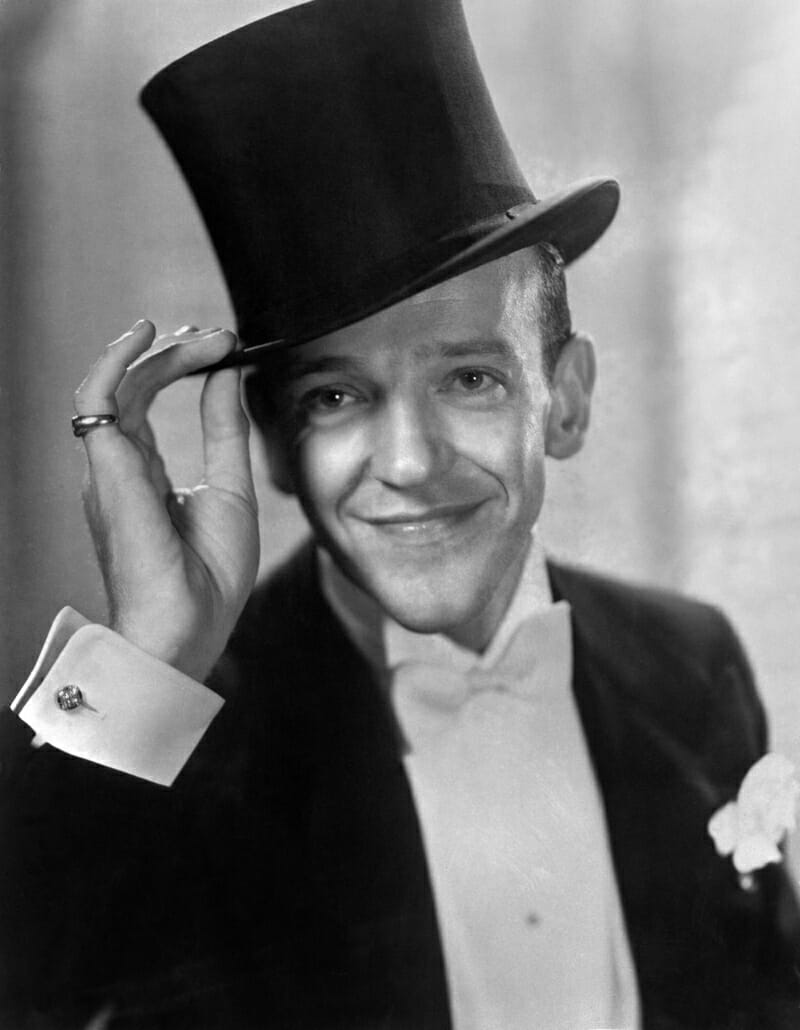
Top hats made of inexpensive wool felt are also available but this type of material is suitable only for daytime headwear.
The collapsible model is known as an opera hat, chapeau claque or a gibus. This model has been acceptable with evening wear since the Regency era and is still made by a handful of companies. Traditionally it has been constructed of ribbed silk (especially in the US) or dull merino cloth (especially in the UK).
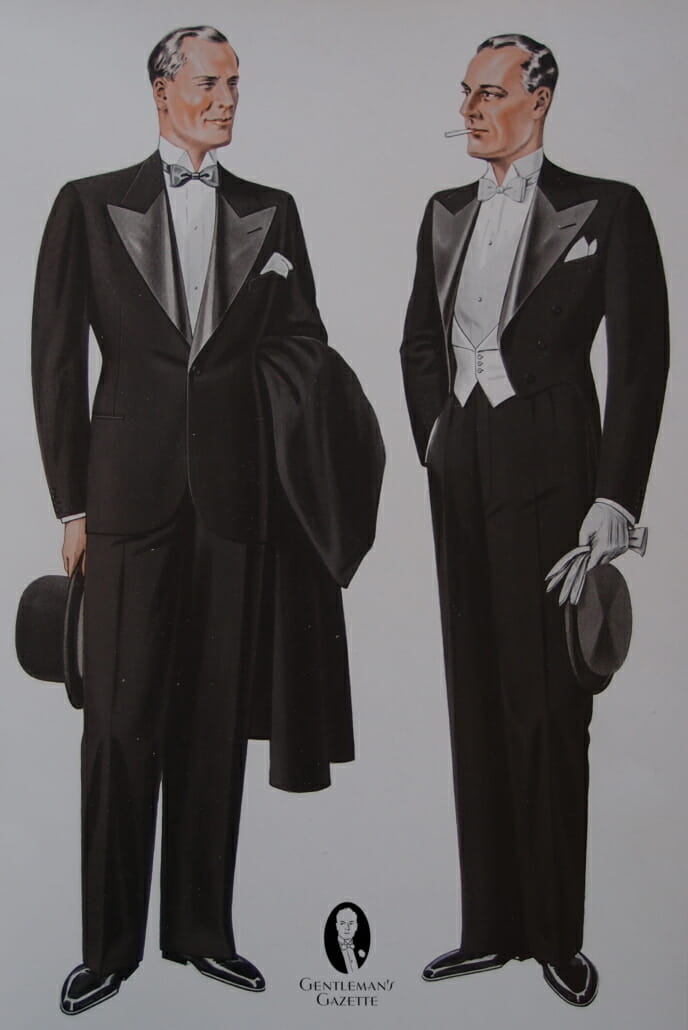
Alternately, a black stiff-brimmed homburg fedora has been endorsed by various authorities since the 1960s as a more modern version of the full-dress hat. Its low crown and dull finish lack the stature of the topper and is thus not recommended.
Top Hat Sizing
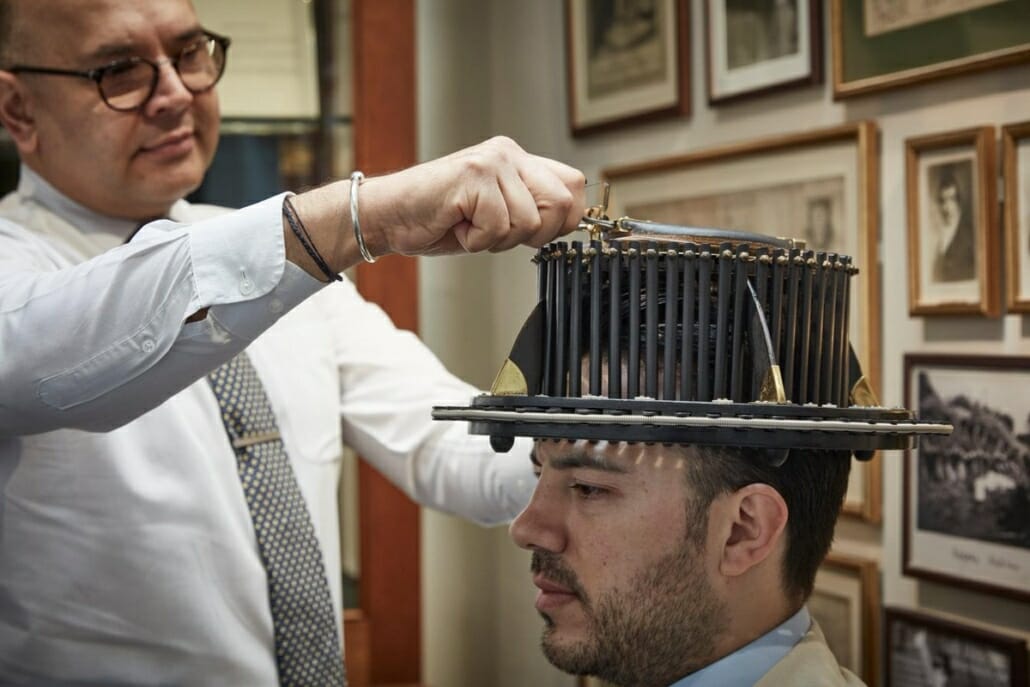
Even though top hats come in the same size as regular hats, it is highly recommended to determine your proper size using a conformateur head measuring device, because otherwise, you might suffer from headaches.
Let’s assume you have a size 60 / 7.5 hat size. With a felt hat, it will adjust to your head shape. On the other hand, a top hat does not adjust and hence there are sub-categories. For example, some people are more of a long oval, while others are oval or more round. The conformateur device determines your head shape so a hatter can find exactly the right top hat for your head and make the necessary adjustments without destroying the top hat.
The Monocle: For Vintage Enthusiasts
Back in the day, monocles were popular for white tie. In this day and age they are reserved for period white tie and vintage enthusiasts.
Explore this chapter: 10 White Tie Guide