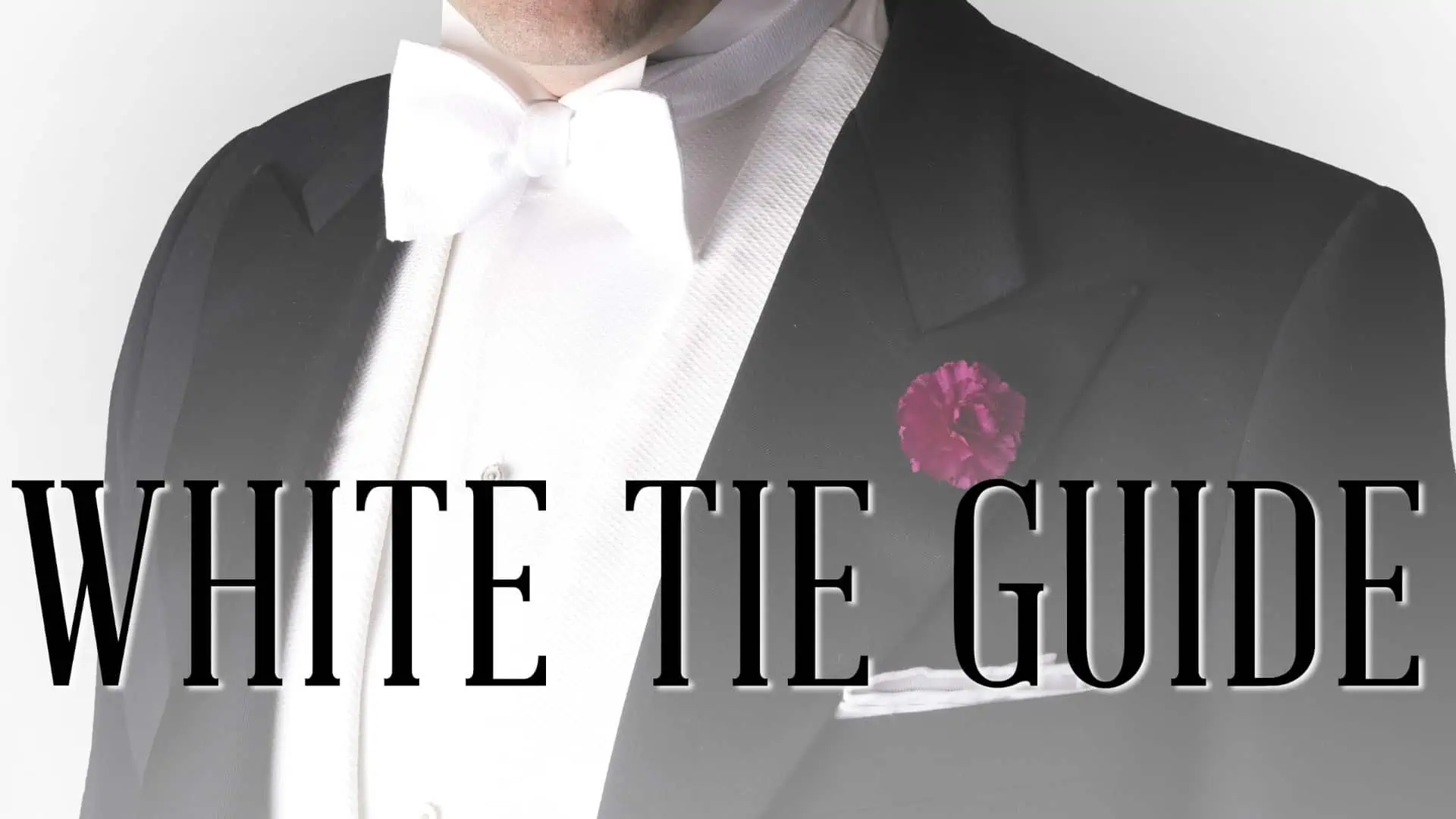
The Full-Dress White Tie Shirt
Next to the tailcoat, the full-dress shirt is arguably the most important aspect of white tie’s regal bearing. Discovering the exquisite details of this aristocratic garment transports a man back to a romantic era of unsurpassed refinement and at the same time instills dismay at the proletarian substitute so ubiquitous today.
- The Full-Dress White Tie Shirt
- Construction and Materials of the Shirt Front Bosom, or Bib
- Understanding Piqué
- How To Put in Shirt Studs
- Identifying the Perfect Detachable Wing Collars
- Regarding Collar Studs
- Cuffs: Plain Linen, Cotton, or P iqué
- Other Important Details: Tabs, Loops, and More
- The Attached Wing-Collar Shirt: An Acceptable Alternative
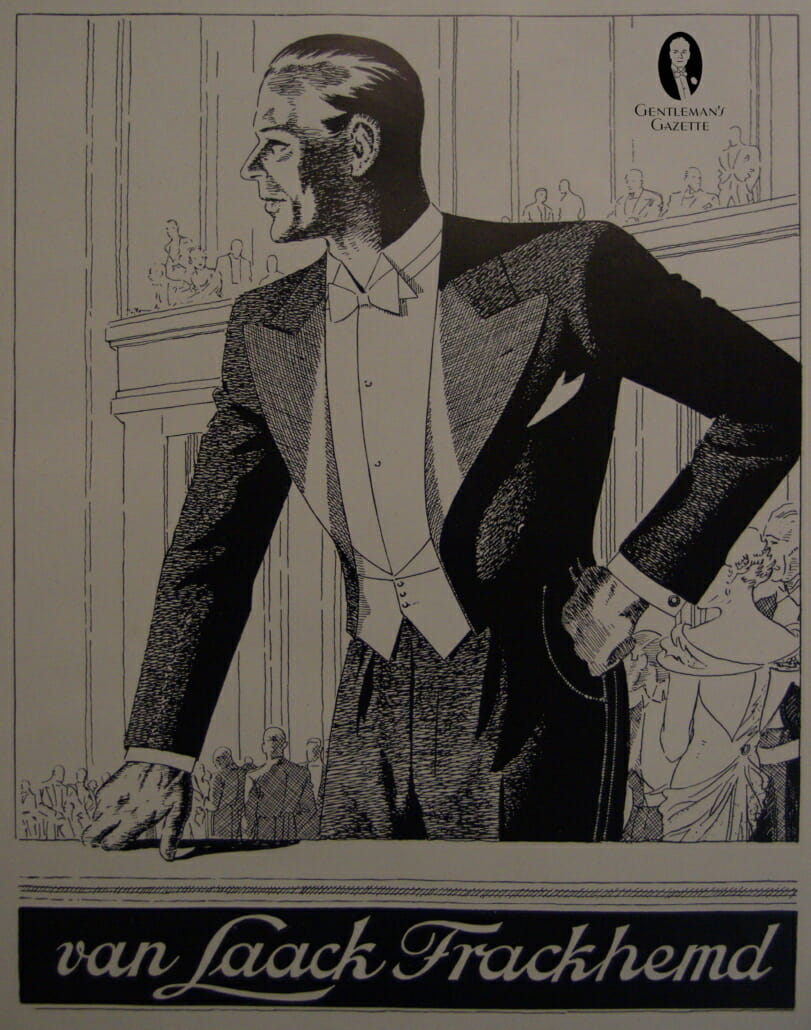
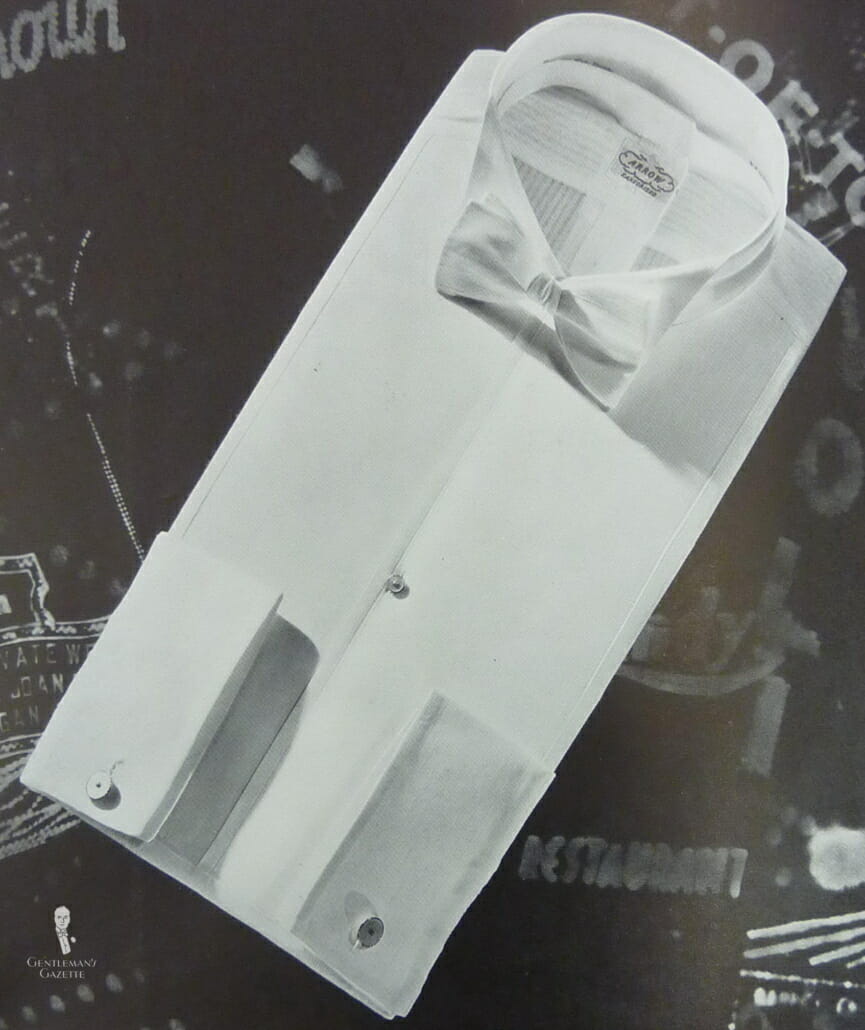
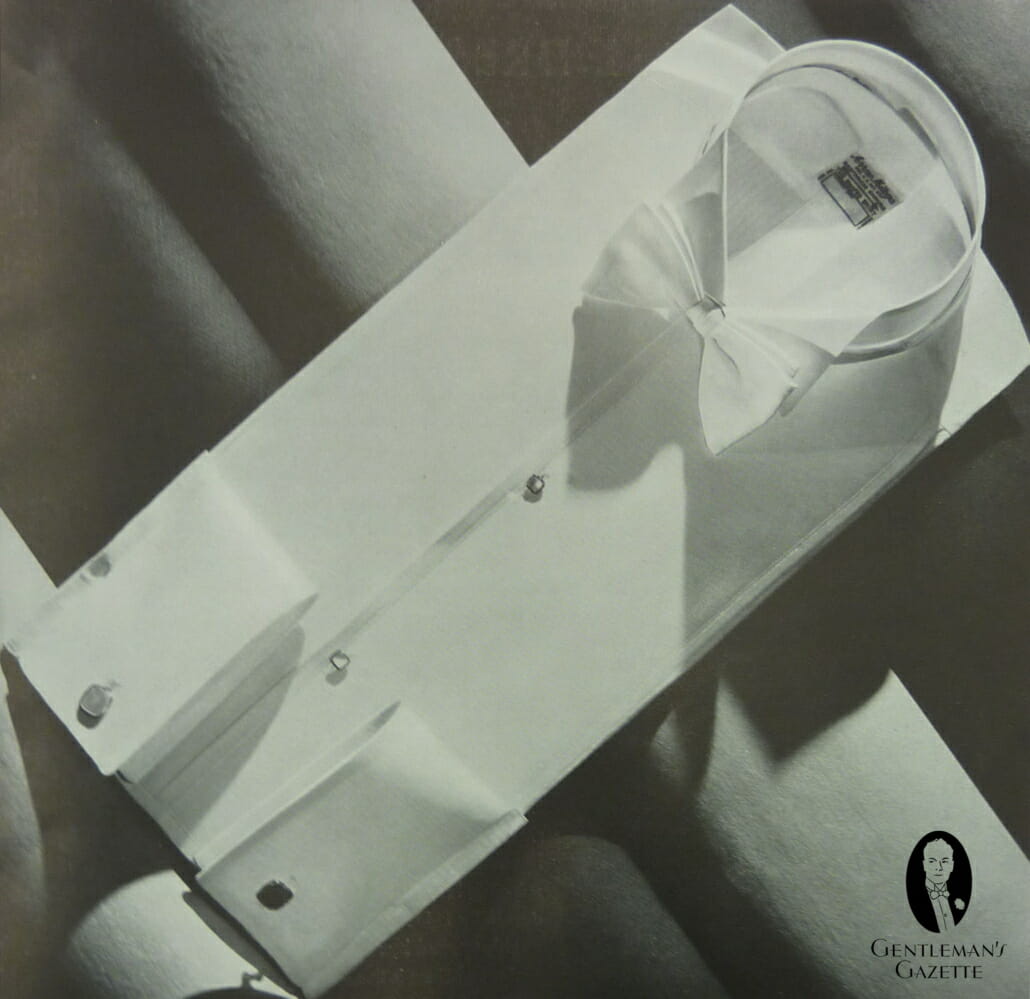
The shirt body is made of broadcloth or a very lightweight fabric such as voile which will help the wearer to stay cool. It is constructed in a collarless “tunic” style to accommodate the requisite detachable collar which, along with the bosom and sleeve cuffs, are the only portions presented to admiring onlookers.
Construction and Materials of the Shirt Front Bosom, or Bib
Made from Boiled or Marcella Piqué
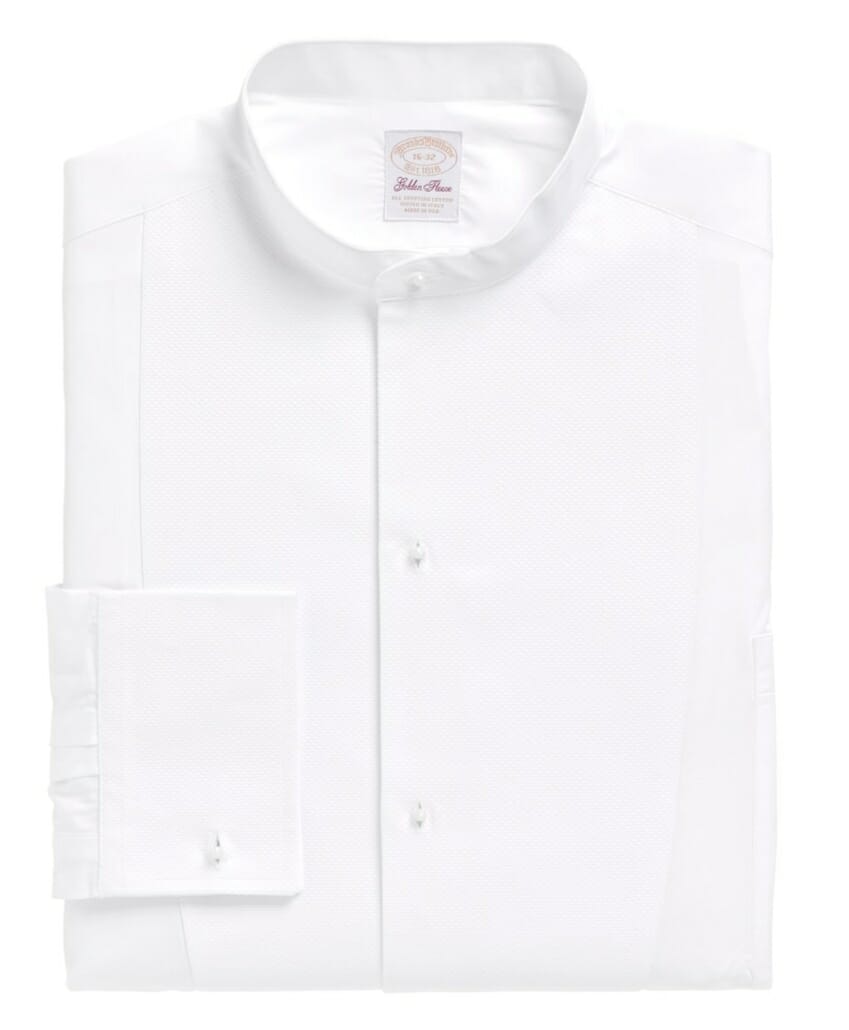
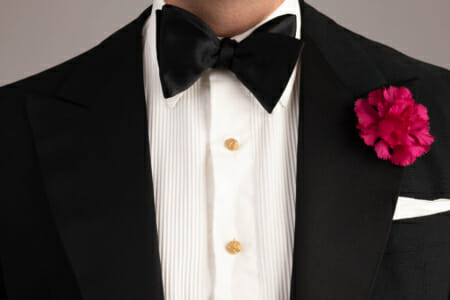
The classic full-dress shirt commands a military-like formality with a stiff and simple bosom made from plain linen, plain cotton or cotton piqué (typically Marcella in the UK). This bib-shaped thick layer of fabric is heavily starched to give all men the appearance of a firm, flat torso, regardless of their actual physique. In order to prevent the cardboard-stiff shirtfront from billowing out like a sail when the wearer sits down and the excess material has nowhere else to go, the properly tailored bosom will end just above the trouser waist and just inside the suspenders. The front traditionally takes one or two (visible) studs depending on the wearer’s height (a single stud adds the illusion of stature) or his tastes.

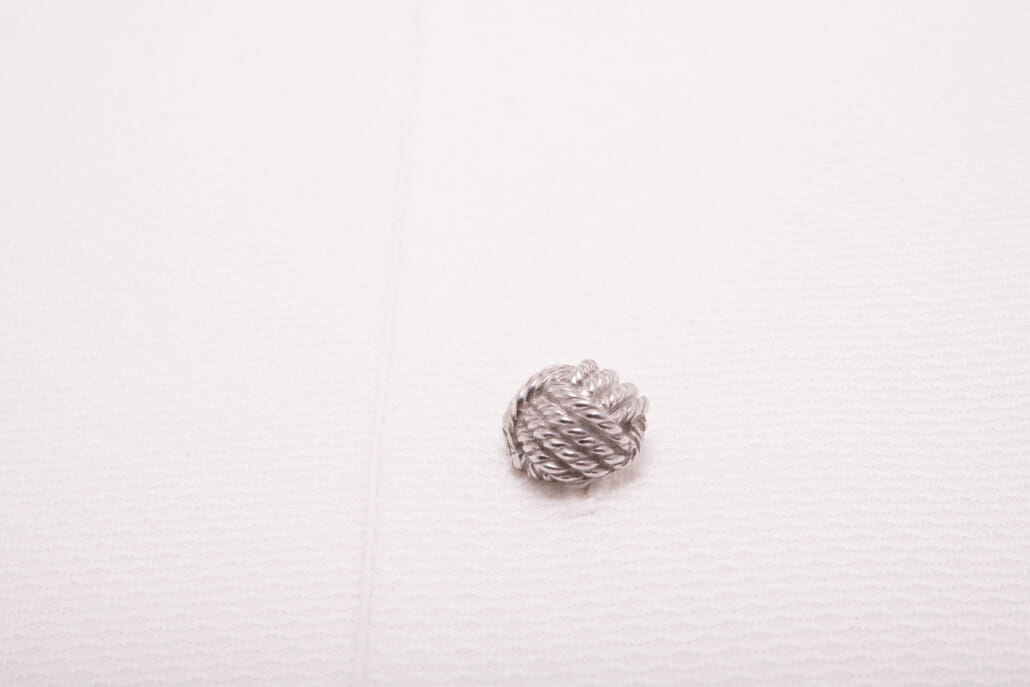
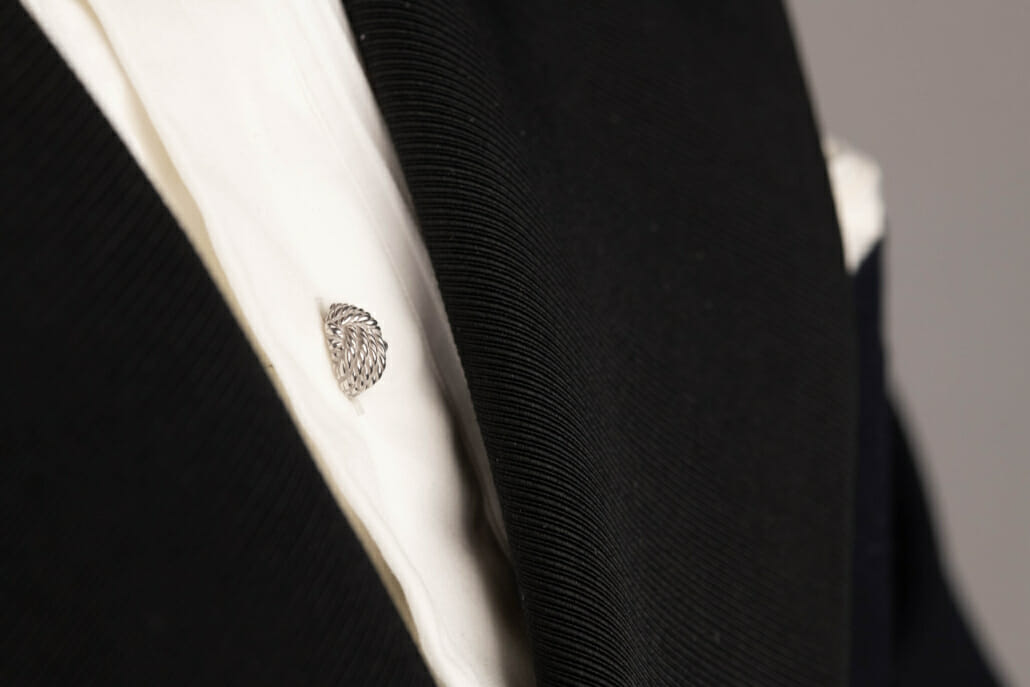
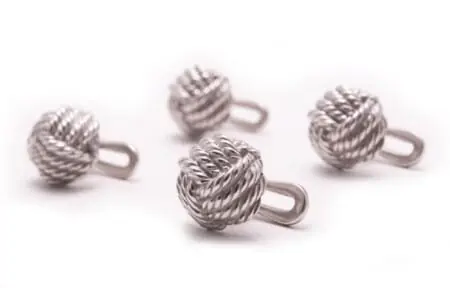
While vintage shirt studs are usually beautiful, they are sadly too small for modern marcella piqueee or boiled front buttonholes. Because of that the shirt will pop open regularly when worn. To remedy that issue, Fort Belvedere designed a matching cufflinks and stud set in platinum that works for white tie, and keeps the shirt properly closed all day long.
Understanding Piqué
There are numerous types of piqué weaves including waffle (small squares), honeycomb and birdseye (small diamonds). Birdseye is also often known as marcella and is the most popular style for formal shirts. The finer the weave of the piqué, the more elegant the shirt front.
The Boiled Shirt in Detail
See the Vintage Evening Shirts page for extensive details on the classic full-dress shirt, aka boiled shirt, including information on back-closing models, detachable cuffs and the detachable bosom (better known as a dickey).
How To Put in Shirt Studs
It can be tricky to put in the shirt studs because the starched marcella piqué is so stiff. Hence some white the shirts feature a side opening on the left that allows you to reach the studs from behind, which can be very helpful, especially if you have larger studs that cannot be buttoned because the buttonhole is too small.
If your shirt does not have that opening, button everything top down as that allows you to look at the back from the bottom.
For more details about different shirt studs check out our White Tie accessories section.
Identifying the Perfect Detachable Wing Collars
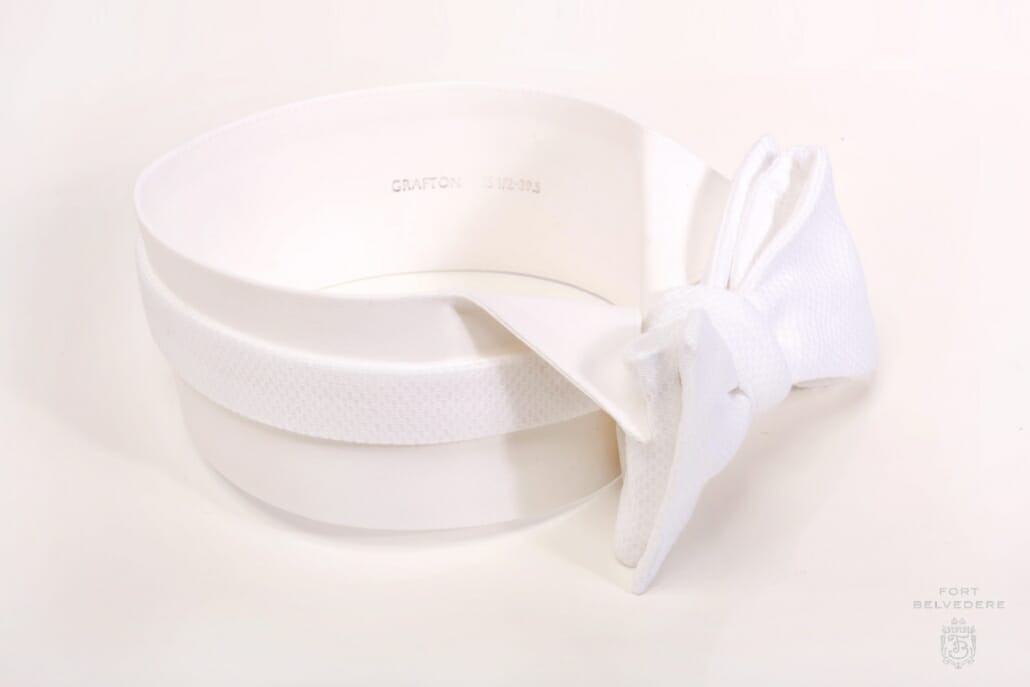
The collar of the full-dress shirt is distinguished not just by its folded wings but also by its height. Originally, these detachable collars stood nearly as high as the wearer’s jawline and even today they should extend at least three-quarters of an inch above the coat collar. Combined with the heavily starched fabric and the broad wings that helped keep the bow tie perfectly in place, the resulting effect “framed all men’s faces in regal splendor” to quote classic couturier Alan Flusser. While such collars are difficult to find today they remain the epitome of formality.
Detachable collars are fastened to the tunic shirt with a shorter stud at the back of the collar and a longer one in front that can accommodate the overlap of fabric at the throat. Because of the shirt design, only the front stud touches the neck. Therefore, the flat back of this stud should be of bone or mother-of-pearl as metal may leave a mark on the skin. The extended portion of the stud is usually brass but is not seen as it is covered by either the bow tie at the front of the collar or by the bow tie band at the back.
Regarding Collar Studs
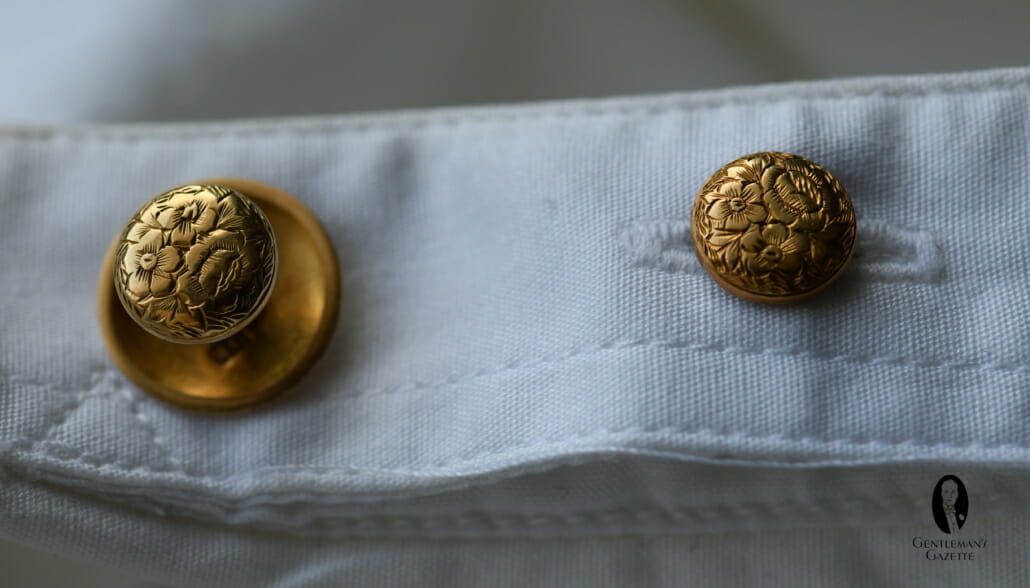
Front and back collar studs (left and right, respectively) Unless you are highly dexterous or employ a personal valet, it is much easier to attach the back of the collar to the shirt before putting on the shirt.
Cuffs: Plain Linen, Cotton, or P iqué
Single Marcella or Stiff Cuffs with Cufflinks
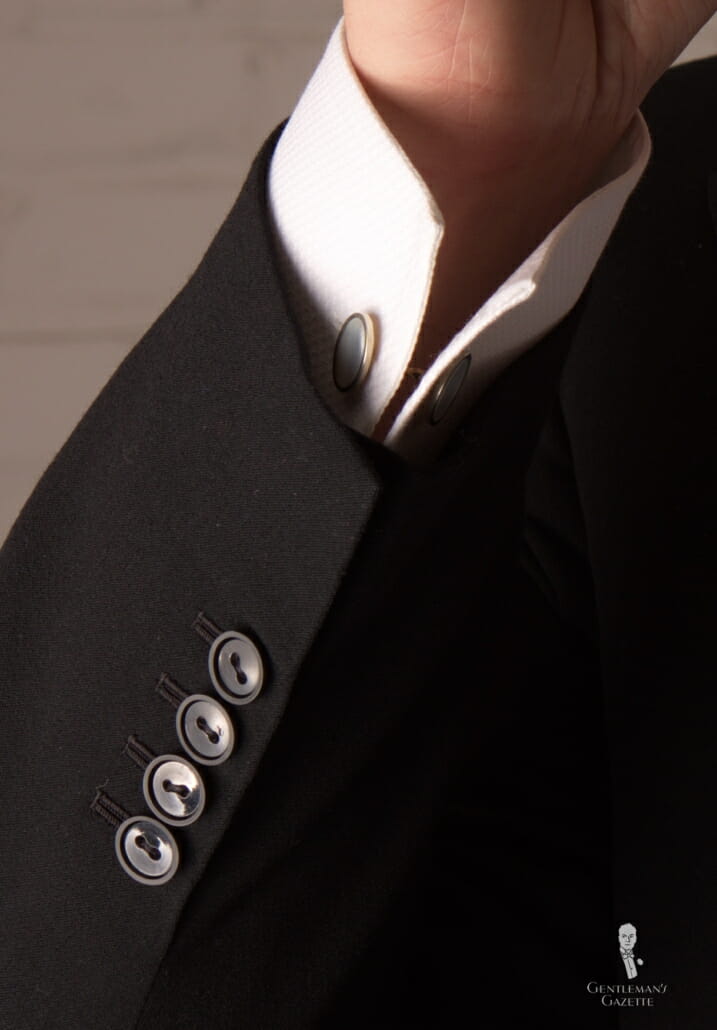
This most formal style of shirt takes stiff barrel cuffs (single cuffs in UK) which are intended to extend further beyond the coat sleeve than do the softer French-style double cuffs worn with a dinner jacket. Although they are not folded back, these cuffs are still fastened with links instead of buttons. They are made of plain linen or cotton or they can be in piqué to match the shirt’s bosom.
Other Important Details: Tabs, Loops, and More
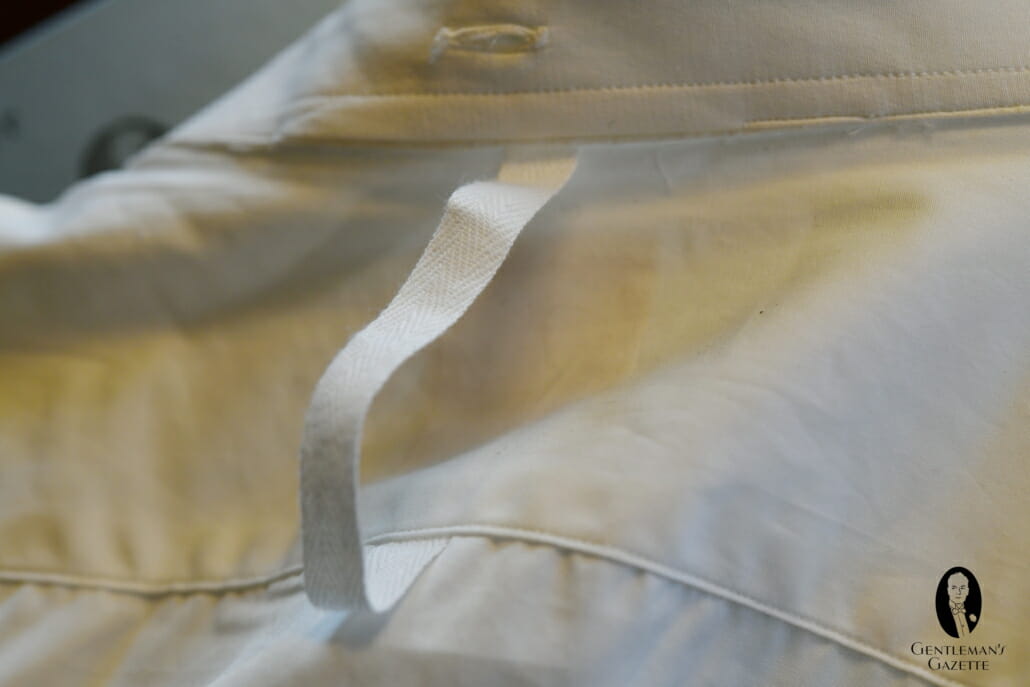
It is a little-known fact today that when a bow tie is worn with a wing collar shirt its band should never be seen above the coat’s collar. Consequently, a finely tailored formal shirt will have a loop stitched immediately below the collar for the specific purpose of keeping the bow tie’s band – and the backless waistcoat’s neck strap – discreetly tucked away under the jacket. Less diligent manufacturers will omit the loop to save costs but this can be easily remedied by a trip to the tailor.
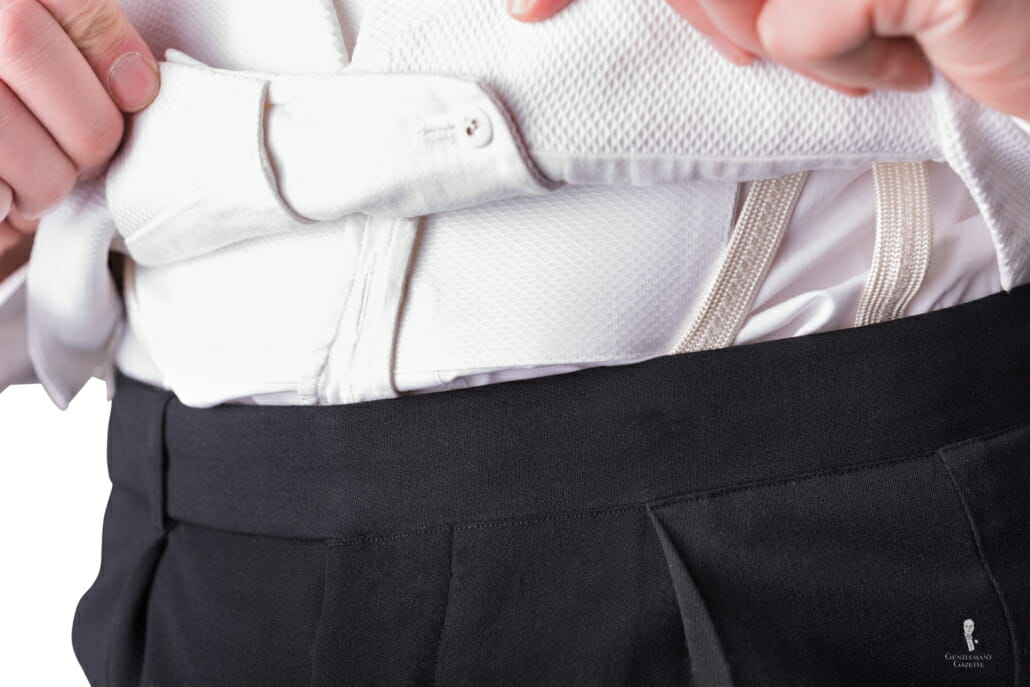
Quality formal shirts will also feature a tab that attaches to the inside of the trouser waistband in order to keep the shirt from riding up over the course of an evening. Like all working details of a formal ensemble, this tab is hidden – in this case by the waistcoat.
There are no pockets on formal shirts as they are not considered dressy and would interfere with the reinforced bosom.
The Attached Wing-Collar Shirt: An Acceptable Alternative
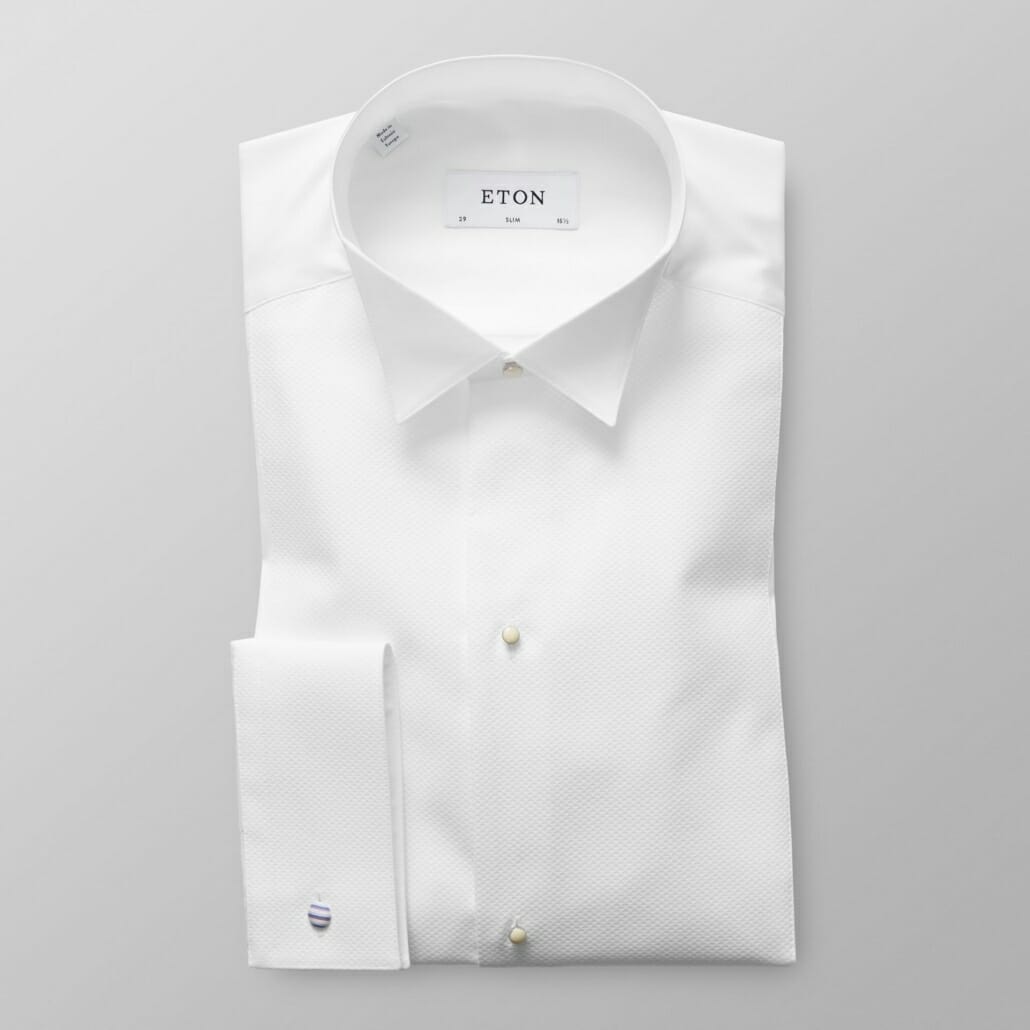
The practice of wearing wing-collared shirts declined dramatically after the 1930s introduction of the formal turndown shirt for the dinner jacket and the dinner jacket’s subsequent replacement of the tailcoat as standard evening wear. As the wing collar’s popularity declined, the number of dry-cleaners able to properly wash and starch them also dwindled. In response, shirt manufacturers began to attach the wing collar to their full-dress shirts in the 1960s. This new style took off in the seventies and eighties and has become the norm for wing collars.
Consequently, men who are unwilling to seek out a conventional detachable collar shirt should look for a contemporary collar that at least resembles the classic archetype as much as possible. In other words, it should be taller than the one and a half inches that is typical for regular shirt collars, should feature pronounced wings instead of the paltry tabs that are so common now and should have a fused construction so that it remains as stiff possible during wearing.
All other details are the same as the classic shirt including the stiffness and minimal decoration of the bosom; soft-pleated fronts are strictly for black tie.
Explore this chapter: 10 White Tie Guide