|
|||||||||||||||||||||
|
Defining Classic Black
Tie
|
Classic Alternatives: Tasteful Personalization
The key
to dressing well is to find freedom within the rules.
Anyone can be completely different, since it’s easy to be
outrageous. The trick
is to be just that bit different. Elegance: A Guide to Quality In Menswear • Classic Precedents
For those
readers who have reached this section after learning the Basics,
History and Classic Components of black tie, it will be readily
apparent that tinkering with the institution is akin to tampering
with perfection. However,
perfection is a relative concept which means that there is always
room for reinterpretation.
Just keep in
mind that the difference between skillfully bending the rules and
oafishly breaking them lies in a man’s knowledge of the fundamental
principles behind those rules.
For those men willing to experiment with untried black-tie
variations, these
fundamentals
can be discerned in the introduction
to the Contemporary section.
For others who prefer to take advantage of tried-and-true
options in their quest for tasteful personalization, they may choose
from the following sartorial precedents favored by some of the most
stylish dressers of the twentieth century.
Discretion is an
important factor in assembling an evening kit that is distinctive
without being distasteful; the adage “less is more” couldn’t be
better suited to customizing a wardrobe that derives its primary
appeal from its understated simplicity.
Therefore, when choosing
among the following classic alternatives is best to limit oneself to
a single item at a time.
Also be aware
that a man’s age and an event’s formality will impact the
appropriateness of these alternatives.
The
guidelines
for
contemporary variations apply just as much to classic ones.
• Adding Color
While color is
the simplest way to customize a black-tie ensemble, its indiscreet
use is the most common culprit in degrading the tuxedo from elegant
formal attire to a sophomoric prom costume. In Dressing the Man,
classic menswear authority Alan Flusser offers some simple advice
for avoiding this pitfall:
• Jacket
The cardinal rules for alternative jackets is that they are appropriate only for less formal options such as a private party at home or at a man’s club and that all other aspects of one’s ensemble comply with the rules for proper black tie. Even then, says menswear author Nicholas Antongiavanni, they “should be approached with caution for they do not command universal respect.” Smoking JacketAs the inspiration for the original dinner jacket, the smoking jacket remains a popular alternative to the traditional black-tie coat. It is made of colored velvet in a dark hue of colors such as of green, violet, burgundy and blue. A classic smoking jacket can be single- or double-breasted and may or may not have frog closures in place of buttons and has a self-faced or silk shawl collar. Odd / Separate Dinner JacketOther than the white model for warm weather, odd dinner jackets (jackets that do not match trousers) are most popular in velvet and tartan. While neither are technically classic, the 1950s origin of the plaid alternative can justifiably categorize it as semi-classic particularly in the understated blue and green tones of the Black Watch pattern. Tartan coats traditionally take shawl collars trimmed in black silk. In the summer a tan colored jacket is a traditional alternative to white or off-white.
• Waist Covering
Matching SetsFirst and foremost, do not wear waist coverings and bow ties made out of matching colors or patterns. The black-tie outfit is close enough to a uniform as it is and accessories should be used to avoid a pre-packaged look, not to encourage it. As A Gentleman Gets Dressed Up so aptly puts it, “a gentleman’s pocket square, tie, and cummerbund were never intended to share the same gene pool.” Odd Waistcoats and Cummerbunds
Waistcoats and cummerbunds are the most common method for adding color and pattern to black-tie but, once again, discretion is essential to maintaining the integrity of the formal ensemble. As mentioned previously, stick to deep rich colors that harmonize with the existing black and white ensemble instead of bright loud colors that detract from it. White WaistcoatWhile colored and patterned waistcoats inherently diminish the formality of the tuxedo, the white piqué full-dress waistcoat actually elevates it. This posh variation - usually paired with a wing-collar shirt and peaked-lapel jacket - was common in the 1920s and 1930s and was prescribed by Emily Post for the most formal of black-tie occasions right up until the 1970s. Today it remains a stylish alternative for many dapper dressers including Alan Flusser. Full details can be found on the White Tie page. • Shirt
Silk dress shirts have long been accepted as a luxurious warm-weather alternative to cotton.
• Neckwear
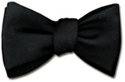
There is one very simple rule for personalizing
bow ties: don’t. Regardless of how commonly this sartorial gaffe appears at formal functions, it is still a faux pas. While it is true that matching ties and cummerbunds were recommended by even the most esteemed etiquette and fashion authorities in the 1960s through the early ‘80s, since that time there has been a return to classic standards which dictate the solid black bow tie is the only correct option with the black dinner jacket. This is not simply a matter of changing fashions but, rather, a reflection of timeless style. Unlike the waistcoat, cummerbund or handkerchief, a contrasting bow tie is not framed by a dark color and therefore stands out as a glaring distraction. It has the effect of gift wrapping the neck and detracting from the face which is supposed to be the focal point of the suit.
The only exception to the rule is limited to classic warm-weather kits due to their inherent informality. In the 1940s in particular, matching sets of maroon cummerbunds and bow ties were a popular alternative to black. (Midnight blue ties were also allowed when worn with trousers of the same color.) Today, the only hope that a grown man has for pulling off this look is to follow the classic warm-weather rules to the letter: jackets should be off-white, shirts should have turndown collars, the set's color must be a genuine maroon and, most importantly, ties should be self-tied. Wearing a pre-tied scarlet bow and cummerbund set with a modern wing-collar shirt and bleached white coat will virtually guarantee that you spend your evening taking other guests' drink orders - or being asked what time your band starts playing.
• Footwear
The classic alternative in black-tie footwear
is the elegant evening slipper. Also known as the
• Accessories
Hose
Formal hose can have a clock design that is either self-colored or of a contrasting color to match another accessory. However, the latter option should be used with discretion.
Suspenders
Because you would never be so uncouth as to remove your jacket at a formal event your suspenders will never be seen by anyone other than your intimate companions. Consequently this is a perfect opportunity to go ahead and indulge yourself a little.
Jewelry
Cufflinks and studs are a second option for subtly enhancing a color that has been introduced by another component in the formal ensemble.
Pocket Square
Handkerchiefs in dark colors make for a natty touch, especially with warm-weather attire. Just be sure not to wear a colored boutonniere at the same time.
|
Bottle green velvet smoking jacket from classic English clothier Pakeman Catto & Carter.
The faille cummerbunds offered by Ben Silver are the epitome of traditionally tasteful colors.
It's safest to restrict color to an item that is largely surrounded by black.
Classic formal color from Tom Ford.
Matching maroon accessories were popular in the 1940s. A similarly colored boutonniere was also common - although it required that the pocket handkerchief remain white to avoid gilding the lily.
|
|||||||||||||||||||
| TOP OF PAGE |
UPDATES |
GLOSSARY |
SEARCH |
CONTACT AUTHOR
COMPARATIVE ENGLISH TERMINOLOGY Hover over images for picture credits. Copyright © 2008. Peter Marshall. All rights reserved. This site does not function correctly in Firefox |
|||||||||||||||||||||