|
|||||||||||||||||||||||
|
Defining Classic Black
Tie
|
Classic Dinner Jackets
The dinner jacket is the foundation of the
black-tie ensemble. The model, style and facings chosen for
the jacket set the tone for the formality and swank of the remaining attire.
• Model
Both single- and
double-breasted models are equally correct.
The single-breasted model is often worn unbuttoned requiring the trousers’ exposed waistband to be covered by a cummerbund or waistcoat. This in turn provides more opportunities for versatility in a man's formal ensemble.
The double-breasted model looks better buttoned when the wearer is standing which means there is no need for any sort of waist covering. However, because men usually prefer to unbutton their jacket when seated this model is less convenient than the single-breasted. Also, although the double-breasted is the most formal type of jacket for business suits, it is has been traditionally considered the less formal style of dinner jacket due to the lack of accompanying cummerbund or waistcoat.
The classic single-breasted dinner jacket takes one waist button. The double-breasted model has four buttons and fastens with either the bottom row (known as 4-on-1 style) or both rows (4-on-2) depending on the cut.
• Lapels
Style
As with the single- and double-breasted models, both the peaked lapel and shawl collar are authentic and correct.
The peaked lapel
is derived from the tailcoat and for that reason it is considered
the more formal of the two styles. The shawl collar is
influenced by the smoking jacket and conveys a softer image than its
angular counterpart.
Considered less formal due to its origins,
it nonetheless appeals to
urbane dressers due to its after-six exclusivity.
The shawl collar is also the style most popular on
warm-weather jackets and other
alternative dinner jackets.
Although the notched lapel is by far the most popular style today and proponents point out that it has made occasional appearances since Victorian times, the style’s derivation from the common lounge suit has traditionally limited it to a fashion-forward alternative. It was not until the late 1970s that etiquette and style experts began to consider it to be correct for formal attire and even then its acceptance was limited. (See Contemporary Black Tie for more on the debate about the appropriateness of this lapel style.) Facings
The best lapel
facings are made of pure silk, while less expensive ones contain a
synthetic component. The silk can take the form of smooth
satin or the dulled ribbed texture of grosgrain. Although the
former is much more common in
Keep in mind
that the facing chosen for the lapels will determine the facings of
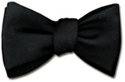
the bow tie and cummerbund as they are all required to be similar.
Here too, grosgrain may be seen as preferable because as
classic couturier
Alan Flusser
explains, it permits some contrast in textures for the bow tie
while satin facings require the neckwear to match.
The latter result, particularly in the case of pre-tied bow ties,
is a noticeably “contrived effect.”
Buttonhole
Classic
sartorial pundits strongly recommend that all dinner jackets have a
working buttonhole on the left lapel for a boutonniere
(known in Britain, ironically, as a buttonhole).
Ready-to-wear jackets may have to be taken to a qualified tailor who
will know where to locate the hole and how to skillfully add it to
the silk-faced lapel.
Custom-made formal jackets will not only include a buttonhole but also a stem holder on the reverse side of the lapel. This is typically a very small cord that keeps the stem in place so that the flower does not fall out of one's lapel over the course of an evening of dancing and dining.
• Color
While black is the norm, midnight blue is also a classic. This extremely dark hue of navy blue achieved its popularity in the 1930s due to its ability to retain its richness under artificial light whereas black fabric is generally more reflective and can sometimes give off a greenish or grayish cast particularly if the cloth is not brand new. For this reason midnight blue is frequently described as being "blacker than black" although "richer than black" would be a more realistic representation.
Sadly, such a garment is rarely offered in the ready-to-wear world and can usually only be obtained on a made-to-measure basis.
According to preeminent English couturier Sir Hardy Amies, whether they are grosgrain or satin, the facings on a midnight blue dinner suit should be black because it is almost impossible to get dark blue satin to match the wool.
A white dinner jacket may be worn in warm weather but only under certain conditions. See Warm-Weather Black Tie for complete details.
• Fabric Content
Formal suits are typically made from finished or unfinished worsted wool. (Worsted is a type of yarn that produces a firm, napless fabric.) Because tuxedos are worn far less frequently than business suits and don’t have to stand up to the same amount of wear and tear over time they can be made of a much finer wool than their everyday counterparts. Finish
In his book Dressing the Man, Alan Flusser provides superb advice on the benefits of discretion when choosing a fabric finish:
Like the tailcoat, dinner clothes are trimmed in facings of varying degrees of luster; therefore, so as not to overstate the sheen quotient, the dinner jacket’s base cloth should be in a dulled or matte finish. Subtle textured weave effects such as baratheas and mini-herringbones, or quiet variegated effects avoid affectation while adding surface interest to the formal ensemble.
This recommendation applies more to North Americans as British tailors generally consider barathea to be the norm for evening wear wools and silks.
Weight
Despite what some salespeople will claim, there is no such thing as a year-round weight for suit material. However, since formal affairs invariably take place in climate-controlled environments, experts concur that a 9-10 ounce fabric is the most practical choice.
• Pockets
The double-besomed
jetted (slit)
hip pocket is the only style simple enough to
compliment the dressy dinner jacket.
Flap pockets are not appropriate for formal attire
due
to their busier and bulkier design and are simply
an attempt by tuxedo manufacturers to
save money
(although some designers will trim the edges of a flap
pocket so that the flap can be removed to reveal a formal besom).
Besom welts can be of self fabric or trimmed with the lapel’s silk facing, though classic menswear scholar Nicholas Antongiavanni suggests that for the English this latter touch “is a sure sign of hired clothes”.
The dinner
jacket must also have a welt breast pocket to hold a handkerchief. • Vents
The original
dinner jackets were made without vents then later offered with side
vents. While side vents provide easier access to trouser pockets and
are more comfortable to sit in, they also make the jacket less
slimming and somewhat compromise the intended formality of the tuxedo.
The center (aka single) vent is unacceptable not only because of its sporty pedigree (it was designed for horseback riding) but also because it opens up when a man puts his hand in his trouser pocket thus exposing the seat of his pants and often a white patch of shirt to boot. This is becoming a more common feature on dinner jackets as mainstream manufacturers save money by patterning their tuxedos on standard suit suit styles. Fortunately, a good tailor can convert such jackets into a ventless model by closing the center vent.
• Buttons
As mentioned above, the number of waist buttons is determined by the jacket's model.
The sleeves should be finished with four buttons with their edges touching, just like the sleeves on the tailcoat and better business suits.
All of the jacket’s buttons can be plain or covered in the lapel’s facing.
|
![]() The facings trinity: bow tie, lapels and waist covering. Note that the classic shawl is wider at the bottom than around the neck. ![]() Grosgrain detail. ![]() Buttonholes are not as common in shawl collars today most likely because of the way they tend to interfere with the uninterrupted line of the collar. ![]() ![]() Midnight blue is often so similar to black that the two can only be distinguished when placed side by side. The difference is most obvious in daylight (top) and least apparent in artificial light (bottom). ![]() Barathea dinner jacket from British bespoke tailors Norton & Townsend. ![]() Besom pocket. ![]() Side vent. ![]() Correct sleeve buttons. |
|||||||||||||||||||||
|
UPDATES | GLOSSARY | SEARCH | CONTACT COMPARATIVE ENGLISH TERMINOLOGY Hover over most images for picture credits (Firefox users may need to check picture properties). Copyright © 2009. Peter Marshall. All rights reserved. |
|||||||||||||||||||||||