- The Classics: Butterfly & Batwing
- Self-Tied Always Superior to Pre-Tied Bow Ties
- Fixed Size & Adjustable Bow Ties: Finding the Right Fit
- Overview of Classic Bow Tie Styles
- Determining Your Proper Bow Tie Size
- Classic Black Bow Tie Fabrics
- Bow Tie Placement
- Tying a Bow Tie
- Bow Ties of a Different Color? Watch Out
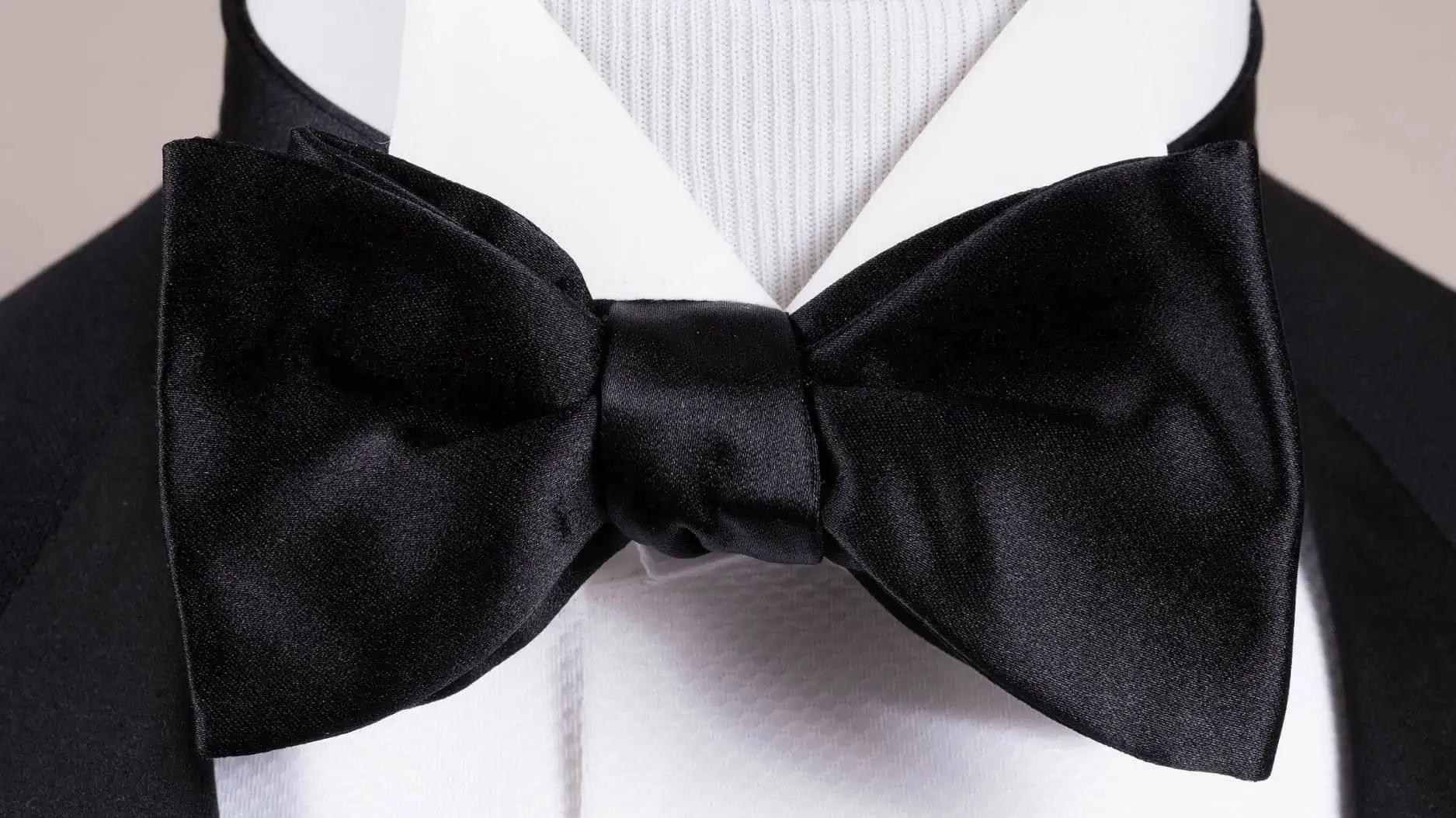
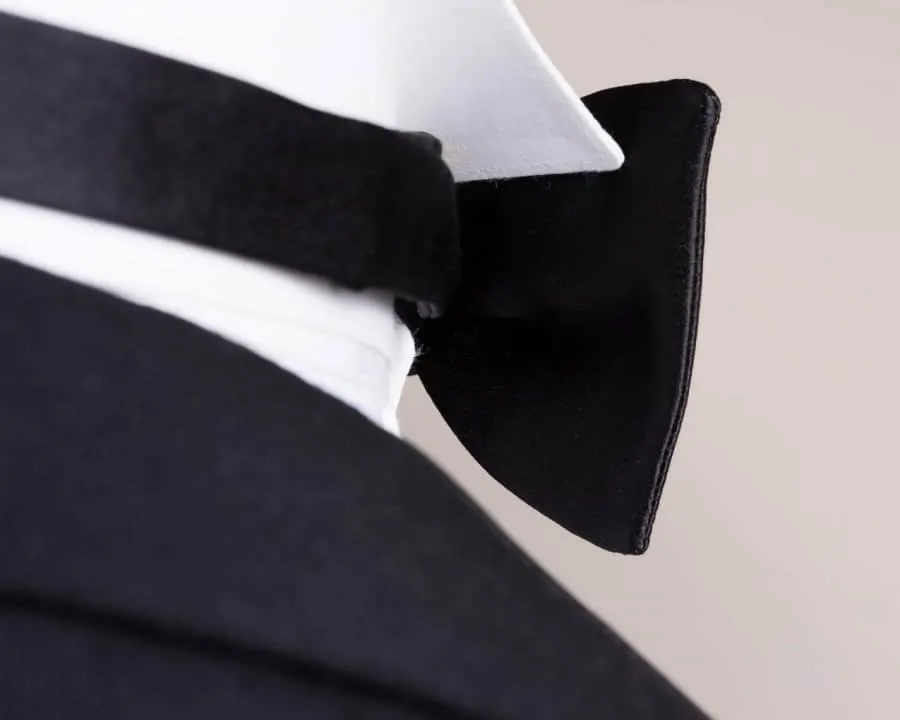
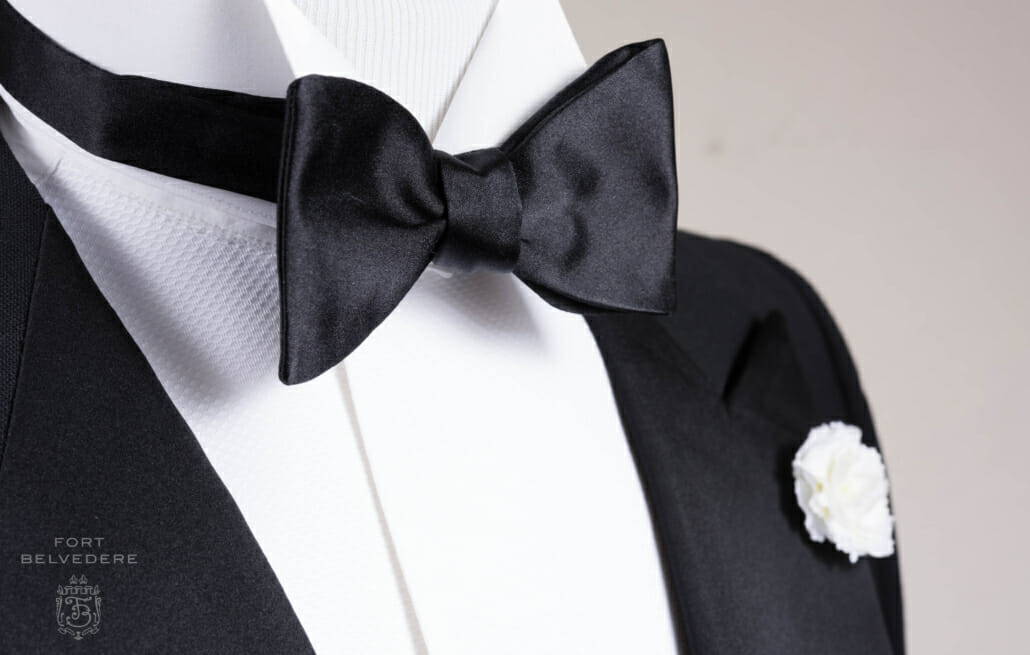
The formal bow tie is not just black tie’s namesake but also its pièce de résistance as it embodies the formality and elegance of the entire tuxedo ensemble. When a tuxedo-clad gentleman enters a room, it is the black bow shape framed against a crisp, white shirt that immediately sets his attire apart from a simple dark suit. In the dinner suit’s heyday, formal bow ties were available in an almost infinite variety of shapes and sizes.
Generally, the ready-to-wear options used to be much more limited and many of the classic variations that used to necessitate the services of a custom tailor can now be found at our online shop with probably the largest selection of quality sized self tie silk black bow ties anywhere in the world.
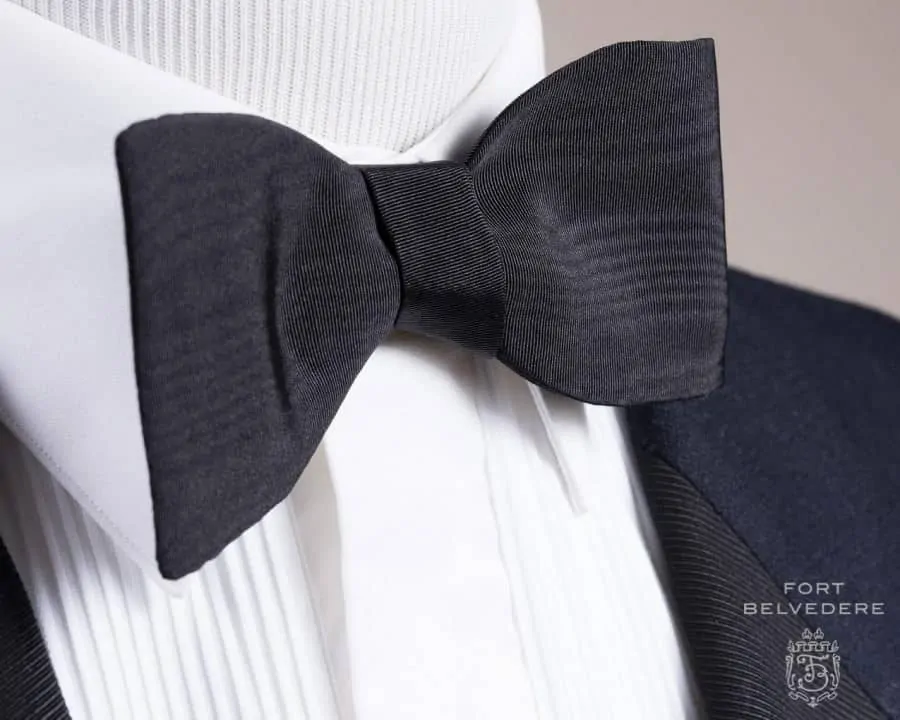
The Classics: Butterfly & Batwing
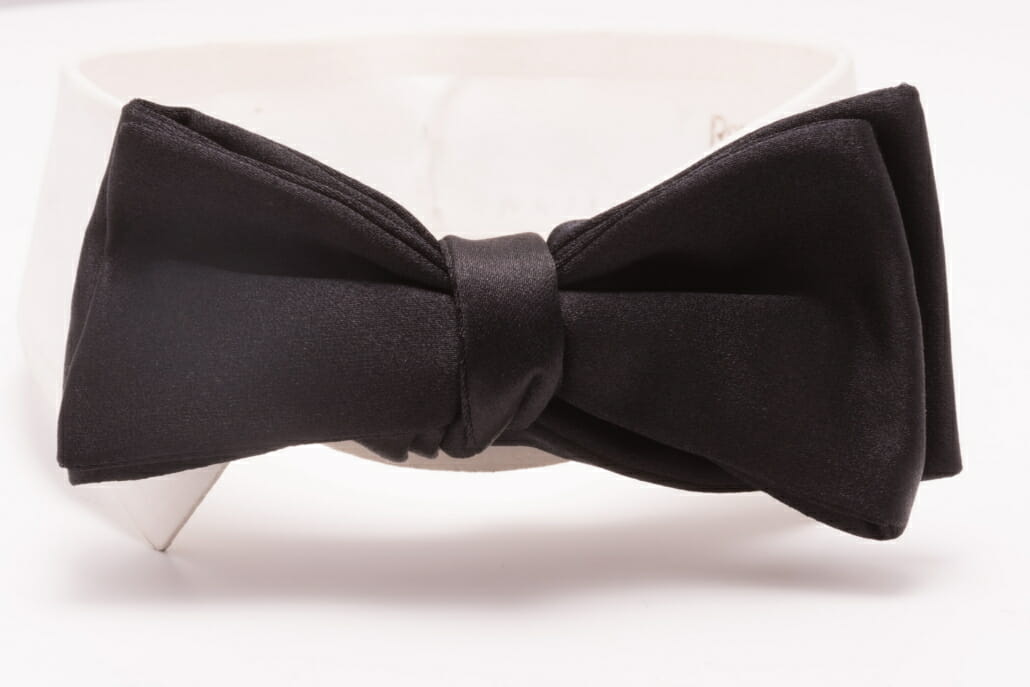
The butterfly bow tie is probably the most classic version, followed by the large butterfly bow tie, followed by the batwing bow tie. Take a look at all three of them.
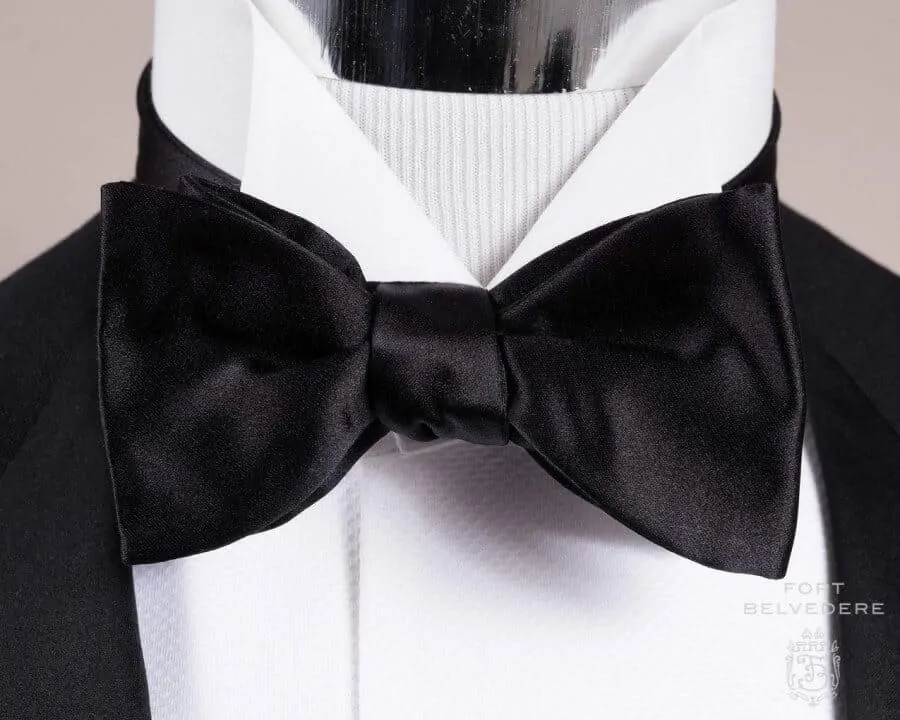
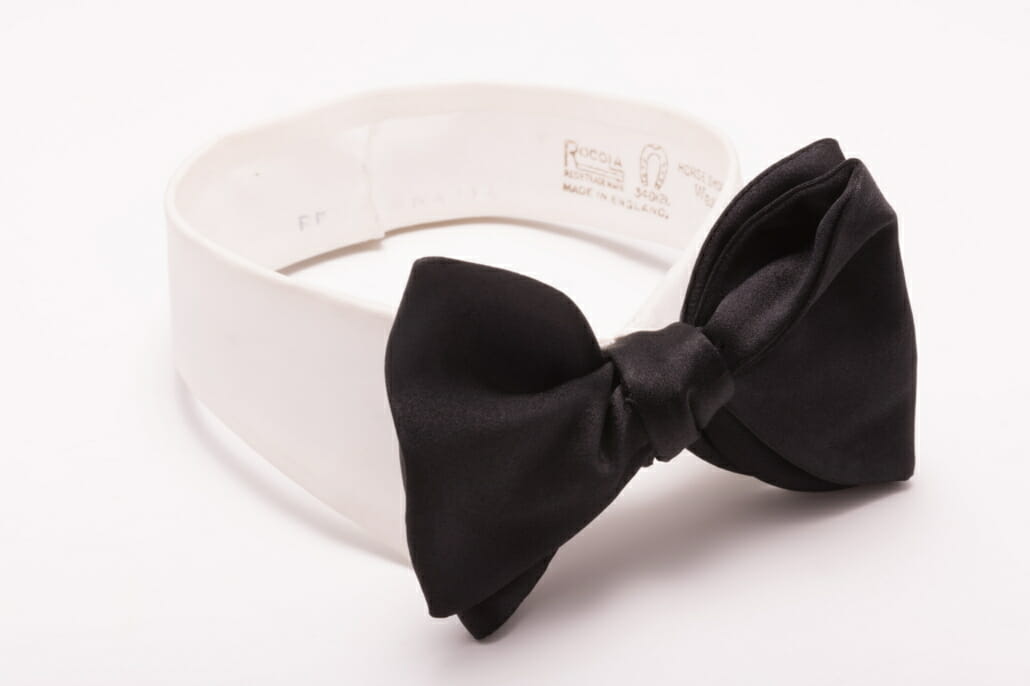
Self-Tied Always Superior to Pre-Tied Bow Ties
The choice of bow tie model separates the men from the boys – and the gentlemen from the waiters. Wearing a pre-tied bow tie to a formal function is the sartorial equivalent of using training wheels at the Tour de France.
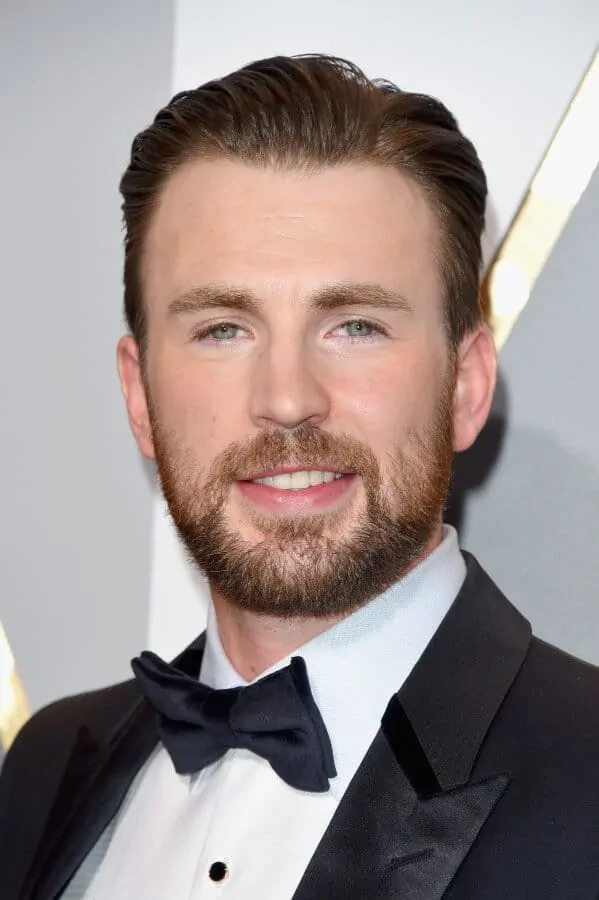
The decision to avoid self-tie models is invariably based on ignorance rather than experience as most men have no idea that the process is virtually identical to tying a simple shoelace bow. Anxiety over a flawed result may also be a contributing factor. However, the fact is that a slightly asymmetrical hand-tied bow adds a unique flair to each man’s ensemble.
Also pre-tied bow ties often angle away from the face and because they are stiff, unlike a self-tie bow tie, it gives itself away very easily.
Fixed Size & Adjustable Bow Ties: Finding the Right Fit
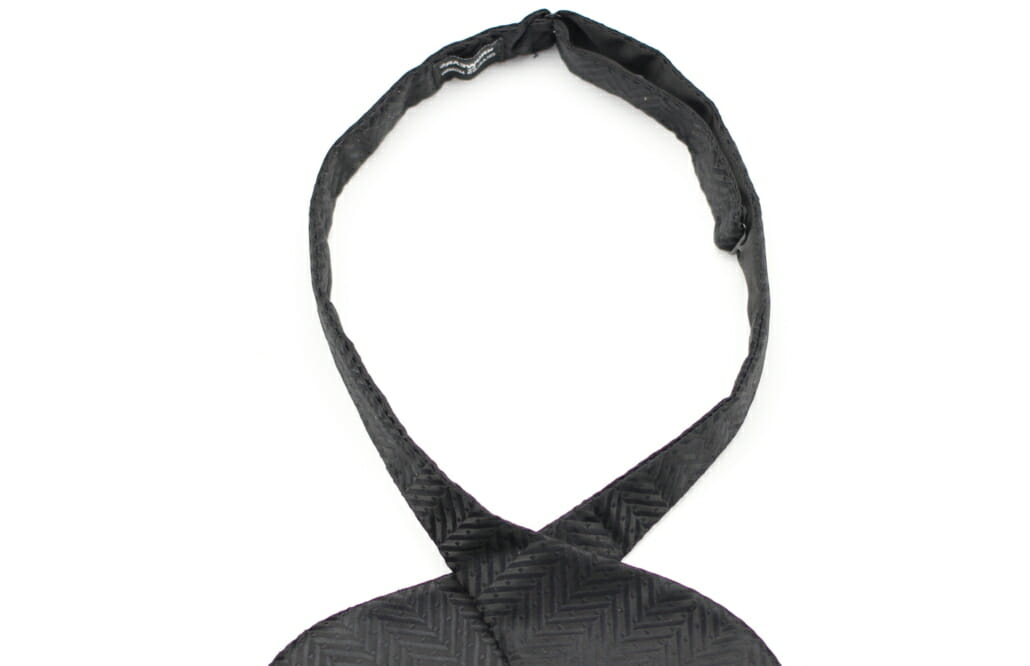
Adjustable black bow ties are the norm nowadays because it allows retailers to save on stocking costs. Sized bow ties are always preferable because the width of the finished bow will be directly proportioned to a specific neck size as opposed to the one-size-fits-all bow which is expected to accommodate necks ranging from fourteen to eighteen inches in circumference. And because the fitted models are made from a single piece of material, their exposed bands forego the excess fabric and unsightly clasps characteristic of the adjustable versions – a particularly important factor for gentlemen with a preference for wing collar shirts.
Because it was so difficult to find proper, sized evening black bow ties, Sven Raphael Schneider designed a range of high-quality black bow ties made of the finest Italian silk. All are exclusively self-tie and properly sized. You can see all of them in our shop here.
Which bow tie will suit you best? Watch our video to find out
Overview of Classic Bow Tie Styles
The following are the most common styles of bow ties.
| Name | Bow Shape | Tie Shape | Tie Width |
| Classic “Butterfly” | 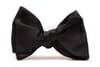 |  | 3″ to 3½” |
| Modern “Butterfly” or “thistle” (classic “semi-butterfly”) | 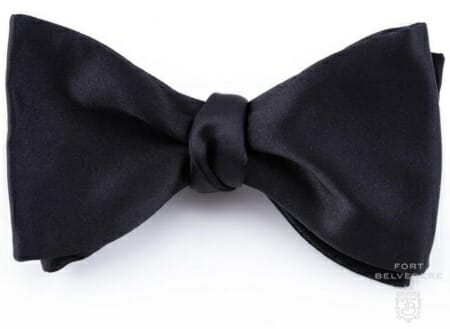 |  | 2¼” to 2¾” |
| “Batwing“ (classic “straight-end” or “club”) | 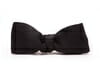 |  | 1½” to 2″ |
| “Pointed” | 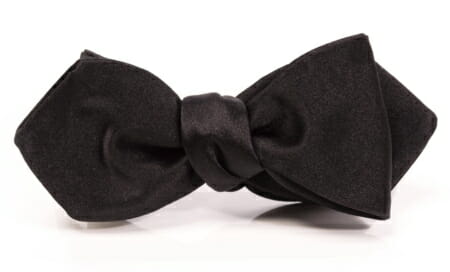 | A butterfly or batwing design can have pointed ends for a unique and classic effect. |
The bow tie shape is a matter of personal preference although one should consider a few things:
- A beard or beard stubble will catch on the bow tie and pull threads, so a smaller shape is preferable.
- A bow tie that is too big is reminiscent of the style of the 1970s and can appear dated.
- Conversely, a bow tie that is very slim looks is reminiscent of the 1960s and could also appear dated.
- The most classic shape is the 2.75″ Butterfly that was popularized in the 1930s. It will make the wearer look debonair, and never outdated, as the style has clearly stood the test of time.
- With a peaked lapel, pointed-end bow ties coordinate nicely with the angularity of peaked lapel jackets and wing-collar shirts.
- The dotted lines in the pictures shown on the patterns indicate where the tie blades (ends) are folded to create the bow shape. In the case of pointed ties, the two points are achieved when the pointed tip of one blade extends beyond the square fold of the overlapping blade. (See Tying a Bow Tie for complete details regarding the tying process.)
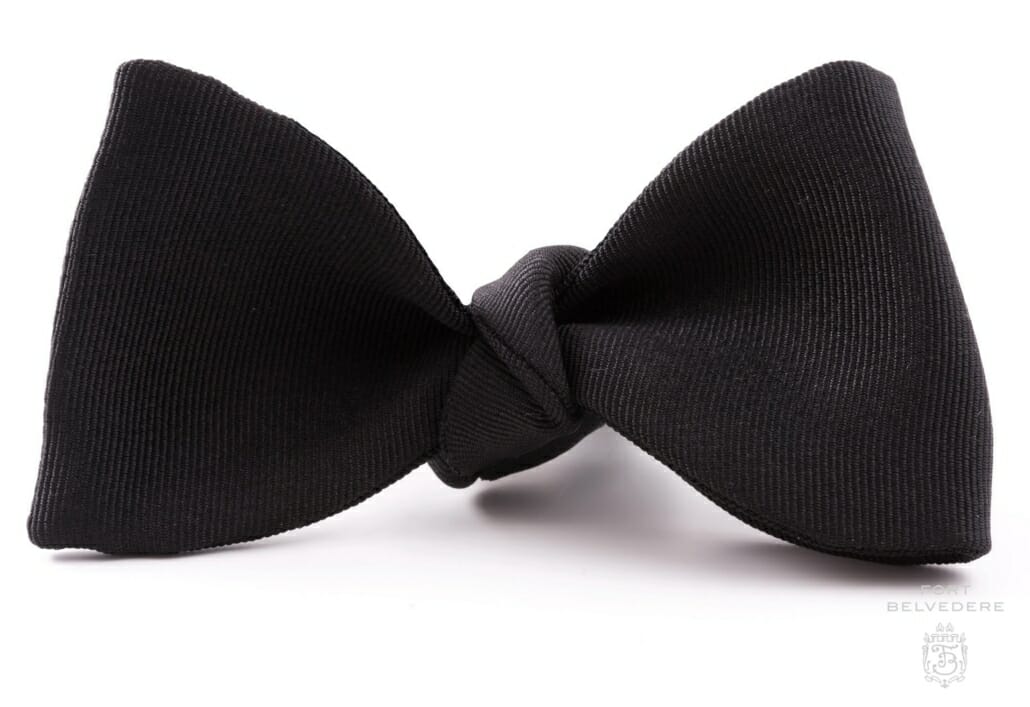
The Single End Bow Tie
The single-end bow tie was popular with elegant gentlemen during the heyday of classic men’s clothing in the roaring 1930s. It never has pointed ends and is usually a butterfly shape.
Determining Your Proper Bow Tie Size
While the bow tie shape may be open to interpretation, the tie’s size must follow certain guidelines to ensure a handsome proportion.
Originally the rule of thumb was that the outer edges of the bow never extended beyond the edges of the collar. However, since wing collars are now much smaller than they were, it is safer to use Alan Flusser’s rule that the finished bow should fall somewhere between the width of the wearer’s face and the outer edges of his eyes.
In terms of tie width (i.e. the vertical measurement of the tie blades), these tend to vary by bow style as well as by current fashions. The sizes used in the chart above are a good starting point but by no means absolute. In general, wider ties work well with higher collars as they prevent the bow from becoming insignificant in comparison.
If you want the golden middle opt for 2.75″ in height. It will always be timelessly classic and debonair.
Classic Black Bow Tie Fabrics
Color: Black
The term “black tie” says it all. When it comes to neckwear for classic tuxedos the only color you need is black. Even if your tuxedo or dinner jacket is tailored of a midnight blue fabric, the lapel facings will always be black and you want to match that color with your bow tie. Any other hue runs the risk of branding you as a 1980s prom date or wedding usher.
Material: Silk
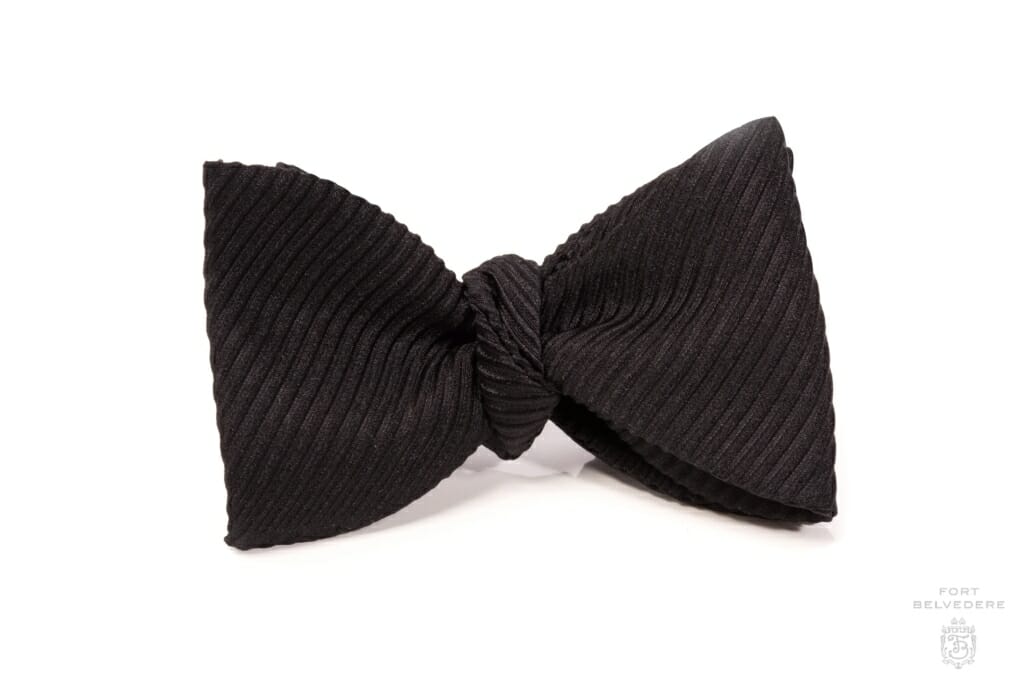
Like the jacket lapels, a quality bow tie will always be constructed of pure silk. Maybe cotton blends are the permissible in case of velvet, as pure silk velvet is no longer produced.
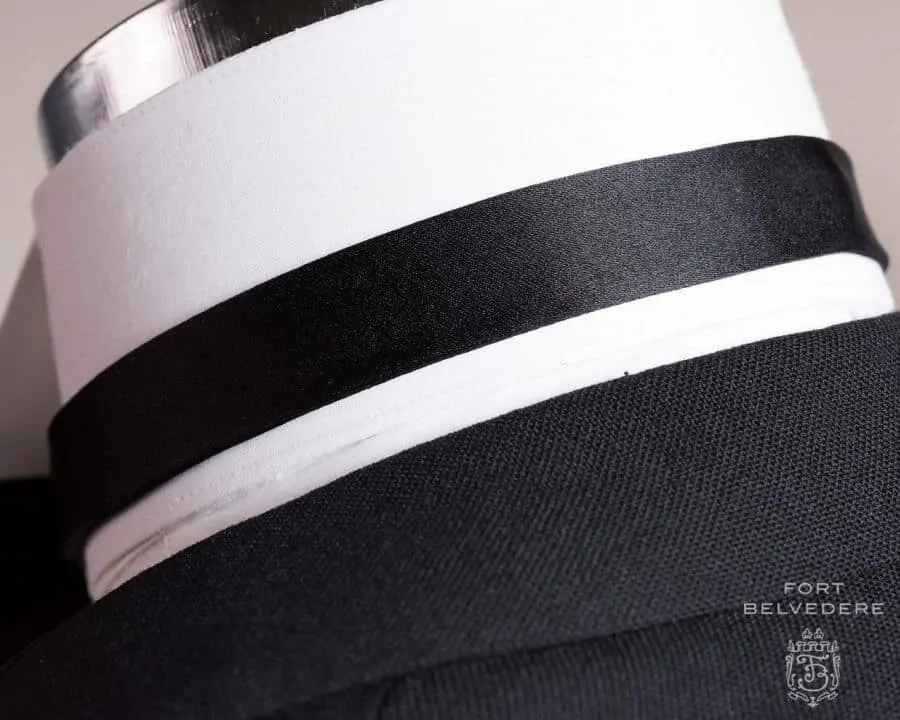
The texture of the bowtie is governed by the lapel facing of the dinner jacket. A silk satin lapel calls for a satin bow tie while faille or grosgrain facings require a ribbed or textured finish such as barathea or wide rib grosgrain or something else. For an overview of all of your weave options, please take a look here.
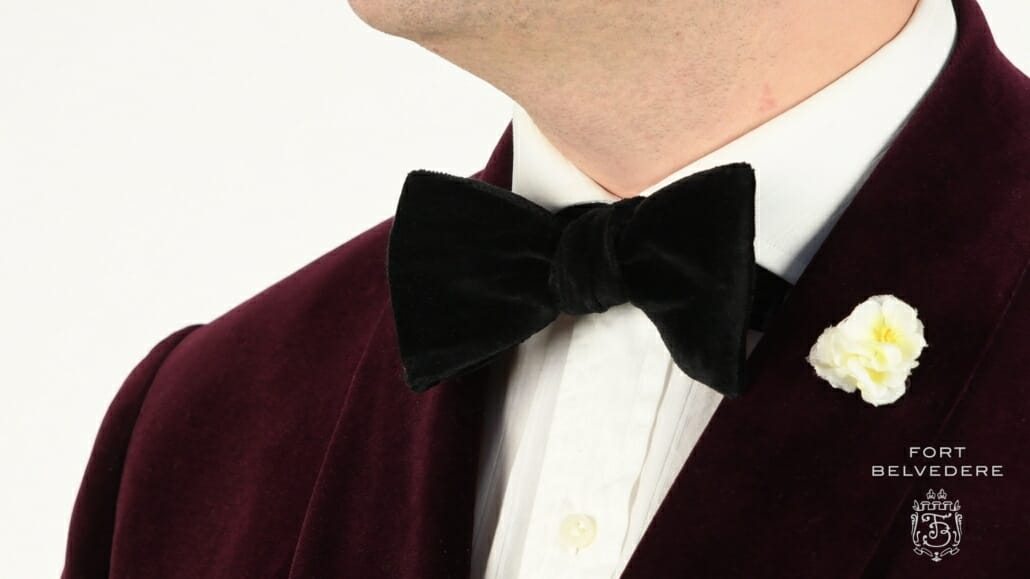
For a double-breasted dinner jacket or one made of velvet a black velvet bow tie looks very handsome.
Bow Tie Placement
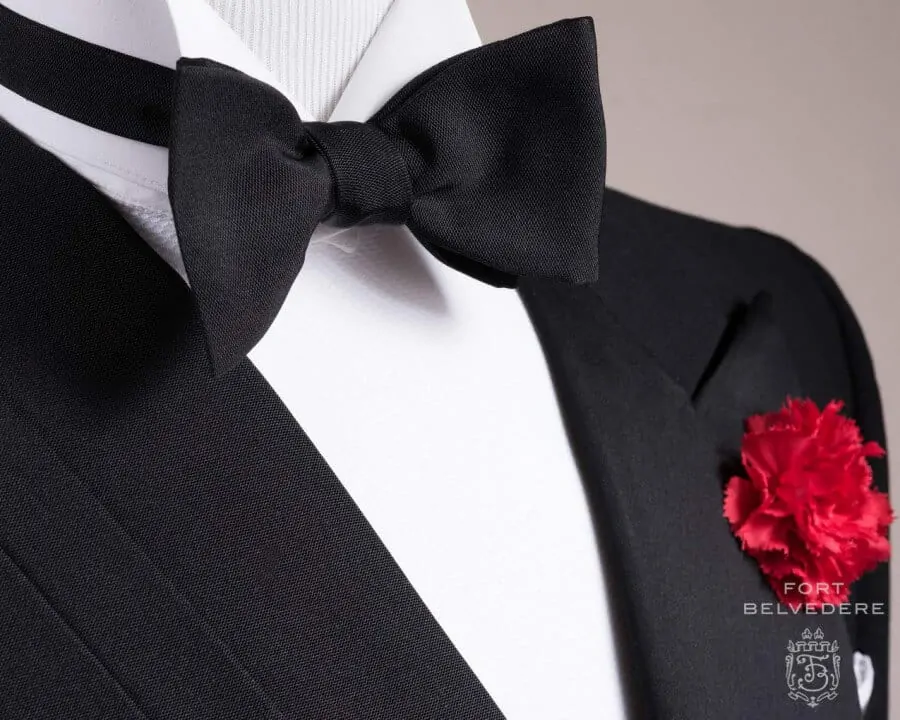
When worn with wing collars, bow ties are placed in front of the wings. This positioning is not only proper etiquette but also a practical choice as the collar’s wings will help to keep the bow in place by pressing it forward.
Tying a Bow Tie
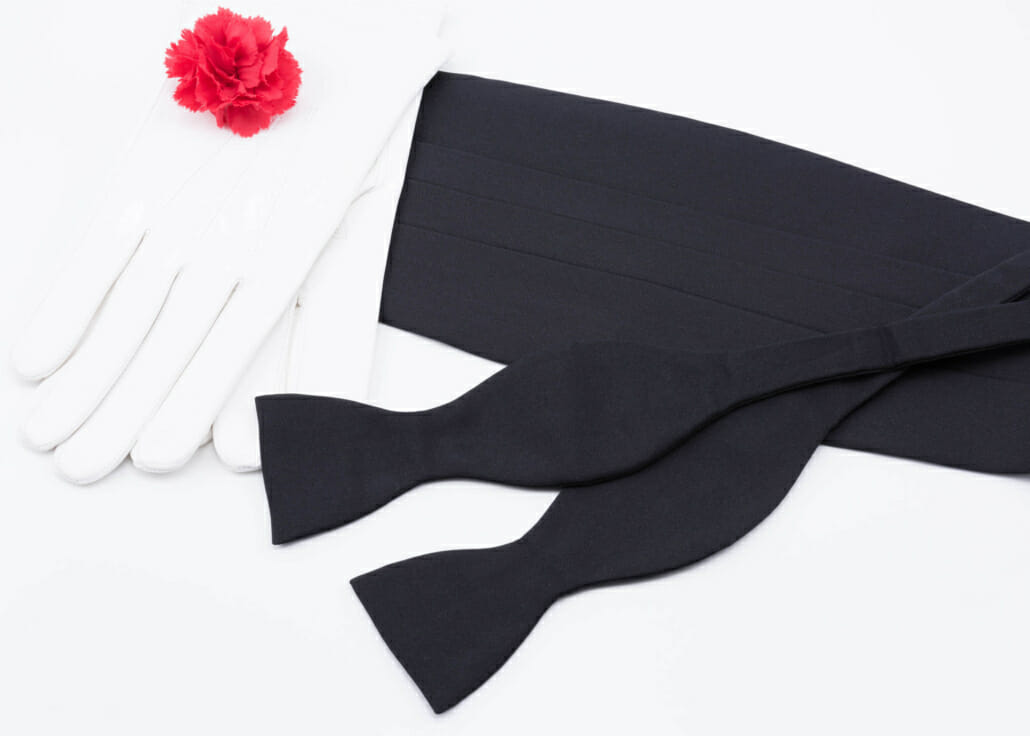
Pre-tied bow ties might look cute on little boys but a grown man should know how to tie his own neckwear. Watch the following video to learn how with simple, step-by-step instructions
Bow Ties of a Different Color? Watch Out
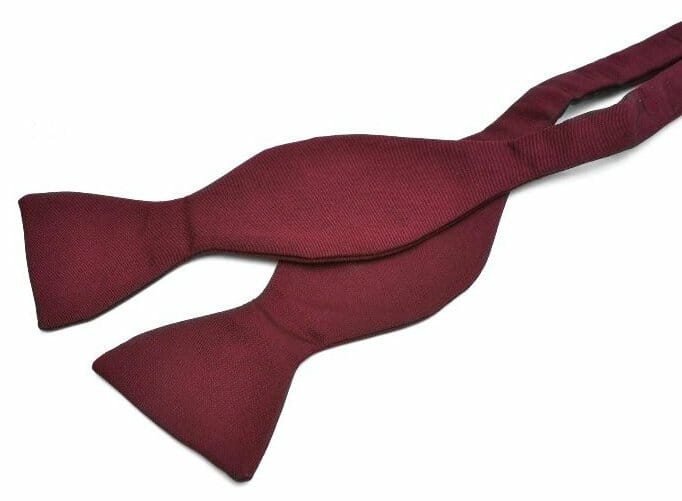
Considering that the dress code is called “Black Tie,” you will be best served limiting yourself to black bow ties. That being said, deep jewel tones can be worn. Just watch out, as while a maroon bow tie can be worn with a white dinner jacket, for instance, it comes with great risk of being mistaken for the wait staff.
Explore this chapter: 4 Classic Black Tie – The Gold Standard
- 4.1 Classic Tuxedo – Dinner Suits
- 4.2 Classic Evening Waistcoats, Vests, & Cummerbunds
- 4.3 Classic Tuxedo Shirts
- 4.4 Classic Neckwear – The Black Bow Tie
- 4.5 How To Find The Right Black Bow Tie For Your Tux and Face
- 4.6 Classic Tuxedo Shoes – Patent Leather Oxfords & Pumps
- 4.7 Classic Accessories – Cufflinks, Studs & Co
- 4.8 Classic Black Tie Outerwear
- 4.9 Warm-Weather Black Tie – The (Off) White Dinner Jacket
- 4.10 Classic Tuxedo Alternatives – How To Stand Out in Black Tie
- 4.11 Non-Traditional Dinner Jacket Guide